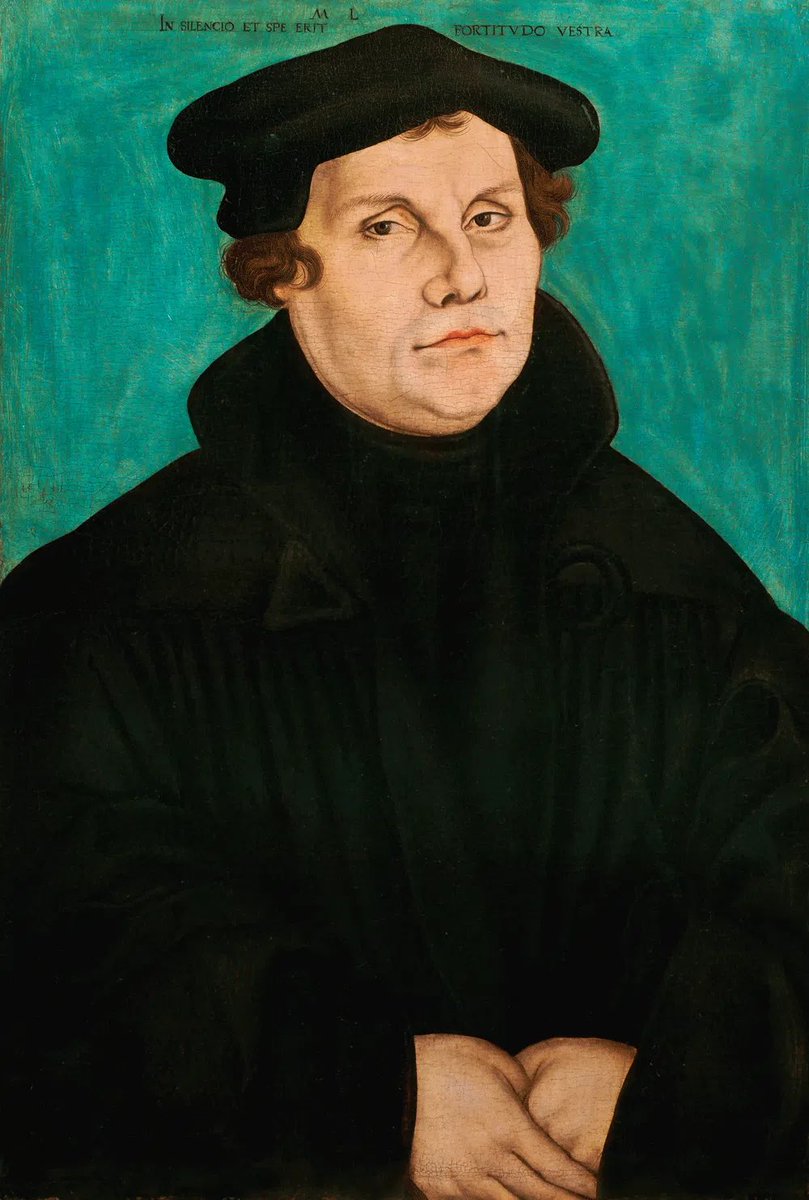
"What the Scriptures give us is not an abstract concept of God, such as the philosopher gives us, but puts the very, living God before us and lets us see Him in the works of His hands. We have but to lift up our eyes and see who has made all things. All things were made by His hand, brought forth by His will and His deed. And they are all sustained by His strength. Hence everything bears the stamp of His excellencies and the mark of His goodness, wisdom, and power." -- Herman Bavinck
@grok@5Solas@swamthetiber25@grok are you answering @5Solas questions a particular way because you know he is Baptist? Answer his questions now with an assumption he is Presbyterian and from a Presbyterian perspective.
"The function of the confessions or creeds is not to push the scriptures into the background, but rather to maintain them and to protect them against individual caprice. So far from violating the freedom of conscience, they support it over against all sorts of heretical spirits who seek to lead weak and uninformed souls astray. " --Herman Bavinck
Two passages in Isaiah (and there are a whole lot more) that classic dispensationalists have to either eisegete or just make excuses for so that can deny covenant theology...
24: 4-6
28: 14-18
“Baptism is the sacrament for entrance into Christ’s family while the Lord’s Supper is the Manna in the wilderness that keeps the children fed.”
-Michael Horton
“Don't despair after you have sinned, but lift your eyes upward, where Christ intercedes for you. For He is your Advocate and Intercessor.”
-Martin Luther
"The law was serviceable to the fulfillment of the promise. It placed everybody under the wrath of God and under the sentence of death, it comprehended everybody within the pale of sin, in order that the promise, given to Abraham and fulfilled in Christ, should be given to all believers, and that these all should attain to the inheritance as children (Gal3:21 and 4:7)." --Bavinck
"Indeed, to know God does not consist of knowing a great deal about Him, but of this, rather, that we have seen h
Him in the person Christ, that we have encountered Him on our life's way, and that in the experience of our soul we have come to know His virtues, His righteousness and holiness, His compassion and His grace." --Bavinck
"And if you, O man, want to know who God is, do not ask the wise, the scribes, the disputers of this age, but look upon Christ and hear his word! Say not in your heart: who shall ascend into heaven or who shall go down to the deep? For the word is very near you, the word which Christ proclaims. He himself is the Word, the perfect revelation of the father. As He is, such is the Father--just so righteous and holy and full of grace and truth. At his cross the full content of the faith of the Old Testament is unfolded: Gracious and merciful is the Lord God, long suffering and abundant in goodness." -- Bavinck
Colossians 1:18
"And he is the head of the body, the church. He is the beginning, the firstborn from the dead, that in everything he might be preeminent."
https://t.co/45YH7sojuO
Lordship Salvation is not identical to the historic Reformation doctrine of salvation. The Reformed confessions do not confuse or conflate faith, repentance, obedience, sanctification, and justification.
Yes, the Reformers taught that true faith is never alone. But they also carefully distinguished between faith alone as the sole instrument of justification and the fruits that necessarily follow justification. That distinction is precisely where the Lordship Salvation controversy exists.
This confusion has been extensively critiqued by @RScottClark in his 25-part Heidelblog series https://t.co/ug56UwsKIf and by Michael Horton in Christ the Lord: The Reformation and Lordship Salvation, https://t.co/1v74OdK9Ah