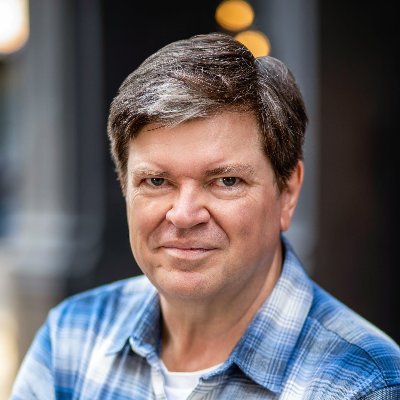
Specialist in international security | human security | arms control | conflict analysis | conflict prevention & management | Gratuate from University of Geneva
A lire: Mon récent article sur la stratégie commune pour la CEDEAO de prévenir efficacement le terroriste en Afrique de l'Ouest. A partager avec amis, proches, collègues et partenaires pour atteindre un plus grand nombre de personnes de référence.
https://t.co/af0MWA8qXt
Les grandes figures façonnent l'avenir en laissant des récits mémorables. Construis ton chemin avec détermination pour inspirer les générations futures.
L’histoire ne retient pas seulement les dates et les victoires. Elle retient les récits. Marie Curie en isolant le radium, a laissé l’histoire d’une persévérance qui a ouvert les laboratoires aux femmes. Nelson Mandela mettant fin à l’apartheid a légué le récit d’une réconciliation plus forte que la vengeance.
Ces figures deviennent grandes parce que leurs actes dépassent leur époque et leurs choix créent une grammaire nouvelle.
D’autres, plus tard, conjuguent leurs propres verbes à partir de cette expression. Façonner l’avenir, c’est laisser un récit assez solide pour que quelqu’un d’autre puisse y poser les pieds.
Par conséquent, construis ton chemin avec détermination pour inspirer les générations futures. La détermination sans direction s’épuise vite. Choisis une cause qui te dépasse. Pas forcément glorieuse.
Il est important de savoir pourquoi on avance en acceptant l’aspérité. Aucune trace mémorable ne s’est faite en ligne droite. Les échecs, les détours et les refus font partie du matériau. Ce sont eux qui donnent du relief au récit qu’on laissera. La détermination ne réside pas dans l'absence de chute, mais dans la capacité à se relever. C’est décider de la valeur de chaque chute.
On inspire peu avec des slogans. On inspire avec de la cohérence en prônant l’audace et des risques mesurés. Par exemple en défendant la solidarité, on doit la rendre visible dans son agenda afin que les générations futures regardent moins des discours que l’emploi du temps. Ainsi on montre que c’était possible.
À d’autres de réinventer la suite avec leurs outils, leurs luttes, leurs codes. L’héritage le plus fertile est celui qui laisse de la place.
L’avenir se nourrit des histoires qu’on lui raconte. Assure-toi que la tienne donne envie de prendre la plume à ton tour.
Dans quelle mesure le leadership participe de manière significative à l'efficacité du travail en équipe ?
Le leadership efficace repose sur la collaboration d'équipe, en considérant que l'union de plusieurs compétences peut donner des résultats exponentiels, bien au-delà de la simple addition de 1+1+1 qui fait 5 ou 6 et non pas 3.
Vous vous demandez peut-être pourquoi. Dans cet article je vous apporte des éclaircissements.
La complémentarité des compétences montre que nul n'est parfait dans tous les domaines. En équipe, les différentes forces se complètent pour atteindre un résultat plus robuste que celui obtenu par un seul profil.
C’est pourquoi les États doivent conjuguer recherche, administration, communication et terrain pour maximiser l’impact de leurs politiques publiques.
Le leadership participatif aide à réduire les angles morts. Lorsque le travail est réalisé individuellement, la vision du problème est limitée et biaisée tandis que le travail d'équipe permet de confronter les hypothèses et de stimuler le débat. Les erreurs sont plus rapidement mises en évidence et les solutions sont évaluées sous plusieurs angles, notamment grâce au principe de la relecture croisée et du débat constructif.
En leadership, il est crucial d’être résilient, complémentaire et de partager les responsabilités pour gérer efficacement les situations inattendues. Lorsqu’un membre est bloqué ou absent, la charge de travail mentale et opérationnelle est répartie entre les membres pour prévenir l’épuisement professionnel et assurer la continuité.
Le leadership collaboratif renforce les capacités d’apprentissage du leader, l’aidant à observer les autres, leur façon de présenter les choses et leur capacité à gérer les conflits.
Un leader collaborateur est un élément clé qui démultiplie le dynamisme, la crédibilité, le réseautage et l’action, influençant ainsi les décideurs publics et institutionnels en faisant montre des fondements tels que la confiance, l’écoute et la clarté dont leur absence conduit les collaborateurs à la lenteur et à l’improductivité.
En conclusion, il revient à noter que le leadership participatif est indispensable dans une équipe, car il constitue un levier efficace pour aborder et résoudre des problèmes complexes.
Hello everyone,
At the beginning of the New Year, I wish you a Happy New Year 2026. Health, Peace, Love and prosperity in all respects. Let’s meet again soon for new fruitful and wonderful adventures.
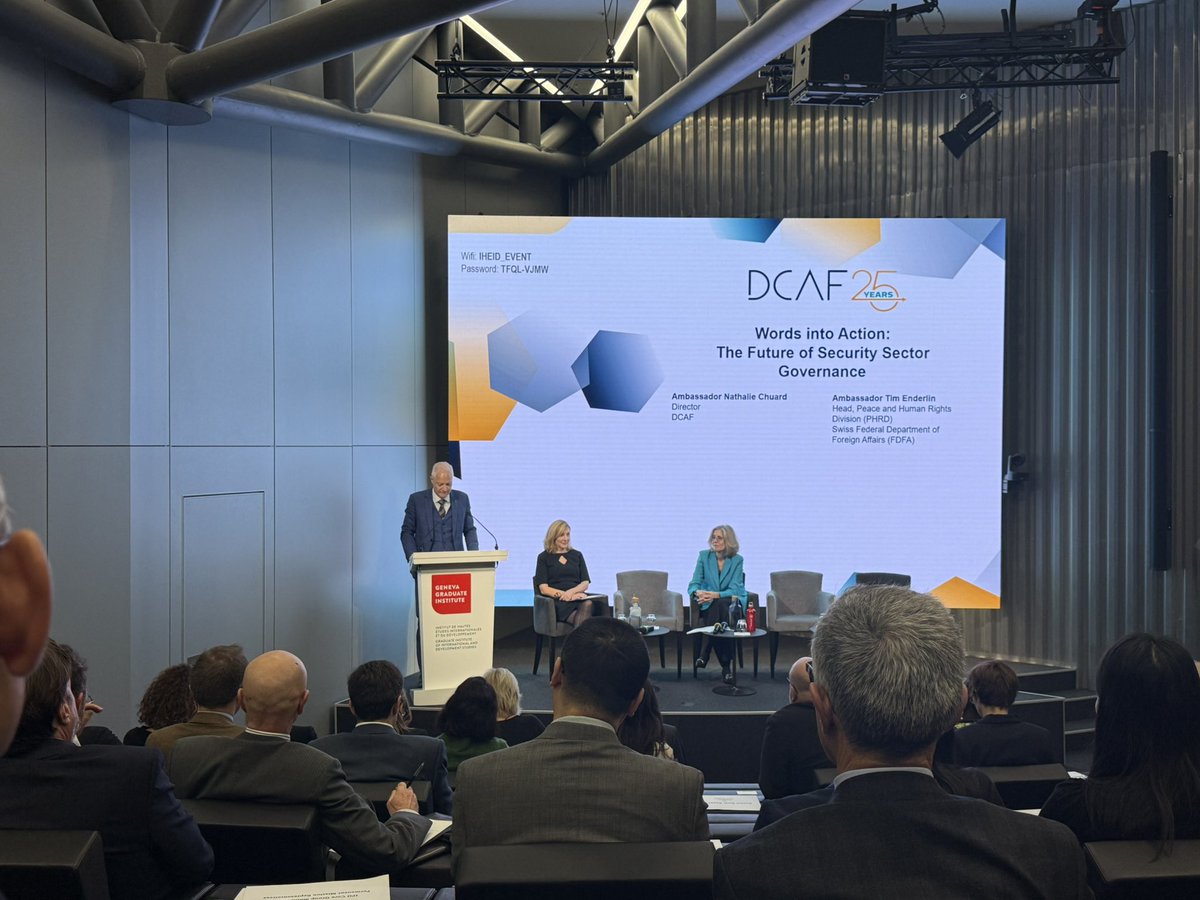
What future for security sector governance in a changing world?
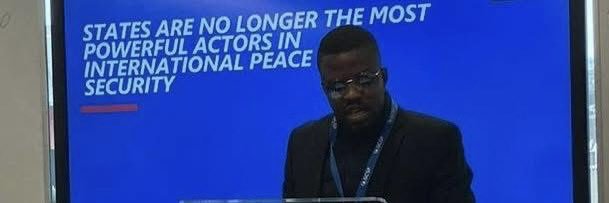
In Geneva, on November 27, I had the honor of participating in the meeting of leading experts from around the world to reflect on security governance.
The event organized by the @DCAF_Geneva - Geneva Centre for Security Sector Governance as part of its 25th anniversary made it possible to discuss three crucial themes.
The first theme focused on the role of security sector governance in a changing geopolitical world, as a tool for promoting peace and sustainable development and human dignity for all.
The second point, devoted to Syria, Lebanon and the Middle East, made it possible to explore mainly the context of the changes that have recently taken place in Syria and Lebanon.
This session, which challenged conventional approaches to security sector governance, also explored in point 3, the security sector's barriers to global and inclusive security.
The event, which took place around a round table, reviewed the approaches to inclusive solutions for lasting peace and security.
African regionalism at the service of partisan politics and tribalism: The case of the Cameroon in brief.
After 60 years of national sovereignty, in many African states, regionalism supposed to contribute to the enhancement of resources and wealth and to local cultural development would be transformed into a political project with a tribal connotation for sustainability in power.
Ethnic attribution of political and administrative responsibilities has not contributed to strengthening the issue of representativeness and the pillars of democracy and good governance.
This phenomenon, which has become a strategy for coordinating public affairs, has long hampered social cohesion, national unity, community, peace and stability.
For example, the permanent assignment of the post of Prime Minister to the English-speaking elites did not prevent armed conflict in the two English-speaking regions of Cameroon.
In addition, the appointment of an Anglophone to the post of Minister of Territorial Administration (MINAT) was not enough to resolve a crisis that has lasted for a decade.
The coptaion of certain elites in the far north is now proving utopian when it comes to the electoral loyalty of the inhabitants of the North in the re-election of President Paul Biya to the power for 42 years.
French version below
#Madagascar:
The situation remains confused.
The Capsat - a logistical support unit of the armed forces that rallied the demonstrators, appointed and installed its new chief of staff, General Demosthene Pikulas, in the presence of the Minister of the Armed Forces.
From now on, all decisions come from the headquarters of this unit, which reiterates to side with the demonstrators, thus rejecting any idea of a military coup.
President #AndryRajoelina, tending to take back control, denounces an illegal seizure of power by force.
The rest, see you soon!
#Madagascar:
La situation demeure confuse.
Le Capsat - une unité de soutien logistique des forces armées qui a rallié les manifestants, a nommé et installé son nouveau chef d'état-major, le général Démosthène Pikulas, en présence du ministre des Forces armées.
À partir de maintenant, toutes les décisions proviennent du quartier général de cette unité, qui réitère s’être rendue du côté des manifestants, rejetant ainsi toute idée d'un coup d'État militaire.
Le président #AndryRajoelina, ayant tendance à reprendre le contrôle, dénonce une prise illégale du pouvoir par la force.
Le reste, à bientôt !
Cameroun: Presidential elections october 2025.
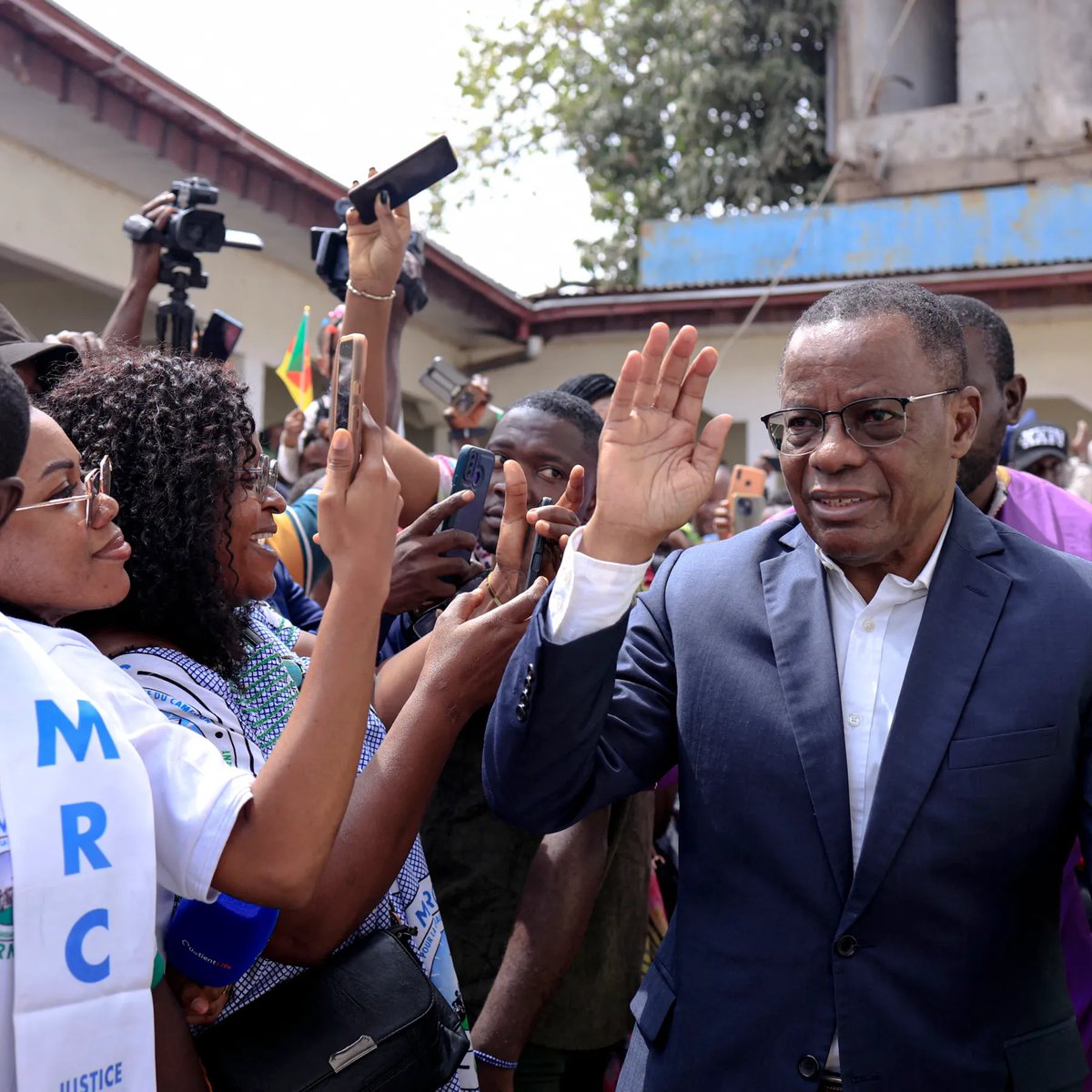
#PaulBiya, outgoing president, candidate for his own succession, after exercising his civic duty, said he could not make projects without being sure of being re-elected.
French version below
Madagascar:
If the situation remains to be clarified, as for the seizure of power by the armed forces, a group of soldiers would have at least rallied the protest movement, refusing the order to shoot at the demonstrators.
We will get back to you for the rest!
Madagascar:
Si la situation reste à clarifier, quant à la prise de pouvoir par les forces armées, un groupe de militaires aurait tout au moins rallié le mouvement de protestation, refusant l’ordre de tirer sur les manifestants.
Nous vous reviendrons pour la suite!
Cameroon:
Any mandatory mandate is void. The exercise of the function of Member of Parliament is representative. We may have boycotted the legislative and municipal elections and joined a representative political party to pretend to have elected officials,... what else do I know?
And all this to ultimately tell the Cameroonian that everyone is free to vote for whoever he wants.
Those who said that these debates had no place and that they were false debates were not wrong?
Wasn’t RFI radio wrong to say what we all heard?
After the October 12 elections, I will give you an appointment in a zoom program to explain what escaped the Cameroonian scientific civil society that carried these debates.
I will also tell you where the game of democracy has taken a hit in this electoral process.
See you soon!
Thierry K’pele
PhD candidate in political science
If no democracy is perfect for some and for others, each country would have its own democracy, it is the promotions of the incoherent foundations that the architects of each camp would like us to approve.
Otherwise, the identity of democracy, the universality of the fundamentals, if it is observed in implementation, would be the political model that would underlie good governance.
However, everywhere in the world and in Africa in particular, it is still gangrenous by a partisan policy, because of its many aspects, especially tribal, ethnic, regionalist and religious, which are not perceived as a diversity of richnesses to be taken into account in the political architecture of the continent as a whole.
Thierry K’pele
Geneva, August 20, 2025
When the fight against corruption must cost life in Africa.
He was murdered for refusing to be bribed by traffickers who tried to import spoiled rice into Rwanda.
It all began in July 2007 when two days after his kidnapping, the bloody and mutilated body of Floribert Bwana was discovered in the courtyard of a university campus in Goma in the Democratic Republic of Congo.
At only 26 years old, Floribert, recently graduated, had just started his job as a customs officer, which lasted only three months.
Last year (2024), he was declared a martyr by the Catholic Church and will be able to be canonized. His killers have never been arrested.
Thierry K’pele
Geneva, August 5, 1025
How did Africa understand democracy?
This question deserves to be asked since the 3rd wave of military coups that have shaken Africa over the past five years.
In addition to revealing the fragility of democracy in Africa, this new wave has highlighted two new phenomena.
1. Popular support for military coups (Sahel) in West Africa.
2. The civilization of the transitional military regime and the creation of a political movement to continue to govern (Central Africa).
Given the dynamics of African democracy (1990 - 2025), it is more necessary than ever to increase efforts to strengthen democracy on the continent.
This is the foundation of my commitment to contribute to scientific research.
@t_kpele
Togo : Dans cette séquence , je fournis une analyse des raisons pour lesquelles l’idée d’un régime militaire n’est pas une option pour l’alternance politique au #Togo. À écouter jusqu’à la fin.
Understand why the military coup option is not a solution to alternating power in Togo.
My intervention is of an educational nature in order to prevent such scenarios. I would therefore like to draw the public's attention to the situation Togo is currently experiencing.
Since the events of 6, 26, 27 and 28 June 2025, during which 7 Togolese died, there has been much discussion on social networks about popular demonstrations. As a specialist in security issues, I have tried to reveal the reasons or motivations that led people to support military coups in Burkina Faso. When you look at the political history of Burkina Faso, the poor implementation of human security is the factor that favours popular support for coups d'état that were once condemned. The increasingly degrading living conditions led the population to rise up and say NO to a regime that seemed to be a democracy. It should also be said that Burkina-Faso has experienced several military regimes.
In Ghana, Jerry Rawlings came to power in 1981 and set up the Provisional National Defence Council. With this Council, Rawlings led the transition and organised the elections. Through Rawlings, Ghana entered DEMOCRACY with full force. We all know where Ghana is today in terms of Democracy. Elections are regularly held without the violence seen in other African countries.
In the case of Benin, after independence in 1960, there were several military coups between 1963 and 1972. When Mathieux Kérékou came to power, he introduced democratic governance. The coups d'état that took place in Benin helped to strengthen democracy, as Benin subsequently went through several rounds of elections, and just a few days ago President Talon announced that he would be stepping down at the end of his term.
However, in the case of Togo, the most notable coup d'état was that of General Gnassingbé Eyadéma in 1963, which lasted 38 years. In the past, Togo has not experienced coups d'état that have met with popular support or that have been voted through so that there is no national reference for regime change.
For this reason, I would remind you that the factors that lead to military coups, military rivalries, rivalries between the military and the ruling regime and military interventionism are different from those that lead to popular support for coups d'état. If, when the country is on the verge of exploding, the constitution entrusts the military with the task of restoring institutions, it is not necessary for the military to stage a coup d'état in order to remain in power.
Envisioning a military coup will not save the day. Rather, it will set the country back at least 50 years.
By @t_kpele
Geneva, 07 July 2025
Recap: Understanding the context of the recent popular protests in #Togo:
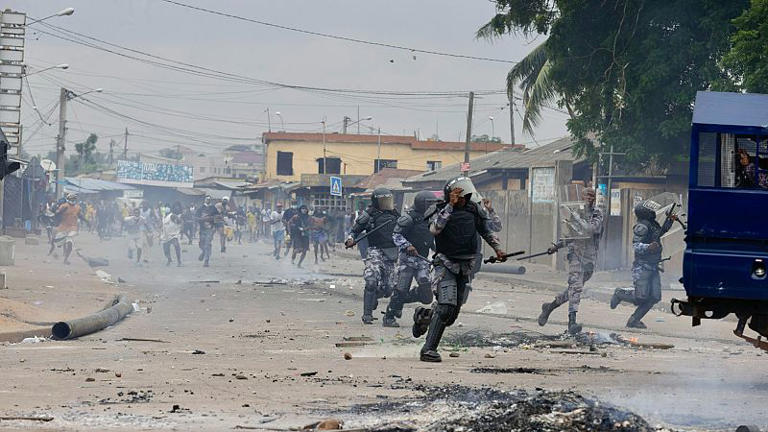
On June 6, 26, 27 and 28, popular demonstrations against the ruling regime took place in Lome.
Recall that on May 6, a year after the adoption of a new constitution by a National Assembly whose mandate was over, Togo was fully entering a 5th republic. A new political architecture without popular consultation and consent.
Thus, in several districts of the capital, the population, most of the young people have multiplied protests through the capital to demand the resignation of Faure Gnassingbe, former President of the Republic who became President of the Council with full power and without limitation of mandate, while the function of the one who is designated President of the Republic is only symbolic and honorary.
To understand these social movements, repressed by the defense and security forces deployed in large numbers, the governance favoring the deterioration of the living conditions of the Togolese are the main causes.
The adoption of a new constitution and the entry into a 5th republic in such a context reveal to the eyes of the majority of the population that the ruling elite seems to give priority to its sustainability in power, thus ignoring the real problems faced by the Togolese.
What is perceived by many citizens who are calling for his resignation is that the Faure regime in place since 2005 no longer seems to have the margin to continue governing.
These popular grumblings violently repressed as usual by the defense and security forces and groups of armed individuals revive the ongoing political crisis in Togo. Events likely to provoke the plebiscite of the army's seizure of power. A situation that leaves no Togolese indifferent, regardless of the political edge, even if some, out of fear for their lives or their benefits, preferred to turn into cemetery silence.
To prevent the reproduction of this new phenomenon that took place in Burkina-Faso, Mali and Niger, I chose to conduct an academic work on the theme: "The deficiency of human security policy in Africa: a factor of the popular support for coups d'état in the Sahel states - Case of Burkina Faso".
Today, the story seems to be revealed following the evolution of the demonstrations that shook Togo in June and that could continue on July 1, especially since for the moment, it is difficult to predict a concerted outcome.
Bern, June 30, 2025