Everyone wants multi-baggers.
Few have the patience to hold them.
Compounding only works if you don’t interrupt it.
Lesson from The Joys of Compounding by Gautam Baid
#Investing#LongTerm#Compounding
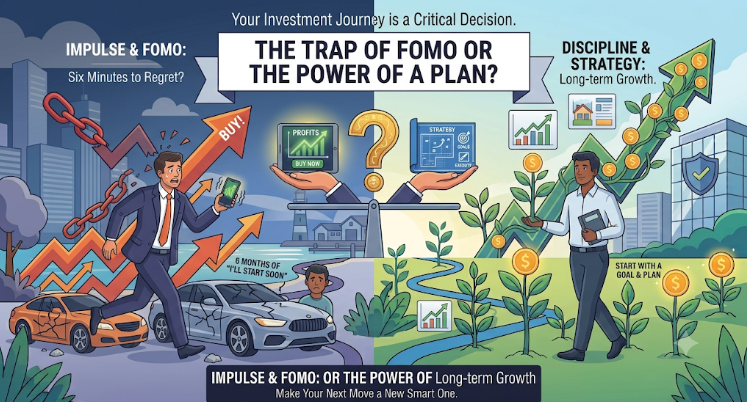
Six months of “I’ll start soon.” One profit screenshot, and you’re ready in six minutes.
That’s FOMO making the decision for you.
Would you rather start with a goal and a plan—or buy because someone else made money?
You can earn ₹50 lakh and still live pay check to pay check
A raise helps. So does the habit of keeping some of it: spend less, build an emergency fund, invest consistently, and resist new EMIs.
If you had to master one first, which would you choose—earning more or keeping more?
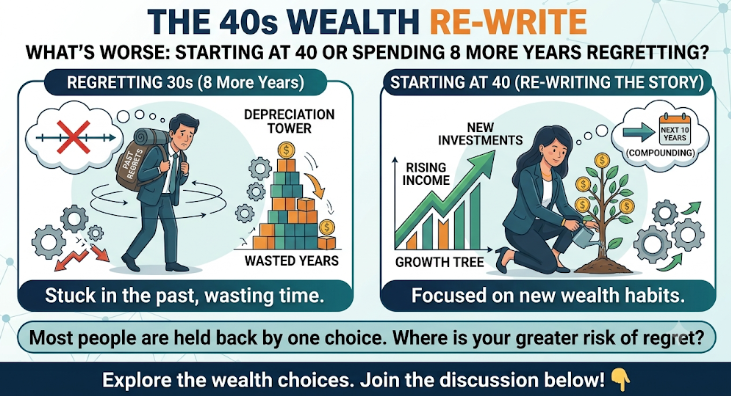
Wasted your 30s financially? Your 40s can still rewrite the story.
You don’t need the perfect past. You need disciplined investing, rising income and time for compounding.
What’s worse: starting at 40 or spending another 8 years regretting 30?
Need the money next year? Don’t put it where next year’s market decides its value.
Investing isn’t just about returns. It’s about time.
No time horizon = speculation.
Clear time horizon = strategy.
What matters more: return or timing?
High income alone won’t make you wealthy.
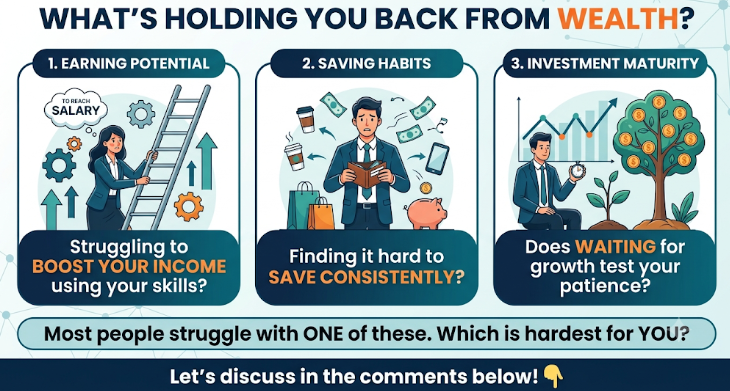
You need 3 things:
Earn with skill.
Save with discipline.
Invest with patience.
Most people fail at one.
Which is harder for you: earning more, saving consistently, or staying invested?
Your first 5 earning years can make or break your wealth.
Don’t rush into a house or lifestyle upgrades. Build cash flow. Get insured. Invest aggressively. Borrow to scale, not experiment.
First big goal: House or Investments?
The most expensive investing mistake? Refusing to admit you were wrong.
Money already invested is gone. The real question is where your next rupee should go.
Sometimes holding takes patience. Sometimes exiting takes courage.
Which is harder?
Being broke isn’t the most dangerous financial state. Staying stuck is.
A low bank balance can change.
But “I’ll never get ahead” can stop you from saving, investing, learning—and trying.
What’s harder to escape: an empty wallet or a defeated money mind-set?
Your salary package is the number that impresses people. Your bank credit is the number that runs your life.
CTC sounds exciting. Take-home pays the bills.
But what you invest builds wealth.
Which number matters most: CTC, take-home, or invested amount?
Your business may be worth more to an outsider than it is to you.
Not because they know your business better.
Because owners see operations.
Outsiders often see untapped value.
Which is more dangerous: missing an opportunity—or not knowing it exists?
Most investors don’t have a stock problem. They have a holding problem.
Buying is easy.
Holding through crashes, bad headlines and boring years is harder.
Great businesses need time, not constant attention.
Which is harder for you: finding a good investment or staying invested?
A falling stock isn’t automatically a bargain. Sometimes it’s a warning.
During a crash, ask one question:
Did the price collapse—or did the business?
Strong business + temporary selling pressure can create opportunity.
Cheap price ≠ good stock.
What do you check first?
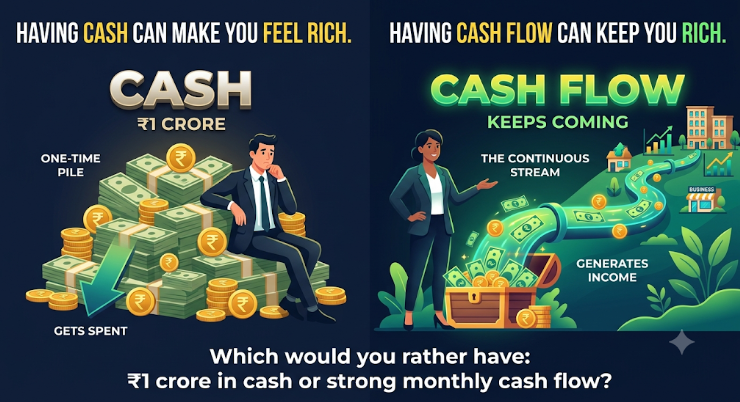
Having cash can make you feel rich. Having cash flow can keep you rich.
Cash gets spent.
Cash flow keeps coming.
Don’t just build a pile of money. Build assets that can generate income.
Which would you rather have: ₹1 crore in cash or strong monthly cash flow?
Getting rich isn’t about luxury. It’s about having choices.
The goal isn’t to impress people. It’s to reach a point where money stops controlling every decision you make.
Would you rather look rich—or have the freedom wealth can buy?
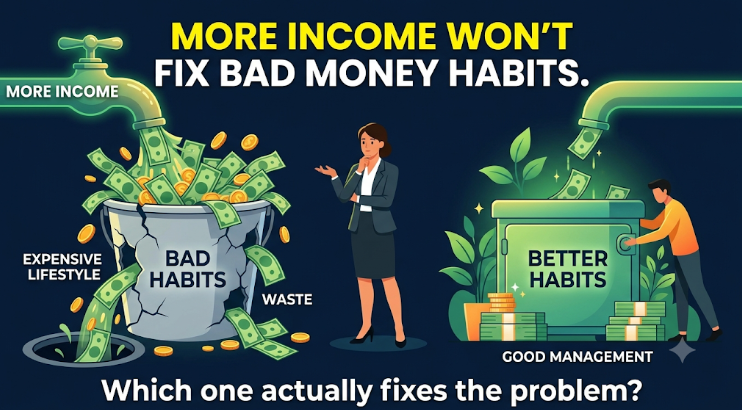
More income won’t fix bad money habits. It may just make them more expensive.
Before chasing a bigger salary, learn to manage what already comes in.
More money or better habits—which one actually fixes the problem?
A bigger house can actually buy you LESS freedom.
Owning a modest home outright at 45 can feel richer than paying EMIs on a dream home until 70.
One gives you status. The other gives you breathing room.
Which would you choose: a bigger house or an earlier debt-free life?
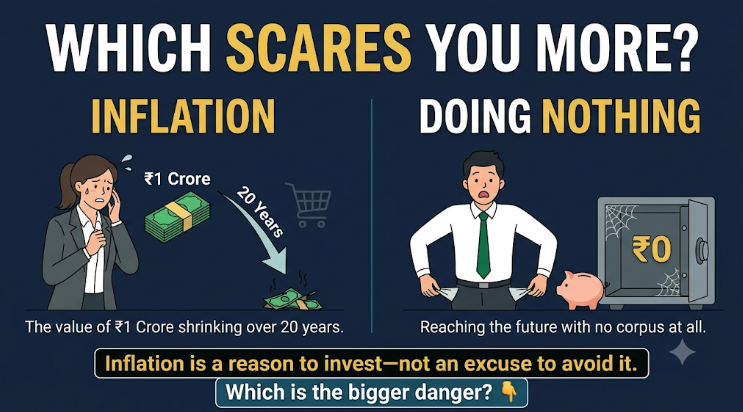
Inflation is a reason to invest—not an excuse to avoid it.
Yes, ₹1 crore in 20 years won’t buy what ₹1 crore buys today.
But doing nothing guarantees your cash loses purchasing power.
Which scares you more: inflation—or reaching the future with no corpus at all?
There’s a point where your money can earn more than you do.
At an illustrative 10%:
₹1 Cr can grow ₹10L
₹3 Cr can grow ₹30L
₹5 Cr can grow ₹50L
That’s why building the base matters.
Would you rather chase a higher salary - or build a portfolio that can rival it?
Trying to find the “perfect” time to invest could be costing you more than a bad entry.
Mutual funds give you diversification without picking every investment yourself.
Choose wisely. Keep costs reasonable. Stay consistent.
What matters more: perfect timing or time invested?
Want more monthly income? Get comfortable being boring.
Spend less than you earn.
Keep the difference.
Put it into productive assets.
Repeat for years.
It won’t look impressive today. The results might.
What’s harder: finding the right investment or staying consistent?