@OurFavOnlineDoc “Settle matters quickly with your adversary who is taking you to court. Do it while you are still together on the way, or your adversary may hand you over to the judge, and the judge may hand you over to the officer, and you may be thrown into prison. ”
Matthew 5:25
🌡️ SUPER EL NIÑO: ARE OUR FARMERS READY? 🌾
Super El Niño could bring unusual heat, changing rainfall patterns, and increased pressure on agriculture. For Nigerian farmers, this is a reminder to prepare early, protect our crops, and plan wisely
Let me do a detailed breakdown of my post of last on why married men need to be careful with their japa decisions or plans.
In Nigeria, when a man is bringing in above N1m every month, he can carry the house on his own.
Rent or mortgage in a decent area, school fees, feeding, light and water, small domestic help, even a driver if he wants.
The wife does not have to chase the same hours just to keep the lights on.
She can work if she wants, or work part-time, or focus on the children and the home without the family collapsing.
Decisions are simpler to make and carry out. He is not waiting on her salary to pay the landlord. She is not calculating whether her contribution gives her equal say on every expense.
The man still leads financially, so the traditional shape of the marriage stays intact. That is the “peace and privileges” part.
Put simply, he is not begging or negotiating from a weak position.
Now move the same couple abroad. The above N1m does not follow them as real spending power.
Rent in London, Toronto or Houston for a family of four is already painful.
Childcare is expensive or non-existent.
Taxes take a big bite.
To live anything close to the life they had, both of them usually have to work full-time, often long hours, sometimes in jobs below what they were doing at home.
Suddenly the wife’s income is not extra; it is now a necessity. When her money is what keeps the family afloat, two things happen:
First, she starts expecting a bigger voice on money decisions, career choices, where they live, how the children are raised.
Second, the man feels the pressure of not being able to provide the way he used to. Arguments about whose money paid for what become common.
Resentment builds on both sides. He feels like he has lost the role he was used to. She feels like she is carrying weight she did not sign up for when they were still in Nigeria.
People like to say “we will both earn three times more and everything will be fine.” In practice the extra money is often swallowed by the higher cost of living, so the net improvement is smaller than they imagined.
Meanwhile the marriage is now running on two full-time jobs instead of one solid provider and a supporting partner.
That is a different marriage.
Studies and everyday observation both show that when the wife’s earnings match or exceed the husband’s, the chance of separation goes up.
Not because money is evil, but because the old agreement about who provides and who decides has been rewritten without anyone admitting it. Many couples cannot manage the new version.
Staying in Nigeria with a solid income keeps the original agreement alive. The man remains the main provider. The wife still has status and comfort without having to trade her time and energy for survival money.
Family life is less stressed, and there is more room for respect in the direction the man is used to receiving it.
That is why my advice is to stay and keep building rather than chasing the idea that relocation automatically makes both of you richer and happier.
For many, it just makes both of you tired and less sure who is in charge of the house.
I hope you now understand better.
End.
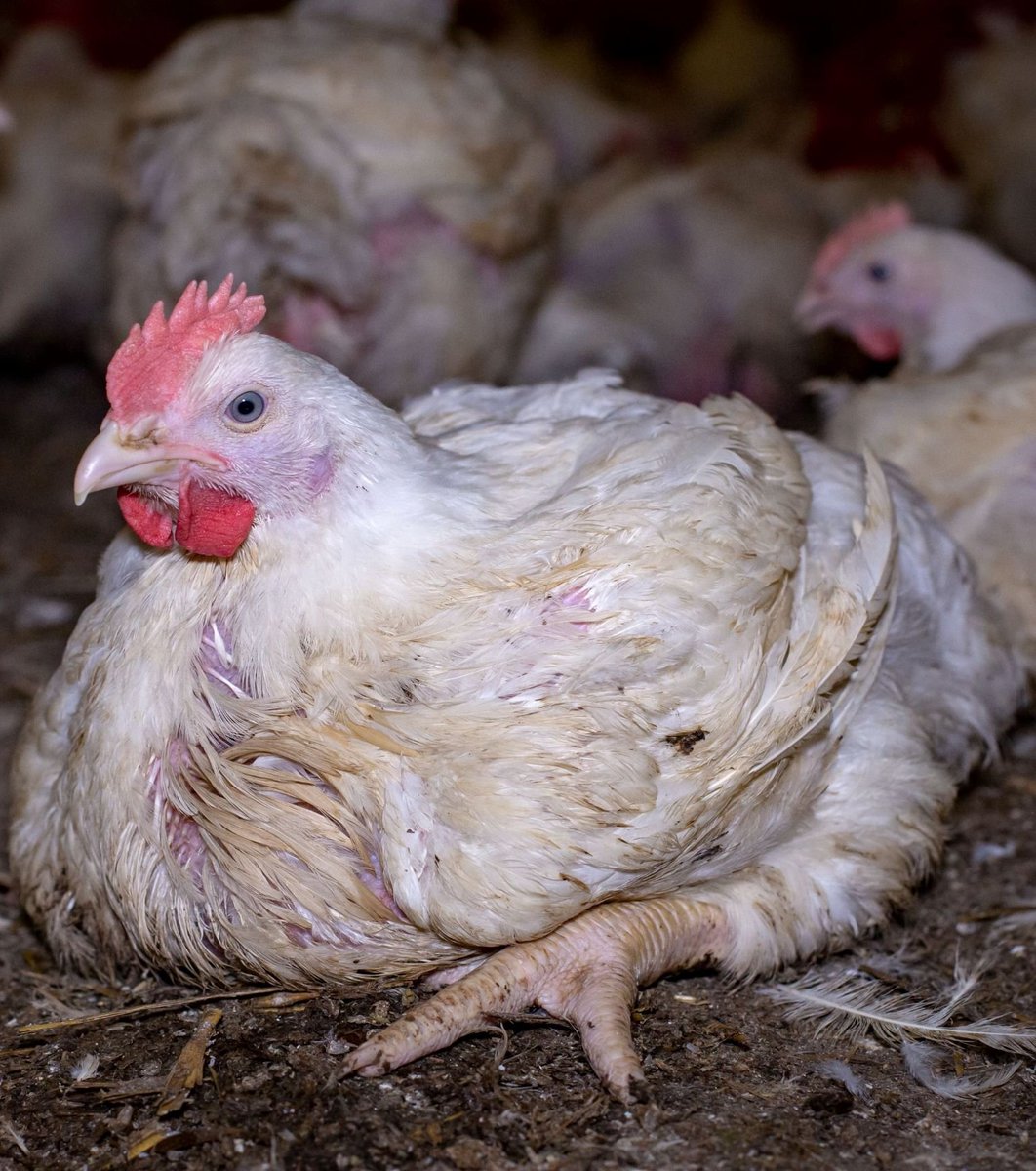
Denmark is moving to ban Frankenchickens — the first country in the world to do so.
What we’ve done to chickens is the largest genetic experiment ever run on any animal, and one of the most troubling.
Geneticists took a scrawny bird and engineered an obese meat machine. The chickens we eat today grow four times faster than chickens did in 1957.
But their bodies are not four times stronger. By just six weeks old, many will suffer ailments of old age — heart failure, organ colapse — while one in four will become lame (Knowles et al., 2008).
In studies, lame birds will choose feed laced with painkillers — a sign of chronic pain (Danbury et al., 2000).
Their parents meanwhile are kept on starvation rations. Birds engineered to grow this fast would otherwise eat themselves to death before laying a single egg.
We now breed over 70 billion of these birds a year. Denmark is acting to reverse this giant genetic experiment. The rest of the world should follow suit.