Agile exists because people can work very hard implementing a feature that some client will feel is a bug.
Waterfall exists because people have faith in rituals that allow you to read their minds and predict the future.
Both can devolve into having no real communication.
Context length for LLMs is going to the moon, but the real challenge is finding context when there is none. How to develop attention on top of a trusted platform. Self-hosted models seem to be the only ones we can have some real alignment with.
I built a new tool! It's a single page web app that runs OCR against images and PDFs entirely in your browser (no file upload needed) using Tesseract.js and PDF.js
You can drop files onto it, or you can click to select and open them (which works on Mobile Safari as well)
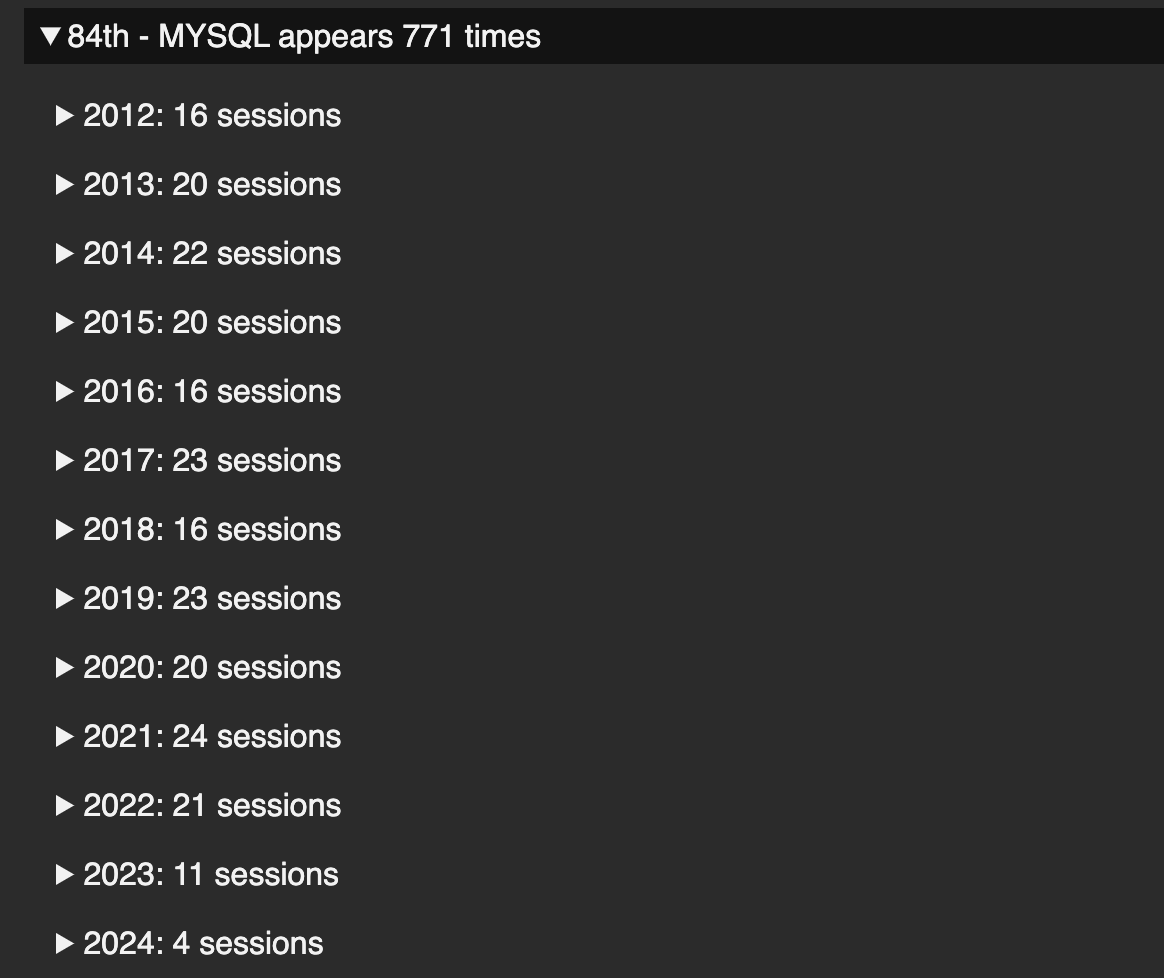
Looking at keywords from #FOSDEM schedules since 2012 and I might put this on a repo for other people to play with as well. Curious to see how certain topics evolve, like what happened to #mysql recently.
Knowledge can be shared freely but it still can’t be gained for free. We often need to be exposed to a concept multiple times before finding some wisdom in it. Open information empowers people and creates opportunity to add value by helping them make sense of it.
One positive thing coming from language models is opening up the problem of you being able to create anything if you can clearly specify what you want and follow-up on that. Addressing ambiguity across time is at the core of what programming is.
Ironically, programmers are in one of the best positions to get scared by #LLMs because we understand how phrasing our prompts can move us towards better results. Other people just bounce off the friction of having to think about their prompting.
Techbros: have machines generate cheap eye candy just to get better reach on social media.
Artists: immediately give these dumb generated images the title of “art”.
Sure, eye of the beholder and anything can be art, but why start an already unfair match with an own goal?
Business models can make or break software. Apps like Slack or Trello were doing fine until they were no longer being made for their users, but for the people who pay for their enterprise pricing.