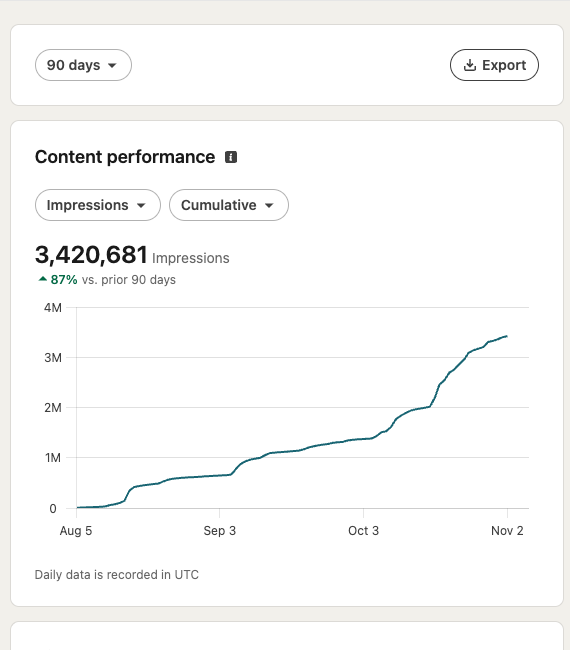
O to 20,000 followers on LinkedIn in 4 months. Booked a meeting with BlackRock.
Starting at 0 on X today. 99% of Al content on social generates zero enterprise pipeline.
What actually booked institutional pipeline came down to three things:
Goodbye, Carta.
The cap table math you pay five figures a year for is arithmetic your own AI now does with a full audit trail.
Every fund I talk to has the same line item. Cap table platform, fund admin add on, per stakeholder fees, and a renewal that climbs every year. The work underneath: ledger math, waterfall logic, pro forma scenarios, and documents generated from templates.
So we built the desk in your own files:
→ Keep the cap table ledger like a fund controller
→ Run the waterfall by hand against the LPA, clause by clause
→ Model the next round like a VP walking the board through dilution
→ Check management fee and carry math like an LP's auditor
→ Draft the pro forma the lawyers actually mark up
→ Tie every share count to the signed doc it came from
The walkthrough is simple. Drop the signed docs and the ledger in. It rebuilds the table from the documents, not from what someone typed last year. Then it prices the next round three ways and shows which term moves your dilution most.
The work you rent costs:
- Fund controller: $180k a year
- Fund admin analyst: $95k a year
- The platform: five figures, forever
Your cap table is a spreadsheet with lawyers. It was never a platform.
Stop renting your own ledger back.
Rebuild the table. Check the waterfall. Keep the fee.
Most people will read this, nod, and keep paying the renewal.
The ones who rebuild one cap table from the signed docs this week will know their real dilution before the next round.
Free access
Your quant costs $180,000 a year. He rebuilds the tear sheet by hand for every allocator.
Not the strategy. The document around it. Those are two different jobs, and the allocator reads the second one first.
A quant launched an asset manager with two partners and a strategy that works. Every allocator request means a backtest in a spreadsheet, an export, a script, and a document rebuilt by hand. Days, per request.
So we built the desk that produces the document:
→ Backtest on your own history like a quant researcher, not a spreadsheet
→ Stress it against its worst windows the way an allocator will
→ Price execution costs like a trading desk, so the paper return survives
→ Check the allocation is efficient before someone outside the firm does
→ Grade every model against SR 11 7 rules like a bank validation officer
→ Write the one page brief the way an investment committee reads
The honest part. Backtests stay labeled hypothetical, every statistic stays a live formula, and the data never leaves your machine.
This is the work you pay for today:
- Quant analyst: $180K/year
- Reporting and analytics platform: five figures a year, per seat
- The real cost: a three person firm that reads like a three person firm
Most emerging managers watch the wrong scoreboard. They polish the strategy. The allocator reads the document.
Run the backtest. Build the sheet. Look like the firm you are becoming.
Most people will read this, nod, and rebuild the pack by hand again.
The ones who automate one tear sheet this month will be pitching while everyone else is formatting.
I'm giving away the entire tear sheet desk. It's in the first reply.
Goodbye, Bain.
Not the 100 day plan. The checking after it. Those are two different jobs, and nobody does the second.
The plan gets priced into the deal. Then the board packs arrive, each with its own format and its own EBITDA definition. By the time anyone checks, the plan has been rebased twice.
Accordion's survey, reported by https://t.co/qzULAHusEE: 74% of PE operating partners call budgeting the top AI opportunity in finance. 84% of the CFOs they back still build it in Excel.
So I pointed Claude at the board packs the fund already receives:
→ Turn every board pack into one table, cited to the page, like a fund controller
→ Put actuals next to the underwriting case, not the rebased plan, like the deal associate
→ Rank the book by months of runway like a lender's credit analyst
→ Size the gap between covenant and reported EBITDA like a leveraged finance banker
→ Write three board questions per portco, like an operating partner
→ Re derive the roll up cold, like a reviewing principal
The honest part. It reads what management reported. It does not audit it, and it is not a valuation.
This is the work you pay for today:
- Financial analyst, median: $102,740/year
- Financial manager, median: $166,570/year
- The real cost: a miss found at exit, not at the board
Most funds watch the wrong scoreboard. The number that matters is the gap to the case you paid for.
Load the packs. Check the case. Ask the question.
Most people will read this, nod, and retype the board packs next quarter.
The ones who check one portco against its case this month will ask the question management hoped to skip.
I'm giving away the entire portfolio monitoring desk. It's in the first reply.
Goodbye, Goldman research desk.
Not the research. The wait for it. Those are two different products, and the note a desk bills six figures for still lands after the open.
Every allocator waits on the same morning note. While you wait on the desk, the desk is waiting on the data.
So I stopped waiting. The note writes itself on my own machine before I wake up, and my positions never leave it:
→ Score the regime, risk on or risk off, like a cross asset strategist
→ Put every market the book touches on one screen like a macro PM
→ Flag sovereign and country risk like an emerging markets analyst
→ Catch the macro shock in the hour it breaks like an overnight hedge fund desk
→ Write the brief your IC reads in two minutes like a Goldman research associate
→ Grade its own regime call before it sends, like a risk officer
The honest part. The first version was confidently wrong twice. It called risk on into a tape that was rolling over, because it leaned on one feed it should not have. That is why it grades itself now. It is a read, not a trade.
Staffing that costs:
- Macro research analyst: $150K/year
- Markets strategist: $300K/year
- A full research desk: $1M+/year
Most allocators watch the wrong scoreboard. The edge is not reading the note first. It is owning the desk that writes it.
Read the regime. Skip the subscription. Brief your IC first.
Most people will read this, nod, and wait on the desk again tomorrow.
The ones who run one local morning note this week will brief the IC before the desk has pulled the data.
I'm giving away the entire morning note desk. It's in the first reply.
BREAKING: AI just collapsed the merger model from a two-week associate build to an afternoon.
Not the modelling. The waiting for the model. Those are two different costs, and a deal team pays for both.
Same build an Evercore associate loses two weekends to, rebuilt every time someone moves the price.
So I pushed Claude to run the accretion dilution workflow a deal team used to hand a first year:
→ Model accretion dilution the way an Evercore associate would
→ Flex the mix of cash, stock and new debt like a leveraged finance banker
→ Find the exact price where the deal stops adding to EPS like a Goldman M&A VP
→ Pull synergies through the pro forma without double counting like a corp dev lead
→ Stress the combined leverage before the credit committee does
→ Show the one assumption the whole deal hangs on like the MD before the board
The honest part. It builds the model. It does not make the call. A synergy case is a guess until someone on your side signs it.
This is the work you pay for today:
- Investment bank model work: $500 an hour
- Junior IB analyst: $150K/year
- The real cost: two weeks of a live deal with no number
Most deal teams watch the wrong scoreboard. The associate hours were never the moat. The judgment on top of them is.
Feed the two companies. Read the accretion. Price the deal.
Most people will read this, nod, and hand the model to a first year again.
The ones who run one live deal through it this week will bring the breakeven price to the partner meeting.
I'm giving away the entire merger model kit. It's in the first reply.
Goodbye, TradingView Premium.
Not the charts. The 11pm tab marathon around them. Those are two different jobs, and the subscription only does the first one.
It is 11pm. You have 40 tickers open. RSI, MACD, the weekly, then the daily. By chart 31 you are scrolling, not reading. Tomorrow you act on it anyway.
So I handed the whole watchlist to Claude. No charting account. One note comes back:
→ Read the S&P, VIX, gold and the dollar like a bulge bracket morning strategist
→ Run RSI, MACD and Bollinger on all 40 names like a sell side technical analyst
→ Check weekly against daily against the 4 hour like a prop trader
→ Mark each name up, down or range like a quant at a systematic fund
→ Backtest the setup you trust like a risk manager at a multi strategy fund
→ Kill the setup that only worked in hindsight like a bank model validator
The honest part. It will not tell you what to buy, and it will not place a trade. The walk forward test can fail the setup you love. That stings. It is the point.
The seat you are standing in for:
- Financial and investment analyst, US median: $102,740/year
- Financial risk specialist, US median: $117,330/year
- The real cost: 40 charts read with tired eyes
Most traders watch the wrong scoreboard. The edge is not one more indicator. It is the setup you killed before it cost you.
Paste the list. Read the flags. Go to bed.
Most people will read this, nod, and open tab 41 tonight.
The ones who run one night review this week will go to bed with flags instead of tabs.
I'm giving away the entire chart desk. It's in the first reply.
Your PitchBook seat costs $25,000 a year. Every other bidder is working the same list.
Not the database. The companies that were never in it. Those are two different searches, and most deal teams pay for the first and never run the second.
The founder and family owned companies that trade at a lower multiple never show up, because their deals were never published.
So I built a desk that goes looking where the database does not:
→ Map the real market from the open web and trade bodies like an associate at Audax
→ Screen founder and family owned fits against your mandate like a VP of business development
→ Cut the ones a sponsor already owns like a principal at Thoma Bravo
→ Verify who actually owns the company like a diligence analyst at Kroll
→ Build a checked contact and a one page brief like an origination lead at Blackstone
→ Refresh the pipeline every week and flag the triggers worth acting on
The honest part. It will not give you valuation comps or fund returns. Keep the seat for that. A human signs off every brief before any contact is used.
This is the work you pay for today:
- Data seat: $25K/year
- Business development associate: $150K/year
- The real cost: bidding on the same ten companies as everyone else
Most funds watch the wrong scoreboard. The edge is not a bigger database. It is the owner nobody else has called.
Map the market. Verify the owner. Make the call.
Most people will read this, nod, and keep exporting the same list as every other fund.
The ones who run one mandate through it will find a company nobody else is calling.
I'm giving away the entire origination desk. It's in the first reply.
Goodbye, AlphaSense.
Not the search. The retyping. Those are two different jobs, and most research teams pay for the seat, a median $18,375 a year, and still copy numbers the SEC publishes for free into a spreadsheet by hand.
9pm, earnings night. The 8-K just dropped and your IC wants a view by 7am. Your analyst has the 10-Q, last year's 10-K and a spreadsheet that will not tie. Then someone asks if the CFO sold stock.
So we built the filings desk inside Claude:
→ Pull three years of standardized statements like a long/short fund analyst
→ Catch every Form 4 insider sale like an event driven PM
→ Read any fund's 13F like a fund of funds allocator
→ Lift Risk Factors and MD&A like a direct lending credit analyst
→ Read 8-K items the same night like a sell side associate
→ Map subsidiaries and the auditor like a forensic accountant at a short seller
The honest part. No advice, no trades, no expert calls, no broker research. It reads SEC filings. Install once, give the SEC an email, no key, and it answers from the filings.
Each of these replaces output that costs:
- Financial analyst, US median: $102,740/year
- Analyst at a securities firm: $124,370/year
- Top 10% of analysts: $180,860+/year
Most research teams watch the wrong scoreboard. They count seats, not the hours spent retyping numbers the SEC already publishes.
Ask the filing. Check the answer. Skip the seat.
Most people will read this, nod, and build nothing.
The ones who build one filings workflow this week will be running circles around them by the next print.
I'm giving away the entire filings desk. It's in the first reply.