☀️ Living to brighten people's days
❄️ Sharing Japanese yokai | Author of "Yuki-onna (Snow Woman)" on Kindle
⚛️ Physics fan via George Gamow
🐾 Dog & cat lover
Now, can your brilliant intellect unravel the mystery of this baffling song? A song’s dark riddle, unbroken for a millennium.What was the true nature of the Yuki-Onna, the terrifying yet hauntingly beautiful Yokai of ancient Japanese legend?A literary horror mystery tracing the razor’s edge of absolute dread and an ancient curse, ultimately yielding to a profound tale of ultimate love and salvation.
👇 Discover the truth via the link in my bio. #JapaneseFolklore #GothicHorror #LiteraryFiction
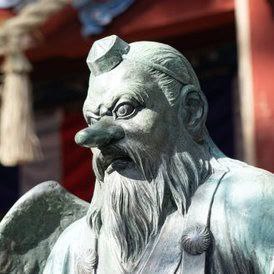
Tengu, a demon from Japanese mythology, has a 1300-year-old origin.
Acc to folklore, Tengu was known for his large nose, a strange tiny hat, inciting wars among the local population, and kidnapping children from villages at night.
Nothing of interest here, now move along...
Indeed, connections to ancient Judaism can be found everywhere in ancient Japan. Speaking of Japan's ancient mysteries, Tengu are mysterious yokai with incredible powers, and I'm actually quite fond of them. In terms of faith and folklore, while they are worshipped as the masters or guardian deities of sacred mountains, they have also been feared as beings that cause mysterious disappearances ("kamikakushi") and supernatural phenomena. Famous examples include Sojobo of Mount Kurama and Tarobo of Mount Atago.
歌川国芳 ↓
Now, can your brilliant intellect unravel the mystery of this baffling song? A song’s dark riddle, unbroken for a millennium.What was the true nature of the Yuki-Onna, the terrifying yet hauntingly beautiful Yokai of ancient Japanese legend?A literary horror mystery tracing the razor’s edge of absolute dread and an ancient curse, ultimately yielding to a profound tale of ultimate love and salvation.
👇 Discover the truth via the link in my bio. #JapaneseFolklore #GothicHorror #LiteraryFiction
確かに可愛い
Ami Nakai has become a hot topic among international media and fans as a rare type of figure skater whose facial features and expressions barely change even while spinning during jumps and spins. When she took the lead in the women's short program at the 2026 Milano-Cortina Olympics, The New York Times' official social media posted a crystal-clear mid-jump photo of her, praising her as a "rare type whose face stays completely unchanged even mid-jump." ⛸️
夜の京都を練り歩く妖怪たちの行進を描いた日本の伝統美術「百鬼夜行絵巻(ひゃっきやぎょうえまき)」。
主役となっているのは、長年使われて魂が宿った古道具の妖怪「付喪神(つくもがみ)」たち。琵琶や鍋、下駄、傘など、身近な日用品が手足を生やして楽しげに、あるいは不気味に行進する姿は、怖さよりもどこかユーモラスで愛嬌があります。
多くの作品には物語を説明する文章(詞書)がなく、見る人の想像力に委ねられているのも魅力のひとつ。そして巻末には、夜の終わりや朝日の到来、あるいは経文の霊力を示すとされる巨大な火の玉が描かれ、妖怪たちが慌てふためいて散り散りになるクライマックスを迎えます。
室町時代の重要文化財・真珠庵本をはじめ、江戸時代にかけて数多くの模写やバリエーションが生み出された、日本人の豊かな想像力と遊び心が詰まった絵巻物です。
The "Hyakki Yagyo Emaki" (Night Parade of One Hundred Demons) is a genre of traditional Japanese picture scrolls depicting a nocturnal procession of yokai (supernatural spirits and monsters) marching through the streets of Kyoto.
At the heart of this parade are "Tsukumogami"—everyday household objects like lutes, cooking pots, wooden clogs, and umbrellas that have gained souls after long years of use. Sprouting arms and legs, these quirky creatures look less terrifying and more humorous, lively, and oddly charming.
Most of these scrolls have no accompanying text, leaving the narrative open to the viewer's imagination. The parade builds up to a dramatic climax at the end of the scroll, where a massive fireball—representing the rising sun or sacred spiritual power—appears, sending the demons fleeing in panic.
From the Muromachi-period masterpiece at Shinju-an Temple to countless Edo-period variations, these scrolls showcase the rich imagination and playful spirit of traditional Japanese art.
#HyakkiYagyo #JapaneseArt #Yokai #Tsukumogami
Indeed, connections to ancient Judaism can be found everywhere in ancient Japan. Speaking of Japan's ancient mysteries, Tengu are mysterious yokai with incredible powers, and I'm actually quite fond of them. In terms of faith and folklore, while they are worshipped as the masters or guardian deities of sacred mountains, they have also been feared as beings that cause mysterious disappearances ("kamikakushi") and supernatural phenomena. Famous examples include Sojobo of Mount Kurama and Tarobo of Mount Atago.
歌川国芳 ↓