Rekomendacje dotyczące badań genetycznych w schorzeniach kardiologicznych o etiologii genetycznej. #Genetyka, #Kardiologia, #Kardiogenetyka
https://t.co/l7khQGNCfp
@blueeyedboy88@Wojtek_Kordyca Doktorze, będzie pracowała w publicznym szpitalu, asystowała do operacji. Nie podał też doktor żadnych informacji czy ma już jakąś specjalizację zabiegową. Szczerze mówiąc chciałbym poznać osobę która się tego podjęła.
Generalnie skala adopcji jest na tą chwilę niska. Dodatkowo nigdzie nie ma 100% przynajmniej obecnie. W związku z tym na razie wygląda to raczej na nowe potężne narzędzie, które moze być wykorzystane do zwiększenia efektywności osób już pracujących. Pytanie czy jak będziemy mieli do dyspozycji tak potężne narzędzia to faktycznie nie zmieni się również zakres zadań. Ilość zadań na pracownika zwiększy się na pewno.
A pediatrician colleague in her 40’s passed away after a short illness. After 15 yrs working at this job:
- No email announcement sent from the hospital.
- No call made to her family.
- No memorial or grief support for the department.
- Her job posted for hiring the next week.
Obviously
The number needed to treat (NNT) for statins to prevent one cardiovascular death is about 1 in 125 over 5 years (depending on baseline risk).
In a lipid clinic, you may see 125 such patients every week or two.
If a clinic effectively initiates and maintains statins in around 5,000 patients that corresponds roughly to:
about 8 cardiovascular deaths prevented per year once the system is steady
or one life saved every 6–8 weeks
That is preventing a father, a mother, a colleague from dying.
The effect builds up in time.
Obviusly
The number needed to treat (NNT) for statins to prevent one cardiovascular death is about 1 in 125 over 5 years (depending on baseline risk).
In a lipid clinic, you may see 125 such patients every week or two.
If a clinic effectively initiates and maintains statins in around 5,000 patients that corresponds roughly to:
about 8 cardiovascular deaths prevented per year once the system is steady
or one life saved every 6–8 weeks
That is preventing a father, a mother, a colleague from dying.
The effect builds up in time.
„Parachutes increase life expectancy by an average of a few seconds, because most people on the plane would have survived the 5 hour flight anyway” 😃
The number needed to treat (NNT) for statins to prevent one cardiovascular death is about 1 in 125 over 5 years (depending on baseline risk).
In a lipid clinic, you may see 125 such patients every week or two.
If a clinic effectively initiates and maintains statins in around 5,000 patients that corresponds roughly to:
about 8 cardiovascular deaths prevented per year once the system is steady
or one life saved every 6–8 weeks
That is preventing a father, a mother, a colleague from dying years too early.
Please don’t give medical advice. If your content convinces high-risk people to skip lipid-lowering therapy, the math scales: with an NNT ~125 over 5 years, a big audience can mean real, preventable deaths. Your reach is far greater than 5,000.
Something big IS happening.
I don't agree with everything Matt wrote, but we need to help people outside of our bubble understand what's coming.
Here's a video breakdown of this incredible article:
@Nevis_q@FinansowyUmysl Też mam taką nadzieję, ale niestety obawiam się że ma wiele wspólnego z naszą inteligencją. My też bazujemy na prawdopodobieństwie w rozumowaniu i ma schematach. Pozdrawiam.
🌟 New insights into cardiovascular proteomics from UK Biobank!
A large-scale analysis of nine key circulating proteins — including ACE2, NT-proBNP, BNP, BAG3, NOTCH1, ACTA2 and more — reveals how genetics, lifestyle, medications and disease interact to shape cardiovascular risk.
🔍 Key findings:
• Strong associations between protein levels and age, sex, ancestry, lifestyle (alcohol, smoking).
• Genetic modifiers identified at GCKR, APOE and SERPINA1, influencing multiple proteins.
• ACE2 emerges as particularly important — higher circulating levels were linked with hypertension and type-2 diabetes, yet Mendelian randomisation suggests a protective causal role.
• NT-proBNP and BNP correlated with structural heart traits, arrhythmias, and future diagnoses of heart failure and atrial fibrillation, reinforcing their prognostic value.
• Individuals carrying pathogenic variants for HCM or DCM showed elevated NT-proBNP, highlighting early biomarker potential.
💡 Why this matters
This work enhances our understanding of the biological pathways connecting proteomics, genetics, and cardiovascular disease — and points toward future opportunities for precision medicine, risk stratification, and biomarker-guided therapies.
#Cardiology #Proteomics #GenomicMedicine #UKBiobank #CardiovascularResearch #PrecisionMedicine #HeartFailure #Hypertension #Biomarkers #NTproBNP #ACE2 #Genetics #AHA #ResearchUpdate
#CardioScience
https://t.co/mVBTPDdmcA
We authored this state-of-the-art review, now published in JACC, to provide an updated, comprehensive overview of post–myocardial infarction inflammatory mechanisms and to critically evaluate the emerging clinical evidence on anti-inflammatory therapies for secondary cardiovascular prevention. https://t.co/cb4VpNHiUy
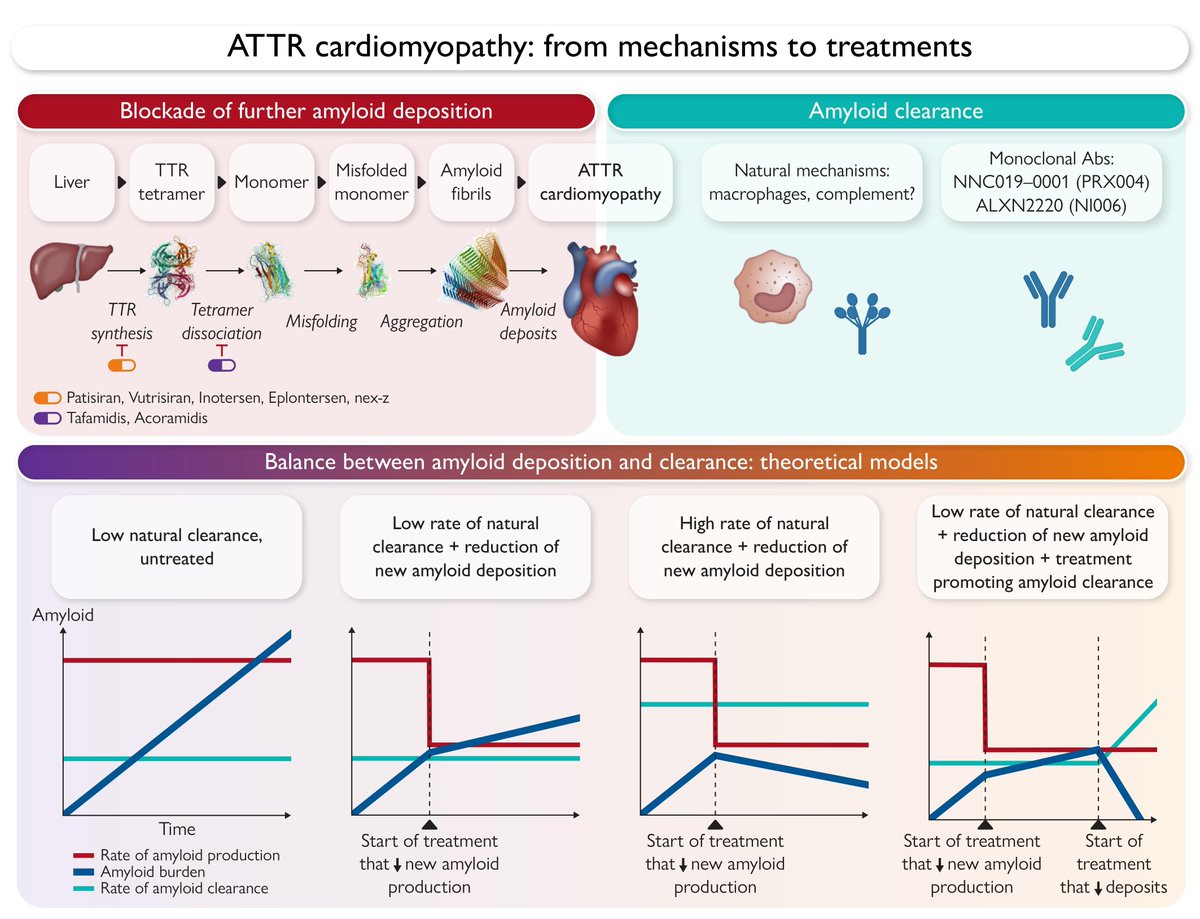
Transthyretin amyloid cardiomyopathy: from cause to novel treatments. Read this State-of-the-Art review just published in #EHJ 👉 https://t.co/xs8gK2WEW0
@RoccoMontone@ehj_ed#amyloidosis