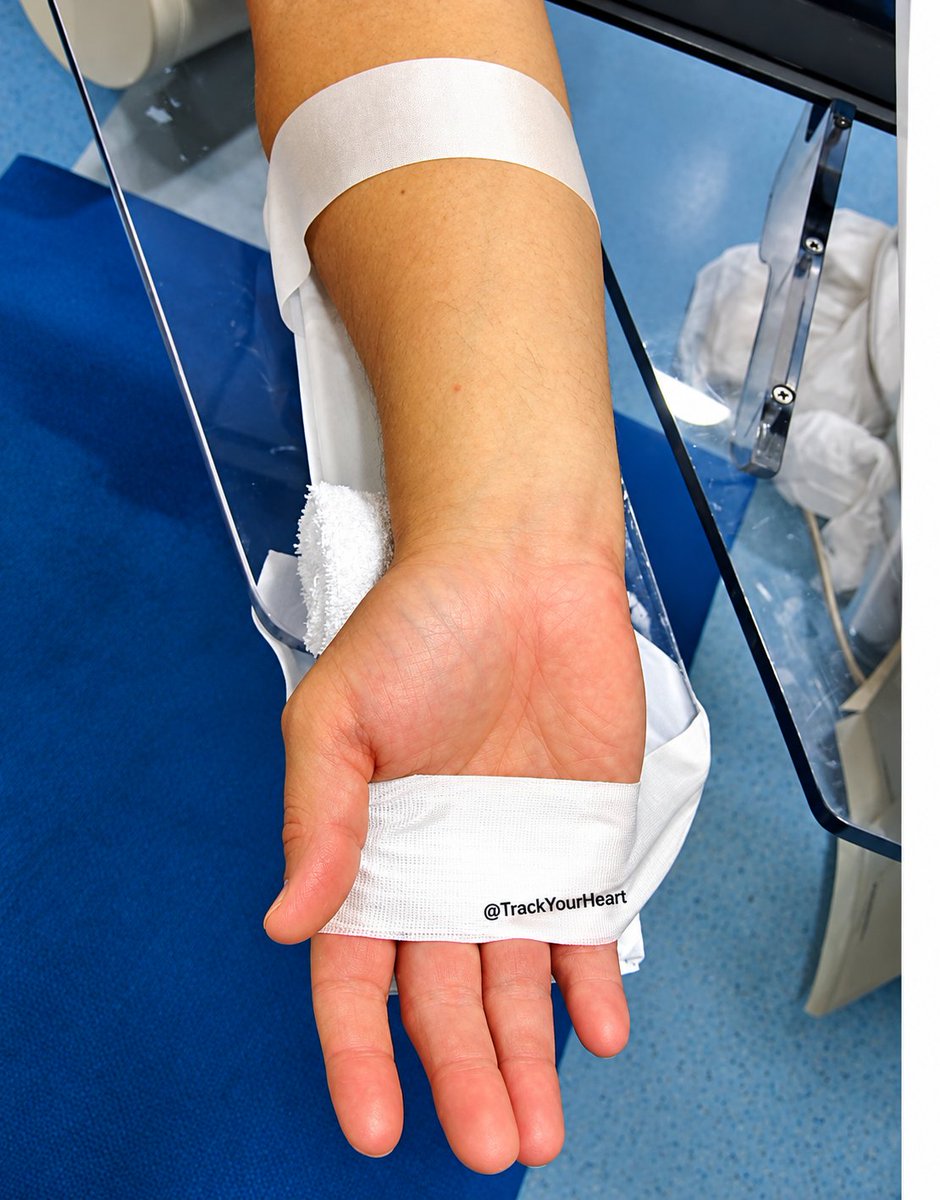
Percutaneous coronary intervention saves lives, but sometimes the complication begins before the coronary artery is even reached.
The vascular access site matters.
A contemporary review explains why radial access is preferred, what can go wrong, and how these complications can be prevented.
A practical thread:
🫀 Seeing Truly Normal Coronary Arteries
Dual Source PCCT + High Iodine = Confidence of Exclusion
In coronary CTA, detecting plaque matters.
But confidently proving absence of plaque is even more powerful.
A truly normal coronary artery should not look “probably normal.”
It should look sharp, smooth, motion-free, and perfectly opacified.
That level of certainty comes from the combination of:
- Photon-Counting CT (PCCT)
- High spatial/temporal/contrast resolution
- High iodine concentration contrast (400 mg I/mL)
🧠 Why this combination matters
Subtle abnormalities can be masked by:
- Motion blur
- Noise
- Partial volume effects
- Insufficient intraluminal enhancement
Sometimes what we call “normal” is simply underpowered imaging.
⚡ What changes with PCCT + 400 mg I/mL
Ultra-high spatial resolution
- Clear intima–lumen interface
- Distal vessels sharply defined
High temporal resolution
- Minimal motion artifacts
- True coronary borders, even at higher HR
High iodine concentration (400 mg I/mL)
- Stronger intraluminal signal
- Higher contrast-to-noise ratio
- Uniform, stable lumen opacification
- Subtle wall irregularities no longer hide in low signal
Spectral capability
- Cleaner iodine–tissue separation
- Greater confidence in excluding non-calcified plaque
When arteries are truly normal, they appear:
✔️ Smooth
✔️ Thin-walled
✔️ Motion-free
✔️ Intensely and uniformly opacified
Not “likely fine.”
But objectively pristine.
In coronary CTA, technology is not only about finding disease.
It’s about confidently saying:
There is none.
From uncertainty to reassurance.
From suspicion to precision.
That’s the strength of PCCT with high-iodine coronary imaging. ⚡🫀
#PhotonCountingCT #PCCT #CoronaryCTA #HighIodine #400mgIodine #HighTemporalResolution #UltraHighResolution #CardiacCT #PreventiveCardiology #yesCCT
@HamidMirPAK یہ رپوٹ دیکھیے سنیے اور سوچیے
کیا بدقسمتی ہے اس قوم کی کیسے بہادر، زہین
اور قابل لوگ ان وطن فروشوں نے ضائع کیے ہیں
ایک ناسور ہارا ہوا 🐷 اپنی انا کی تسکین کے لیے ایک ہیرا خاتون کو قید میں رکھوا کر خود کو لیڈر کہتا ہے بیغیرت بے ضمیر کرپٹ بھگوڑا🖐
TARGET-CTCA: a negative CTCA trial? Maybe. But look at what was actually tested.
Patients were selected mainly by mildly elevated hs-troponin—not by likelihood or burden of coronary atherosclerosis—and CTCA was performed weeks after the acute presentation.
More importantly, the enormous amount of information provided by CTCA was reduced essentially to four stenosis categories: no, mild, moderate or obstructive CAD. No plaque burden, quantitative plaque analysis or high-risk plaque phenotype was used to guide treatment.
Yet CTCA clearly changed management: at 12 months statin use rose from 27% in patients without CAD to 79%, 92% and 95% in mild, moderate and obstructive CAD.
And the trial was designed to detect an ambitious 40% reduction in MI/cardiac death. The per-protocol analysis actually showed HR 0.83 (95% CI 0.63–1.09), still compatible with clinically meaningful benefit.
Perhaps TARGET-CTCA does not show that CTCA fails to improve outcomes. It shows that simply detecting CAD and applying a relatively crude stenosis-based treatment algorithm is not enough.
The next question should be different: can CTCA-guided precision prevention based on the burden and biology of atherosclerosis improve outcomes?
Next Month: Oct 10-11: 15th Annual MMI Conference.
30+ faculty. Case-based Structural heart, ischemia, diastology, cardiomyopathy, sarcoid & amyloid; Latest in Echo/CT/PET/CMR.
Live Q&A. Global audience. Affordable. Recordings for 2mo.
@DeBakeyCVedu | https://t.co/EGJRnbhci8
Hi all,
The Lp(a) HORIZON trial has released topline data and, quite shockingly, missed its primary endpoint.
In other words, lowering Lp(a) in patients with prior MI, stroke or peripheral arterial disease, who were otherwise very well treated for LDL-C, blood pressure, diabetes and other risk factors, did not reduce the primary cardiovascular endpoint.
We obviously need to see the full data before making firm conclusions, and I don’t want to speculate too much without the details.
But this is a big enough result that it is worth summarizing what we know, what we don’t know, and what this may mean for our patients after 20+ years of trying to test the “Lp(a) hypothesis.”
What we know:
1-There are hundreds if not thousands of genetic, epidemiologic and Mendelian-randomization studies showing that elevated Lp(a) is associated with MI, stroke, peripheral arterial disease and aortic stenosis. That body of evidence is very strong.
2-However, much of those data come from community-based populations, often before the era of intensive LDL-C lowering and modern secondary prevention.
3-There has been much less information about how much residual risk Lp(a) carries in someone who has already had an event and is then treated very aggressively.
4-HORIZON may have had some of the best-treated patients of any recent cardiovascular outcomes trial.
Baseline LDL-C was about 65 mg/dL, a measured LDL-C contains the cholesterol carried on Lp(a), so in reality, 15-20 points lower.
5-In patients with very high Lp(a), if you correct LDL-C for Lp(a)-cholesterol, the actual LDL-C carried by LDL particles may have been closer to 45–50 mg/dL, perhaps even lower in some patients.
6-This raises a very basic question:
Can you still demonstrate a major incremental benefit from lowering another apoB-containing particle when the underlying LDL burden has already been driven this low?
What we don’t know:
1-What was the actual corrected LDL-C in these patients? I think it would be extremely informative to directly measure Lp(a)-C and calculate corrected LDL-C. This may tell us a lot about the biological setting in which pelacarsen was being tested.
2- What was the OxPL status? Our prior work has suggested that much of the pro-inflammatory biology associated with Lp(a) is related to its enrichment in oxidized phospholipids. Did OxPL fall? Did patients with higher OxPL derive more benefit? Was Lp(a) concentration actually identifying the patients with the most pathogenic particles?
3- Did we measure the right component of Lp(a) for trial inclusion? We generally measure molar particle concentration. But is molar concentration itself the main driver of risk, or is it partly a surrogate for what the particle carries? Cholesterol? Triglycerides? Oxidized phospholipids? Other proteins? Could two patients with the same Lp(a) concentration have very different Lp(a)-mediated risk? I think this question deserves much more attention.
3- Were the genetic data telling us exactly what we thought they were telling us? The genetic data are extremely compelling, but genetics reflect lifelong exposure. A clinical trial treats patients late in life, often after decades of arterial injury and after an event has already occurred. Those are not necessarily the same experiment. Could there also be some unrecognized biology linked to the LPA locus that we have not completely accounted for? That possibility should at least be considered.
3- Does very low LDL-C modify the Lp(a) risk relationship? Maybe Lp(a) is particularly important when LDL-C is higher, but its contribution becomes smaller once LDL-C is driven to very low levels. Again, we need the data.
4- Does aspirin or other antiplatelet therapy reduce part of the risk associated with Lp(a)? Lp(a) has potentially important prothrombotic effects. Almost everyone in a trial like HORIZON is receiving contemporary antiplatelet therapy. Could that blunt one component of the risk associated with Lp(a)?
5- Why are these patients still having events? This may be one of the most interesting questions of all. These are patients with LDL-C around 65 mg/dL, and perhaps corrected LDL-C substantially lower, yet cardiovascular events continue to occur. What is driving that residual risk? Inflammation? Thrombosis? Plaque burden that is already too advanced? Other lipoprotein characteristics? Something we are not measuring?
6- Do we need to re-examine some basic assumptions about atherosclerosis? We have spent decades focusing heavily on the quantity of circulating lipoproteins. But perhaps lipoproteins are relatively benign until they undergo biological modification in the artery wall. Oxidation may be one of those key modifications. For some patients, the answer may be to remove more particles from the circulation. For others, perhaps the better approach is to prevent their oxidation or block the downstream biological effects of oxidized lipids. The recent difficulties with anti-inflammatory approaches, including IL-6 inhibition, make these mechanistic questions even more interesting.
7- Was there something specific about pelacarsen, the degree or timing of Lp(a) lowering, advanced disease, trial duration, background therapy or patient selection that mitigated a potential benefit? We simply don’t know yet. That is why the detailed results will be so important.
What does this mean for patients today?
If you have already had an MI, stroke or PAD, the immediate lesson is very clear:
1- Get all of your established risk factors treated aggressively.
2- Get LDL-C/apoB very low.
3- Control blood pressure.
4- Control diabetes.
5- Don’t smoke.
6- Use appropriate antiplatelet and other guideline-directed therapies.
HORIZON shows us what modern secondary prevention should look like.
If you have elevated Lp(a) but have never had an event, the genetic and epidemiologic data still suggest increased lifetime risk.
Until the other 4 outcome trials read out, I would continue to treat every modifiable risk factor aggressively.
We should wait for those trials before drawing broad conclusions about the entire field.
I think the story of Lp(a) therapy is beginning, not ending.
We also need to show tremendous respect and gratitude to the patients who participated in HORIZON and to the investigators and companies that invested enormous resources to actually test the Lp(a) hypothesis, to the ultimate benefit to peole with elevated Lp(a) to best guide how to manage risk.
More to come as we go forward.
I’m a cardiologist. Today cardiologists everywhere were humbled by this trial.
The trial is Lp(a)HORIZON. Pelacarsen, a monthly antisense injection from Novartis and Ionis, was given to 8,323 patients who already had heart disease plus genetically high lipoprotein(a). These were not untreated people. They were on modern guideline therapy—high-intensity statins, blood-pressure control, antiplatelets. The drug did its job: it slashed Lp(a) levels by roughly 70–80%, the same drop we saw in earlier studies. The thing it was supposed to prevent did not move. Cardiovascular death, heart attack, stroke, and urgent stents or bypasses were no lower than placebo. The miss held even in the sicker subgroup whose Lp(a) started above 90 mg/dL.
That is why the field is in shock.
For a decade we treated this as settled biology. Lp(a) is 80–90% genetic. One in five adults carry high levels. Diet and gym do almost nothing. Observational studies and Mendelian randomization kept saying the same thing: higher lifetime Lp(a) means more heart attacks, more strokes, more aortic stenosis. Phase 2 looked like a home run—an 80% reduction with a simple monthly shot. We told ourselves this was the missing piece for the patient who already has perfect LDL, perfect blood pressure, doesn’t smoke, and still has events. Many of us expected it to be as important as the arrival of statins. Companies spent years educating the entire cardiology community that we finally had a target we could actually hit.
We were wrong about the simple version of the story.
A lifetime of high Lp(a) from birth is not the same experiment as turning the number down for a few years after the arteries are already damaged and every other risk factor is already optimized. Residual risk from Lp(a) may simply be smaller once LDL is already in the 40s. Eighty percent lower may still leave too much particle in people who started very high. The next drugs (siRNAs) go deeper and last longer; this was the first-generation ASO. Benefit, if it exists, might live in younger patients, primary prevention, or extreme levels rather than this secondary-prevention population. Or the effect on existing plaque and thrombosis is slower and smaller than the genetics made us believe.
We will get the full event curves, actual achieved levels, and every subgroup later this year. Other outcome trials with more potent agents are still running. The Lp(a) chapter is not closed. But the version we all believed—“lower this inherited number and events will follow in already-treated patients”—just failed its first large, hard test.
Measure Lp(a) once. Treat everything else we can actually change as if it still matters. Because today we learned, again, that a beautiful lab change is not the same thing as fewer funerals.
Science is supposed to surprise us. This one did.
Why Were Stents Invented?
Balloon angioplasty was revolutionary.
But the balloon had a problem: opening an artery did not always mean keeping it open.
After balloon inflation, the vessel could develop a major dissection or recoil back toward its original size.
This created two major problems:
◻️ Abrupt closure: acute or early loss of vessel patency, often related to dissection, recoil, or thrombosis.
◻️ Restenosis: recurrent narrowing developing later, driven largely by vessel remodeling and neointimal tissue growth.
The solution was the coronary stent.
Think of a stent as a scaffold placed inside the artery. It helps:
⭕ Keep the vessel mechanically open
⭕ Seal flow-limiting dissections
⭕ Reduce acute recoil
⭕ Maintain a larger lumen after PCI
Early stents were far from perfect. The first generations had problems with stent thrombosis, restenosis, delivery, and vascular injury.
The development of the Palmaz-Schatz stent and the landmark STRESS and BENESTENT trials demonstrated that coronary stenting could produce better acute angiographic results and reduce restenosis compared with balloon angioplasty alone.
Then came a major evolution:
Bare-metal stents
⬇️
Drug-eluting stents
⬇️
Modern-generation DES
Modern DES release antiproliferative drugs to reduce neointimal hyperplasia and are now the standard stent platform for most PCI rather than bare-metal stents.
And stent technology is only part of the story.
Today, intravascular imaging with IVUS or OCT can help select stent size, optimize expansion, identify complications, and investigate stent failure, particularly in complex PCI.
The evolution of PCI is essentially a story of solving one problem after another:
1️⃣ Balloon angioplasty opened the artery.
2️⃣ Stents helped keep it open.
3️⃣ Drug-eluting stents reduced restenosis.
4️⃣ Intracoronary imaging helps us optimize the result.
Source: Textbook of Interventional Cardiology, 8th ed., Eric J. Topol & Paul S. Teirstein.
b. False
The statement is incorrect. VT usually has a QRS complex ≥120 ms, but not always: there are VTs with narrow QRS complexes (<120 ms), such as fascicular VT (left posterior fasciculus) and some VTs originating in the His-Purkinje system, which can show QRS complexes of 100-120 ms.
Furthermore, QRS width alone does not distinguish VT from SVT with aberrancy; for that, morphological criteria are used (Brugada syndrome, AV dissociation, precordial concordance, etc.), precisely because the premise of "always" is what fails here.