We in Iceland wish the best of luck to our coarse but noble Norwegian cousins as they set sail in search of greatness in Vinland and beyond.
Should they fare well, we shall commit their deeds to epic prose.
But know this: Iceland will return to seek the World Cup and add a new chapter to our own saga.
Finally, we shall all meet in Valhalla.
In a corner of parliament at the far end of the Royal gallery a box lies permantly open containing sand from all five Normandy beaches -a reminder to both houses of the sacrifice & the cause of freedom fought for by brave service people on DDay June 6 th 1944. #DDay
RIGHT NOW in 1944, the BBC broadcasts an excerpt of Paul Verlaine's 1866 poem "Chanson d'automne" into Nazi-occupied Europe. The passage "...wounds my heart with a monotonous languor” is a coded signal to the French Resistance. It means: “The Allies are coming!”
Capital Weather Gang, the weather blog that has been a part of the Washington Post for almost 20 years, is becoming an independent site and rebranding as Capital Weather.
Per a note to WaPo staff today, the site will still contribute to WaPo during major weather events.
Shrey spelling 32 words in 90 seconds to win the Spelling Bee is the new greatest athletic accomplishment of 2026. I don’t even know how he said the letters that fast. Got a “Holy Mackerel” out of
@minakimes
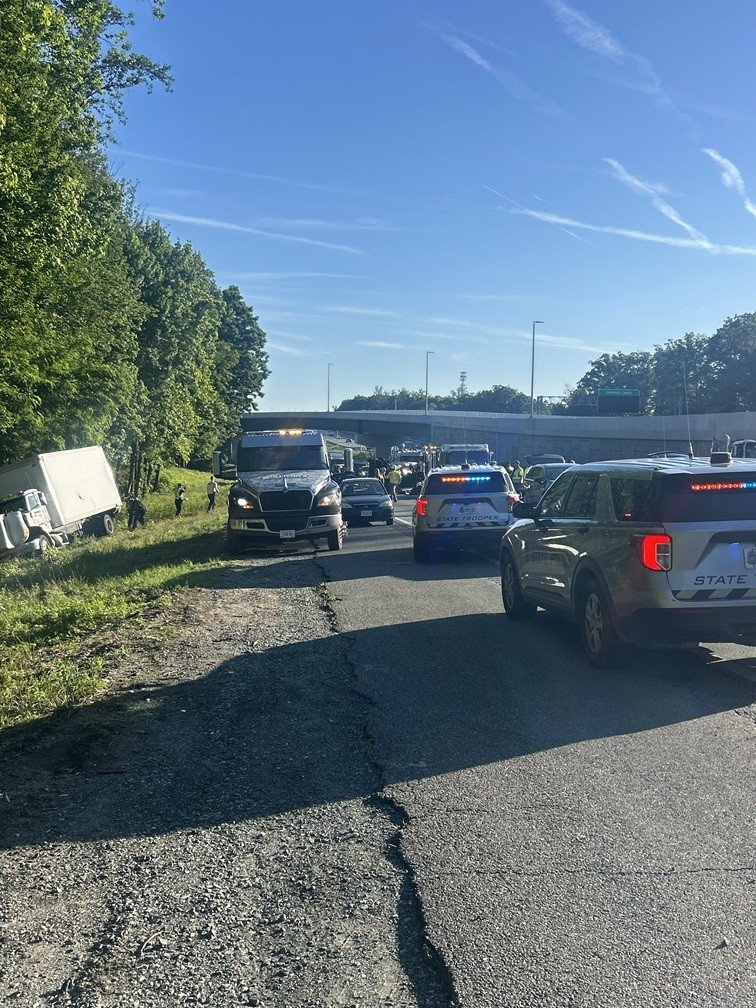
STAFFORD COUNTY CRASH UPDATE 🚨 Five people are dead and dozens are injured after a multi-vehicle crash early Friday morning on Interstate 95 southbound in Stafford County.
MORE: https://t.co/HVzzWPwO5j
OMG. In the final round of the National Spelling Bee, they just now used “hwyl” — but pronounced it as “WHOO-ill.” (And yes, they identified it as Welsh.) Thank heavens they kid knew it!
The Welsh pronunciation is more like “hoil.”
2.4 million babies are alive today because of one man. An Australian railway clerk who was scared of needles his entire life and somehow gave blood every two weeks for 64 years.
It started in 1951. James Harrison was 14. He was lying in a hospital bed. He had just lost one of his lungs in major surgery. The operation took three hours. They closed him up with 100 stitches. He would spend the next three months in that bed. The only thing keeping him alive was strangers' blood, and he needed almost two gallons of it to make it through.
His father was sitting next to him in the hospital. Reg Harrison was a blood donor himself. He told his son the truth: he was only alive because strangers had given their blood. Right there in that bed, the 14-year-old made a promise. The day he turned 18, he would start giving blood himself. He would pay them back.
Two days after his 18th birthday in 1954, James showed up to give his first donation. The nearest donation center was a couple of hours away in Sydney. He took the train. Every two weeks. For 64 years.
About ten years in, doctors found something rare in his blood. An antibody called anti-D. It could stop a disease where a pregnant mother's body attacks her own baby in the womb. Before they figured this out, thousands of Australian babies were dying every year. Doctors didn't know why. Mothers were losing one pregnancy after another, with no idea what was killing their children. James's blood was the cure.
He gave blood 1,173 times. Of those, 1,163 came from his right arm and only ten came from his left, because he was terrified of needles. Had been ever since that surgery as a kid. For 64 years of donating, he never once watched the needle go in. He looked away. Every single time.
More than three million doses of medicine were made from his blood. The Australian Red Cross says he saved 2.4 million babies. Some of those were his own grandkids: his daughter Tracey got the same injection when she was pregnant. She told the Red Cross her father had "left behind a family that may not have existed without his precious donations."
A railway clerk. Scared of needles. Born in a country town called Junee in 1936. Died in his sleep on February 17, 2025, at age 88. He never met the people he saved. Those babies grew up. They had kids of their own. And most of those millions will never know his name was James Harrison.
A scared railway clerk kept 2.4 million children alive just by showing up every two weeks for 64 years. You have no idea what your life will mean to someone you haven't met yet. You can't see it from where you're sitting. James Harrison couldn't either. He just kept showing up.
WOW! We hit a high of 97 today which was a record and JUST LOOK at what we see on Thursday. Huge changes and the cooler wet weather lingers into Memorial Day weekend.
In 2009, one English village lost both its phone box and its mobile library in the same year. One local came up with a fix so simple it accidentally became a national movement: take the empty phone box, fill it with books, leave the door unlocked.
The village is Westbury-sub-Mendip in Somerset, population about 800. The council had just cut the mobile library, and BT was quietly removing payphones across the country. Parish councillor Bob Dolby and his wife Lyn bought the empty box from BT for one pound, fitted it with four wooden shelves, filled it with around 100 donated books, and left the door open. The library ran 24 hours a day, on the honour system, with no librarian and no fines.
The BBC ran the story. Within two years, other villages were copying the idea. Today, more than 7,200 red phone boxes across Britain have been saved this same way.
The box itself has a much older story. It was designed by Sir Giles Gilbert Scott, who also designed Liverpool Cathedral and Battersea Power Station. He won a 1924 contest to create one standard phone box for Britain. His first version went up in London in 1926. In 1935, the Post Office asked him for a smaller, cheaper version to mark King George V's 25 years on the throne. That second version is the one you see on every postcard and tourist mug. About 60,000 were installed between 1936 and 1968. Roughly 11,700 are still standing.
By the 1990s, Britain had 100,000 phone boxes of every kind. Mobile phones gutted the numbers. Only about 3,000 traditional red kiosks are still working. With BT switching off the old phone network in 2025, the rest were headed for the scrapheap.
BT had already started saving them. In 2008, they quietly launched a scheme called Adopt a Kiosk. Any parish council or registered charity can take over an unused phone box for £1. BT removes the phone, hands over the keys, and even keeps the small light inside working for free. The community covers any repairs. The Twentieth Century Society went further and got more than 3,000 of the most historic boxes officially heritage-listed, which means they can never be torn down.
The saved boxes have become every kind of thing you can think of. About 800 hold defibrillators, the small machines that can save someone in cardiac arrest. Others became mini art galleries, local history museums, even a one-metre-wide gin bar called The Wee Bar in the Scottish village of Kilberry, with room for three drinkers. The model works because phone boxes are almost always in the middle of a village, right next to the post office and the pub.
Scott originally wanted his boxes painted silver, with a greeny-blue interior. The Post Office overruled him and picked red, because their postboxes were already red. A century later, that one decision is the reason these boxes are famous enough to be worth saving.
My SUMMER FORECAST for heat. Take a look! A Strong El Nino typically means we do NOT see intense heat, but we do see more humidity and rainfall potential. All in all, it should be a pretty good summer.
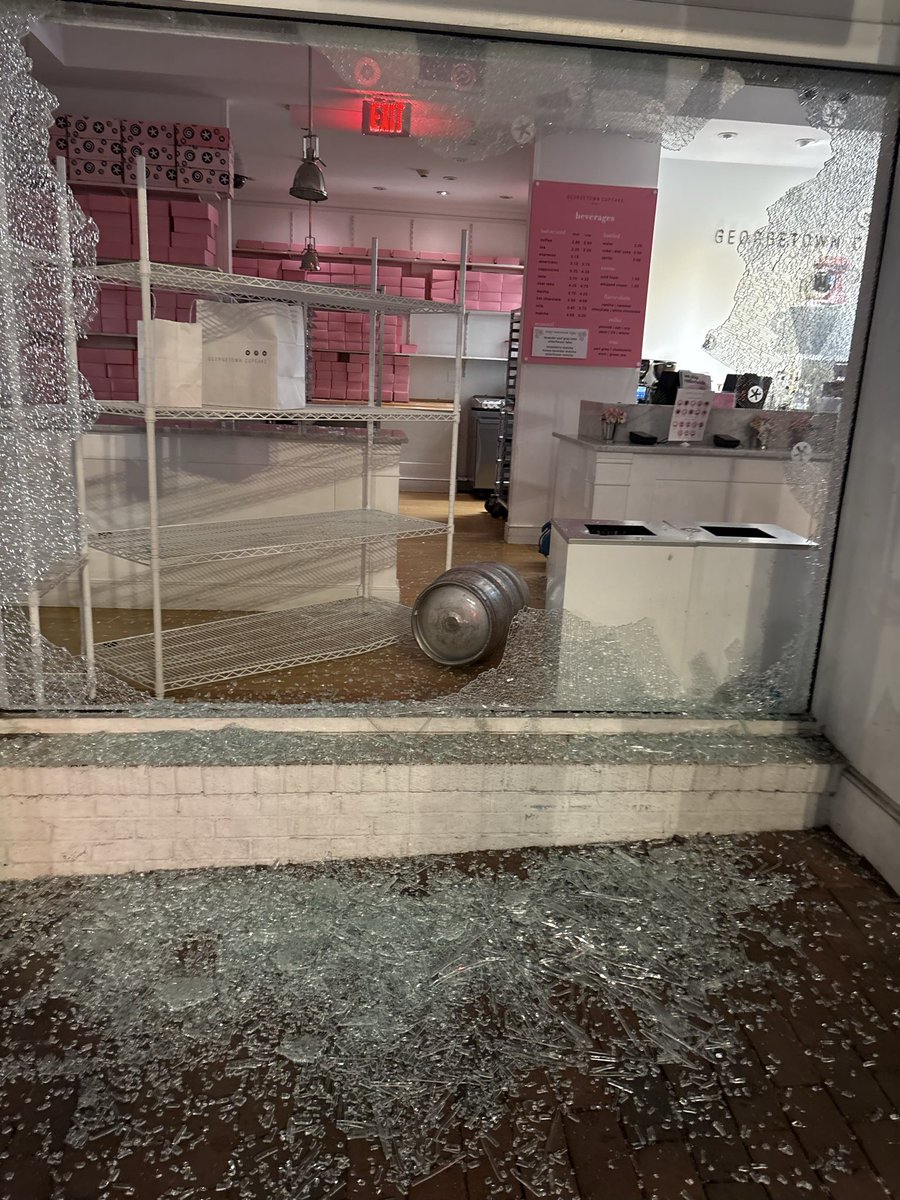
If anyone has any information about the individual who threw a beer keg through our window tonight, please contact the DC police anonymous tip line at (202) 727-9099.