PRESS RELEASE
EXTENSION OF CONTINUOUS VOTER REGISTRATION (CVR) AND INTRODUCTION OF SELF-SERVICE REGISTRATION FOR FIRST-TIME VOTERS
The Independent National Electoral Commission (INEC) wishes to inform Nigerians that, following a review of the ongoing nationwide Continuous Voter Registration (CVR) exercise and feedbacks received from its State Offices, political parties, civil society organisations, and other stakeholders, the Commission has approved a two-week extension of the exercise.
As Nigerians are aware, the nationwide CVR exercise commenced on 18th August, 2025 and was originally scheduled to conclude on 10th July 2026. In order to provide additional opportunity for eligible citizens who are yet to register, the Commission has extended the exercise to Sunday, 26th July 2026.
The extension underscores the Commission's commitment to ensuring that every eligible Nigerian has a fair and reasonable opportunity to be included in the Register of Voters ahead of future electoral activities.
In furtherance of its commitment to innovation, accessibility, and improved service delivery, the Commission is pleased to announce the introduction of a self-service registration option (online) for eligible first-time voters. The new service will become available from Wednesday, 8th July, 2026 through the Commission's dedicated CVR portal - https://t.co/zSrbjW8vGZ where the step-by-step guide is also provided.
The self-service option will enable eligible citizens to initiate and complete their voter registration process, including biometric capture, using their personal devices without having to physically visit an INEC office. The system incorporates robust identity verification, biometric validation, and backend integrity checks designed to preserve the credibility and accuracy of the National Register of Voters.
The Commission urges all eligible Nigerians who are yet to register to take advantage of this extended window and explore the new voter registration technology option. The Commission remains committed to a credible, inclusive and accessible voter registration process, and to advancing the use of technology to improve citizens' experience in the electoral process.
Mohammed Kudu Haruna
National Commissioner & Chair, IVEC
3rd July, 2026
REMINDER: MEDIA ACCREDITATION FOR #OsunDecides2026
Media organisations intending to cover the Osun State Governorship Election scheduled for Saturday, 15th August 2026, are reminded that online accreditation is ongoing.
🖥️ Apply via: https://t.co/I9tRiZt8ls
⏳ Accreditation Portal Closes:
Sunday, 2nd August 2026 (12:00 midnight)
⚠️ Please note:
• No late submissions will be accepted.
• The portal will automatically close at midnight on the deadline date.
• There will be NO extension of time.
Media organisations are encouraged to complete their applications before the deadline.
For enquiries:
📞 07088844564
📞 08032861058
New home. Same voter. One simple update.
If you have relocated for work, school, marriage, retirement, or any other reason, the solution is simple: (https://t.co/EOn47PhXYS)
✅ Apply for a Transfer of Registration
❌ Don't register again.
🗓️ CVR ends 10 July 2026
🌐 https://t.co/TXA4XP2fCk
#CVR2026
#OsunDecides2026: INEC CHARGES EOs, AEOs ON GRASSROOTS VOTER EDUCATION, INCLUSIVITY AHEAD OF AUGUST 15 GOVERNORSHIP ELECTION
The Independent National Electoral Commission (INEC) has tasked Electoral Officers (EOs) and Assistant Electoral Officers (AEOs) in Osun State with aggressive grassroots voter education and deliberate inclusivity measures as the Commission ramps up preparations for the August 15, 2026 Osun State Governorship Election.
At a high-level Joint Implementation Meeting of the Voter Education & Publicity (VEP) and Gender & Inclusivity (G&I) Departments, held on Monday at El Bee Grandeur and Longue, Osogbo, the Commission’s leadership declared that election is a process, not an event, and warned that voter apathy remains a critical threat to electoral participation in Nigeria.
Welcoming participants to the joint implementation meeting, the Honourable Resident Electoral Commissioner for Osun State, Mrs. Oluwatoyin O. Babalola, emphasized that successful elections are products of meticulous planning, extensive voter engagement, continuous public sensitization, and deliberate efforts to ensure every eligible citizen is adequately informed and empowered.
Mrs. Babalola noted that despite continuous improvements in electoral administration, many citizens fail to participate actively due to misinformation, inadequate knowledge of electoral processes, distrust in the system, political disengagement, and limited access to election-related information.
"For a stand-alone Governorship Election such as the forthcoming Osun State Governorship Election, the responsibilities of the VEP Department become more critical," she said. "Citizens must understand not only when elections will hold but also why their participation matters."
The REC outlined key VEP activities, including public awareness and sensitization campaigns, community-based voter education at markets, motor parks, religious centres and schools, stakeholder engagement, and countering misinformation and disinformation in the digital era.
On inclusivity, she described it as "not merely a policy objective but a democratic imperative," mandating the G&I Desk to coordinate activities targeting women, Persons with Disabilities (PWDs), youths, elderly persons, and other marginalized groups.
Mrs. Babalola urged every EO and AEO to identify communities with historically low voter turnout, establish functional relationships with traditional rulers and religious leaders, conduct regular grassroots voter education activities, and encourage community ownership of voter education initiatives.
"Every eligible voter must know: why voting matters, how to vote correctly, where to vote, and when to vote. Every woman, young person, elderly citizen, and person with disability must be made to feel that the electoral process belongs to them and that their voices matter," she charged.
INEC TRAINS POLITICAL PARTIES, EPM HEADS ON POLITICAL PARTY FINANCE REPORTING SYSTEM AHEAD OF 2027 ELECTIONS:
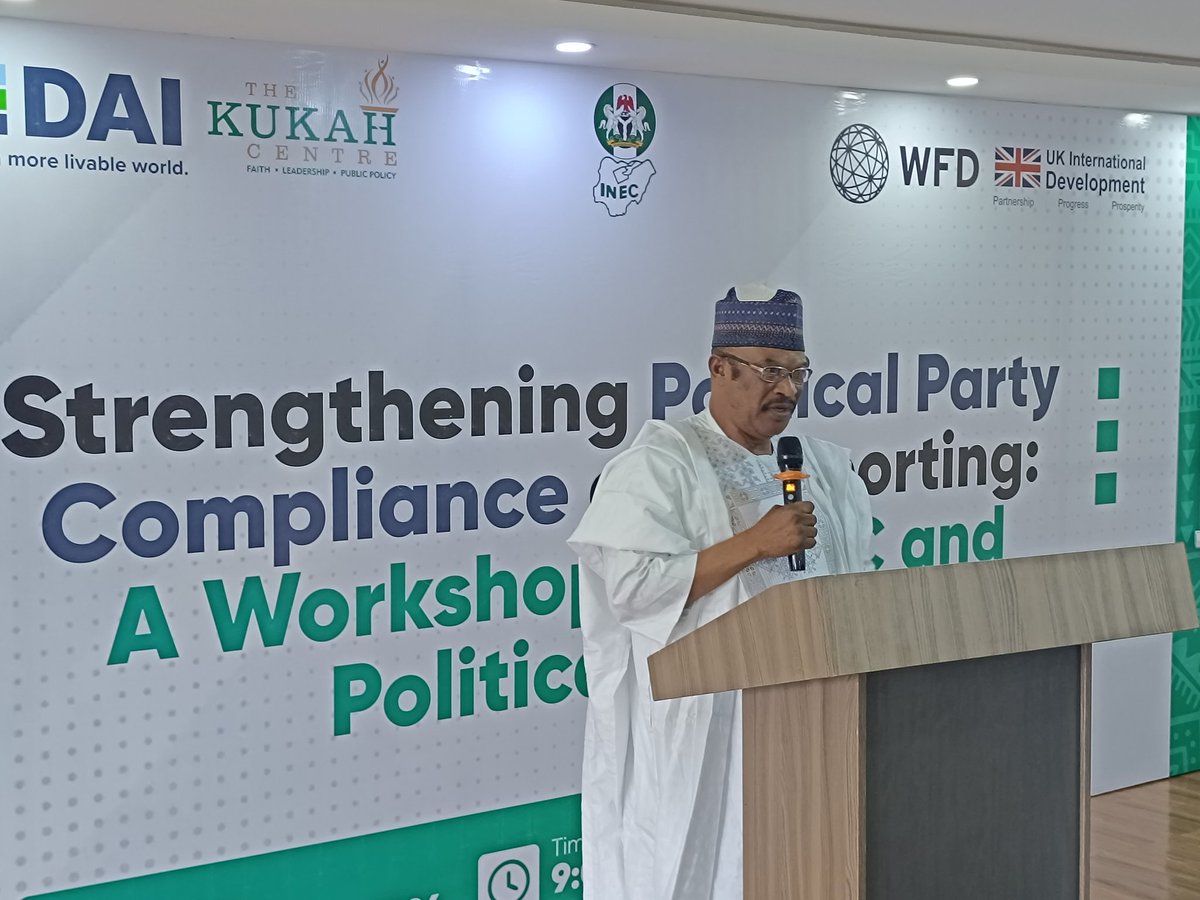
The Chairman of the Election and Party Monitoring Committee (EMPC) of the Independent National Electoral Commission (INEC), Dr. Baba Bila, has reaffirmed the Commission’s commitment to strengthening transparency, accountability and institutional capacity ahead of the 2027 General Election through the deployment of technology-driven electoral reforms.
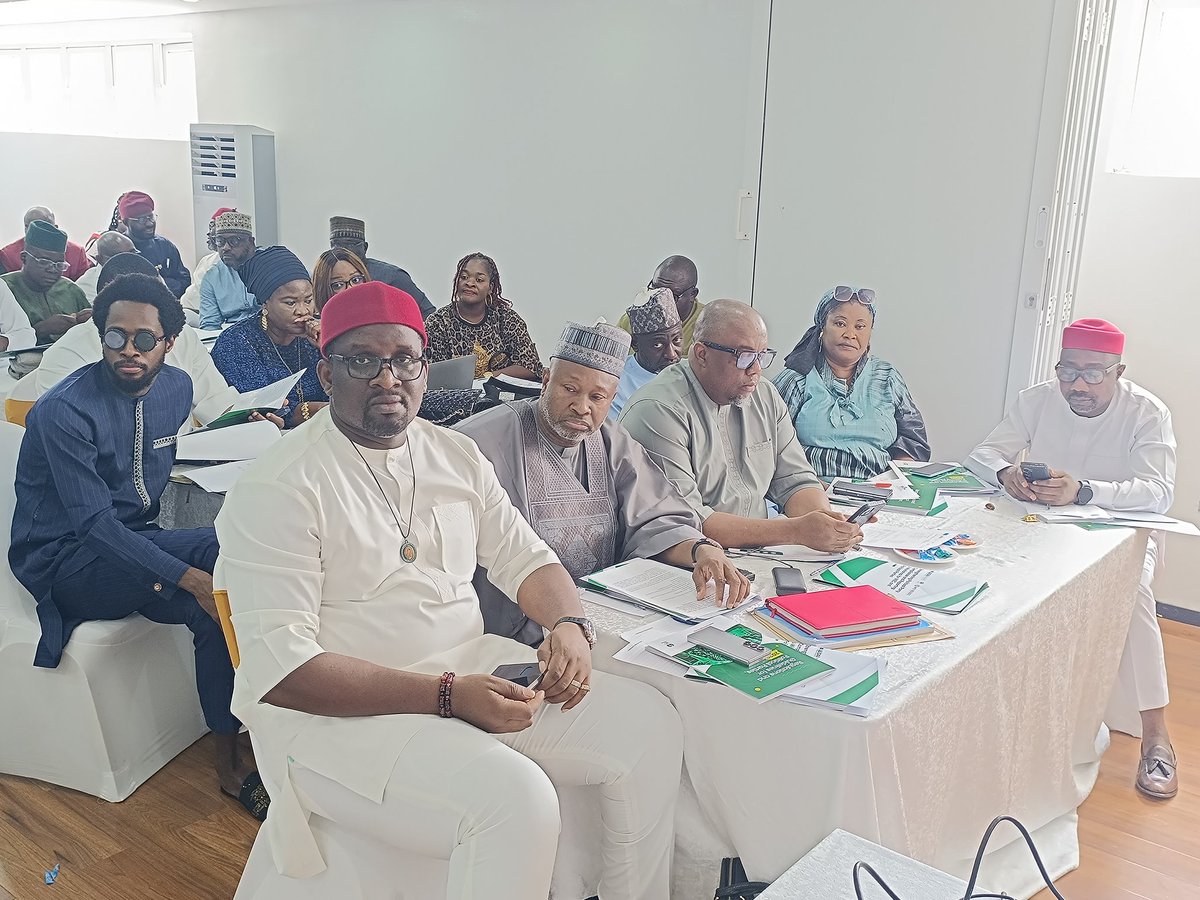
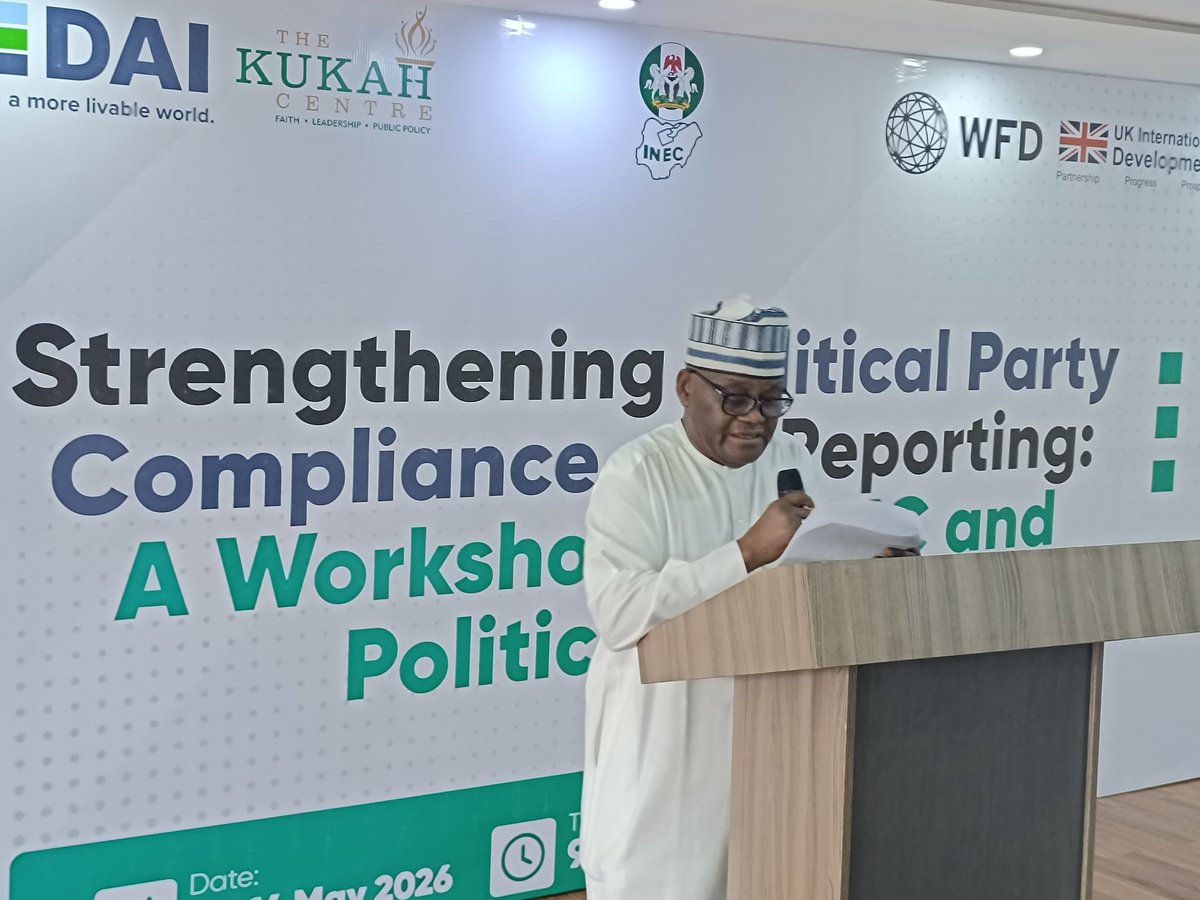
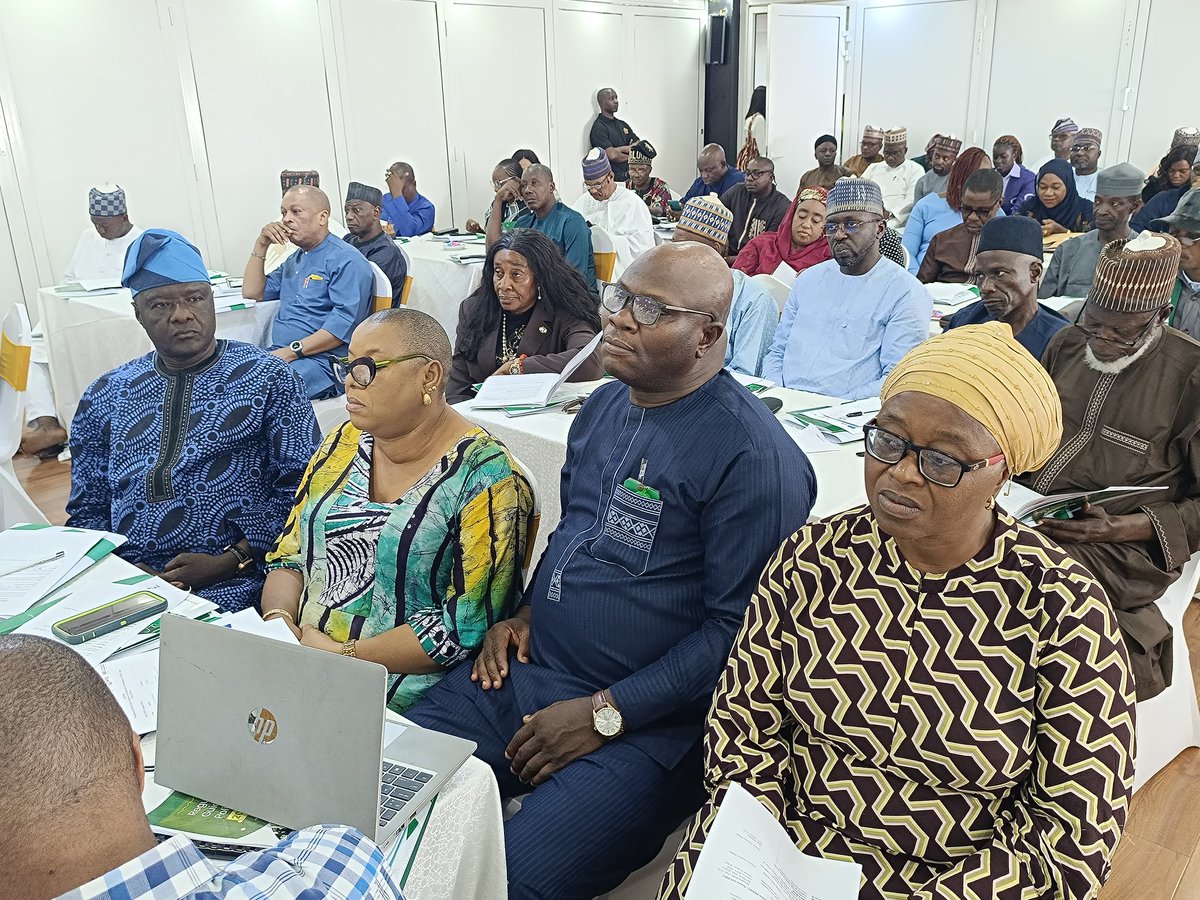
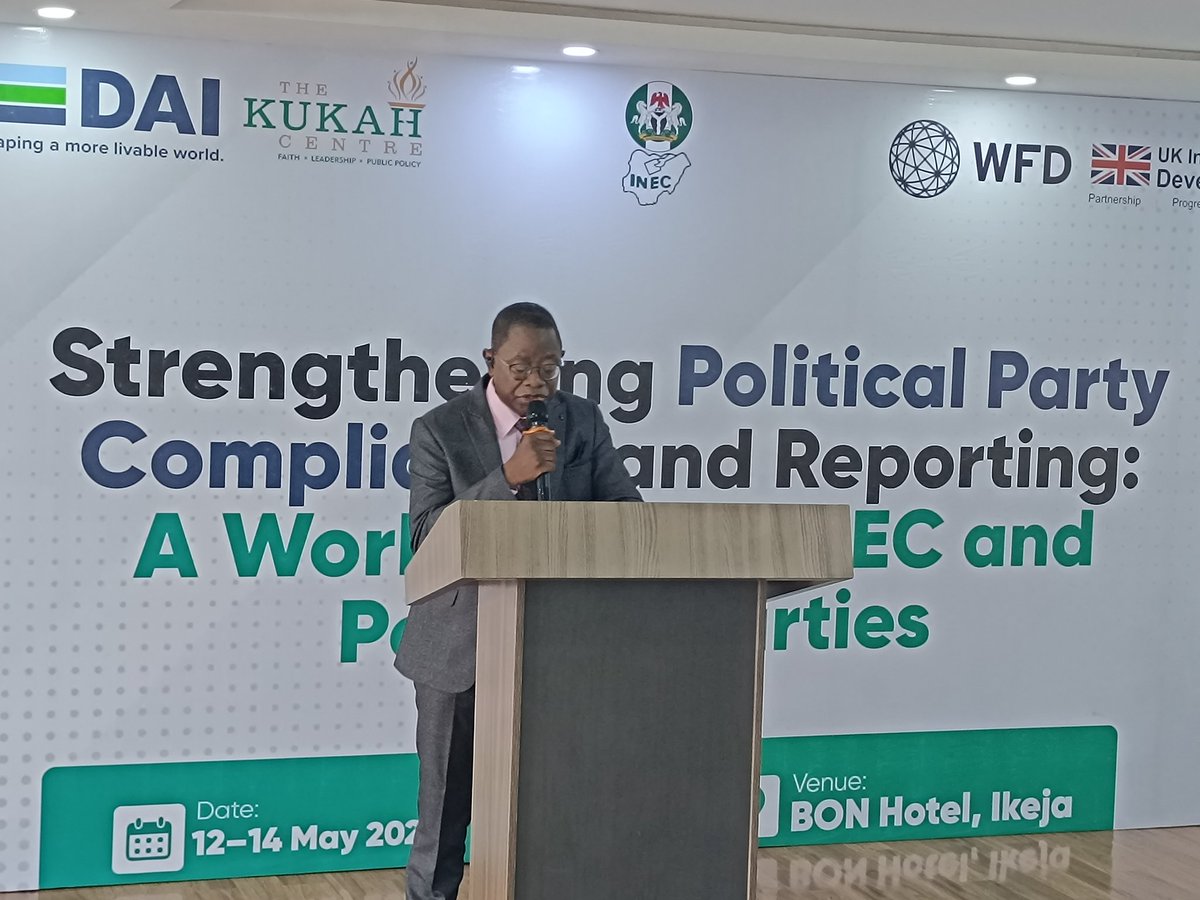
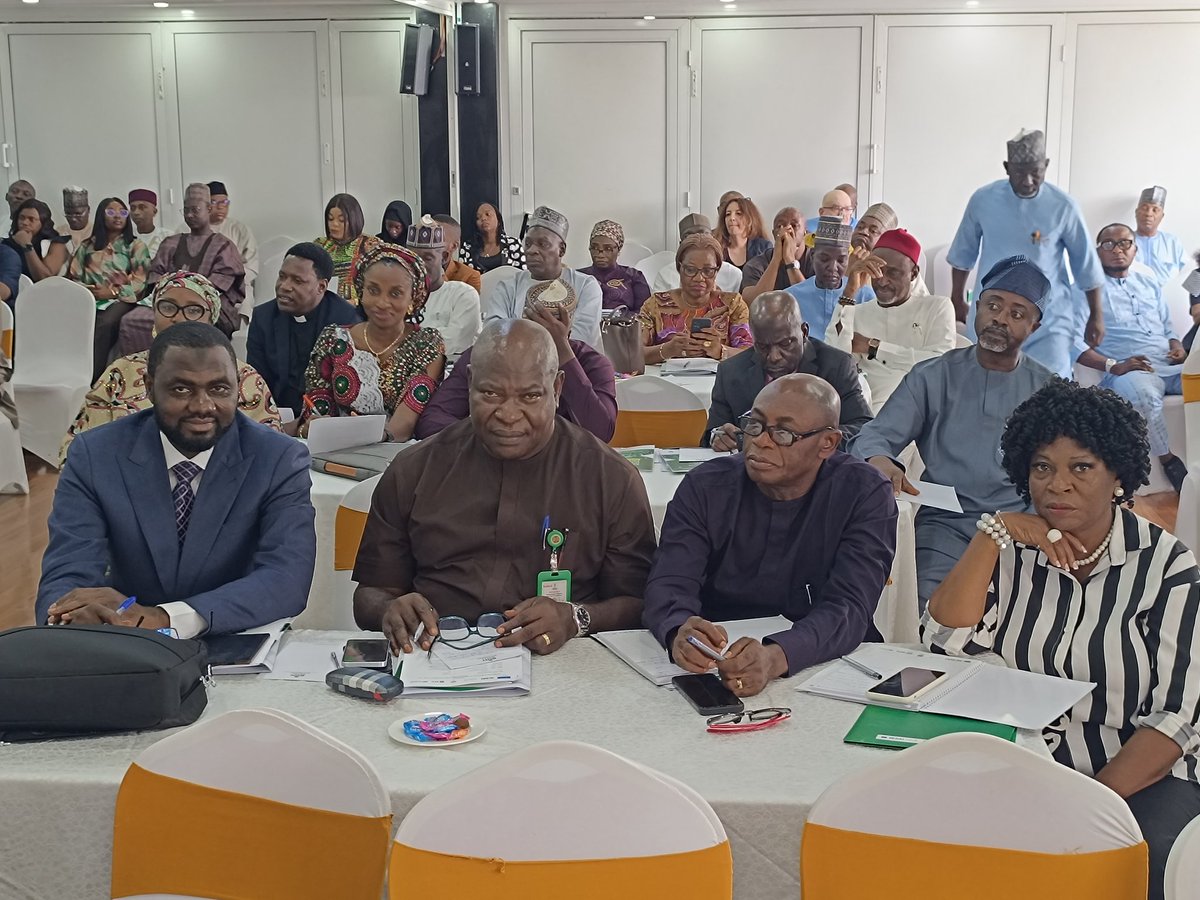
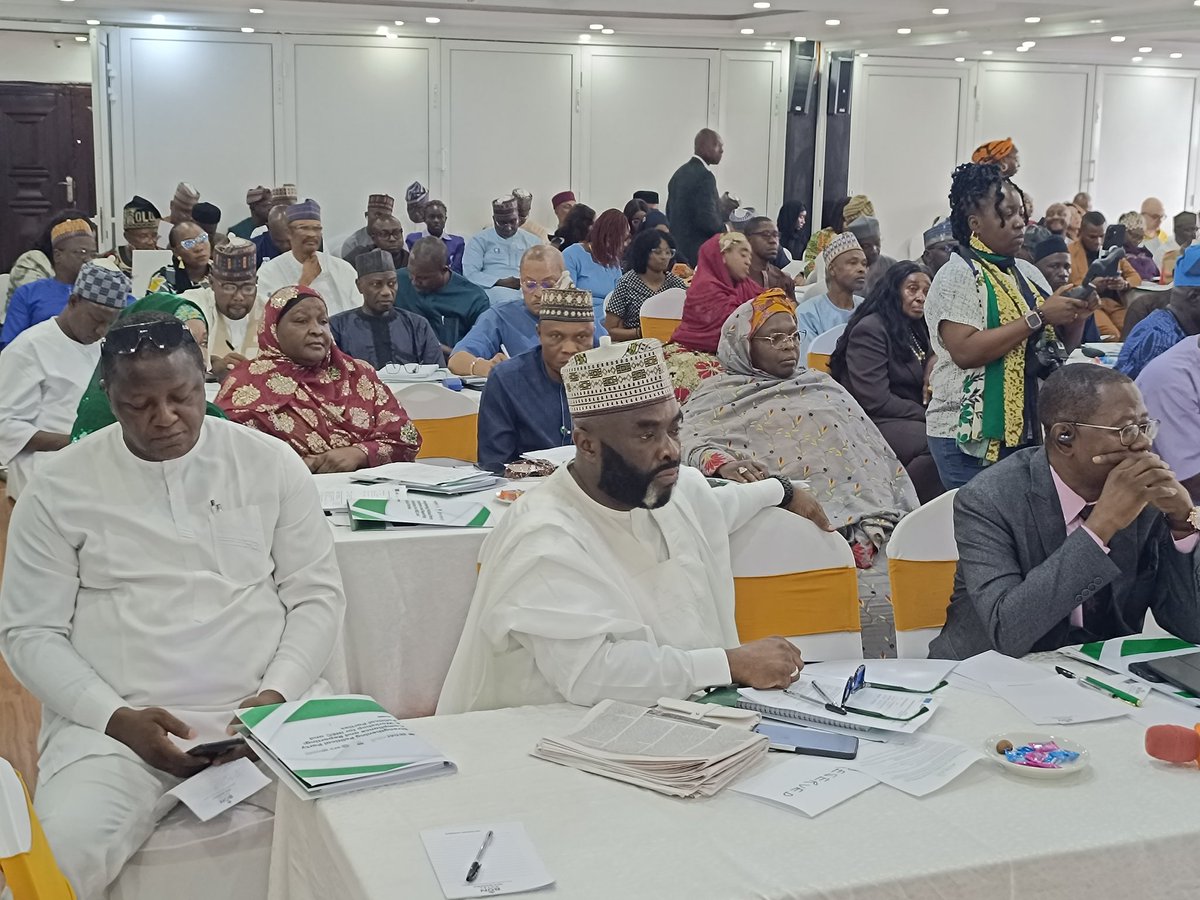
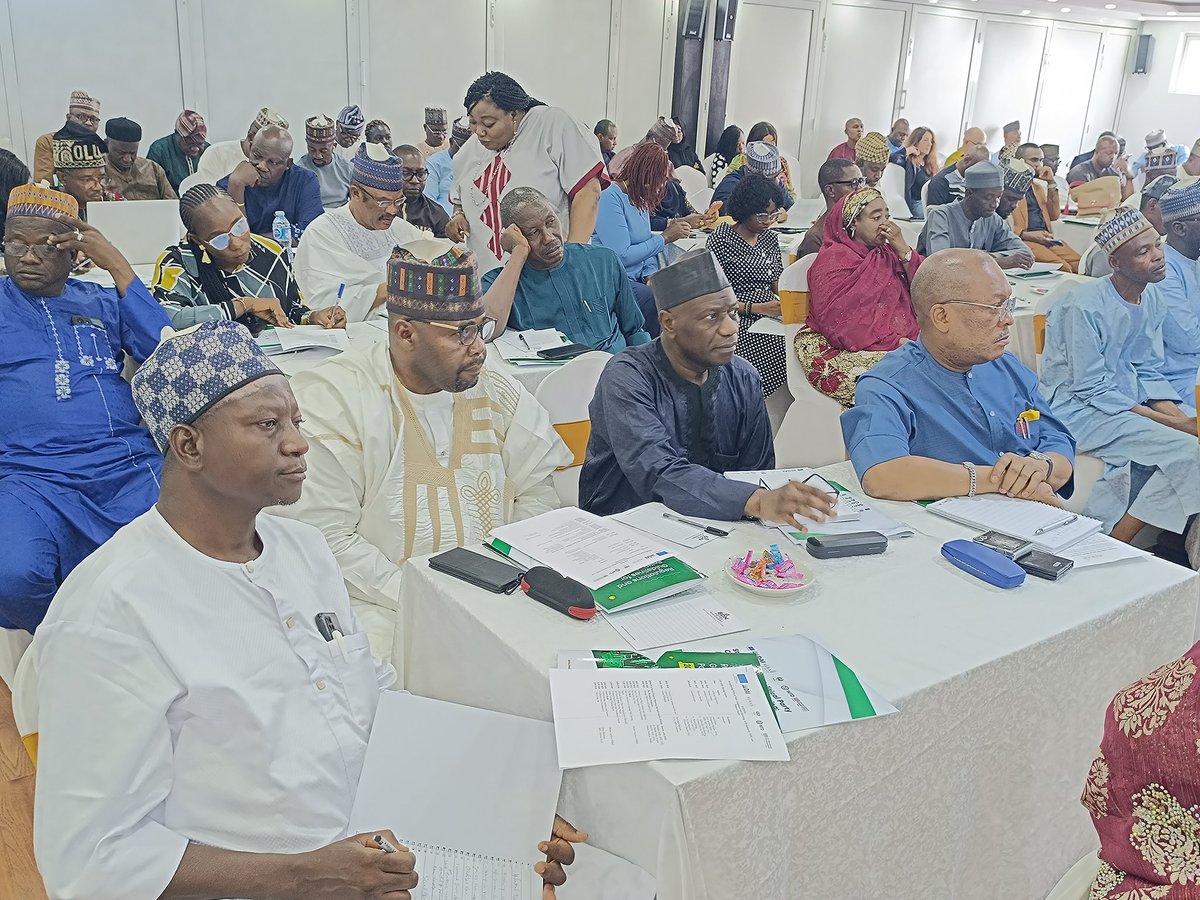
Dr. Baba Bila stated this while declaring open a training programme for Heads of Department, Election and Party Monitoring (EPM) from the 36 States of the Federation and the Federal Capital Territory (FCT), alongside leaders of political parties, on the Political Finance Reporting and Audit System (PFRAS) and the Regulations and Guidelines for Political Parties 2026, held at Bon Hotel, Ikeja, Lagos State.
He described the training as “timely and strategic,” noting that the Commission was intensifying preparations towards the 2027 General Election by strengthening institutional capacity, deepening stakeholder understanding of electoral processes and enhancing compliance with legal and regulatory frameworks guiding political parties and election management in Nigeria.
According to him, the Political Party Finance Reporting and Audit System (PFRAS) represents a major milestone in INEC’s ongoing electoral reform efforts aimed at improving transparency, accountability and regulatory oversight in political finance administration.
“Political finance remains one of the most critical pillars of any democratic process. Public confidence in elections is often linked to the transparency and accountability associated with campaign financing, party expenditure and regulatory compliance,” he said.
Dr. Baba Bila explained that the PFRAS platform was carefully developed to provide a technology-driven framework for the submission, monitoring and auditing of political finance reports by political parties, adding that the system would enhance operational efficiency and strengthen public trust in the electoral process.
He further noted that the Commission recognises that the future of election administration increasingly depends on the effective deployment of technology to improve transparency, reduce operational challenges and support data-driven decision-making.
The EMPC Chairman commended the Department of Election and Party Monitoring (EPM) for driving implementation and stakeholder engagement on the initiative, citing the recent practical training conducted for officers in Ekiti State ahead of the 2026 Ekiti State Governorship Election as evidence of the Commission’s proactive preparations.
Dr. Baba Bila also emphasised the need for stronger collaboration between INEC and political parties, stressing that credible elections are built through continuous preparation, effective regulation, responsible political conduct and strict adherence to established procedures.
“The Commission remains fully committed to delivering credible, transparent and inclusive elections in line with its constitutional mandate,” he stated, while urging participants to actively engage in the training and utilise the knowledge gained to strengthen electoral administration and political party compliance at both national and state levels.
Earlier in his welcome address, the Resident Electoral Commissioner (REC) for Lagos State, Prof. Ayobami Salami, described the workshop as coming at a critical moment in Nigeria’s electoral cycle, especially with increasing political activities across the country ahead of the 2027 General Election.
He noted that political parties’ membership management, compliance structures, internal discipline, financial accountability and legal capacity would come under greater scrutiny as electoral activities intensify.
Prof. Salami observed that unresolved primary election disputes, poor documentation and lack of financial transparency had contributed significantly to litigation and declining public trust in previous electoral cycles.
He explained that the Commission’s review of the 2022 Regulations and Guidelines for Political Parties, which produced the 2026 Regulations and Guidelines, was informed by stakeholder engagement and evidence-based assessments aimed at shifting from reactive interventions to proactive supervision anchored on measurable compliance indicators and improved enforcement mechanisms.
Also speaking, the Country Director of the Westminster Foundation for Democracy (WFD), Adebowale Olorunmola, stressed the importance of strengthening citizens’ confidence in the democratic process, noting that declining voter turnout in Nigeria reflects growing public distrust in electoral institutions and political parties.
He urged political parties to improve internal democracy, maintain transparent membership registration systems and make their platforms more inclusive for young people, women and persons with disabilities.
According to him, political parties must move beyond transactional politics and embrace reforms that promote accountability, openness and broader public participation.
The Team Lead of DAI, Rudolf Elbling, explained that participants would receive both technical and practical training on the PFRAS platform, including simulations designed to improve understanding of political finance reporting and auditing processes.
He said the system would make political finance reporting more accurate, transparent and easier for political parties and election administrators.
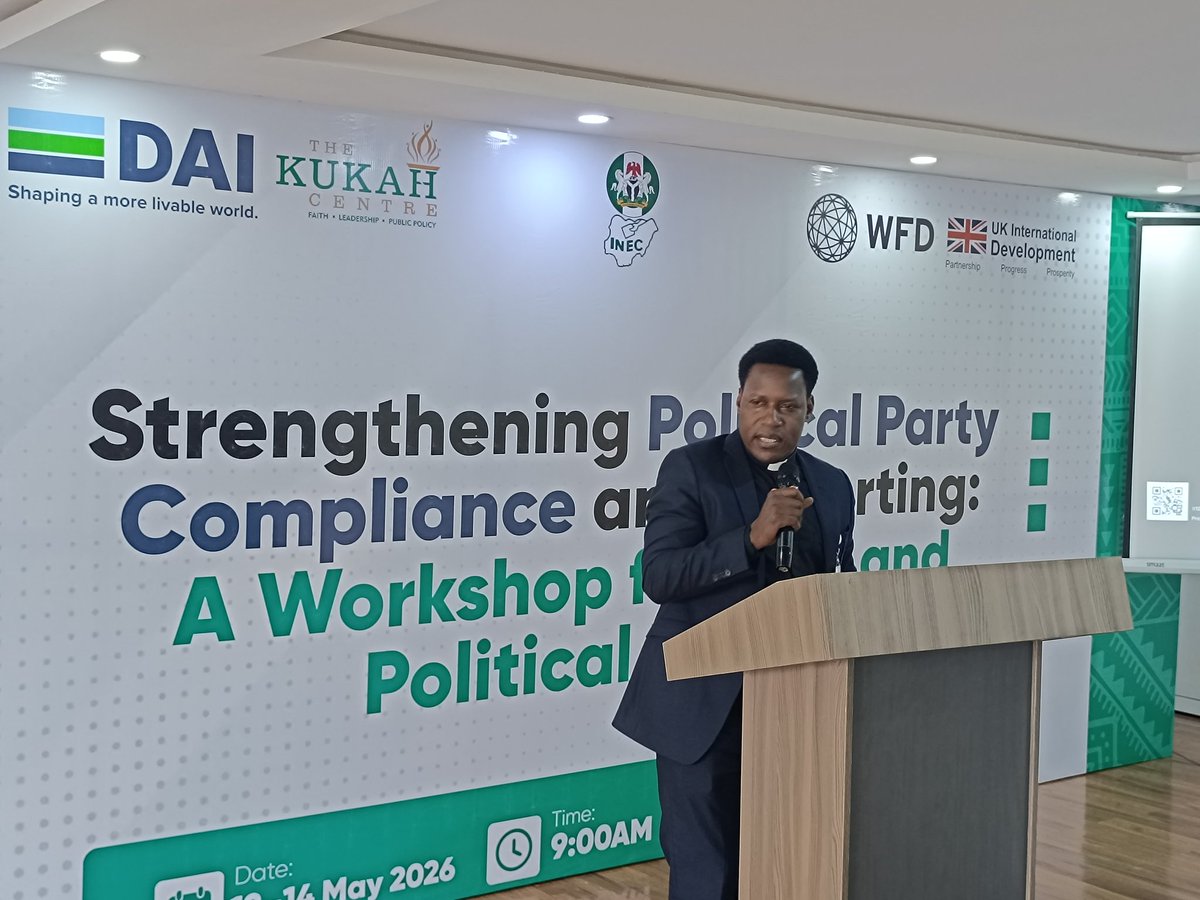
Similarly, the Executive Director of the Kukah Centre, Father Atta Barkindo, stressed the importance of compliance with laws and regulations in strengthening democratic governance and restoring public trust in institutions.
He stated that Nigeria does not lack laws and policies, but rather faces challenges with enforcement and compliance, adding that accountability and adherence to regulations remain essential for deepening democracy and ending the culture of impunity.
The workshop, organised by INEC in collaboration with the Westminster Foundation for Democracy (WFD), DAI and the Kukah Centre, brought together senior electoral officials, political party leaders, development partners and electoral stakeholders from across the country to enhance understanding of the Political Party Finance Reporting and Audit System (PFRAS) and the Regulations and Guidelines for Political Parties 2026 ahead of the 2027 General Election.
The objectives of the workshop was presented by Prof. Dimis Mai-Lafia, who stated that the training was designed to enhance stakeholders’ understanding of key provisions and changes introduced by the Electoral Act 2026 and the Regulations and Guidelines for Political Parties. He explained that the workshop also seeks to strengthen practical capacity for compliance reporting and the use of the Political Party Compliance Toolkit; improve stakeholders’ ability to generate, manage and submit compliance data through INEC’s reporting framework and digital systems; promote consistency, accuracy and standardisation in compliance monitoring and reporting processes; and build a sustainable pool of trained actors capable of cascading knowledge through a Training of Trainers (ToT) model.
Prof. Mai-Lafia further stated that the expected outcomes of the workshop include the development of a comprehensive learning curriculum and workbook on electoral compliance and reporting; delivery of technical training sessions on the Electoral Act 2026 and INEC Regulations and Guidelines; conduct of a Training of Trainers (ToT) workshop; finalisation and validation of INEC monitoring templates and political party reporting templates; as well as enhanced participant capacity in compliance reporting and monitoring processes.
INEC Welcomes New National Commissioner, Reaffirms Commitment to 2027 General Election Preparations
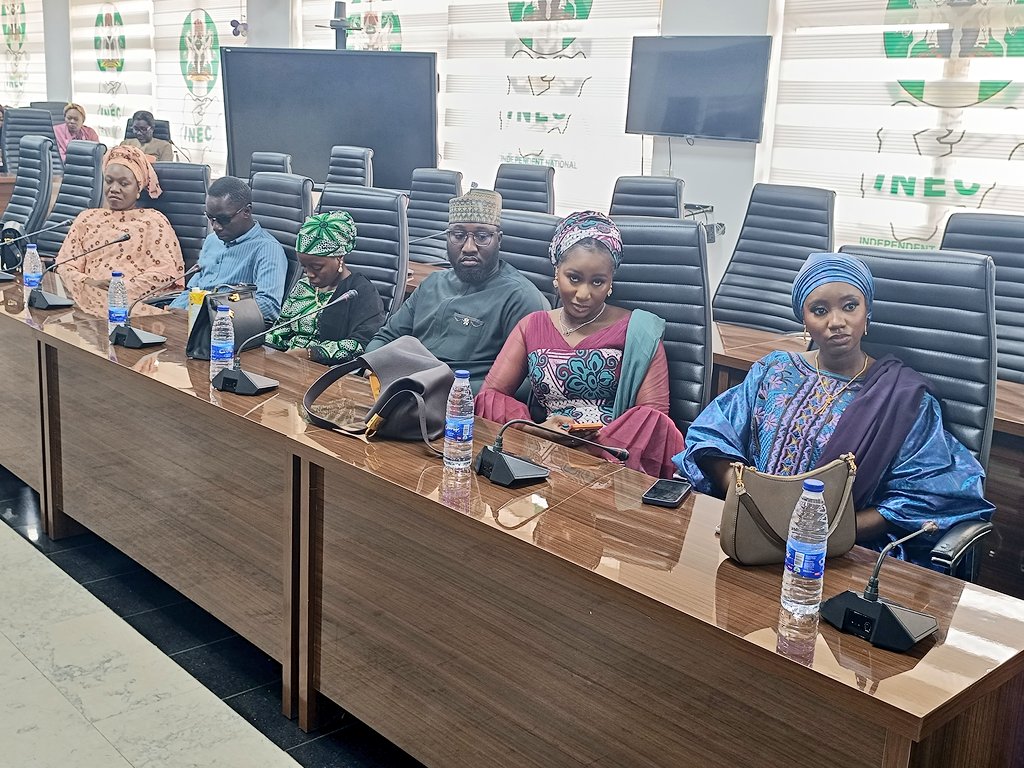
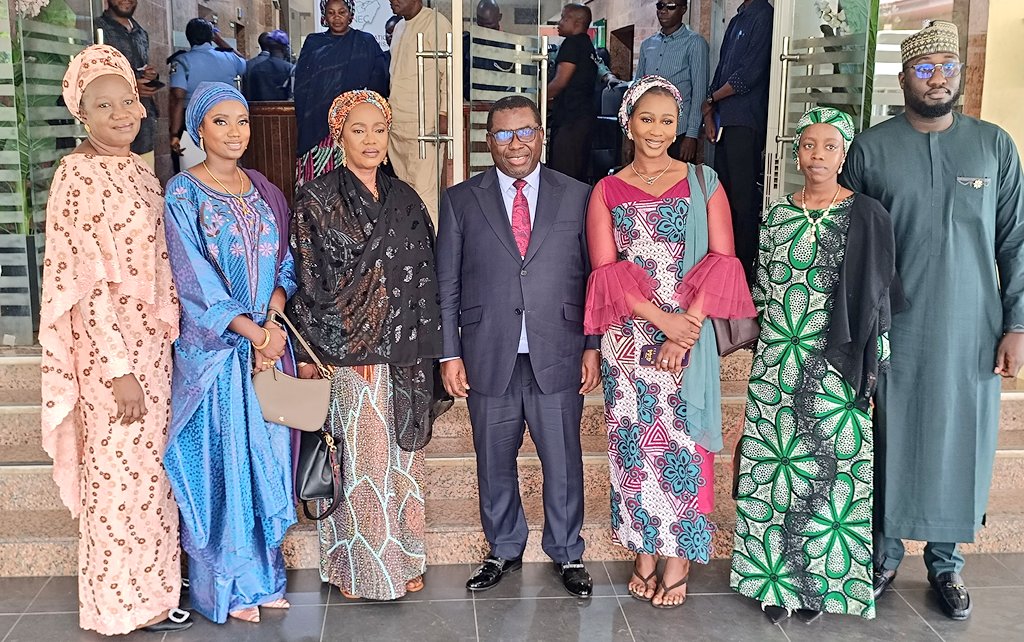
The Independent National Electoral Commission (INEC) has formally received a newly appointed National Commissioner, Rear Admiral Jamila Abubakar Sadiq Manafa (rtd.), MNI, OFR, following her swearing-in by the President of the Federal Republic of Nigeria.
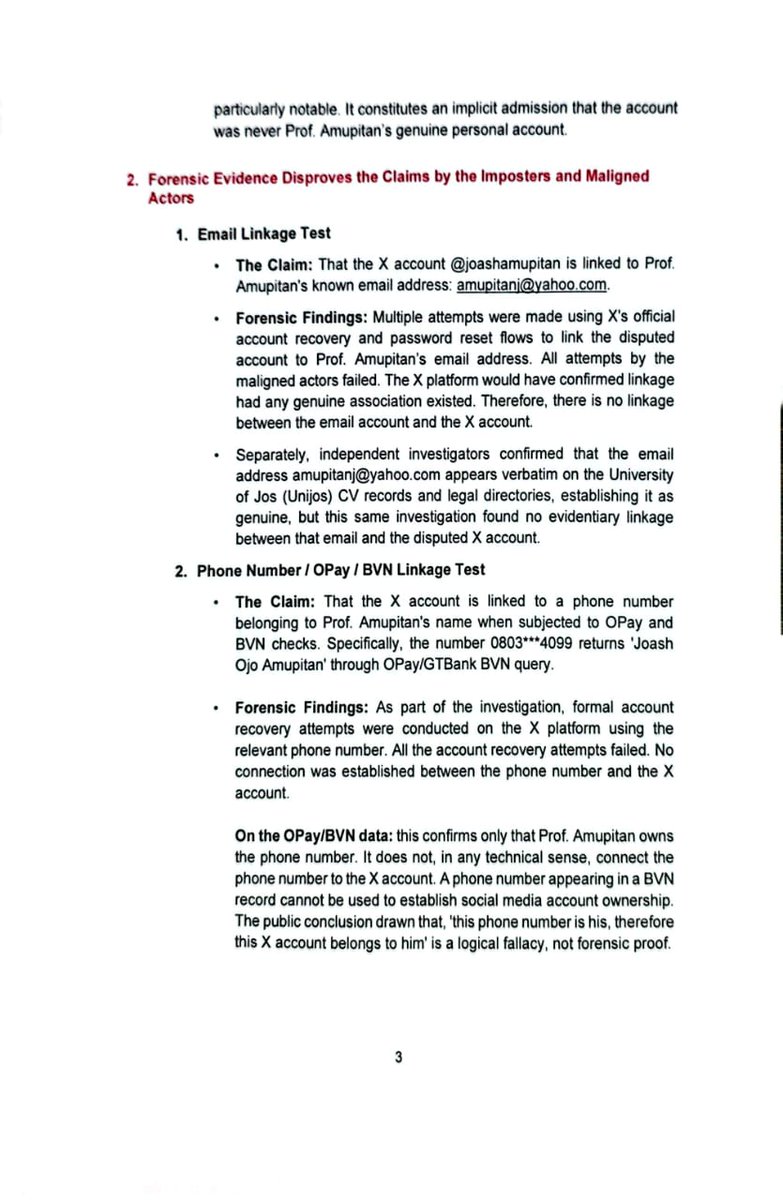
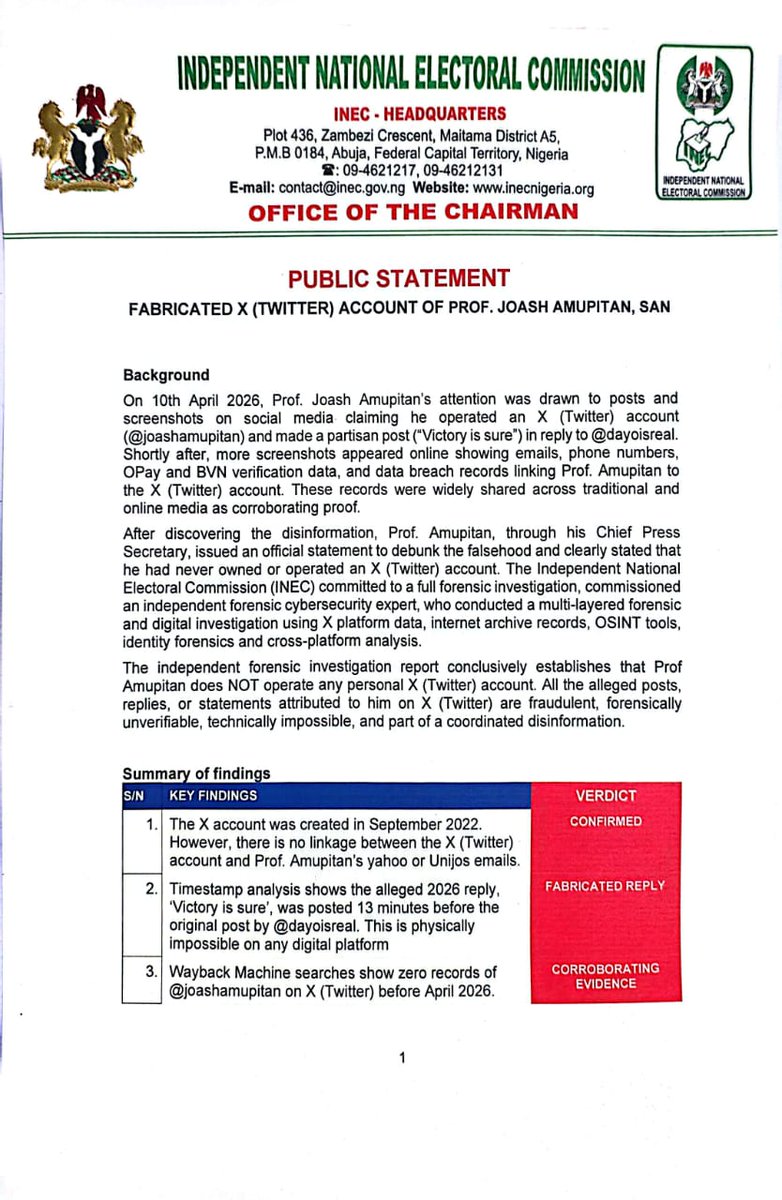
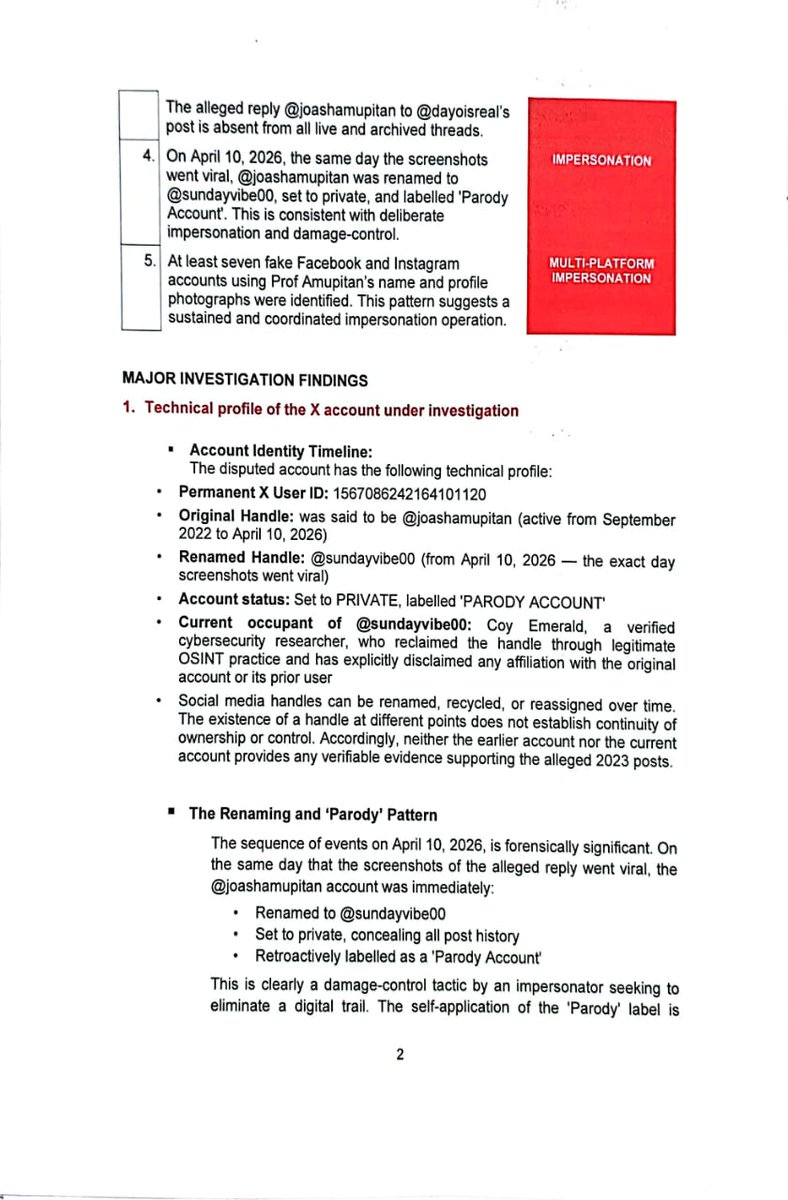
INEC Chairman, Prof. Joash Amupitan, SAN, described the appointment as both timely and strategic, noting that it comes at a critical period in the Commission’s electoral calendar.
He stated that the appointment restores full representation for the North-East geopolitical zone after over a year of vacancy, thereby enhancing the Commission’s decision-making capacity as it intensifies preparations for forthcoming electoral activities.
The Chairman further highlighted the Commissioner’s extensive experience spanning legal practice, military service, and logistics management, emphasizing that her expertise will add significant value to electoral planning, security coordination, and the management of electoral disputes.
Prof. Amupitan reaffirmed the Commission’s commitment to its constitutional mandate, stressing that INEC remains focused and undeterred despite emerging challenges. He noted that preparations are ongoing for a series of electoral engagements, including by-elections and other scheduled polls ahead of the 2027 General Election.
According to him, these off-cycle elections will serve as important benchmarks in assessing and strengthening the Commission’s operational readiness for the Presidential and National Assembly elections scheduled for January 2027, as well as the Governorship and State Houses of Assembly elections in February 2027.
The Chairman urged the new National Commissioner to actively participate in the Commission’s activities, collaborate with colleagues, and draw on the wealth of institutional experience within INEC to support the successful delivery of credible, transparent, and inclusive elections in Nigeria.
In her response, the newly sworn-in National Commissioner, Rear Admiral Jamila Abubakar Sadiq Manafa (rtd.), MNI, OFR, expressed appreciation to the leadership of the Commission for welcoming her into its fold.
Speaking at the Commission’s headquarters in Abuja, she thanked the INEC Chairman and members of the Commission for accepting her into what she described as a new professional family, noting that the reception made her feel as though she had known them for years.
She also acknowledged remarks highlighting her military background, expressing confidence that her experience in service would be useful in supporting the Commission’s operations.
The Commissioner further expressed optimism about working with the Commission towards the development and stability of the country, while wishing the institution success in its forthcoming activities.
She prayed for divine guidance and protection for the Commission, its members, their families, and the nation at large.
“I pray and hope that we are going to work together for the development and stability of this country. In God we stand and in God we serve,” she said.
She also offered prayers for the success of upcoming elections, as well as for the safety of all those involved in the electoral process, including staff and their families.
The Commissioner concluded by expressing gratitude once again for the warm reception, saying she was honoured to serve in her new capacity.
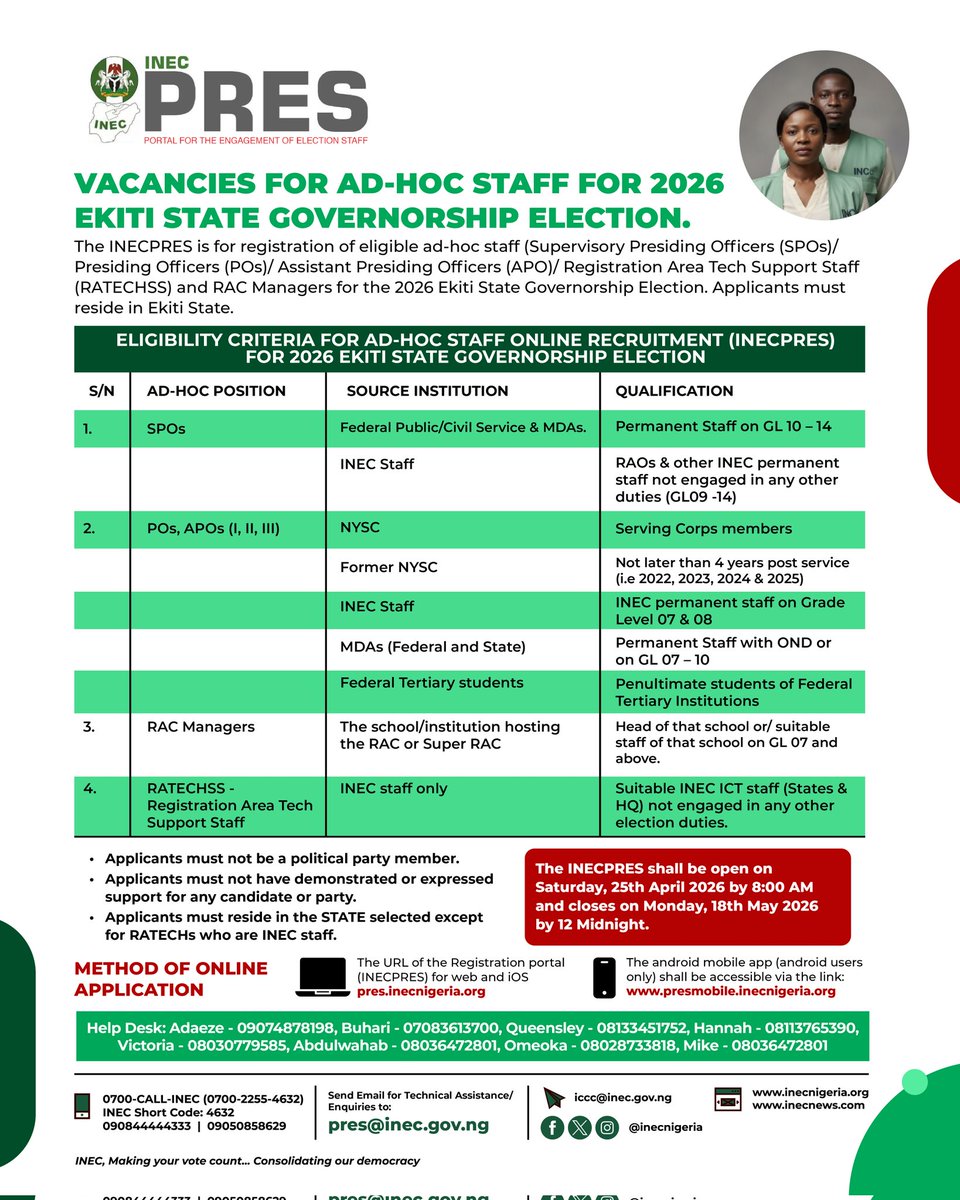
The Independent National Electoral Commission has opened applications for Ad-hoc Staff for the 2026 Ekiti Governorship Election.
Positions: SPOs, POs/APOs, RAC Managers & RATECHs
🗓 25 April – 18 May 2026
🌐 Apply Now: https://t.co/HwNeBEiZni
#EkitiDecides2026
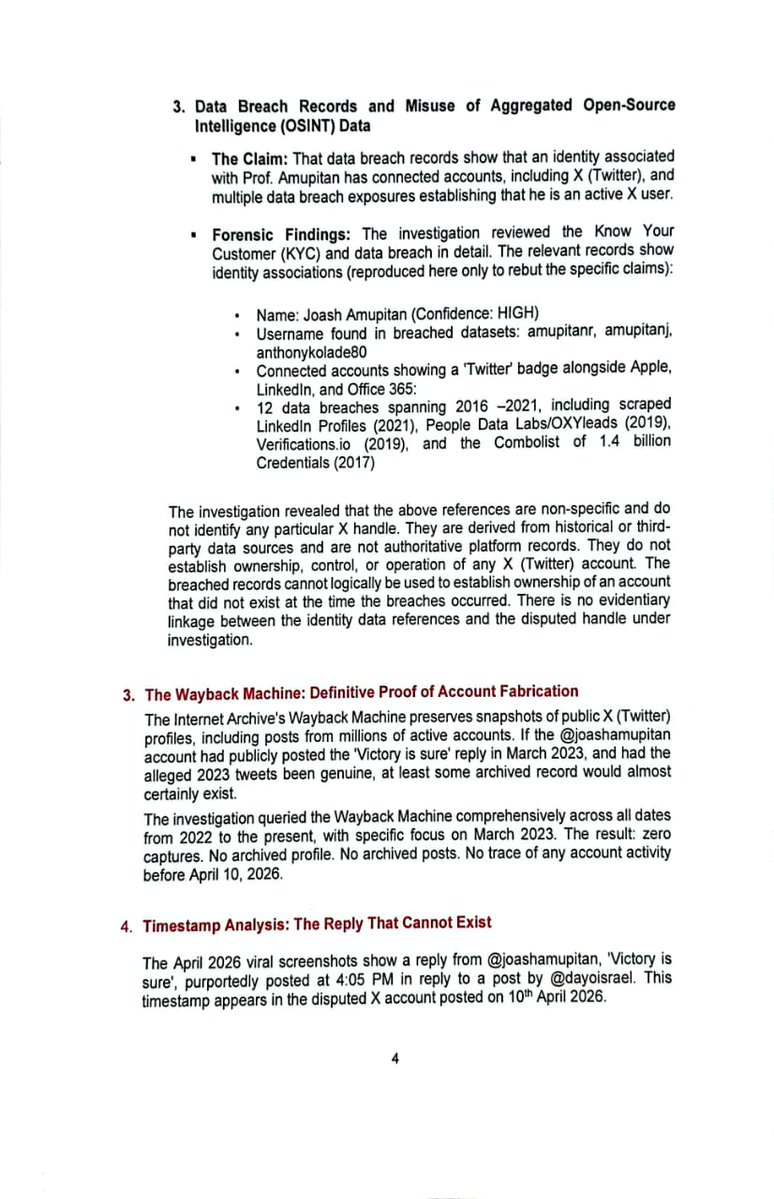
REBUTTAL:
The Independent National Electoral Commission (INEC) did not copy its recent press statement from any third party.
Any circulation of the statement outside the Commission’s official channels was done independently and not coordinated by INEC.
The publication by Peoples Gazette titled “Nigerians react as INEC reposts Tinubu aide’s message” is fake, misleading, and a misrepresentation of facts. https://t.co/aXjweXirFc
INEC’s repost of the statement was solely to amplify accurate information earlier released from the Commission and should not be misconstrued as alignment with any individual or political office holder.
The Commission remains strictly non-partisan and urges the public to disregard misleading interpretations of its actions.
INDEPENDENT NATIONAL ELECTORAL COMMISSION (INEC)
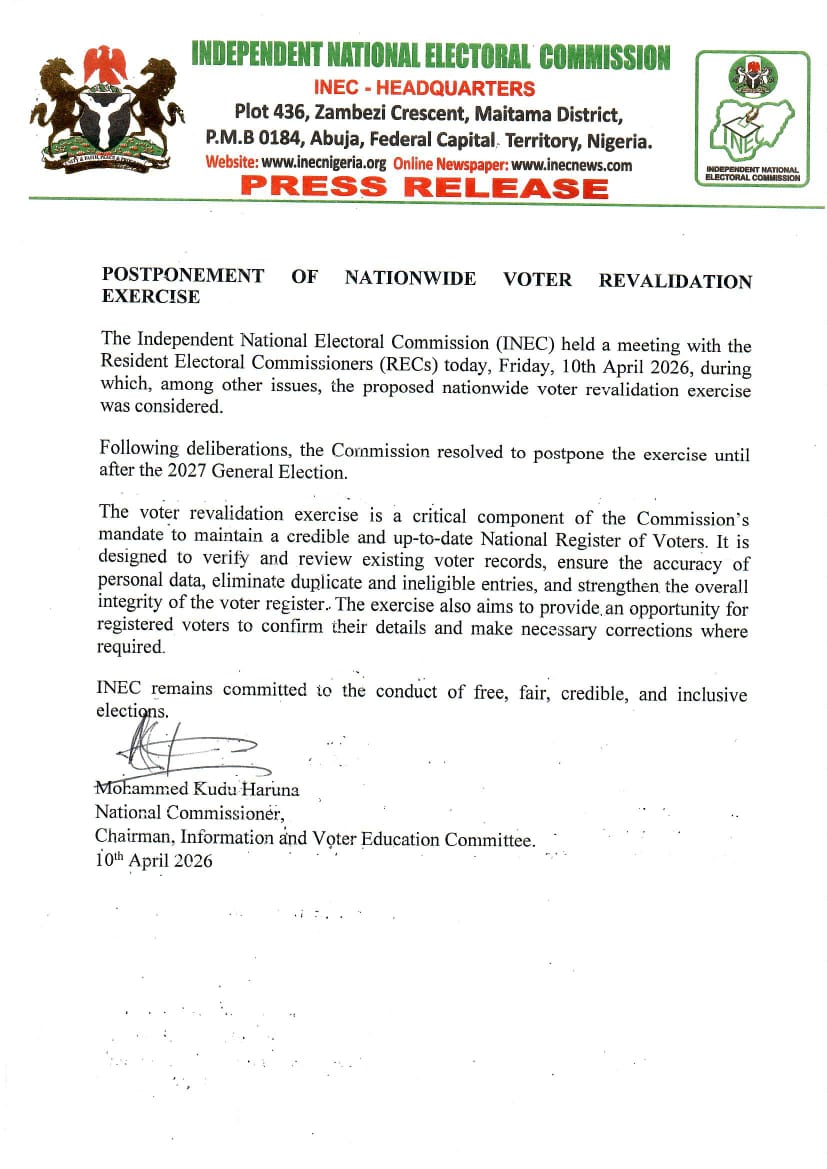
PRESS STATEMENT
POSTPONEMENT OF NATIONWIDE VOTER REVALIDATION EXERCISE
The Independent National Electoral Commission (INEC) held a meeting with the Resident Electoral Commissioners (RECs) today, Friday, 10th April 2026, during which, among other issues, the proposed nationwide voter revalidation exercise was considered.
Following deliberations, the Commission resolved to postpone the exercise until after the 2027 General Election.
The voter revalidation exercise is a critical component of the Commission’s mandate to maintain a credible and up-to-date National Register of Voters. It is designed to verify and review existing voter records, ensure the accuracy of personal data, eliminate duplicate and ineligible entries, and strengthen the overall integrity of the voter register. The exercise also aims to provide an opportunity for registered voters to confirm their details and make necessary corrections where required.
INEC remains committed to the conduct of free, fair, credible, and inclusive elections.
Mohammed Kudu Haruna
National Commissioner,
Chairman, Information and Voter Education Committee.
10th April 2026
Online Media Accreditation Portal Now Open
The Online Media Accreditation Portal for the #EkitiDecides2026 Election officially opens today, 8th April 2026.
Media organisations interested in covering the election are invited to apply within the accreditation window, which closes at midnight on 7th June 2026.
Please note: the portal will shut down automatically at the deadline.
Late applications will not be considered.
Apply early. Don’t wait till the final hour.
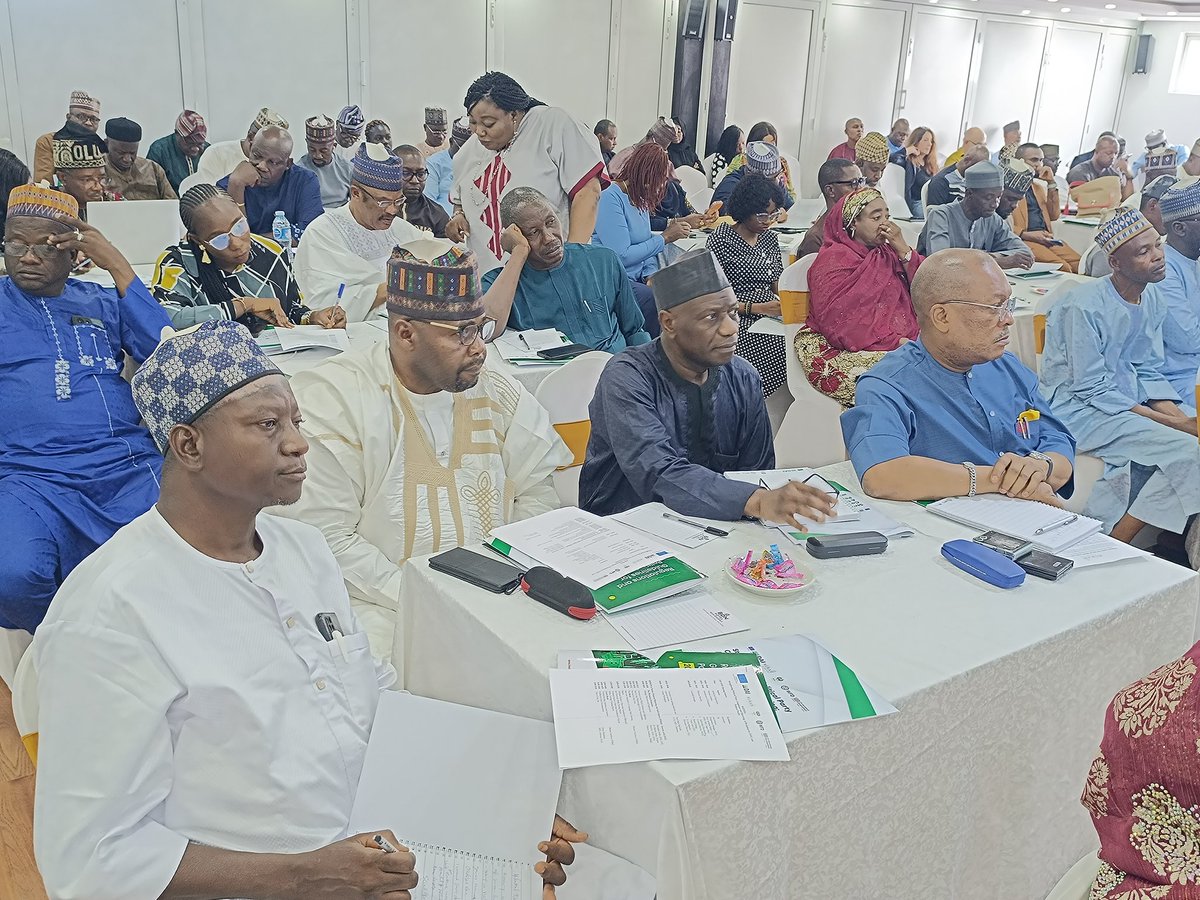
The third session, “Procurement Planning as the Foundation for Electoral Readiness,” was delivered by Mrs. Nanzok Bukata, who underscored the centrality of structured planning to successful procurement outcomes. She highlighted the need for comprehensive needs assessment, market analysis, and integration of procurement plans with the electoral calendar, noting that statutory timelines leave little room for delays or adjustments.
Mrs. Bukata further stressed the importance of documentation, transparency, and adherence to due process, emphasizing that clear records and open procedures are essential to maintaining public trust and institutional credibility. Her presentation resonated strongly with participants, who shared experiences on the importance of early engagement with end-users and accurate specification of procurement requirements.
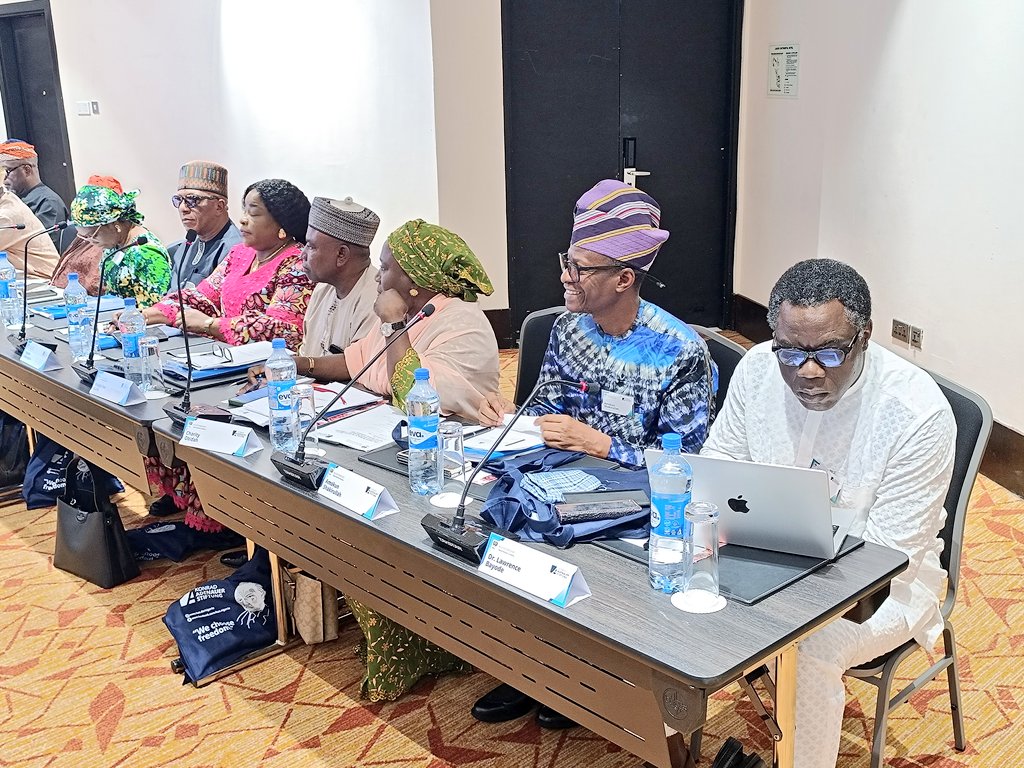
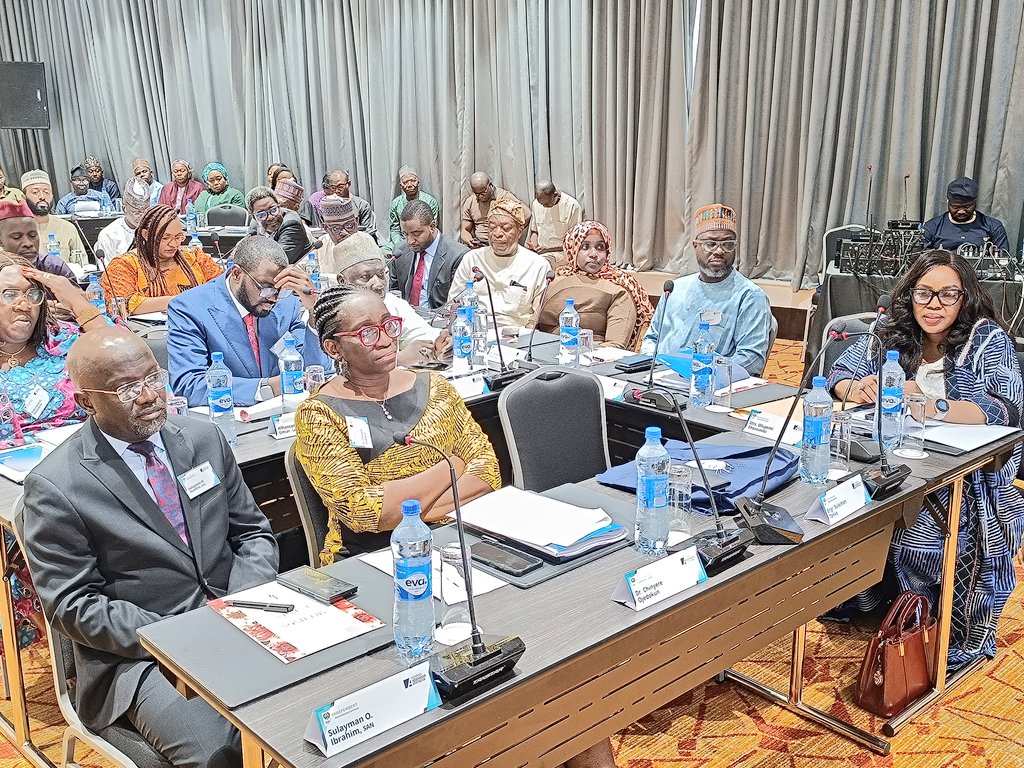
Throughout the day, discussions were enriched by contributions from Commissioners and Directors, whose experiences provided practical context to the technical sessions. The interactive format fostered knowledge exchange and reinforced a shared commitment to strengthening procurement systems within the Commission.
As deliberations concluded for the day, participants expressed a collective resolve to institutionalize best practices and lessons learned from the workshop. The engagement not only deepened technical capacity but also strengthened the Commission’s culture of integrity, accountability, and professionalism.
The active involvement of the INEC Chairman highlighted the strategic importance of procurement reform as part of the Commission’s broader preparations for the 2027 General Election. His leadership signaled a clear commitment to ensuring that all procurement activities meet the highest standards of transparency, efficiency, and value for money.
With the workshop continuing into its final day, the Commission remains focused on consolidating gains from the sessions and translating them into actionable frameworks that will support the successful delivery of a credible, transparent, and well-managed electoral process in 2027.
The second session, “Risk Management in Public Procurement Process in Nigeria,” was facilitated by Prof. Prince Michael Ikupolati, who provided a comprehensive overview of procurement-related risks and mitigation strategies. He outlined key vulnerabilities, including operational inefficiencies, financial uncertainties, compliance gaps, and reputational risks, stressing that proactive risk management is essential to safeguarding public resources and institutional integrity.
Prof. Ikupolati also emphasized the role of insurance instruments such as performance bonds and contractor risk coverage in ensuring accountability and protecting government investments. He noted that effective enforcement of these mechanisms is critical, particularly in large-scale, time-sensitive operations such as national elections.
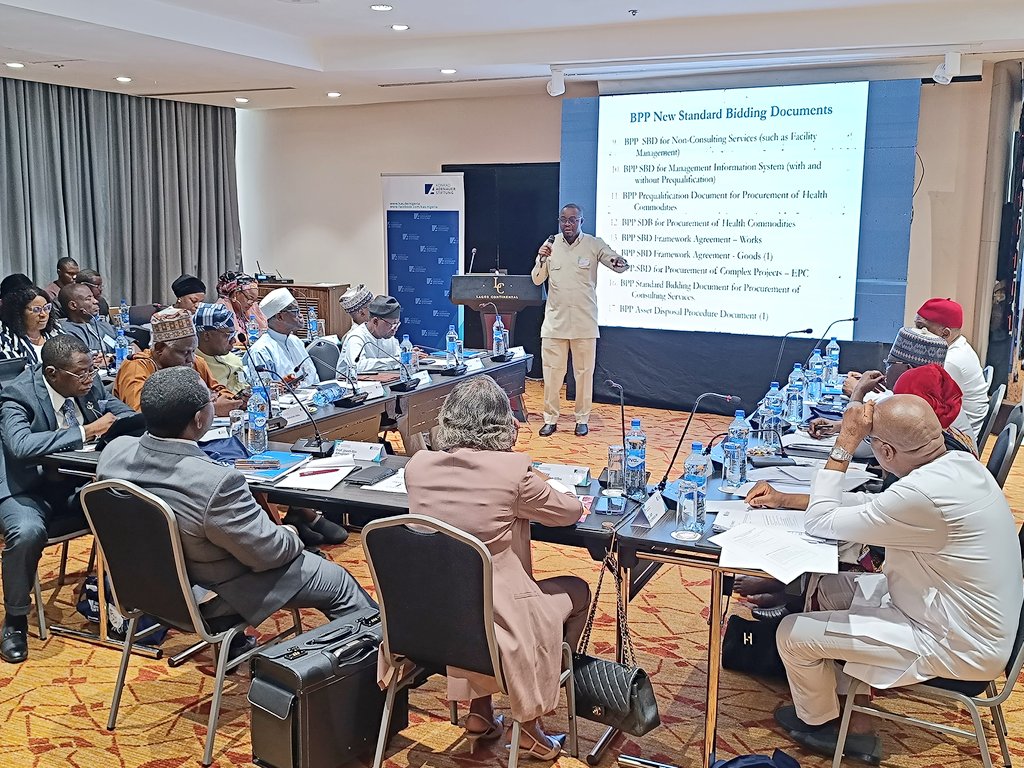
The first session, titled “Building Procurement Capacity for Election Readiness,” was delivered by Mr. Nelson Ojougboh of the Bureau of Public Procurement (BPP). He highlighted the importance of early and strategic procurement planning, noting that aligning procurement activities with the national budget cycle is essential to avoiding delays and ensuring value for money. He further emphasized the statutory implications of non-compliance, warning that procurement without a valid plan constitutes a violation of extant regulations.
Mr. Ojougboh also introduced participants to newly revised Standard Bidding Documents, designed to enhance transparency, standardization, and efficiency in public procurement. Discussions that followed enabled participants to examine practical implementation challenges and explore ways to adapt the frameworks to the specific demands of electoral operations.