Ayer me exhibieron en un momento de inseguridad y me hicieron pasar vergüenza.
Sí, me caló. Pero vaya que podría haber sido peor.
Podría haber sido yo quien exhibiera a otra persona que no se sentía segura, solo para quedar bien. Y eso… no me dejaría dormir en paz.
How to control an LED (or any other low voltage device) with your Arduino's analog inputs [TUTORIAL] https://t.co/65BXzhW5vB #arduino#diyelectronics#maker
Esto vale oro. ¡4 Cursos gratuitos sobre Ciberseguridad!
✓ Introducción y Fundamentos
✓ Seguridad de red
✓ Ataques en la nube
✓ Centro de operaciones (SOC)
De la prestigiosa empresa PaloAlto Networks:
→ https://t.co/3mFFBOXJjK
¿Tienes que enviar EMAILS desde tu WEB o APP?
Esta API te permite enviar 3000 correos GRATIS al mes
Se llama Resend y está disponible para:
JavaScript, Python, Java, Go y más:
Código para enviar un email en Node.js ↓
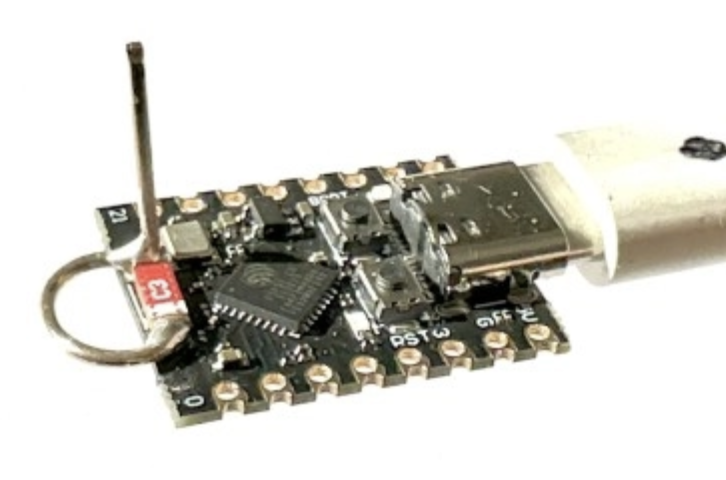
Project: ESP32-C3 SuperMini Antenna Mod
https://t.co/21VEdwrb5N
ESP32-C3 SuperMini modules are remarkably affordable, but with a significantly restricted WiFi range. A simple antenna mod can improve its performance.
#esp32#antenna#mcu
Aprender Python te dará una habilidad extra a la hora de buscar trabajo, y que mejor, aprenderlo de forma intensiva, yendo a los conceptos fundamentales rápidamente. https://t.co/34RN6R5asA
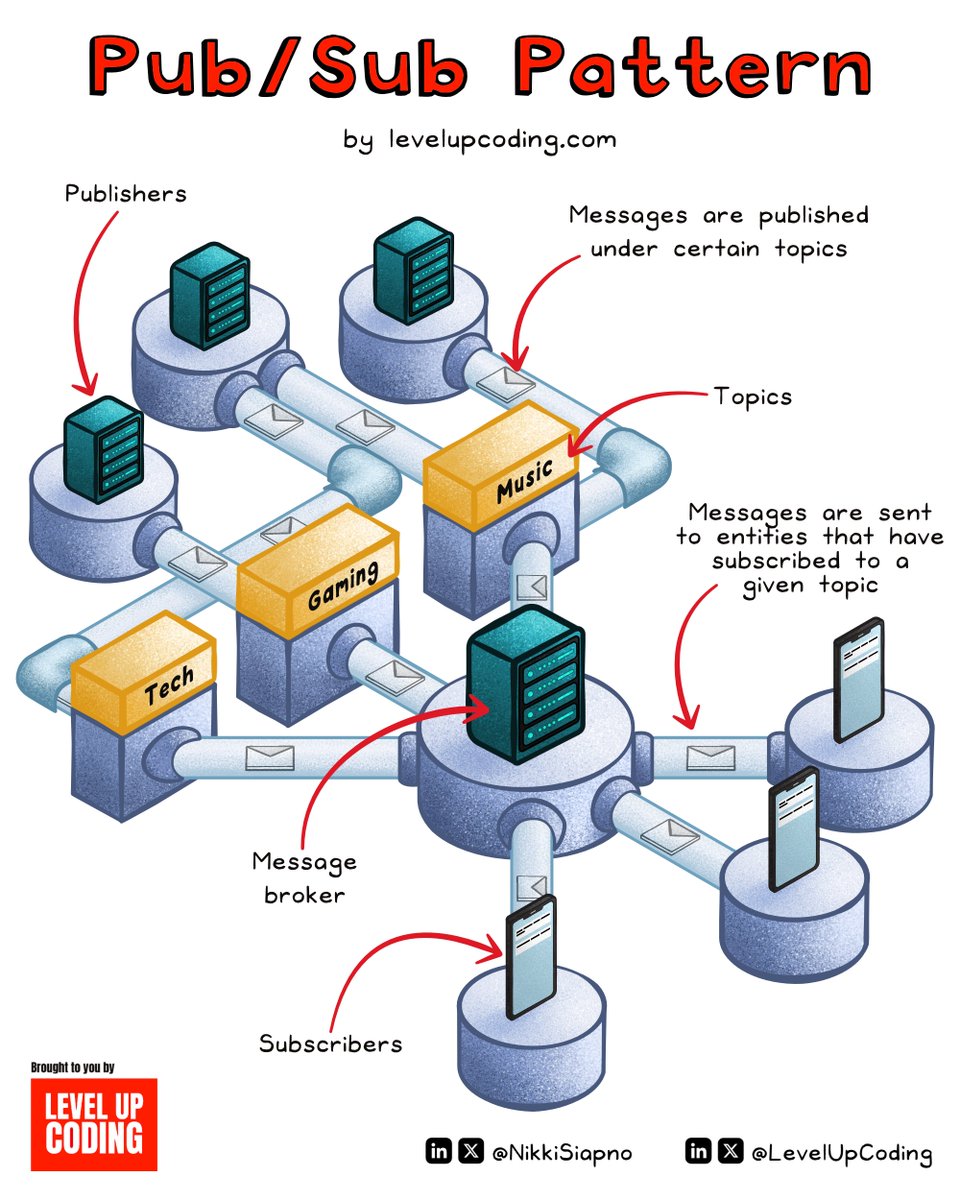
Pub/Sub Pattern Explained.
Distributed systems need to handle scalable, decoupled communication. The publish-subscribe messaging pattern enables this by providing asynchronous, event-driven message distribution.
There are three entities involved — publishers, topics, and subscribers.
Subscribers tell the system which messages they would like to be informed about by subscribing to a topic.
Publishers send messages to topics, without knowledge of who the message should be sent to.
A message broker or event bus then forwards these messages to the appropriate subscribers.
Social media platforms and messaging apps have several features that would be perfect candidates for this model.
For example, Twitter's account notifications feature. I could turn on notifications for any user, which could be the equivalent of subscribing to a topic.
After doing so, a push notification would be sent to me every time that user creates a post.
Message senders and receivers are heavily decoupled in a Pub/Sub model. This leads to improved scalability, flexibility, and fault tolerance.
As a result, it is a popular option for distributed systems that require large amounts of communication between nodes. It is often used alongside other communication patterns to meet the system’s needs.
💬 Over to you. Do you use Pub/Sub? 💭
~~
Thanks to our partner Typesense who keeps our content free to the community.
PHP devs, did you know you can easily implement instant, typo-tolerant search (for free)?
Check out Lavarel Scout—Typesense: https://t.co/XTGeDyoDFu









![circuitbasics's tweet photo. How to control an LED (or any other low voltage device) with your Arduino's analog inputs [TUTORIAL] https://t.co/65BXzhW5vB #arduino #diyelectronics #maker https://t.co/UrYc2WQmp5](https://pbs.twimg.com/media/G127RBhWEAArquS.jpg)