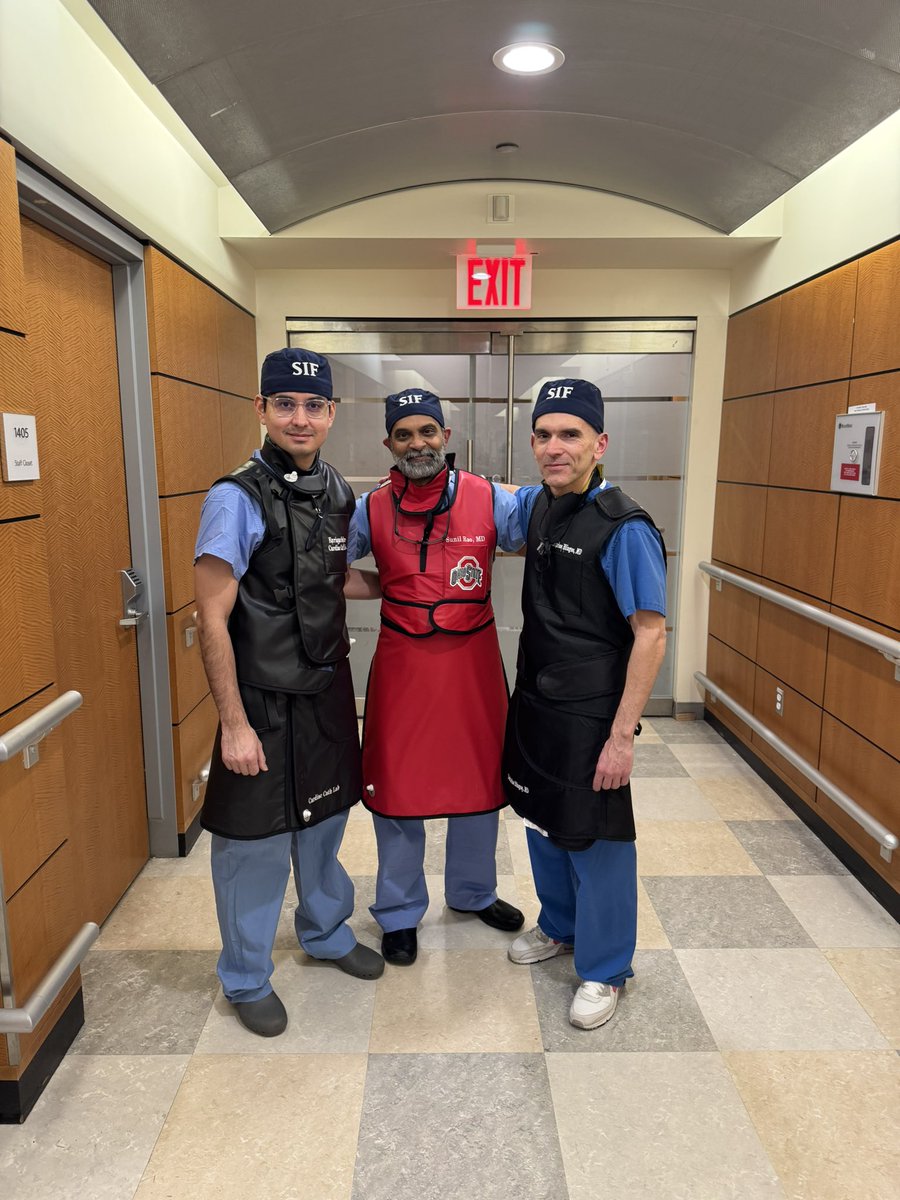
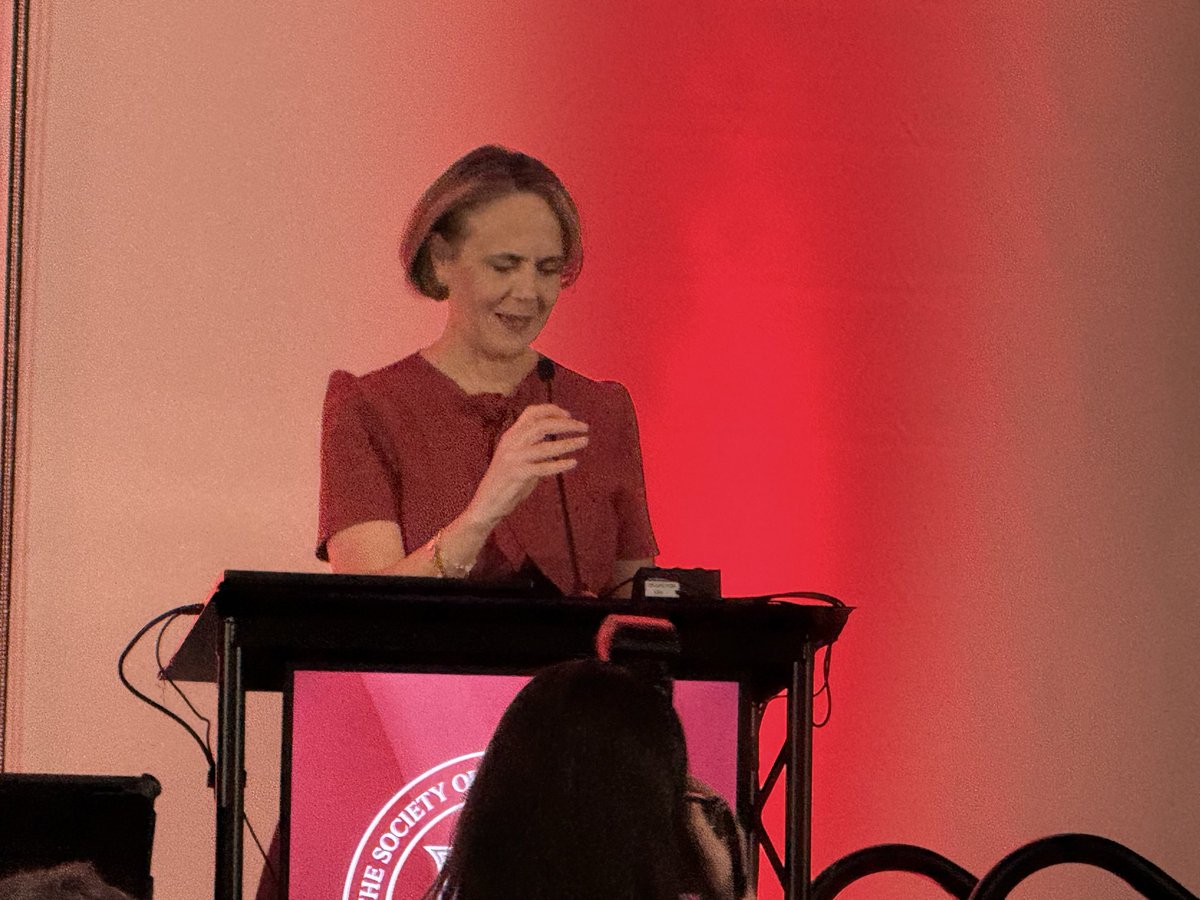
Thanks to everyone who stopped by and visited with us at #ESTS2026! If you didn’t get to meet with AATS 105th President @JonesDavid2013 in Athens, join us in September in NYC for #ITSOS2026: https://t.co/bzVZv1lNEW
A few slots are still open! ✏️Epi Writing Camp @JHUSummerEpi@pablov489 and I will share our approaches and experience on how to write a clear and well-organized manuscript📜
☑️Check out the details here:
Part 1: https://t.co/lqClG6WRZb
Part 2: https://t.co/UELPqcg8S7
Good luck to everyone taking the ABTS Oral Exams this weekend! Your hard work, dedication, and preparation have brought you to this moment. Wishing you confidence and success as you take the next step in your cardiothoracic surgery career.
New in #JTCVS Open: Cold crystalloid cardioplegia appeared to be noninferior to cold blood cardioplegia for myocardial protection in elective aortic arch replacement, as suggested by comparable postoperative left ventricular ejection fraction. Read more: https://t.co/a2wq5pqy4x
Age and Procedural Timing for Asymptomatic Severe Aortic Stenosis: Analysis from the EARLY TAVR trial. Early TAVR versus clinical survelliance consistent among all age groups above 65 years @kashishgoelmd@PhilGenereuxMD https://t.co/3SGDxiXhcF
📄 Can turbulence improve how we assess aortic stenosis?
🔗 DOI: https://t.co/o9jaD399G4
🫀 Aortic stenosis (AS) grading still relies heavily on pressure gradients…
❗ But gradients are flow-dependent
❗ And can mislead us in low-flow, low-gradient AS
👉 So—are we missing something more fundamental?
✨ This study explores a novel concept:
👉 Turbulent kinetic energy (TKE) as a marker of AS severity
🧠 Why TKE?
➡️ Turbulence downstream of the valve reflects:
✔ Energy loss
✔ Haemodynamic inefficiency
✔ “Wasted work” not contributing to forward flow
👉 Potentially a flow-independent marker
🔬 Study design:
🧪 Ex-vivo model with porcine aortic valves
🔁 Different flow rates: 1 – 4 L/min
⚙️ Three stiffness grades:
SGa → normal
SGb → moderate
SGc → severe
📊 Two methods to measure TKE:
✔ Reference: particle tracking velocimetry
✔ Test: colour Doppler echocardiography
📈 Key findings:
🔥 TKE increased with:
✔ Higher flow
✔ Higher valve stiffness
👉 Both methods:
➡️ Successfully distinguished severe vs non-severe AS
📊 At high flow (4 L/min):
➡️ Severe AS showed gradients ≈ 41 mmHg
💡 The key message:
👉 TKE reflects energy loss, not just velocity
➡️ A completely different dimension of valve haemodynamics
🚀 Clinical implications:
👉 Could help in:
✔ Discordant AS cases
✔ Low-flow, low-gradient AS
✔ Situations where gradients underestimate severity
👉 And importantly:
✔ Can be estimated with standard colour Doppler
⚠️ Limitations:
❗ Ex-vivo model
❗ Needs clinical validation
🚨 Bottom line:
Turbulence (TKE) may become a new, flow-independent marker of aortic stenosis severity—potentially transforming how we assess difficult cases.
#Cardiology #Echocardiography #AorticStenosis #CardiacImaging #Hemodynamics #Innovation #Echo #ValvularHeartDisease #MedTech 🫀📊
1/8
— The First Lesson as a Surgeon, Inherited from Dr. Yamamoto —
🎯 Let’s start with a question.
There’s a small circle drawn on a piece of paper in front of you.
“Put a dot inside this circle.”
How do you do it?
A: Slowly and carefully, making sure it never goes outside.
B: Quickly — just a quick flick, focusing on speed.
Which is the “right” answer?