Board-certified: Internist, Obesity Med. Geneticist, RegenMed, Orthobiologist and DPC practice. Pro Paleo Doc! Author and Longevity Doc. using rapamycin etc.
Does this care in 2 degree weather not deserve to be reimbursed? Should record profit insurers be allowed to stiff labs, nurses and doctors & get away with it Scot-Free? We’ll see @EdGainesIII@wendellpotter@mass_marion We’ll see….
In America, a warehouse store. A fully roasted chicken costs five dollars, the raw chicken beside it costs seven, and I stood between them like a man between two truths.
Golden. Hot. Seasoned. Spinning in glory under the lights, in a line of its brothers. Four dollars and ninety-nine cents.
I checked the raw birds. Seven dollars. Pale. Cold. You must do everything yourself.
This is not commerce. Commerce does not move backward. Somewhere in this building, mathematics lies defeated.
I asked the man at the counter. "How is the cooked bird cheaper than the raw bird?"
"Been five bucks forever. They keep it that way."
"But the store loses."
"Yep. On purpose."
On purpose. I held my receipt with both hands.
In my land, a lord who lowered the price of rice in a hard winter was remembered for generations. They built him a small shrine. This store does it every day, with chicken, and tells no one.
A woman behind me grew tired of my reverence. "It's just a chicken, sir."
It is not just a chicken. It is a wound the merchant takes on purpose, so that anyone, on any day, with five dollars, eats like a lord. The bird is the message. The price is the vow.
I will confess: I bought two. I did not need two. The second was not hunger. It was gratitude, and it was delicious.
Some prices are not prices. They are promises.
I return every week now. I take one bird. I bow toward the deli, briefly, so as not to alarm the staff. They have begun nodding back.
The vow holds. The bird turns. Five dollars.
Long may it spin.
Xocova (Ensitrelvir) Coming Soon to USA!
A second-generation SARS-CoV-2 antiviral called Xocova could turn out to be a big deal.
Will it cure Long COVID? No. But might it be a genuine tool for people living with it? Possibly.
Something to blunt a bad outcome. Something that buys space to recover through other means. Something that lets a Long COVID patient visit family, see friends, exist in the world with a little less dread.
Something you could take before walking into a medical appointment with a provider who won’t wear an N95.
I have to assume it’s also an option for people whose immune systems are already compromised, by cancer, by treatment, by Long COVID itself.
Will I stop masking in public? No. But would I go out more? Yes. For our family, that alone would be life-changing, the simple knowledge that if we get sick, better options are there.
Will it prevent Long COVID if taken early? I don’t know. Paxlovid doesn’t appear to help with that, but the data on Xocova isn’t in yet. It’s currently approved only for acute infection, but I find myself hoping, genuinely hoping, that preventive use becomes possible someday.
One more thing: it has far fewer drug interactions than Paxlovid. For people already managing complicated medication regimens, that’s not a small thing.
I don’t post about the labs in the w$r zones as it leads to deplatforming.
Russia probably cares much more about a Plum island in their backyard than some penis piano playing puppet laundering USD for swamp creatures.
There’s a top tier research group in New York that’s working to invest a lot of time and $$ into a true BPC-157 injectable safety study.
Checking all biomarkers before and after, giving us a true picture of what this compound really is about
More details to come
She got an echocardiogram, had health insurance, and still got billed $1,731 after insurance already paid around $7,000. She tried to negotiate and they told her no.
So she makes a fake appointment for her husband who doesn’t have insurance, asks the self-pay price, and they tell her $487.02. Self-pay being cheaper than using your insurance is crazy.
BPC-157 has a 100% hit rate across every tissue tested. Nothing else comes close.
Not most. Not some. Every one.
→ severed nerves — REGREW
→ torn ligaments — REBUILT (oral worked)
→ detached tendons — REATTACHED
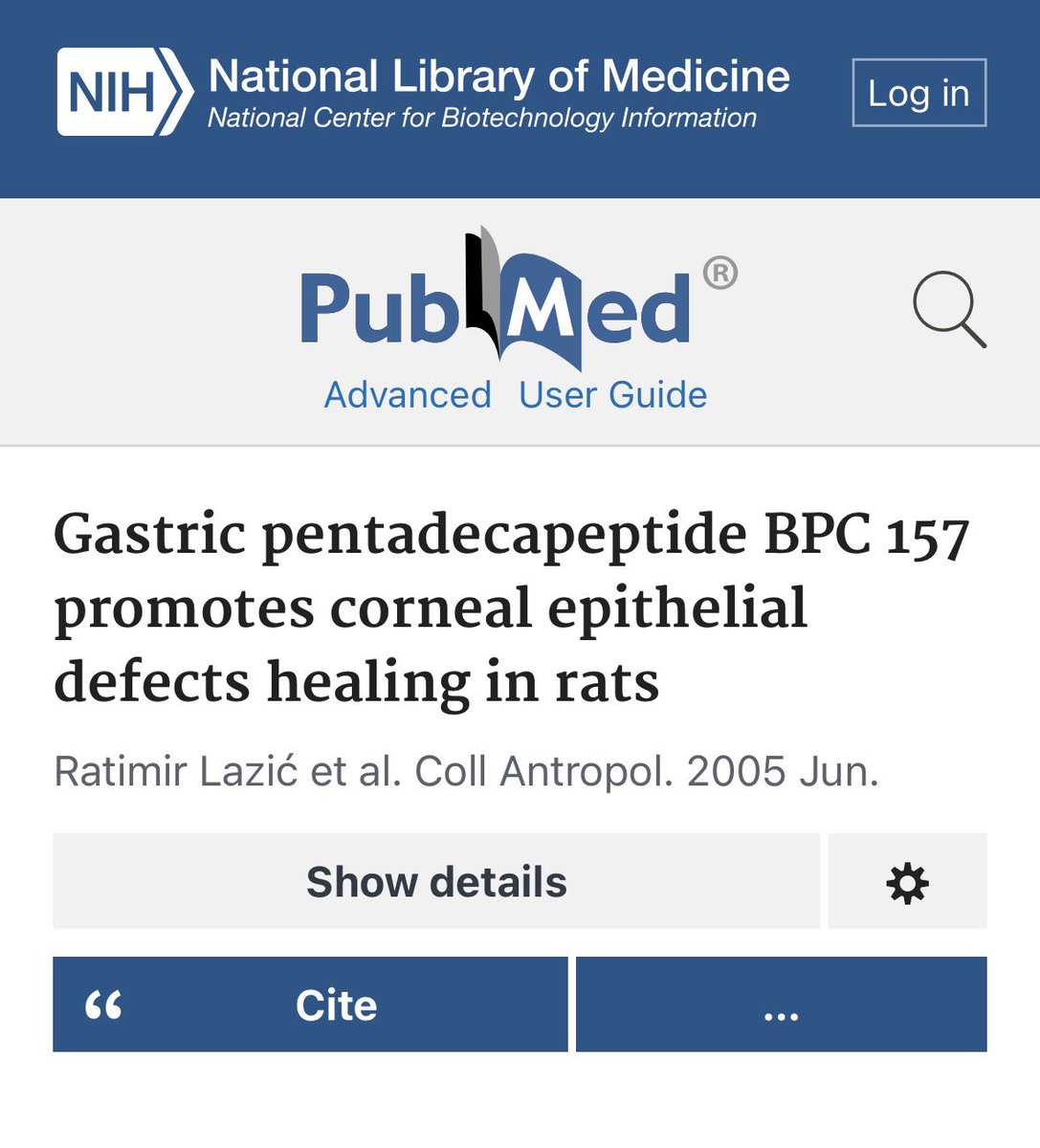
→ punctured cornea — SEALED
→ destroyed liver — REVERSED
→ shredded gut — REPAIRED
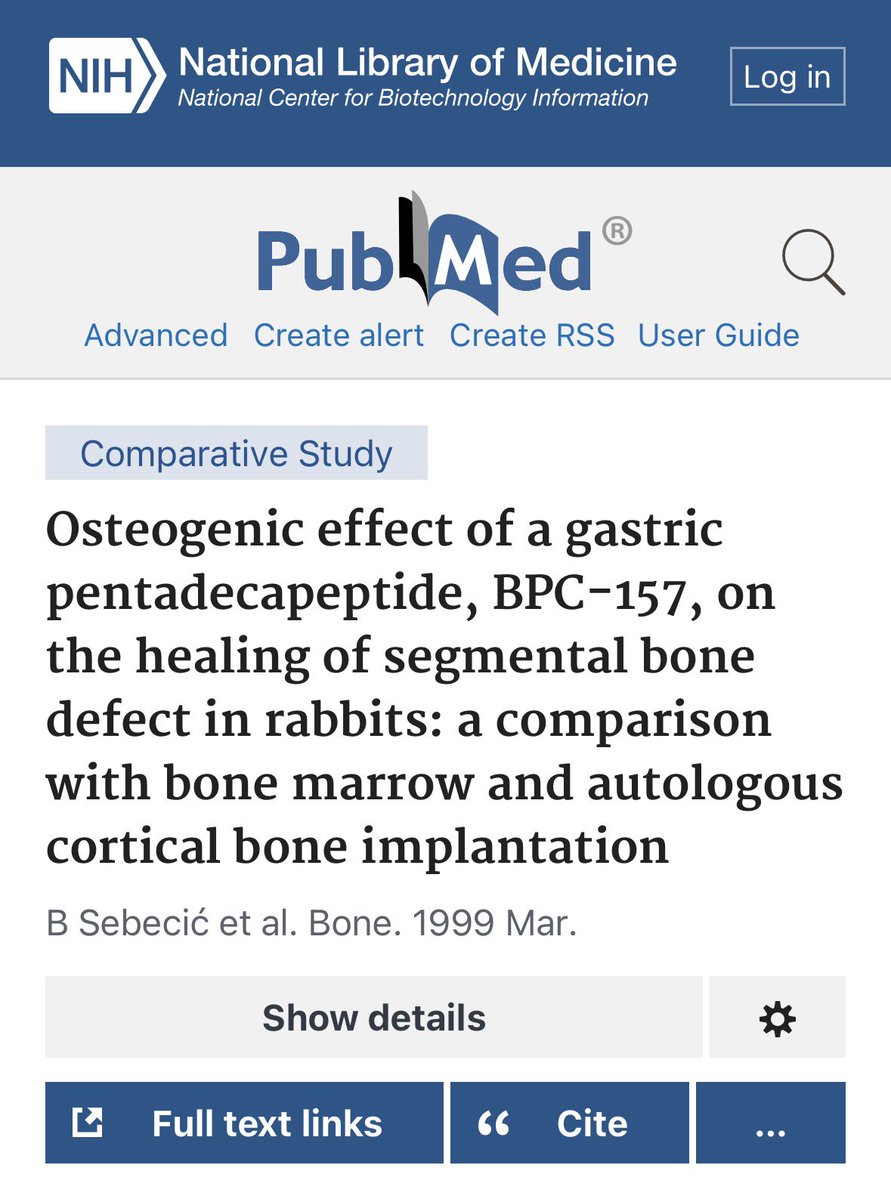
→ bone defects — CLOSED (matched grafts)
→ stopped heart — RESTORED
→ Parkinson’s — REVERSED
→ crushed spinal cord — RECOVERY at 360 days
15 amino acids. Found in your own stomach juice. Your body makes it — just not enough to fix old damage.
One repair system: blood vessel growth, collagen production, inflammation reduction. Universal across tissues. That’s why one peptide works everywhere.
No lethal dose in 30 years. WADA banned it. FDA is now reconsidering it.
Your doctor never mentioned it. Your stomach has been making it your entire life.
I take it daily. Source in the comments ↓
University of New Mexico researchers found SARS-CoV-2 ORF3a hijacks VPS39, misroutes NPC2 and breaks mitochondria-lysosome contacts, trapping cholesterol inside lysosomes.
A direct path from viral protein to cell dysfunction.
https://t.co/WmKO1Evd8i
Unbridled doubt can lead to ignorance just as surely as blind certainty - often even more effectively than honest, curious inquiry.
Be wary of the costume of doubt; it often disguises a cynic masquerading methodically as a skeptic.
Your malpractice carrier does not need you to lose a lawsuit to make money.
It needs time.
Fewer than 2 in 100 doctors see a malpractice payout in any given year.
Most physicians pay premiums for years and never cost the carrier a dollar.
Med mal is one of the longest-tail lines in insurance. The carrier collects your premium, holds it for years, and invests it before any claim lands.
In 2024, the industry lost money on underwriting and still cleared $2.1 billion, almost all from investment income.
Are you done giving away your money to the carriers? Join us.
@Megalithic12000 The Antikythera mechanism found in the ancient wreck in the Mediterranean. (Which nobody had heard of our guess that it existed)
If the ancients could make that, they could have made something similar that solved any sailing issue.
For thousands of years, sailors could find their latitude from the stars, but no one could work out their longitude at sea.
Latitude tells you how far north or south you are, but longitude is east to west, and getting it wrong put whole fleets onto rocks they never saw coming.
🔹Latitude is easy
🔹Longitude needs a clock
🔹No clock could keep time at sea
🔹Four warships lost on the rocks in 1707
🔹As many as 2,000 sailors drowned in a single night
The trick was time, because longitude is just the gap between the hour back home and the hour where you stand, but every pendulum clock was thrown useless by the roll of a ship.
Britain was so desperate it offered £20,000 for a fix, a fortune worth millions today, and still it took until the 1760s before a clockmaker named Harrison cracked it.
But here is where it gets strange, because Hancock points to maps drawn centuries before Harrison that he reads as already carrying good longitudes.
Mainstream puts that down to centuries of dead reckoning and copied coastlines, not lost knowledge, yet he keeps asking how the east to west spacing got so close.
Either way, men died solving what older charts had been creeping towards for centuries.
So were those old maps just good guesswork, or do a few of them sit too neatly to explain?
One of the most interesting emerging ideas in post-infectious illness research is that many different infections may trigger similar downstream biological disturbances, producing remarkably similar symptom patterns despite very different initial pathogens.
This is still a hypothesis—not a settled fact—but the evidence supporting biological convergence continues to grow.
SARS-CoV-2. Epstein-Barr virus. Influenza. Q Fever. West Nile Virus. Ross River Virus. Various bacterial infections.
Different pathogens. Different tissues. Different immune responses.
Yet many patients develop a strikingly similar syndrome characterized by:
• Fatigue
• Post-exertional malaise (PEM)
• Cognitive dysfunction (“brain fog”)
• Dysautonomia/POTS
• Exercise intolerance
• Sleep disturbances
• Sensory symptoms
What if the pathogen is not the whole story?
Several recent reviews suggest that diverse infectious triggers may converge upon a limited number of vulnerable physiological systems.
Among the repeatedly identified candidates:
🔹 Mitochondrial dysfunction and impaired ATP production
🔹 Endothelial and microvascular dysfunction
🔹 Autonomic nervous system dysregulation
🔹 Neuroinflammation and glial activation
🔹 Persistent immune activation
🔹 Altered cellular stress-response pathways
Komaroff and colleagues have argued that Long COVID, ME/CFS, and other post-acute infection syndromes share many of these abnormalities, including mitochondrial dysfunction, endothelial dysfunction, immune dysregulation, and autonomic disturbances. (PubMed)
The mitochondrial story is particularly intriguing.
Independent reviews in both Long COVID and ME/CFS describe evidence for impaired oxidative phosphorylation, reduced ATP generation, altered metabolic flexibility, oxidative stress, and abnormalities in cellular energy production. (PMC)
This matters because virtually every symptom reported by patients—fatigue, exercise intolerance, cognitive dysfunction, autonomic instability—depends heavily on adequate energy availability at the cellular level.
The autonomic nervous system may represent another point of convergence.
Multiple studies have documented orthostatic intolerance, POTS-like syndromes, altered sympathetic/parasympathetic balance, and broader autonomic dysfunction in both Long COVID and ME/CFS. (Taylor & Francis Online)
Then there is post-exertional malaise (PEM)—arguably the most distinctive symptom shared by many patients.
Rather than simple deconditioning, emerging evidence suggests PEM may involve a complex interaction among mitochondrial dysfunction, immune activation, neuroinflammation, autonomic dysregulation, vascular abnormalities, and skeletal muscle pathology. (PMC)
This convergence model helps explain an observation clinicians have made for decades:
Patients often arrive through different doors—but end up in remarkably similar rooms.
An EBV-triggered illness may not be biologically identical to Long COVID.
An influenza-triggered syndrome may not be identical to ME/CFS.
But they may share enough downstream physiological disturbances that the resulting symptom patterns overlap substantially.
Importantly, none of this means we have found a single cause.
The current evidence points toward a network of interacting mechanisms rather than one master explanation.
Different patients may arrive at similar symptoms through different combinations of mitochondrial dysfunction, endothelial injury, immune dysregulation, autonomic dysfunction, neuroinflammation, and metabolic abnormalities.
The future of research may therefore be less about identifying “the pathogen” and more about understanding why different insults appear capable of converging on the same vulnerable biological systems.
If that hypothesis proves correct, it could reshape how we classify—and eventually treat—Long COVID, ME/CFS, and other post-infectious syndromes.
What if I told you it acted like a brain and the whole thing can talk to each other and it’s actually in charge of the atmosphere hydrosphere and agrosphere?
Its electrical activity rivals local natural current flows.
Yes, there are US-funded biolabs in Ukraine. But if these four pages are all she managed to uncover, then this admin appears remarkably inept.
Even the Russian presentations on US biolabs in Ukraine contained more information - including some of the very same pages Gabbard released today.
Johns Hopkins studied 11 hamsters and found SARS-CoV-2 caused lasting cardiac dysautonomia, shifting from early vagal surge to exhaustion, then post-acute reactivation.
Early immune or mitochondrial stress blockade prevented it.
https://t.co/86VzgI7ZDa
An update on our experimental long covid/vax injury protocol, 7 months and 27 patients in⬇️
I just got back from 6 months in Tokyo, and when I return next month it will be as a full employee of Edogawa Hospital, officially coordinating this treatment as it continues to expand
@EthicalSkeptic@HouseLyndseyRN@SenRonJohnson@RandPaul
If they lied to you while enforcing an action, they will almost certainly lie to you about the results of that enforcement.
I’ve spent 25 years studying how rhetorical coercion and fear-driven gullibility operate together. Ignorance is not merely a passive condition — rather, it is an active process.