Our aging paper on the healthy lung single cell transcriptomics is finally out in @AgingCell !
Congrats to our Minxue Jia (1st author) and many thanks to collaborators (Drs Rojas, Mora, Lafyatis)
https://t.co/PKHBsqJSj0
Congratulations to our Feng Shan, a student I co-advise (prim.: Dr. Vignali), condensed his PhD thesis in this first author publication. Not bad, right?
The paper will be included in the next issue of Science Immunology.
https://t.co/ubwMFqSFLR
Very proud for our Tyler Lovelace for his first co-author publication in #BMCMedicine. This is a collaboration with @YoelSadovsky lab.
Congratulations Tyler! #cpcb#UF#NLM https://t.co/vflROpmI6E
This is just up at the AJRCCM. How #COPD predictive equations on spirometry measurements affect disease categorization for non-white populations? Congrats to Liz Regan who led the study and very happy that Robert Gregg and I participated in it. #NHLBI
https://t.co/7l3oAOUhCC
Another ATS conference ended. This year, there were many great talks. Very proud of my students, Tyler Lovelace and Minxue Jia, who gave talks in mini-symposium and presented their work in poster discussions. Happy to see old friends and colleagues. #ATS2023
Very excited to see our paper on lung fibroblasts in #IPF published in #Respiratory Research. This paper describes the changes in fibroblast when transition from normal to profibrotic state. Congratulations to Minxue Jia, who led this work. #NHLBI#UF
https://t.co/uZWDbkgyYj
Very proud of my students Marissa, Minxue and Haiyi for their win in this year's Hackathon. Their work is very promising and hope to see it published soon.
Congratulations to Marissa Di, Minxue Jia, and Haiyi Mao for winning the 2023 CPCB Hackathon in the Science category with their project "Learning non-linear interpretable latent factors for scATAC-seq"! #CPCBHackathon#ScienceCategory 🎉👏
Congratulations to Marissa Di, Minxue Jia, and Haiyi Mao for winning the 2023 CPCB Hackathon in the Science category with their project "Learning non-linear interpretable latent factors for scATAC-seq"! #CPCBHackathon#ScienceCategory 🎉👏
Big congrats to former lab member, Dr. Kristina Buschur, for today's publication. Kristina used causal graphs to identify COPD subtypes from blood RNA-seq, which differ in disease severity and mortality. Thanks to our collaborators and #NIH#NHLBI https://t.co/d7sZZiJGbL
This is amazing! I just found out that @UF offers free subscription to @nytimes and @WSJ to its employees. I don't know who else does so, but I wish all universities make these subscriptions standard, like the science journal subscriptions. #education#journalism
As most @NIH grantees should know, data sharing sections will be required in proposals in early 2023 (https://t.co/aZPVosZtVs). Now @NIH might actually make those sharing grant components PUBLIC! So the public & community can start to hold grantees to their commitments! #nihacd
Just submitted a paper in @ThoraxBMJ. I was amazed by the functionality. The software extracted title, abstract, co-authors and funding information from the Word file. Still needed some tweaks, but it surely helps a long way the submission.
This is our paper for causal inference & prediction on high-dimensional, co-linear data. Our Tyler Lovelace co-led this work in collaboration with Jishnu Das lab, Harinder Singh and others. Congrats Tyler! And thanks @nih_nhlbi for support. #causality https://t.co/Y57bqtolt7
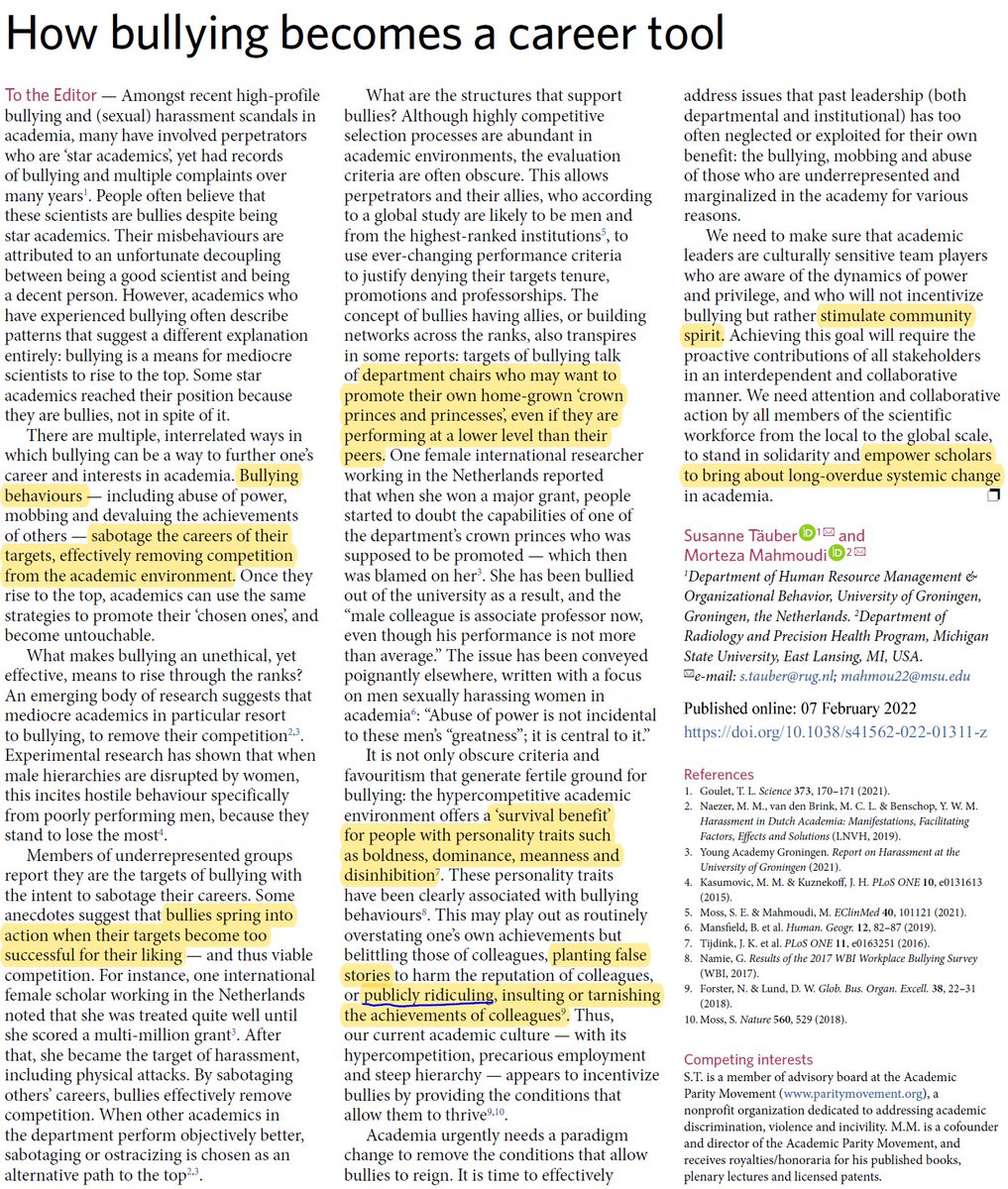
How bullying becomes a career tool: "Bullies spring into action when their targets become too successful for their liking". "Planting false stories, publicly ridiculing, insulting, or tarnishing".
Do we have mechanisms to combat this? Can kindness prevail? #StopBullying
Introducing a new approach for training #ML models using noisy data that works by dynamically assigning importance weights to both individual instances and class labels, thus reducing the impact of noisy examples. Learn more about it at https://t.co/lKYl0fzeYD
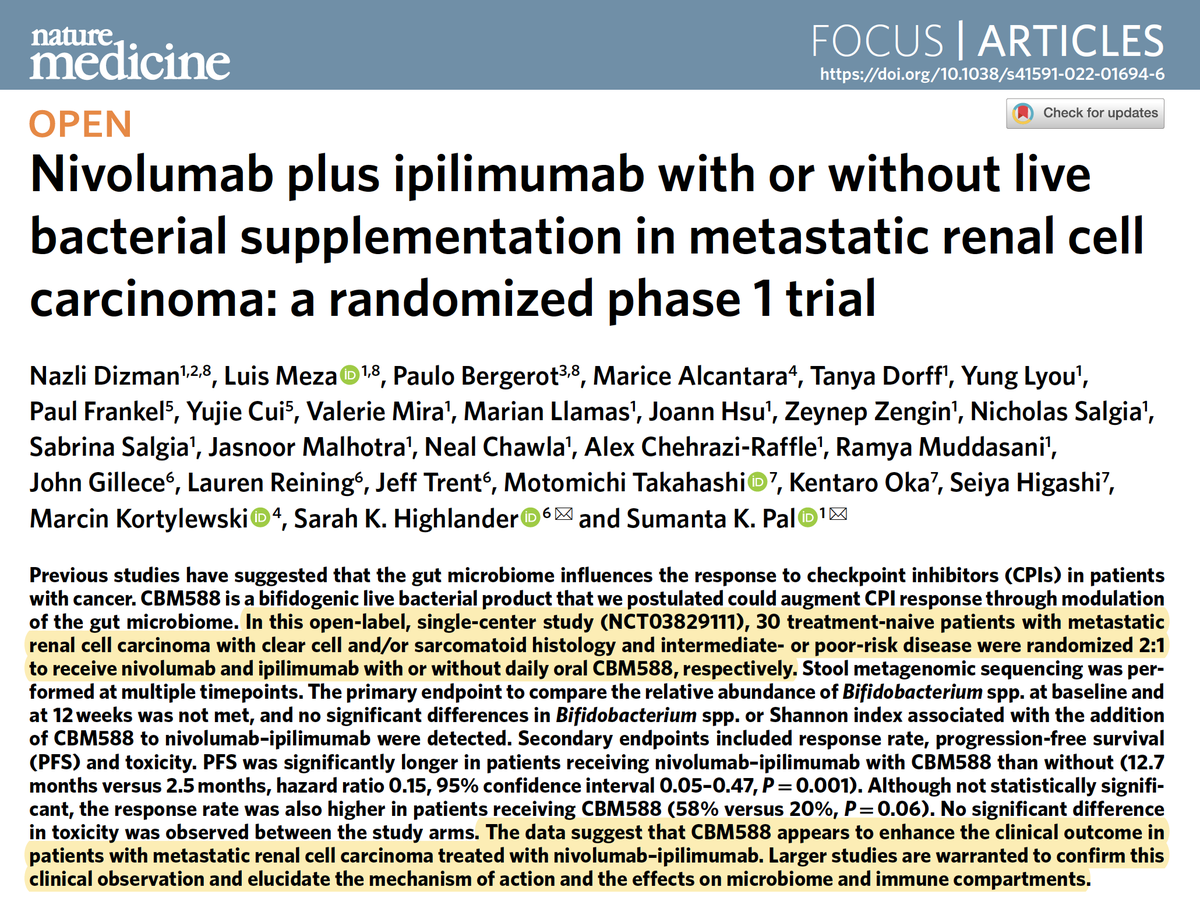
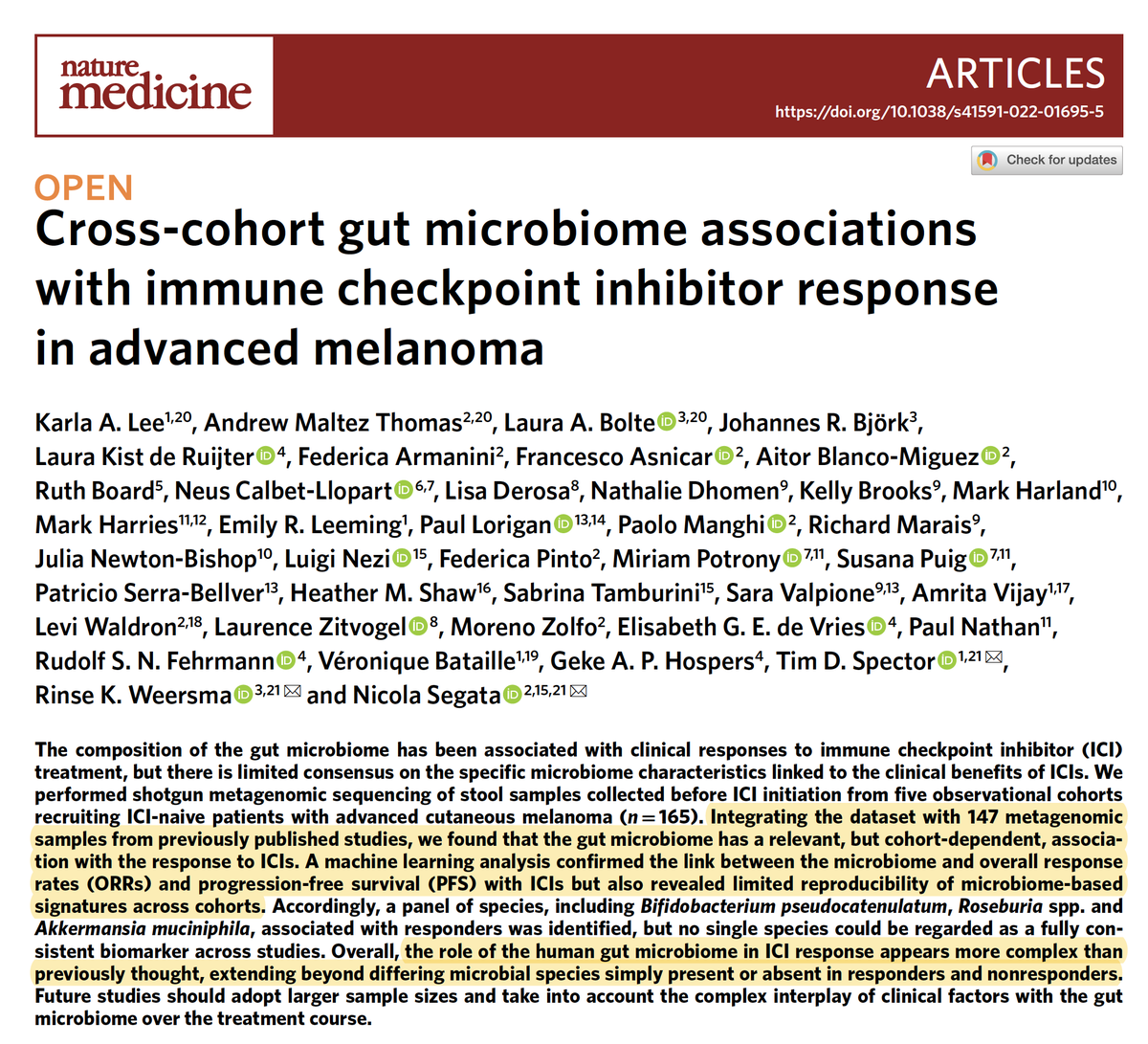
Two new studies highlight the importance of the gut microbiome for response of cancer immunotherapy
Probiotic for renal cell carcinoma
https://t.co/63wYxPtkuZ
Largest metagenomic study, in advanced melanoma
https://t.co/8Atq2aWJtJ
@NatureMedicine