"Real Shiur, but in a cool podcast style"; Short clips; Deep discussions; Source based; Fast pace; It's different; Over 210 videos on YouTube; Tweets by @TuviaE
Extremely grateful bH we've been able to keep up for 3 years with a weekly Torah Talk, with over 180 episodes and reach this milestone!
30,000 views of Torah learning - just 2 guys and our laptops!🤯
Here's to adding more Torah & light into the world!🥂
https://t.co/lGG9qkyFut
In the middle of a product meeting at Google HQ, I ended up giving a Gemara shiur (Talmud lesson) to a top VP and a few PMs.
In the early days of @ZUtALabs, the inbound was wild.
Conferences, interviews, panels, meetings with big tech - all nonstop.
One of those meetings was with a VP at Google and a group of product managers.
And at some point, the question I always got came up:
“How did you think of this? What made you come up with something so… different?”
People assume there’s some secret hack to “thinking outside the box.”
But the truth is:
My entire product-thinking methodology comes from something I learned in 9th grade - and kept sharpening ever since.
From the Gemara (Talmud).
If you’ve never learned Gemara, it’s hard to describe.
It's an ancient text written in an old language, and it functions like the Supreme Court on steroids.
A law is stated.
Centuries later, new sages try to understand what was meant.
What exactly was the case, and why this ruling.
Every word is examined.
Every assumption challenged.
Different scenarios tested.
Implications explored.
And these sages argue over generations - over a thousand years of debates.
When you learn Talmud, you’re trained to:
- question everything
- break a concept into its smallest components
- remove emotion from analysis
- distinguish between things you don't usually even notice, like the perspective of a person or the perspective of an object (Gavra vs. Heftza)
- and always ask: “If I say this, what changes? What’s the Nafka Mina?”
After 30+ years of daily learning, this way of thinking is simply… baked in.
(Yes, annoying in real life: when someone tells me “you can’t sit there,” my instinct is to ask: why? Is it me? The chair - it's for someone else? It might break? Is it the timing? What happens if we change one variable? I can't sit, but can I stand there? Can my kid sit there? If I wait a minute, can I then sit there...? You get the point 😅)
So there I was in Google HQ in Mountain View, explaining this entire framework.
Explaining what the Talmud actually is.
How we’re trained to analyze.
How product thinking, legal thinking, and Talmudic thinking share the same DNA.
Twenty minutes into the meeting, I realized:
I’m basically giving a Gemara shiur to a table of Google PMs.
And they were taking notes.
It remains one of my favorite entrepreneurship memories -
because people are always looking for “innovation secrets,” but sometimes the biggest edge comes from the oldest teachings.
That same way of thinking shows up every time we discuss product and features.
Just ask my co-founders who definitely don’t get frustrated at all by my constant questioning, dissecting, analyzing and refusal to accept simple answers 😄
I’ll save the details of those frameworks for another post.
One of the most meaningful Chanukahs I ever had was inside Samsung’s HQ in Suwon.
Back then, during the @UmooveMe days, we were working almost 24/7 with their engineering teams at the R&D HQ.
I've never seen such work culture before.
Midnight meetings were normal.
2am meetings were common.
On a daily basis we'd leave the office at 4am and got back by 8.
One of those nights happened to be Chanukah.
Chanukah is a cozy, family holiday - the kind you want to spend at home with your kids, lighting candles, eating something warm.
Instead, I was in a freezing meeting room on the other side of the world at 2:30am.
We were in the middle of yet another late-night session when the Samsung engineers stepped out for coffee.
It was just me, my colleague and the VP who led all 3rd-party development and our main point of contact in the company.
She was always there. In all meetings. All emails.
And not just with us.
And by now, she looked completely drained.
Head in her hands.
Staring at her laptop.
Then she sighed and said with real frustration:
"Why am I doing this?
I haven’t slept in days.
I haven’t seen my daughter in weeks.
What’s the point of all this…?"
I heard it, and at first felt a little awkward.
She's a top VP at Samsung...
But honestly - I felt the same.
It was Chanukah.
I wanted to be home with my wife and kids.
Not in a fluorescent-lit room half a world away.
As I was looking for words to say, something clicked in my mind.
I looked at her and said:
"You know… Chanukah is literally the story of the few who beat the many.
A tiny group who believed they could change the world - and did.
It's the few people that impacted the many.
And it's also the small object that brought light to all.
It's one small jar of oil, lighting eight nights.
This few to many, the little to big - it's a victory that shaped our nation and became a tail for generations".
She looked up.
I continued:
"It’s just the few of us here, at 2:30am, exhausted.
But we’re working on a feature that will ship on tens of millions of devices.
What we’re building in this one room can impact people across the entire world.
Do you realize how rare that is?
How meaningful?
Who'd even think something like this is possible.
Little us, in this little room, having such an impact..."
And she smiled.
The room felt different (at least I like to think it did).
The fatigue didn’t disappear - but the purpose came back.
I know that, because several weeks later she thanked me.
But that night taught me something about startups:
Chanukah isn’t just a holiday.
It’s the story of every startup, every small team, every impossible project.
The story of the few who dare - and somehow change the many.
Small teams, impossible odds, long nights… and a belief that it’s worth it.
Most of the world never sees moments like that night in Suwon.
But those moments are where the real work - and the real meaning - lives.
Happy Chanukah!
Eight nights.
We start with a single small candle on the first night, then add one more each night.
Step by step. Consistently.
Until the light overcomes the darkness.
A story told for generations- and a message that remains relevant in every one of them.
For those seeking truth and fact-based answers to tough questions about Israel:
Meet the Israel AI Chat!
This new tool by @YitzKemp and @Tuviae is here to support fact-based discussions and help you confidently address important topics.
Try it out:
https://t.co/exxWu4ar30
For those seeking truth and fact-based answers to tough questions about Israel:
Meet the Israel AI Chat!
This new tool by @YitzKemp and @Tuviae is here to support fact-based discussions and help you confidently address important topics.
Try it out:
https://t.co/exxWu4ar30
1\17🔥New episode for Shoftim!🔥
This week we read the famous & fundamental commandment of
תמים תהיה עם ה׳ אלוקיך
Usually we'd translate תמים (Ta'mim) as someone simple, someone naive, ignorant
But this contradicts our entire tradition & Judaism’s core values?!
What's going on?
17/ Once the source of the hatred is removed, peace is restored - even with arguments!
There's much more to add, but the thread is long enough already😃
You can watch the full Talk here- https://t.co/zUclFXh5Z6
Or listen on other platforms - https://t.co/yPazbF7FTD
7/ And now, after the Sin of the Spies, we have a generation that won't be entering the Land.
Datan & Aviram are now yelling "we told you so!" to everyone there - and are reminding everyone around of the terrible punishment they got - there's no "Land of Milk & Honey"! >>
16\ The story of Datan & Aviram serves as a lesson of how important it is to separate the hatred from the argument.
To isolate the few haters, and to focus on the majority who want good!
And you know what? After ridding Datan & Aviram, we have 38 years of silence in the desert!
Did they not argie for 38 years?? They probably did, but it wasn't fueled by Datan and Aviram's hatred...
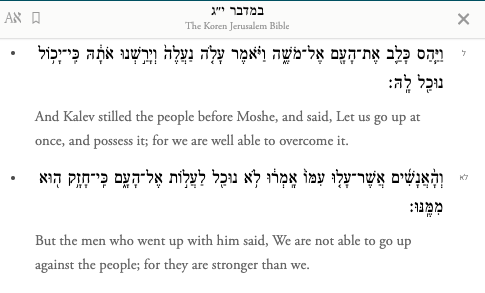
6/ They're mimicking the exact words & terms used by Kalev & the Spies in last week's Parsha!
"We shall go up" vs "we won't go up"
There's a reason they're using these words - they are professional "haters".
Datan & Aviram are professionals in stirring up hatred towards Moshe!
They've got the perfect copywriting and slogans to use!
They know exactly what they're saying - twisting every word & phrase that's used for good, they turn it around to stir up more hatred!
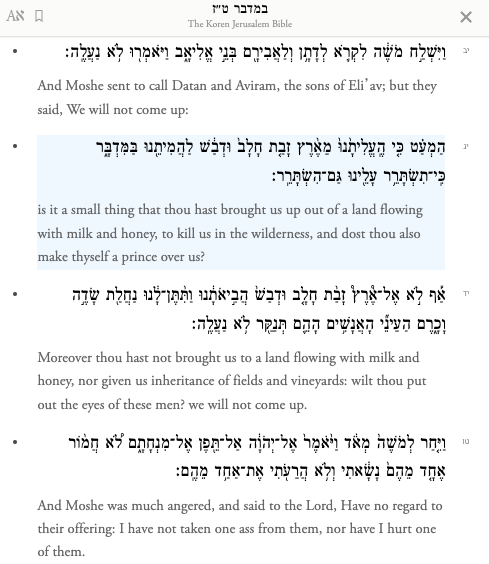
5/ But secondly, what does their answer even mean - "we won't come up"??
Say "we won't come!"
Why "We won't come up"??
And on top of that, if you pay attention to what they're saying, you'll see they're not claiming they want leadership!
They're referring to something else - all these words -"come up", "the Land of Milk & Honey" and "poking out eyes" - are referencing something else!
What are they talking about?? >>
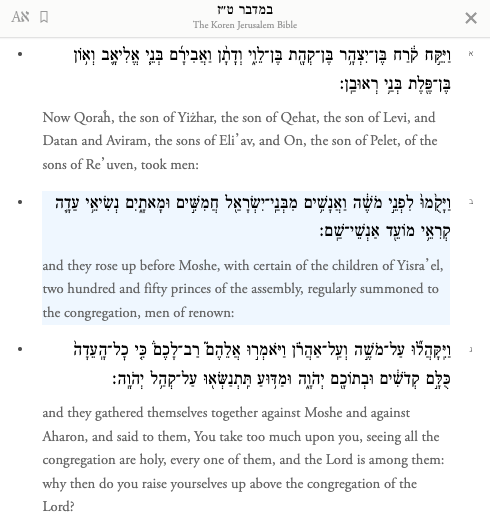
1/ Datan & Aviram - What’s Their Story?
With everything happening with Korach, there's an icredible hidden story in the Parsha.
If you miss it - you might be missing out on the most important part of the rebellion.
Follow along for a short dive into the Psukim >>
4/ Maybe it's because in our story, they're not just "part" of it - but they're the story!
Let's review the Psukim.
Moshe calls them, and they audaciously refuse to "come up" to Moshe.
First of all, this contradicts Korach's claim of wanting leadership. They do not want to step up!
They're staying put! >>