Small tools for small business: pricing calculators, fee sheets and templates for bakers, makers and Etsy/Gumroad sellers. Real maths, no hype. Tips daily.
@anthonysmendes Nice progress. For the cafe, a one-page summary of what's included each month and what counts as extra often settles the clarifications faster than another call.
@TxmedictxC Starting with one time drain is the right call. For most small shops that's chasing unpaid invoices or retyping orders. Fix one, measure the hours saved, then pick the next.
@dlohia Small businesses hit the same thing on a smaller scale. Discounts and free shipping to grow sales can quietly eat the margin, so it's worth checking profit per order, not just revenue.
@kerimg1337 Same for small shops. If a buyer can't tell which option to pick in a few seconds, three clearly named tiers with one marked "most picked" tends to work better than a long feature list.
@jiraiphantom Paying full price matters more than people think. On a handmade piece, a 20% discount can wipe out most of the maker's actual profit once materials and time are counted.
@lovedsociety Weekly is the sweet spot. Even three numbers on a Friday works: money in, money out, and orders still unpaid. Takes ten minutes and you catch a bad month while it's still fixable.
@scottdclary@jacobwarwick The label sets the price anchor before the first call. Describing the result you deliver instead of the task you do usually moves clients from comparing hourly rates to comparing outcomes.
@ScanmyphotosC 36 years and still adapting, respect. Worth asking new customers which tool sent them, so you know which product pages and prices those chatbots are reading and can keep them accurate.
@Leonajardinho From the contractor side, those hours on a full quote that gets a no are unpaid. A rough range on the first visit, before the detailed write-up, saves both sides time when the budget and the job are far apart.
@Bizprofitpro Agreed. A quick check before chasing more sales: profit per order after fees, shipping and packaging. If that number is thin, more orders just means more work for the same money.
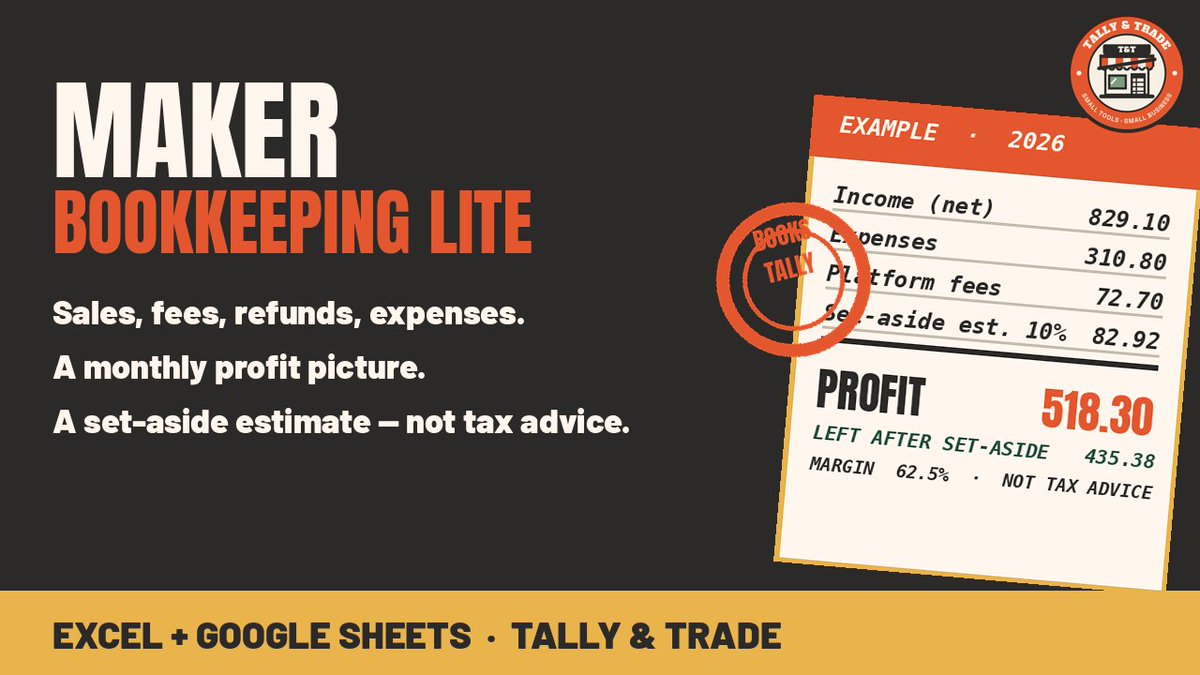
Most makers can tell you last month's sales. Far fewer can tell you last month's profit.
Sales minus fees, refunds, supplies, postage and ads. That's the number that pays you.
Maker Bookkeeping Lite logs every sale and cost and shows profit by month. €12.90, link below.
4 numbers worth checking on the 1st of every month:
1. Money in vs money out (not just sales)
2. Profit per order after fees and shipping
3. What you've set aside for tax
4. Invoices and deposits still unpaid
10 minutes a month beats a panic at tax time.
@zernio@runable_hq True for most owners. The part they still need to own is the facts: prices, opening hours, what's in stock. Posts go wrong fastest when those are out of date.
@Momaslim Slow days are a good time to check which items actually make money after costs. Sometimes the quiet week is the one where you fix your prices.
@themgmtconsult With deep operational expertise, the shortest path is often past colleagues and suppliers who already trust their work. Asking each for one intro usually beats cold outreach at the start.
@MlueDigital Agreed. For local small businesses the quickest win is often a complete Google Business Profile with real photos and prices listed. It can bring calls long before a blog post ranks.
@Ndagije__sam This is why monthly fixed costs need to be written down before opening day. Divide them by your average profit per sale and you get how many sales a month you need just to break even. That number is often a shock, but better to know it early.
@VeronicaPullen Abundant works best when the discount still leaves a profit. Worth checking the margin on your lowest-priced item at the sale price before the day, since that's where a percentage off hurts most.