BREAKING: US threatens to cut off all intelligence sharing with Ukraine if it continues attacking Russian oil refineries, with Witkoff and Kushner telling the Ukrainian team in Miami that sharing could be cut off if Kyiv did not halt the strikes, calling it "a firm request from POTUS," per the FT.
A senior Ukrainian official directly rejects the request, saying "We will burn Russian refineries."
The Ukrainian team cut the trip short rather than hold a second round of talks, and hours later Ukraine struck an oil terminal in Rostov-on-Don.
Ukraine uses US intelligence for the long-range strikes on Russian refineries. A US official with direct knowledge says Trump decided on the diesel deal with Putin after Zelensky ignored 6 US requests to stop attacking them.
BREAKING: US President Trump says he has agreed with Vladimir Putin that Russia would export “to the American and Global Marketplace” diesel.
The quantities are, however quite small to make a meaningful impact. Trump says Russia will export immediately ~300,000 tonnes (~2.2 million barrels or ~100,000 b/d for the rest of the month); plus ~500,000 tonnes in November (~3.7 million barrels, ~125,000 b/d for the month). The flows would increase later, Trump said.
Left unsaid: the White House will have to lift once again sanctions on Russian refined products (if not all oil).
The Trump administration imposed sweeping sanctions on the International Criminal Court (ICC), potentially cutting off its banking, insurance and software services.
The move comes amid U.S. anger over ICC arrest warrants for Israeli officials, including Netanyahu, and a previous investigation into U.S. troops in Afghanistan.
Secretary of State Marco Rubio called the ICC a “rogue court” and warned: “Either the ICC will end its threats, or we will end the ICC.” He urged U.S. allies to pressure the court into meeting Washington’s demands.
The sanctions were announced hours after former ICC judge Navi Pillay won the Nobel Peace Prize for her work in international criminal justice.
Source: Reuters
2026 Nobel Peace Prize laureate Navi Pillay’s commitment to universal legal principles and her firm moral compass are constants in a long career. Born into a family of Indian Tamil origin under apartheid in Durban, South Africa, Pillay became a lawyer and legal pioneer, confronting deep structural discrimination, segregation and exclusion. A common thread runs from her early work defending Nelson Mandela and others who stood up against apartheid to her service as a judge in some of the key international court cases of our time.
This year’s laureate has significantly enlarged the scope and impact of international law. She has served as a judge on the High Court in South Africa, the International Criminal Tribunal for Rwanda and the International Criminal Court. She was the United Nations High Commissioner for Human Rights and, until recently, she chaired the UN Independent International Commission of Inquiry on the Occupied Palestinian Territory. Today Navi Pillay is a judge on the International Court of Justice in the case where Myanmar stands accused of genocide.
In historic international court cases, she has shown that legal measures can help prevent acts of war and violence. Navi Pillay has also contributed to strengthen the institutions of international law. Her independence, expertise and steadfastness have made her one of the most respected international jurists of our time.
Learn more about the 2026 #NobelPeacePrize: https://t.co/JMjpp1jPKc
#NobelPeacePrize #NobelPrize
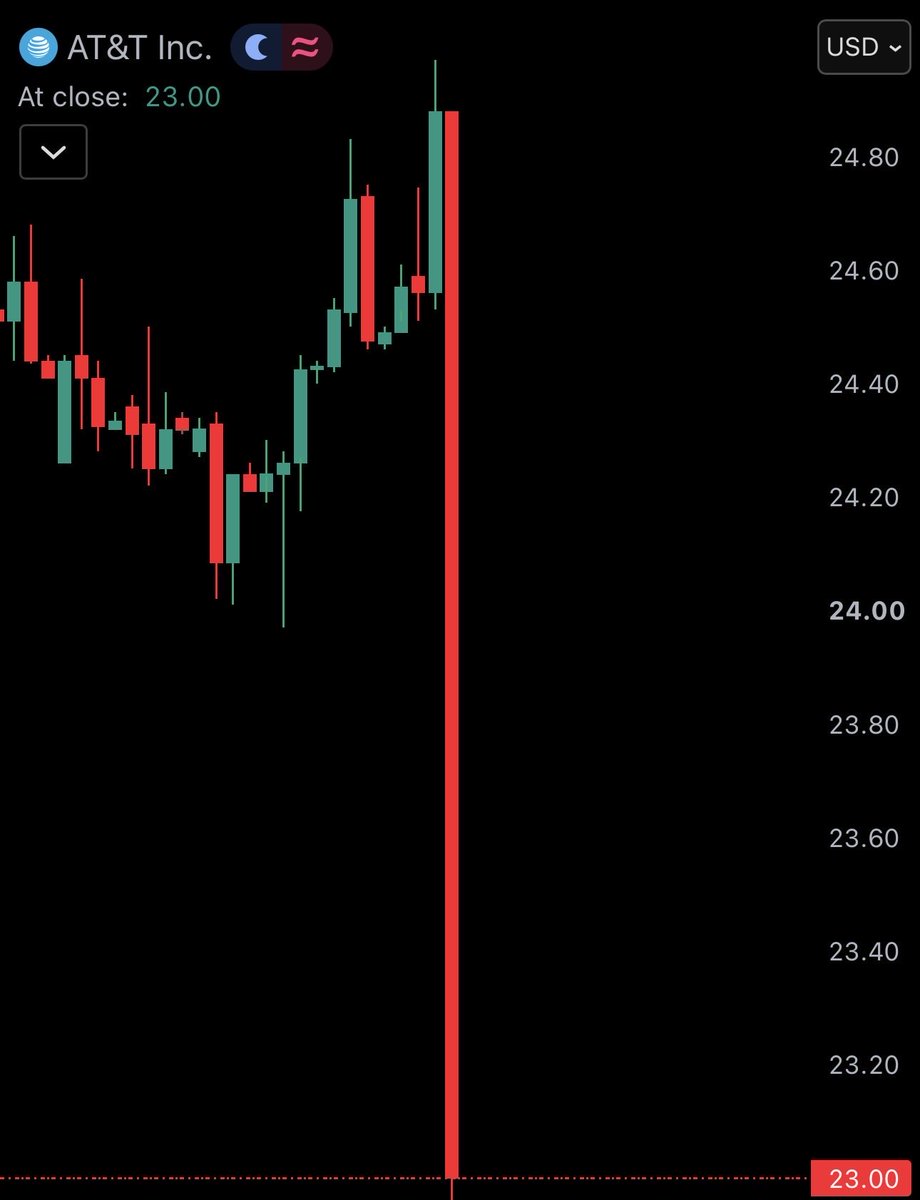
JUST IN: AT&T, Verizon and T-Mobile stocks all crash over 7% after Elon Musk's SpaceX $SPCX announces plans to turn Starlink into major US mobile carrier.
We’ve reached a point in human history where we can send people into space and bring them safely back to Earth, and it’s becoming almost routine. It’s easy to forget just how extraordinary that really is. Humanity is capable of incredible things.
What kind of writer is Anne Carson?
Anne Carson’s work spans poetry, prose and essays, often engaging with themes, texts, and myths from the ancient Greek world. Alongside her career as a writer, she is a professor of classics and widely known for her lectures on ancient Greek literature.
Born in Toronto, Canada, in 1950, Carson published her doctoral thesis in Classics, 'Odi et Amo Ergo Sum' ('I Hate and I Love, Therefore I Am'), in 1981. She later reworked it into the essay 'Eros the Bittersweet', in which she developed many of the ideas about desire that would shape her later writing.
For many readers, 'Autobiography of Red: A Novel in Verse' (1998) serves as an introduction to Carson’s work. Inspired by Geryoneis – the fragmentary poem by the ancient Greek poet Stesichorus – it reimagines Geryon, the red-winged monster slain by Heracles, as a gay teenager with wings who falls in love with Heracles and is left heartbroken.
Throughout her entire authorship, Carson has continually experimented with literary form and explored the possibilities of writing. An example of this is 'Float' (2016), twenty-two chapbooks on different subjects that can be read in any order. More recently, 'Wrong Norma' from 2024, consists of a diverse combination of texts with a strongly performative aspect in which Carson crosses over into various artistic and academic fields.
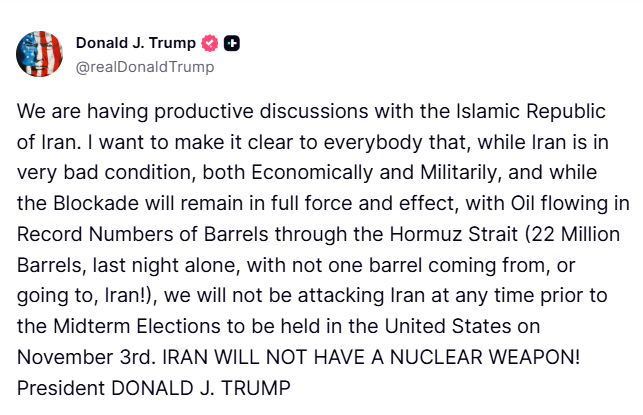
Trump Might Order Another Iran Strike Before the Midterms. Pentagon planners are crafting options though no final decision has been made. w/the great @JonLemire
https://t.co/OYR7uz4P7o
"We don't yet have the full picture of this event."
World Health Organisation Director-General Tedros Adhanom Ghebreyesus says the organisation has been unable to conduct a full risk assessment of reports of a plague in Russia.
https://t.co/nV2luNQ8Rk
📺 Sky 501, Virgin 602