In 1962, neighbors complained when she filled her backyard with "those children." By 1968, she'd changed the world.
July 10, 1921. Brookline, Massachusetts.
Eunice Kennedy was born into one of America's most famous families. She was the fifth of nine children, sister to a future president, raised with privilege, influence, and enormous expectations.
But her life's purpose would come from someone much closer.
Her older sister, Rosemary.
Rosemary learned differently. In those years, families often hid children with intellectual disabilities from public view. Many were placed in institutions and quietly forgotten.
The Kennedy family tried to help.
But in 1941, without informing Eunice or her mother, Joseph Kennedy approved a lobotomy for 23-year-old Rosemary.
The procedure went terribly wrong.
Rosemary was left permanently disabled and spent much of her life in a care facility far from home.
Many people stopped talking about her.
Eunice never did.
As she studied social work, raised a family with her husband Sargent Shriver, and devoted herself to public service, she carried Rosemary's story in her heart.
She saw how people with intellectual disabilities were treated.
Ignored.
Excluded.
Denied opportunity.
She refused to accept that reality.
In the summer of 1962, Eunice opened her Maryland backyard to children with intellectual disabilities.
She called it Camp Shriver.
There were games, swimming, sports, laughter, and friendship.
Some neighbors complained about "those children."
Eunice ignored every complaint.
She saw what others refused to see.
Ability.
Joy.
Potential.
That same year, she publicly shared Rosemary's story in an article for *The Saturday Evening Post*.
Many within her own family were upset.
But Eunice believed silence only strengthened prejudice.
Speaking openly gave countless families hope.
When her brother John F. Kennedy became president, she urged him to support programs for people with intellectual disabilities, helping inspire important federal action.
Still, Eunice dreamed even bigger.
On July 20, 1968, the first International Special Olympics opened in Chicago.
One thousand athletes stepped onto the field.
Many had spent their lives being told they would never accomplish anything.
Now they competed before cheering crowds.
Eunice reminded them that courage mattered more than victory.
The world watched.
A movement was born.
Today, Special Olympics includes more than 5.5 million athletes in over 190 countries.
But the true achievement isn't measured by numbers.
It's measured by lives changed.
Eunice transformed shame into pride.
Exclusion into belonging.
Pity into respect.
She never forgot Rosemary.
After their father's death, she welcomed her sister back into family life and made sure she was never hidden again.
Eunice Kennedy Shriver passed away in 2009, leaving behind far more than awards or honors.
She gave millions of people the chance to compete, belong, and be celebrated.
One sister's heartbreak became hope for the world.
That's not just compassion.
That's a legacy that continues every time an athlete steps onto the field believing they belong.
BREAKING: LOL! Thomas Massie turns his own camera on a Fox Digital reporter pestering him about his ex and an alleged Boebert affair – “I heard you like gay porn. Is that true? ”
Rep. Thomas Massie just delivered one of the wildest and funniest mic-drop moments of the year.
Walking on the street, Massie was approached by Fox News Digital reporter Nicholas Ballasy who asked about allegations from his ex-girlfriend including claims of an NDA and an alleged affair with House colleague Lauren Boebert.
Massie politely responded that the allegations were all false, twice. He asked Ballasy, “When did [Fox] become a tabloid?
Then he got an idea, he turned on his phone to play the journalist with a question of his own.
“So let me ask you, I heard that you like gay porn. Is that true? I just want to give you a chance to respond.”
“I’m not going to get into that,” Ballasy stammered, twice, later saying “Of course I don’t like it,” to which Massie quipped “That’s not what I heard!”
Tee hee!
As far as Republicans go, we will miss Massie, who was primaried out of Congress by Trump. He’s one of the few who actually pushes back against the worst parts of the MAGA machine, demands transparency on the Epstein files, and refuses to be a spineless soldier in Trump's imaginary army.
He just proved he’s a funny guy too.
Michelle Obama had a problem.
She was standing in Buckingham Palace, about to sit down to a state dinner hosted by Queen Elizabeth II — one of the most formally dressed women in the world, wearing jewels that had adorned British royalty for centuries — and the gift she had brought was a $50 brooch from an antique shop in Washington D.C.
It was May 2011. President Barack Obama and the First Lady were on a state visit to the United Kingdom — only the second time in history a sitting American president had been granted that honor. The palace had pulled out all the stops. Chandeliers blazing. Footmen in livery. The Queen in full regalia, diamonds catching the light.
And Michelle's gift was a small moss agate brooch from a vintage store called Tiny Jewel Box.
Barack Obama would later recall the moment with a smile. "The Queen was dressed up quite a bit for the state dinner," he said. "It was a little bit concerning for Michelle, because as a gift to Her Majesty, Michelle had selected a small, modest brooch of nominal value."
The brooch was beautiful, in its quiet way. Made in 1950 in America, crafted in fourteen-karat yellow gold, set with diamonds and pale green moss agate in the shape of a small flower. Delicate. Personal. The kind of thing you find when you're not looking for something grand — when you're just looking for something true.
Michelle presented it to the Queen that evening, alongside the official state gift — a carefully assembled album of photographs and memorabilia from King George VI and Queen Elizabeth's historic 1939 visit to the United States, something the Queen was said to have been visibly moved by as she turned the pages.
But it was the little brooch that told a different story.
The following evening, the Obamas hosted their own reciprocal dinner at Winfield House — the official residence of the American Ambassador in London. It was a room full of heads of state and royalty, an evening of its own formality and grandeur. The Queen arrived.
And on her lapel, she was wearing Michelle's brooch.
Not one of her legendary pieces. Not a diamond parure gifted by a Commonwealth nation or a sapphire set that had passed through generations of the royal family. The small American flower from a Washington antique shop — worn the very next night, in front of everyone.
Obama said: "The one thing we immediately noticed is that she was wearing the brooch that Michelle had given her. It was an example of the subtle thoughtfulness that she consistently displayed. Not just to us, but to everybody who she interacted with."
The Queen understood something that is easy to forget in rooms full of expensive things: the value of a gift has nothing to do with its price. It has everything to do with what it says. That brooch said — I chose this for you. I thought of you when I saw it. I wanted you to have something made by American hands, something personal, something that wasn't pulled from a state inventory.
The Queen heard every word of it.
She kept the brooch. It became known in royal circles as the American State Visit Brooch, and it appeared on her again on notable occasions over the years — a quiet signal, each time, of the warmth she carried for the people who had given it.
The exchange, it turned out, went both ways. The Queen gave Michelle a gift of her own that visit — an antique brooch of red coral and gold, shaped like a rose. Two women, surrounded by all the machinery of state protocol, quietly giving each other flowers.
When Queen Elizabeth died in September 2022, Barack Obama released a video tribute. He talked about how she reminded him of his grandmother — the same wry humor, the same no-nonsense grace, the same ability to make everyone around her feel genuinely seen. And he told the brooch story. The $50 antique. The state dinner. The moment the next evening when they walked in and saw her wearing it.
"She could not have been more kind or thoughtful to me and Michelle," he said.
Queen Elizabeth II owned jewels that belonged to empires. Pieces that had passed through the hands of kings and queens across centuries of history. Stones worth more than most people will ever see in a lifetime.
And when she wanted to tell someone that their gift had mattered — that the thought behind it had reached her — she pinned a small moss agate flower to her lapel and walked into the room.
That is the kind of person she was.
Kindness, when it comes from a genuine place, doesn't need to be expensive.
It just needs to be worn.
@RNCB20@alphaman_111 There are some like that and unfortunately they stand out because they are few in comparison to so many that work extra hours to help those that need it, quietly provide food for those in need, and care for each individual student because teaching is a calling and not a job.
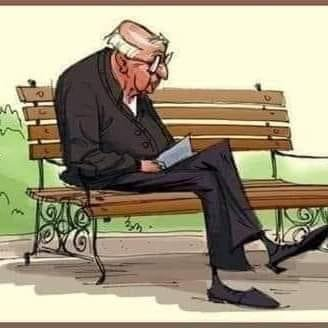
A young man met an old man and asked him:
— Do you remember me?
The old man replied, “No, I don’t.”
Then the young man said, “I was one of your students.”
The old man asked:
— Oh really? What do you do now?
The young man answered:
— I became a teacher.
— That’s great! Just like me? — said the old man.
— Yes. I became a teacher because you inspired me to be one.
The old man was curious and asked what moment inspired him.
The young man told this story:
— One day, one of my friends brought a beautiful new watch to school. I wanted it, so I stole it from his pocket. After a while, my friend noticed his watch was missing and told you about it.
You stopped the class and said:
— Someone’s watch was stolen during the lesson. Whoever took it, please return it.
— But I didn’t return it. I was too ashamed.
Then you closed the classroom door and told all of us to stand up. You said you would check everyone’s pockets until the watch was found. But you also told us to close our eyes while you searched.
So we did.
You went through everyone’s pockets, one by one. When you reached mine, you found the watch and took it. But you didn’t stop. You kept checking the others’ pockets too.
Then you said:
— Open your eyes. I found the watch.
You never said anything to me. You didn’t punish me, and you never told anyone it was me. That day was the most embarrassing moment of my life.
But it was also the day I was saved from going down the wrong path. You didn’t lecture me, but your actions spoke louder than words.
That day, I understood what it means to be a real teacher. And that’s why I became one.
Do you remember that day, teacher?
The old man replied:
— I remember the situation and searching for the watch, but I don’t remember you — because I also had my eyes closed.
This is what true teaching is:
If correcting someone means embarrassing them, then you don’t truly know how to teach. ❣️
South African teenager Bohlale Mphahlele developed an innovative personal safety device designed to look like a simple piece of jewelry.
Known as the Alerting Earpiece, the device is built to resemble a regular earring while discreetly containing a small camera and emergency alert system.
When activated, the earpiece can capture images and send a distress signal to selected contacts. The alert can also include the wearer’s live GPS location, helping trusted individuals or emergency responders locate the person quickly.
The idea behind the design is to provide a discreet safety tool that can be used in situations where reaching for a phone or drawing attention may not be possible.
Mphahlele presented the concept at the Eskom Expo for Young Scientists, where the project received recognition from judges and education officials.
Her invention highlights how young innovators are using technology to address real-world challenges, particularly around personal safety and rapid emergency communication.
There is a little coffee shop, where two people arrive and approached the counter.
“Five coffees please. Two for us and three hanging.”
They paid, they took their two coffees and left.
I asked the waiter. "What’s this about hanging coffees?"
“Wait and you'll see."
Some more people came in.
Two girls asked for a coffee each, they paid & left.
The following order was for seven coffees and it was made by three women - ‘three for them and four hanging coffees.’
I was left wondering...what is the meaning of the hanging coffees, they leave.
Then, a man dressed in worn clothes, who looks like he might be homeless, arrives at the counter and asks sincerely...
“Do you have a coffee hanging?"
“Yes we do, sir.”
They serve him a coffee.... I got my answer.
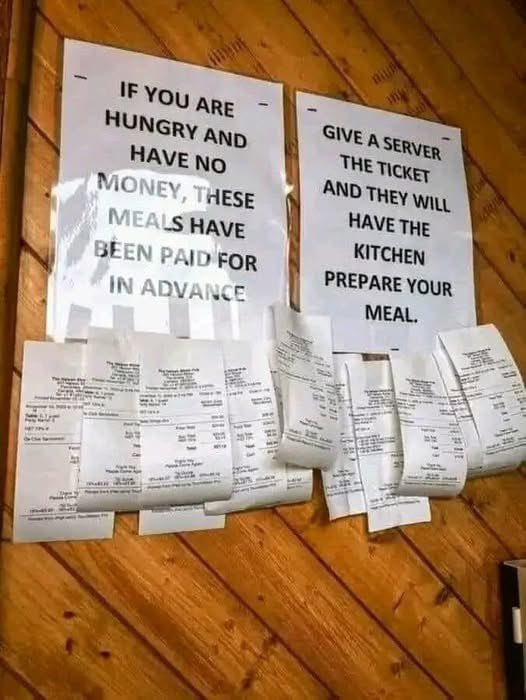
People pay in advance for a coffee that will be served to whoever can't afford a hot drink.
This tradition started in Naples.
Amazingly, it has spread throughout the world’s cities and towns.
It’s also possible to order not only "hanging coffees" but also a sandwich or a full low cost meal.
Wouldn’t it be great if we could all start doing this in the cities and towns where we live?
Small kindnesses like this can impact so many lives, in ways we could never imagine.
Maybe we should all try it.
Credits goes rightful owner
Via Police Report
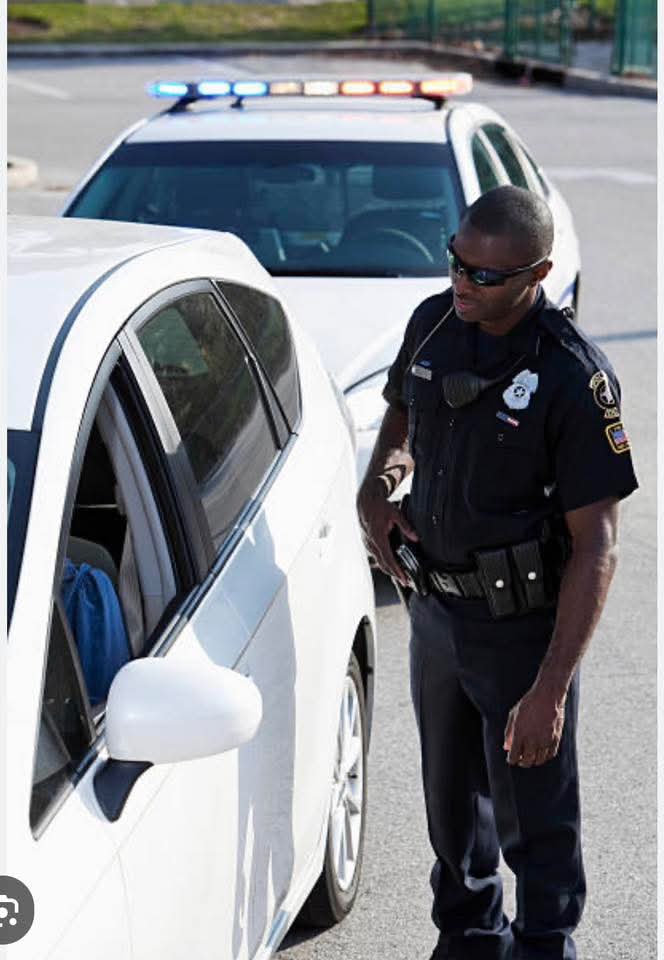
I’ve been a cop for 15 years.
I pulled a guy over last night. He was doing 85 in a 55. Weaving. I walked up to the window ready to write a reckless driving ticket. Maybe even take him in. When he rolled down the window, he wasn't drunk. He was shaking. "My daughter," he gasped. "She's at Children's Hospital. The chemo isn't working. They called... they said I need to hurry." I looked at his eyes. You can’t fake that kind of terror.
I folded my ticket book. "Follow me," I said. I got back in my cruiser, flipped on the lights and sirens, and I escorted him the 20 miles to the hospital. I cleared every intersection for him. We made a 30-minute trip in 15. He ran inside without looking back. I waited in the parking lot for an hour. Just in case.
He came out later, saw me, and walked over. He looked hollowed out. "Did I make it?" I asked. "Yeah," he whispered. "I got to hold her hand while she went. You got me there." He tried to shake my hand, but he collapsed into my arms instead.
Sometimes, to serve and protect means breaking the speed limit.
One of the students in my class who doesn't have a lot of friends came up to me at recess yesterday and said "I am so excited! Tomorrow is my birthday!" A boy nearby said "I'm so excited too!" and she just lit up. "Really?" Her whole face changed. I'm sure this was the first time she'd ever heard someone be excited for her. "Yeah because we get cupcakes," he answered. Her face fell. "I've never had cupcakes at school, we can't afford it."
So now I'm up at five in the morning in the grocery store parking lot trying to figure out how to make this work on a teacher's salary. I grabbed two boxes of store cupcakes and some plates, nothing fancy but it's something. Then I remembered this woman I'd bought custom cake toppers from on Tedooo app a few months back for my own daughter's birthday. Messaged her at 5:30am asking if she could do a rush order for today, explained the situation. She had personalized toppers ready by noon and wouldn't let me pay for them.
That little girl walked into class this afternoon and saw cupcakes with her name on them and just stood there frozen. Asked me three times if they were really for her. The other kids sang happy birthday and for once, just for today, she had friends. She took a photo of the toppers to keep.
I'm a teacher because of moments like this. Because sometimes all it takes is cupcakes and a stranger on Tedooo app who believes that every kid deserves to feel special on their birthday. I'll be broke until next paycheck but I'd do it again in a heartbeat.
Credit: Strength Through Unity
Kareem Abdul-Jabbar sold his 4 championship rings, 3 MVP trophies, and other memorabilia for $2.8 million, donating every penny to youth education programs.
His reasoning:
The Last Snowman
I’m at that stage of life where I’m starting to realize that some moments might be happening for the last time.
Yesterday, my middle son and I built a snowman :-). Yes, this 60-year-old doc's child comes out every now and then.
Fresh snow, quiet air, the kind of morning that feels suspended outside of time. He’s graduated from college. His life is already pulling him west…toward love, toward opportunity, toward whatever comes next. And as we packed snow between our hands, shaping it into something temporary and imperfect, I realized this might be the last time we do this together.
Not the last time we’ll talk. Not the last time we’ll laugh. Not the last time we’ll see each other.
But the last time we’ll build a snowman.
No one tells you how parenting changes. At first, it’s all beginnings. First steps. First words. First days of school. You’re trained to look forward, always forward. And then, without warning, life quietly starts handing you endings instead. Not loud ones. Soft ones, often unannounced.
You don’t get a notification that it’s the last time they’ll fall asleep on your shoulder. Or the last time you’ll hold their hand crossing a street. Or the last time you’ll all be living under the same roof.
You just live through them. And only later do you realize what they were.
I want my kids to move on. I want them to chase what calls them. I want them to build lives that are expansive, brave, and unmistakably theirs. I’m proud of their independence. Proud of their curiosity. Proud of who they’re becoming.
But pride doesn’t erase grief.
It just lives beside it.
I’m climbing what’s been referred to as my Second Mountain now. The first was about building, proving, and accumulating. This one feels different, quieter, and far more deliberate. It’s less about adding, more about distilling. Less about what I achieve per se, and more about what and who I carry forward.
And with that shift comes questions that don’t always have clean answers.
Was I present enough? Did I listen well? Did I prepare them for what I couldn’t protect them from? What did I miss while I was busy building everything else?
I don’t know. Maybe no one ever really does.
Yesterday, we built a snowman.
But, for me, it wasn’t really about the snowman. Well… maybe a little about the snowman.
But… It was about time. About becoming…. and about letting go without letting love leave. About standing in that strange, tender overlap where past, present, and future all exist at once.
If that really was our last snowman, I’m grateful I was there for it.
“Can I bring my baby to the interview?”
The message came in at 11 PM:
“Hi, I have an interview with you tomorrow at 2 PM. My childcare fell through. Can I bring my 8-month-old? I understand if you need to reschedule.”
Old me would have rescheduled.
Unprofessional. Distraction. Red flag.
New me replied:
“Absolutely. See you tomorrow.”
She showed up with her baby on her hip.
She apologized three times before even sitting down.
Ten minutes in, the baby started crying.
She tried to soothe him while answering questions.
She apologized again.
I stopped the interview and said:
“Hey. You’re managing a fussy baby, answering complex questions, and staying calm under pressure. That’s literally the job. Handling chaos while staying professional. You’re already proving you can do it.”
Her eyes filled with tears.
We hired her.
She’s been with us for a year now.
The most reliable team member we have.
Why?
Because when you’re used to handling a screaming infant at 3 AM and still showing up to work the next day, workplace stress feels like nothing.
Working parents, especially mothers, are some of the most organized, efficient, and resilient people you’ll ever hire.
Yet we lose them because our hiring processes are built for people with zero caregiving responsibilities.
If your interview process can’t accommodate a parent facing a childcare issue, you’re not filtering for professionalism.
You’re filtering for privilege.
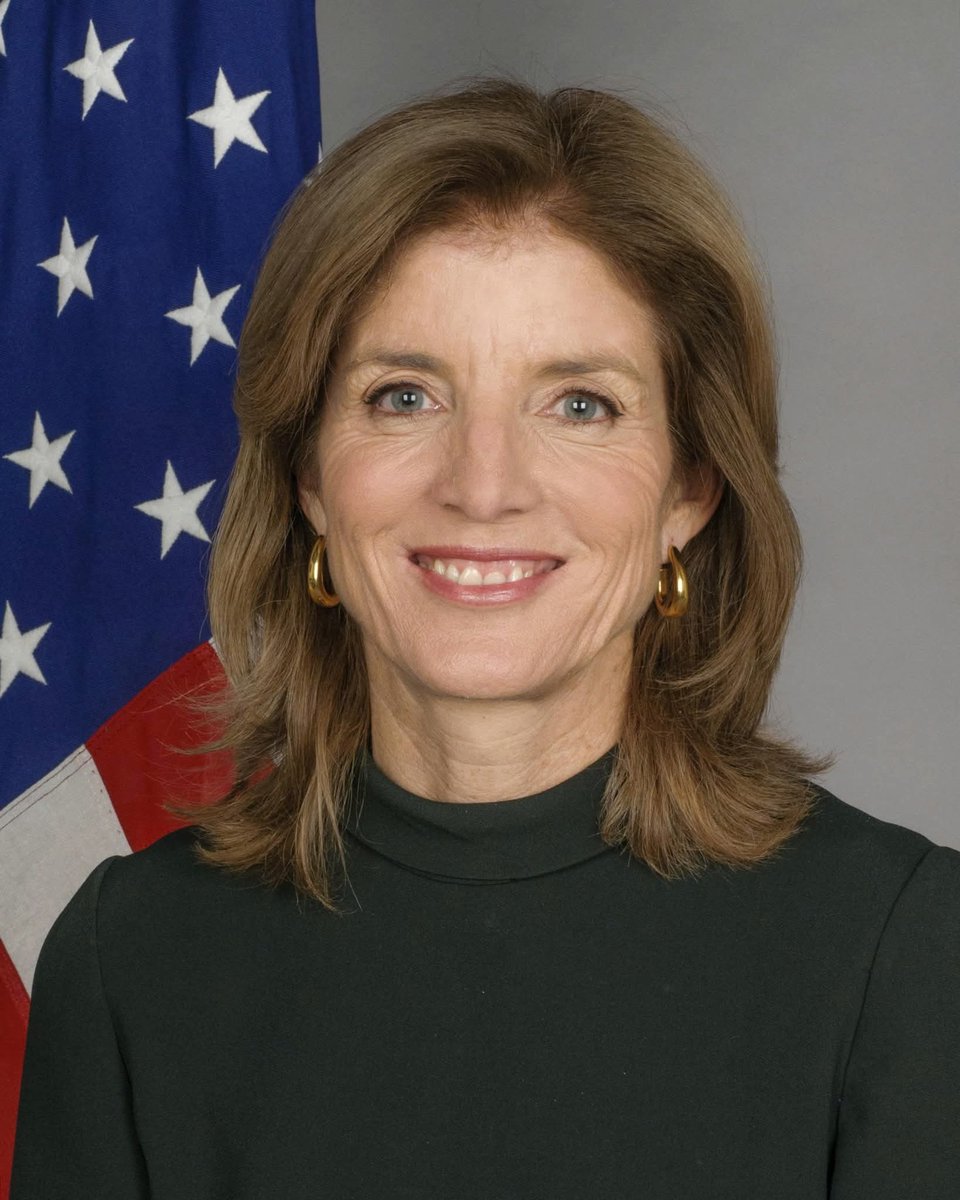
In 1979, Jackie Kennedy Onassis bought Red Gate Farm in Aquinnah on Martha’s Vineyard for just over one million dollars. The 340-acre property was filled with windswept dunes, salt-blasted heathlands, and quiet ponds. Jackie fell in love with the natural beauty immediately. She wanted a life close to nature. There would be no pool or tennis courts. She wanted to swim in the ocean, breathe fresh salt air, ride her bicycle to the lighthouse each morning, run on the beach at low tide, and read on her deck in the afternoon.
Her daughter Caroline later wrote that Jackie loved the old stone walls, the clay cliffs, and the blue heron that lived by the pond behind the dunes. Jackie raised her children there, and later Caroline raised hers. For three generations, the family created traditions on the property. They set lobster traps in Menemsha Pond, entered county fairs, grew vegetables, and collected seashells from the beach every day.
When Jackie passed away in 1994, she left Red Gate Farm to Caroline. In 2013, Caroline and her husband Edwin Schlossberg donated 30 acres along Moshup Trail to the Vineyard Conservation Society. The land was valued at 3.7 million dollars.
By 2019, Caroline’s children had grown up, and she decided it was time for them to explore new opportunities. She put Red Gate Farm on the market for 65 million dollars. The estate had a mile of private beach, rare coastal heathlands home to endangered species, and land considered one of the most important natural tracts in Massachusetts.
Instead of selling to the highest bidder, Caroline worked with the Martha’s Vineyard Land Bank and the Sheriff’s Meadow Foundation. In December 2020, they bought 304 acres for 27 million dollars. In 2021, the Land Bank purchased another 32 acres for 10 million dollars. In total, 336 acres were preserved. The land became the Squibnocket Pond Reservation, open to the public forever.
The Kennedy family kept just 95 acres for their homes and memories. Caroline could have earned 65 million dollars by selling to a tech billionaire, but she chose preservation. She said the family wanted to be worthy stewards of this fragile habitat.
Thanks to her decision, the coastal heathlands, endangered arethusa orchids, northern harrier hawks, and blue herons will continue to thrive. Visitors can walk the same beaches where Jackie ran, climb the hills where Caroline raised her children, and experience the wild beauty of a place protected by one family for forty years.
Red Gate Farm is no longer private property. It belongs to everyone. Caroline Kennedy’s choice reminds us that sometimes the greatest wealth comes from giving something precious to the public rather than keeping it for profit.
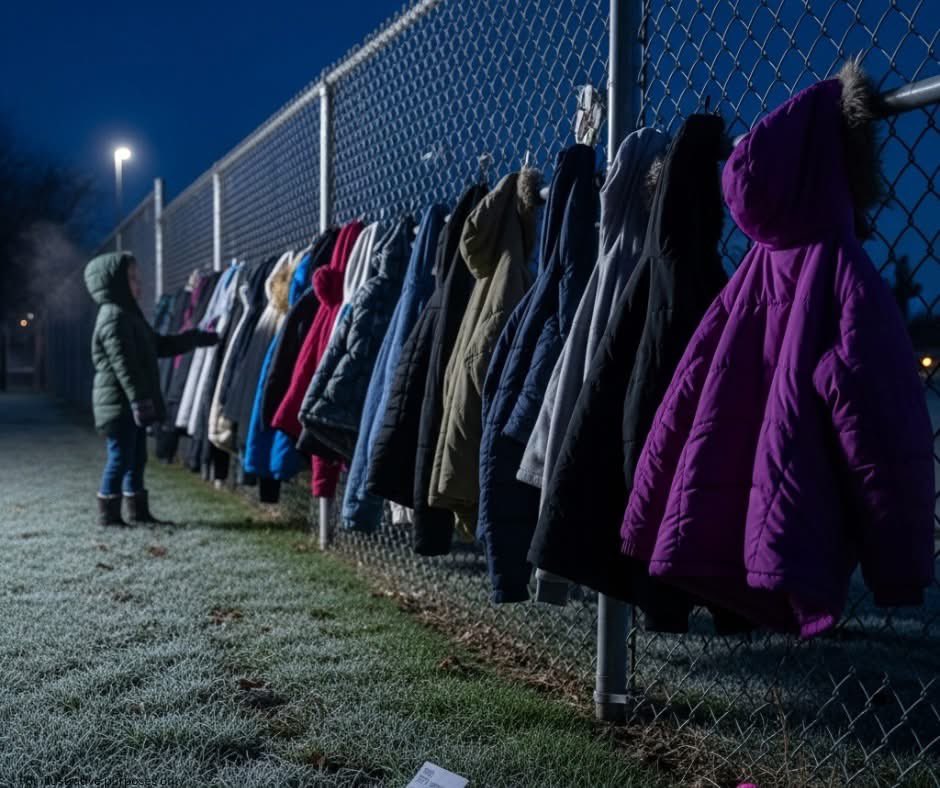
"They found the coats on Thursday morning.
Fifteen winter coats. Good ones, not garbage. Hanging on the chain-link fence outside Lincoln Elementary. No note. No explanation. Just coats, zipped up like ghosts waiting for bodies.
Principal Morris freaked out. Called the police. "Could be stolen," she said. "Could be some kind of prank."
But then Kayla Martinez, eight years old, said her mom worked nights cleaning offices and couldn't afford a winter coat this year. She'd been wearing three hoodies layered up. She touched a purple one on the fence, the right size, and whispered, "Can I?"
Mrs. Alvarez, the PE teacher, said yes before anyone could stop her.
By lunch, all fifteen coats were gone. Fifteen kids who'd been shivering through recess were warm.
The next Thursday? Twenty coats. Different fence, same neighborhood, outside the community center. Then thirty coats appeared at the downtown shelter. Then blankets. Then winter boots.
No cameras ever caught who did it. No social media claims. Just... coats. Every Thursday. All winter long.
The news picked it up. Called them "The Fence Angel." Interviewed grateful families. But nobody knew.
Until March.
Old man died, Earl Hutchins, seventy-one, lived alone in a basement apartment on Fourth Street. When they cleaned out his place, they found receipts. Thrift store receipts. Hundreds of them. He'd been buying every decent winter coat he could find, spending his entire disability check, and hanging them up at night.
His nephew found a journal entry, "Lost my son to exposure in 2004. He was homeless, prideful, wouldn't take handouts. Froze to death behind a dumpster wearing a T-shirt. If I put coats on a fence, nobody has to ask. Nobody has to admit they need help. They just take it. Dignity intact."
I'm Kayla Martinez. I'm sixteen now. That purple coat got me through fourth grade. I never knew Earl. Never got to say thank you.
But last November, I took my babysitting money to Goodwill. Bought six coats. Hung them on that same fence.
My friends saw. They bought coats. Then their parents did. Then the high school started a coat drive, not for a bin, for the fence.
Last Thursday, there were 200 coats. Scarves too. Gloves. We call it "Earl's Fence" now. There's one in Detroit. One in Manchester. One in Vancouver.
I never met the man who saved me from freezing. But I'm becoming him, one coat at a time.
Because the best kind of help doesn't ask for credit. It just hangs there, quiet, waiting for cold hands to find warmth."
.
Let this story reach more hearts....
.
Ai image is for demonstration purpose only.
.
By Mary Nelson