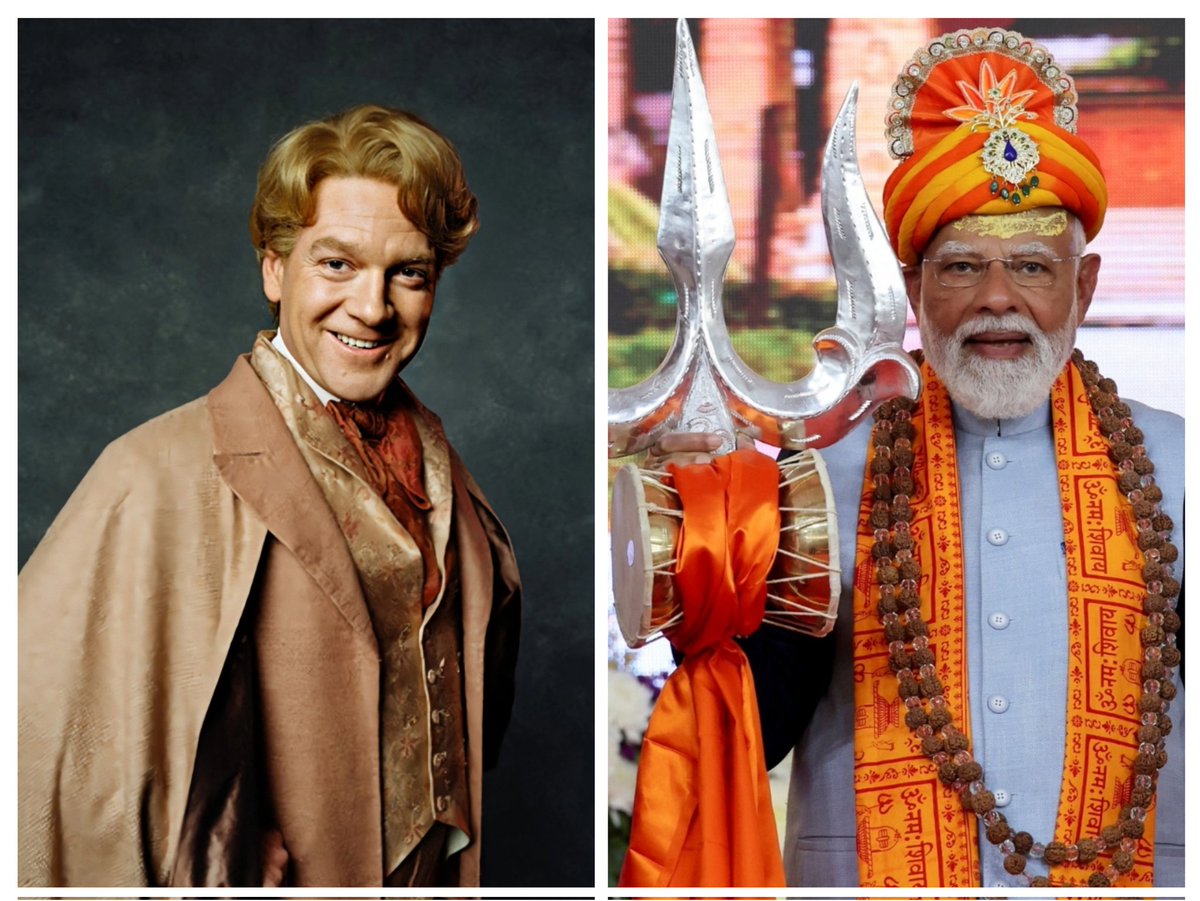
Time to Acknowledge the Greatest Wizard
Gilderoy Lockhart was never exceptional at magic, governance, or problem-solving. His true brilliance lay in performance — grand gestures, constant visibility, and an endless stream of self-authored praise. He borrowed others’ victories, erased inconvenient memories, and ensured the spotlight never moved away from him. Over time, applause replaced evidence, and confidence was mistaken for competence.
Lockhart understood that controlling memory is easier than delivering results. Keep people busy with rituals, symbols, and stories, and they stop measuring reality. When history feels blurry and progress feels emotional rather than factual, the spell is already working. Fictional wizard, timeless method.
Vaibhav Suryavanshi, what a SUPERSTAR 🤩!!
To take a pause & catch your breath requires courage … More power to you … Respect 🙌 !! @rajasthanroyals#ipl2026
A friend of mine, who is formar media personality and former camera man of PMO, still has connections within media and literary circles, mentioned that these rumours have apparently circulated for years within that ecosystem. According to him, it was considered almost an open secret that the Indian cricketing icon had a reputation for being involved with multiple women and allegedly arranged escorts during overseas and domestic tours. There were even stories about hotel room setups involving connecting entrances through teammates’ rooms to avoid attention. Some people also speculate that this may have contributed to the fallout within the team around 2007, though none of this has ever been publicly confirmed for obvious reasons.
Ordered from Hulk Burger on @zomato at 9:50 PM.
After waiting till 10:50 PM, Zomato delivered someone else’s Bikkgane Biryani order meant for “Sunny Rana.”
1 hour delay.
Wrong order.
Ruined dinner at 11 PM.
And the best part? There is NO proper customer care number to even call. Customers are trapped inside useless chatbot/support chats while the company hides behind automated replies and refund templates.
This is exactly how Zomato operates now:
Delay the order → deliver wrong food → force customer into chat support maze → send apology → close ticket.
@deepigoyal maybe focus less on brand image and more on fixing the collapsing delivery and support system.
Food delivery is becoming a gamble on Zomato. You pay money, wait hungry for hours, and still might end up with someone else’s dinner.
Absolutely shameful customer experience.
#Zomato #ZomatoFraud #DeepinderGoyal #CustomerExperience #WrongOrder #FoodDelivery #ConsumerRights #India
@FPLgrassfc@zomato Abe gawar insaan, angrezi nai samajh aati to bol dena, main hindi me translate karta hu... Leh to raha hai, repeat mistake hai, isliye tweet karna pada.... Bus Cool banne ke liye kuch bhi comment mat maar
Caution long read alert. Read this profoundly moving piece and then I will tell you something. If you already have, you can move on to after the quoted text
"A few weeks ago, a friend called me at 01:40 AM. Not texted. Called. For a brief second, my body prepared itself for bad news. Adulthood has conditioned most of us to believe that late-night calls only arrive carrying catastrophe. Someone in the hospital. Someone stranded. Someone dead. But nothing had happened.
She had just finished work, was driving home through near-empty roads in London, heard a song we both used to jam on together, and suddenly missed me. So she called. We spent thirty minutes talking about things that would sound painfully unremarkable on paper. Work fatigue. Bollywood gossip. How she was enjoying every bit of her married life. The indignity of back pain as soon as you touch thirty. A professor we once hated but now miss with alarming frequency. Nothing profound.
And yet after the call ended, I sat awake for a long time with the strange ache of having briefly encountered an earlier version of myself. Not younger exactly. Just…more reachable.
There was once upon a time when friendship did not require elaborate planning. We spoke for hours without checking calendars. Entire evenings disappeared on hostel terraces and tea stalls and long walks taken for absolutely no reason. Friendship in youth thrived on excess time – loose, unstructured, and gloriously wasteful.
However, somewhere between “Let’s catch up soon” and “Sorry, life has been hectic”, adult friendship became one of the most emotionally significant and least discussed losses of modern life.
The invisible funeral
Romantic heartbreak has an elaborate infrastructure. There are films for it. Songs for it. Poetry, rituals, sympathy, advice columns, entire industries dedicated to helping people metabolise romantic loss.
Friendship grief, however, remains oddly invisible. Nobody teaches you how painful it feels to slowly lose access to someone who once knew your inner life intimately. Someone who understood the silences before your sentences. Someone who could identify your mood from the way you said ‘okay’. Someone who knew everything about your crushes and petty insecurities.
And unlike romance, friendships don’t end dramatically. No final conversation. No clean rupture. No cinematic closure. Most friendships dissolve through unattended accumulation – postponed calls, exhausting jobs, geographic distance, emotional fatigue, different sleep schedules, different priorities, and different lives unfolding at different speeds. One day you realise the person who once knew your thoughts now only knows what you accidentally reveal on Instagram stories.
And because ‘nothing happened’, we often deny ourselves the right to grieve it.
We were never meant to live like this
Part of the problem is structural, not personal. Friendships in school and college survived because institutions did most of the work for us. Proximity created intimacy. Repetition created familiarity. We saw each other daily without effort.
Sociologists have long argued that human relationships are sustained less by intensity and more by regularity. Simply encountering the same people repeatedly builds
closeness over time. Youth offers this naturally. Adulthood dismantles it completely. Especially in urban life.
Today’s young professionals live inside systems that quietly erode friendship while pretending to celebrate connection. Work consumes emotional bandwidth. Cities stretch distances cruelly. Weekends become recovery periods rather than social spaces. Ambition transforms everyone into project managers of their own lives. Even rest now feels predicted on being productive.
And so friendship – the one relationship built almost entirely on voluntary presence – begins slipping through the cracks.
The tragedy is that this loneliness often coexists with constant digital interaction. We are perhaps the first generation to possess uninterrupted access to each other while simultaneously becoming emotionally inaccessible. We maintain ambient awareness of one another’s existence without participating meaningfully in each other’s lives. I know what my friends eat. Which cafés they visit. Which things they complain about. I know when they get promoted because LinkedIn informs me before they do. And yet sometimes I hesitate before calling because I no longer know the emotional weather of their lives.
The sanitised version of ourselves
Adulthood rewards self-containment. Everybody is tired. Everybody is working on themselves. Everybody is ‘going through a lot’.
A while ago, I met one of my closest friends after almost two years. We had both changed in ways difficult to articulate immediately.
He had become more efficient with language, as though corporate life had trained his thoughts into bullet points. I had become permanently tired in the peculiar way where exhaustion no longer feels temporary enough to complain about. For the first twenty minutes, conversation moved awkwardly through adult updates. Job. Parents. Health. Mutual acquaintances getting engaged with frightening regularity. And then suddenly he laughed – fully, loudly, head thrown back exactly like he used to – and time collapsed for a second. There he was again.
The brother who never split auto fares with me. The brother who sat beside me during lectures drawing nonsense in notebook margins. The brother who knew who I was before adulthood turned all of us into slightly polished versions of our résumés.
The emotional economy of modern life
Modern adulthood encourages optimisation in almost every sphere. Be productive. Be efficient. Heal yourself. Monetise your hobbies. Curate your identity.
Somewhere along the way, friendships too began absorbing the language of management. We now discuss emotional bandwidth like data plans. Even affection sometimes feels evaluated through invisible cost-benefit analysis: Who texts first? Who makes more effort? Who is emotionally available? Who drains energy?
Friendship, however, has always depended on a certain irrational generosity. A willingness to waste time together magnificently. To listen to the same anxiety for the fifth time. To sit through silence. To remain available without agenda.
And perhaps this is why adult friendship feels increasingly radical. It resists the transactional logic modern life rewards everywhere else. Because a real friend offers something profoundly rare: unoptimised presence. Family is structured by blood. Marriage by institution. Work relationships by utility. Friendship survives purely through mutual choosing. Nobody has to stay. And yet some people do.
Despite impossible schedules and emotional fatigue, some friends continue returning. They send memes during meetings. They remember your important dates. They call you out-of-the-blue. Not because it is convenient. But because somewhere, beneath all the exhaustion adulthood imposes, they still consider your inner life important. Sometimes it is simply the stubborn decision to keep returning to people despite the world constantly training you to prioritise everything else."
This was written by a serving IPs officer on his website, and it was so thoughtful and perceptive that I decided to look him up and check what else he had written.
And this popped up
https://t.co/omBAxEnZ7R
Clearly very very dissonant from the previous piece. I was quite disappointed, given the previous piece. And then today, social media went absolutely crazy as the first piece was almost definitely written by AI.
I confess I had no idea, was drawn into the narrative early and left my rational judgement and narrative far behind.
It is unsettling when you realize how easily you can be taken in, and how easy it is to get past your scepticism. See less