Junior Adjunct Scholar @TakshashilaInst
Curious about geopolitics, economics, finance, technology, law and the intersection of these fields.
Views my own.
Why should UPI transactions remain free forever? "Because it has positive externalities". But in public finance, this argument is flawed. Having externalities does NOT imply a lifetime zero-price tag for every user. A #thread
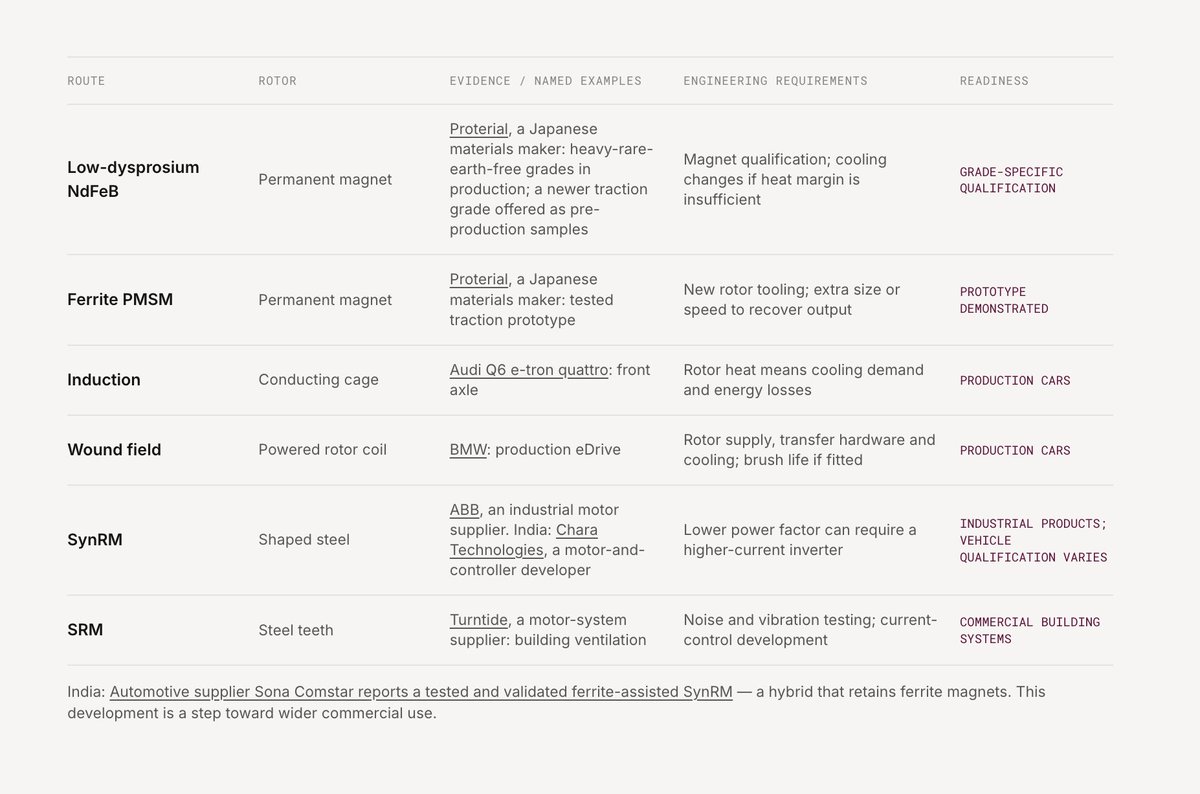
PMSM motors contribute to 90% of the demand for heavy rare-earths like Dysprosium and Terbium. We categorized these minerals as having the highest risk in our earlier mineral categorization work (link in comments).
Now, we've built visualizations to understand the motor itself.
There's so much talk about rare earth magnets, but have you seen what a permanent magnet synchronous motor looks like? What alternative technologies are trying to displace rare earths? What are their prospects? Check out our cool primer, built by @tannmaybaid and @shobhankita
I’ve always found blockchain harder to understand than it needs to be.
So I built a self-paced, visual guide that strips away jargon and focuses on the core ideas.
Link in the comments, would love your feedback.
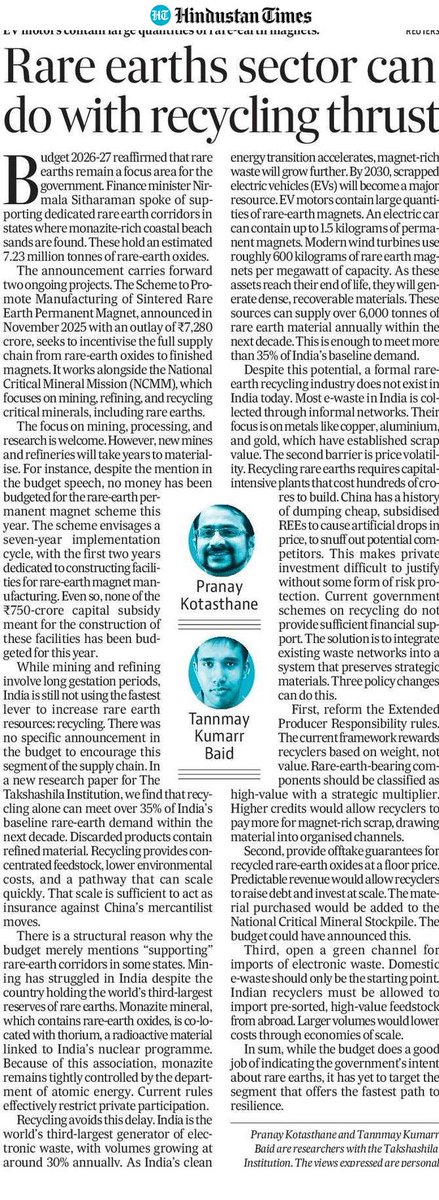
Rare earths are not like oil. They can be recovered, reused, and recycled if policy allows it.
This paper argues that India’s fastest and least damaging route to partial rare earth security lies in urban mining and domestic recycling, using the country’s growing e-waste stream instead of building an entirely new primary mining ecosystem. With the right incentives, recycling could supply thousands of tonnes annually while reducing environmental harm.
Authored by Tannmay Kumarr Baid (@tannmaybaid), Pranay Kotasthane (@pranaykotas), and Narayan Ramachandran, the paper outlines a coordinated policy pathway to make this viable at scale.
Read the full analysis: https://t.co/R8fLoazKrw
Re-up.
Add to this point that @tarunsmehta made: total cost of rare earth magnets in a 2W is less than ₹200. With enough consistent demand from the automotive segment, China can be displaced even if the costs of magnet production increase by 2x or 3x.
We called it. There was much euphoria from the US administration in June after the deal giving six-month licenses to US companies to access Chinese rare earths. Back then, we had written in @IndiasWorld_mag that:
"The deal only provides a six-month license to US companies, after which China could reinstitute the controls if US-China relations do not improve. With a newly institutionalised export control regime, China is prepared to use its rare earth dominance for strategic gains again in the near future."
We had also identified several alternatives. These controls are a mark of desperation, not of strength.
@HappymonJacob@tannmaybaid