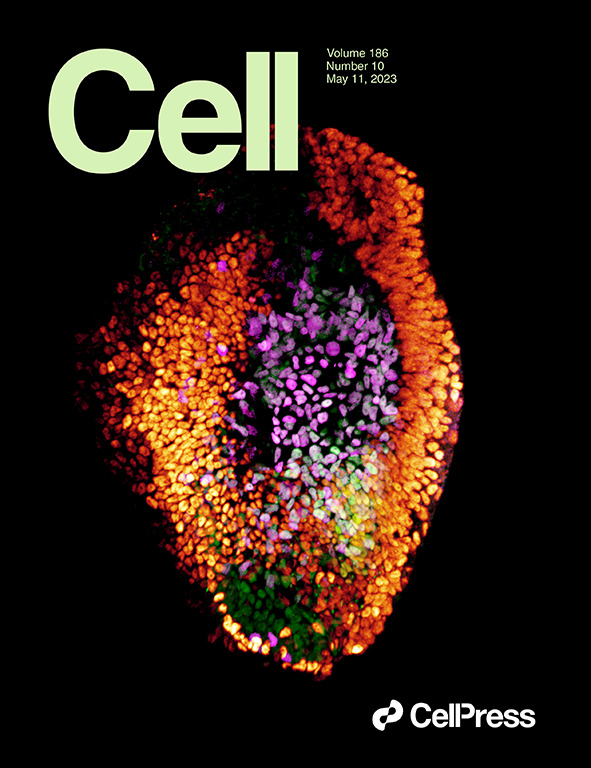
Excited to share our successful collaboration with @taotankm, resulting in a joint publication with Wang lab @CAS and featured as @Cell's cover story! Kudos to all authors involved! Using different methods, both studies showcase ex utero development of monkey embryos to day 25!
Research on human-monkey embryonic chimeras could enable new scientific insights, but faces significant technical and ethical hurdles. de Los Angeles and colleagues discuss the current regulatory landscape for chimera research and its future directions.
https://t.co/mNVIyt9pQy
A fruitful collaboration with @JCIB_Lab_Salk and @taotankm We found human extended pluripotent stem cells could contribute to chimera formation in monkey embryos cultured up to day 19-20 https://t.co/15uxI9EY96
What’s a blastoid? We developed a way to coax naive human pluripotent stem cells (PSCs) into structures that look like human blastocysts, which we call human blastoids. This process is made possible by sequential lineage differentiation and self-organization. (3/10)
7 years in the making, and thanks to my amazing team @AlejandroAgCa@bernardooldak@noashefi@itaymaza & collaborators, our new paper is out. description will follow below later
https://t.co/UmIC9j7xl7
Human embryo research beyond the primitive streak
We argue it’s time to revisit the 14 day limit for in vitro culture & a science led progressive extension of culture period, coupled with public dialogue is the right way forward
https://t.co/VDTbGr8hjE