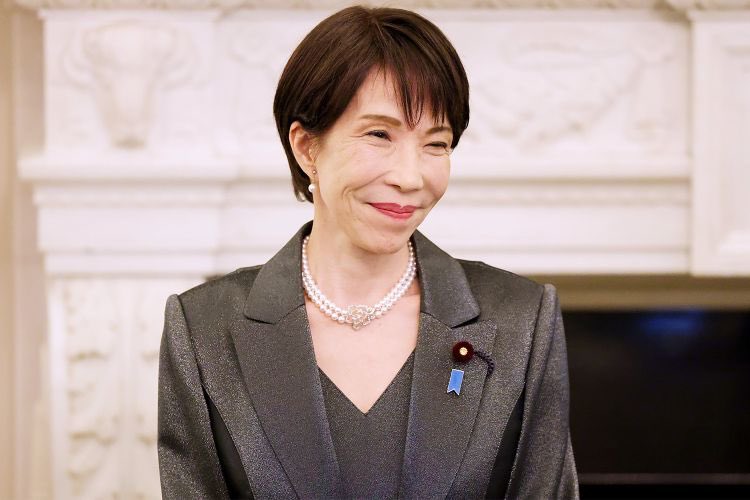
🇯🇵 Japan’s PM Sanae Takaichi landed in Canberra this week and couldn’t stop talking about China. 🇨🇳
Albanese kept it light and focussed on the 50th anniversary of the friendship treaty and practical cooperation. But Japanese officials and media went straight into the China threat scenario.
Joint statement barely out and Japanese officials and media pushed a clear narrative linking the talks to “Chinese economic coercion.”
Reality check from the ground though: Australia just wrapped a solid China visit where it reaffirmed the One China policy and energy cooperation. Reserves back home are tight, with petrol at about 39 days, diesel and jet fuel scraping 29, all the while 144 stations have already run dry amid Middle East chaos. Japan gets a third of its LNG from Australia. This isn’t charity; it’s Tokyo locking down its energy lifeline.
Canberra pledging up to A$1.3 billion for Japan-linked critical minerals projects. Tokyo throwing in hundreds of millions more. The target list? Rare earths, nickel, graphite, gallium and fluorite (the exact stuff that powers EVs, chips, AI).
Lets stop and call this what it is: building an alternative supply chain to “de-risk” from China’s actual dominance in processing and scale.
But the story goes even deeper.
Two weeks ago Japan’s defence minister signed off on co-developing new Aussie navy frigates based on the upgraded Mogami-class, Tokyo’s first postwar export of a major combat platform. Takaichi’s visit locked in joint R&D details, shifting security cooperation from intention to substantive binding.
Takaichi’s own words and timing make it crystal clear: this is her “use security abroad to force constitutional change at home” playbook.
She pre-recorded a message for the 3rd May Constitution Day rally pushing revision by 2027. Delete Article 9’s peace clause, rebrand the Self-Defence Forces as a full “National Defence Force” with overseas deployment rights, collective self-defence and offensive weapons.
Position Japan as “regional security pillar” internationally, then wave the external validation back home to sell remilitarisation. Translation? Do America’s bidding as the vassal state it is.
Australian statements stayed pragmatic: mutual benefit, long-term partner, no inflammatory rhetoric. Japan’s side vomited the China angle in every direction.
Meanwhile, Tokyo’s also fast-tracking weapons procurement talks with Ukraine.
Living in China you see the pattern daily. Beijing isn’t the one exporting warships or rewriting pacifist constitutions. It’s the steady supplier keeping lights on and factories running across the region.
Japan’s play is classic great-power hedging: use Australia’s resources and geography to expand its military footprint while pretending it’s all “defensive.”
The danger? Once Tokyo gets the constitutional green light and external cover, its security policy won’t stop at the home islands. It stretches across the Indo-Pacific.
Australia’s caught in the middle: energy crisis at home, pragmatic trade with China, but now deeper military-tech entanglement with a neighbour openly racing to normalise offensive capabilities.
Who actually wins when supply chains get “de-risked” at gunpoint prices and old pacifist restraints are ditched?
Beijing’s not the one rewriting the rules here; Tokyo is. And Canberra’s fuel gauges are flashing.
🇯🇵🚨 JUST IN: Japan's Prime Minister Takaichi says "ordinary citizens not considered" in the new National Security Council creation bill. The ruling party plans to pass it on April 22 through the committee, then the full House's on April 23.
This is dangerous. Spies disguise themselves as ordinary citizens. That means ordinary citizens will become targets of investigation. The government is creating a surveillance machine and telling the public not to worry. That is exactly when you should worry.
The people are already protesting. 36,000 surrounded the Diet. Now the government is rushing the bill. No debate. No delay. Just power.
Get this in front of as many eyes as possible. Japan is not a surveillance state. Not yet. The people must stop this.
Caray no puedo olvidar esa afrenta, la humillación que profirió Trump a la ministra de Japón.
Es inaceptable
Trump volvió a cruzar una línea que no debería tocar ningún líder: celebró, sin pudor, el uso de la bomba nuclear en un episodio ligado a Japón, y lo hizo nada menos que frente a una representante de ese país.
No hubo respeto, ni memoria, ni mínima empatía por las miles de vidas que se perdieron. En lugar de un gesto de solemnidad, hubo burla. En lugar de prudencia, arrogancia. Fue una escena que rozó lo grotesco.
Lo más grave no fue solo la actitud de Trump, sino la reacción —o mejor dicho, la ausencia de ella— por parte de la primera ministra japonesa, Sanae Takaichi. No hubo indignación, no hubo reclamo. Continuó la conversación como si nada hubiera ocurrido. Como si la historia no pesara.
Esa imagen ha encendido la indignación en Japón.
Hoy, miles de ciudadanos están saliendo a las calles. No para respaldar a su gobierno, sino para cuestionarlo. Para señalar lo que consideran una humillación aceptada en silencio.
Porque el mensaje que quedó no fue diplomático, fue simbólico: viajar miles de kilómetros para escuchar una afrenta, sonreír ante ella y aún así cerrar acuerdos.
Y eso, para muchos japoneses, no es política exterior… es sumisión.
El malestar crece, el silencio se rompe y la memoria colectiva reacciona.
Trump ofendió.
Takaichi calló.
Y el pueblo japonés ya respondió.
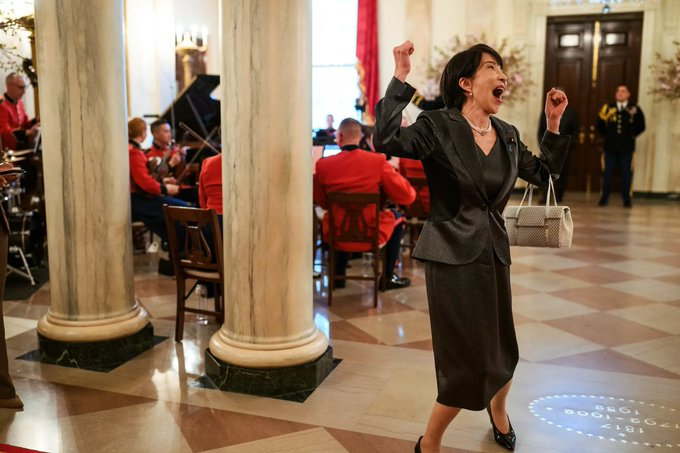
What do Japanese people think about the obsequious behavior of their Prime Minister Sanae Takaichi during the state dinner at the White House?
She is visiting the most corrupt, narcissistic US president of all time, who is currently trying to plunge the entire world into chaos, and she is dancing with joy.