Looking forward to presenting our paper "Causal Discovery over Clusters of Variables in Markovian Systems" this week at NeurIPS. Come talk with me at my poster (#2601) on Thursday from 4:30pm-7:30pm.
5/8 “Causal Discovery over Clusters of Variables in Markovian Systems” (joint w/ @taravanand, @adelehr, Jin Tian, Gregory Hripcsak)
Thu, 7:30 pm (#2601)
Link: https://t.co/dpqydz3JzE
We study causal discovery when variables come grouped into clusters, a setting where standard algorithms often fail due to ambiguous independence patterns. We characterize the Markov equivalence classes of cluster DAGs (C-DAGs) and introduce CLOC, the first sound and complete constraint-based algorithm for discovering causal structure directly at the cluster level.
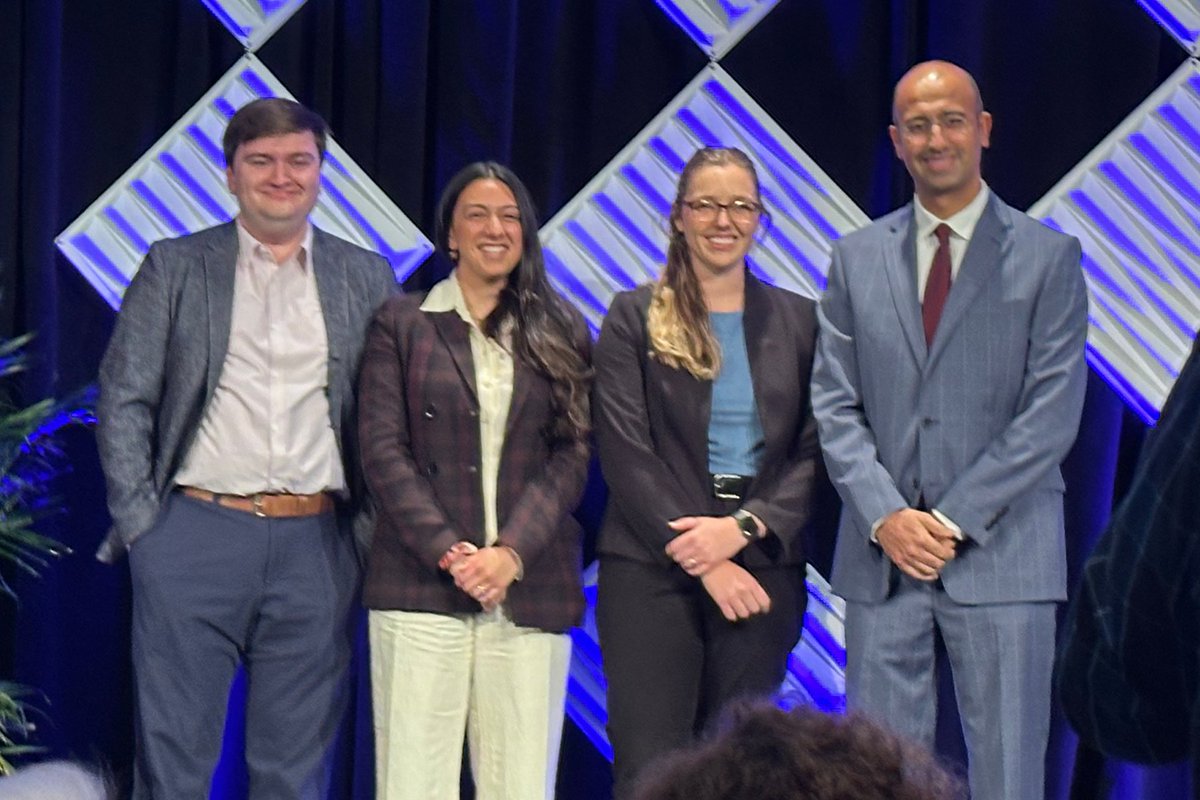
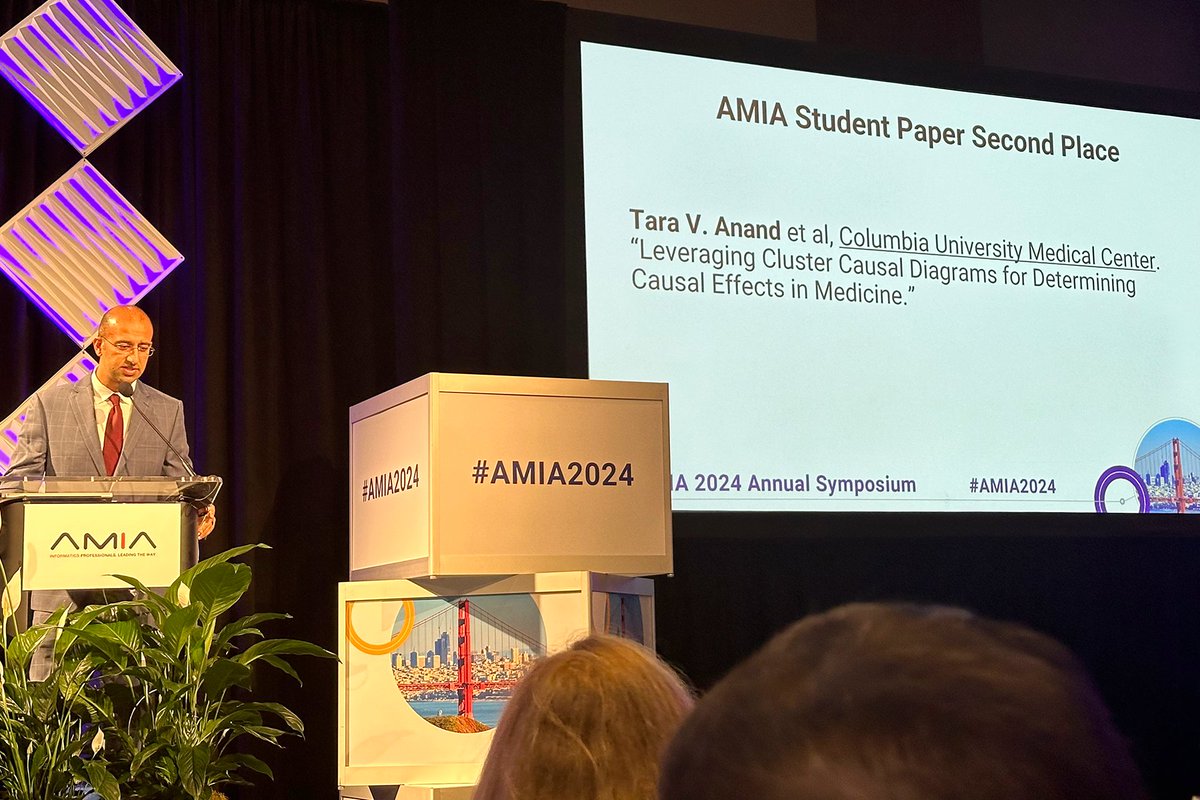
🎉🎉 Congratulations to our PhD trainee Tara Anand (@taravanand) on earning 2nd place in the #AMIA2024 Student Paper Competition!
Title: Leveraging Cluster Causal Diagrams for Determining Causal Effects in Medicine.
Congrats Tara! 👏👏 @ColumbiaPS@Columbia@amiainformatics
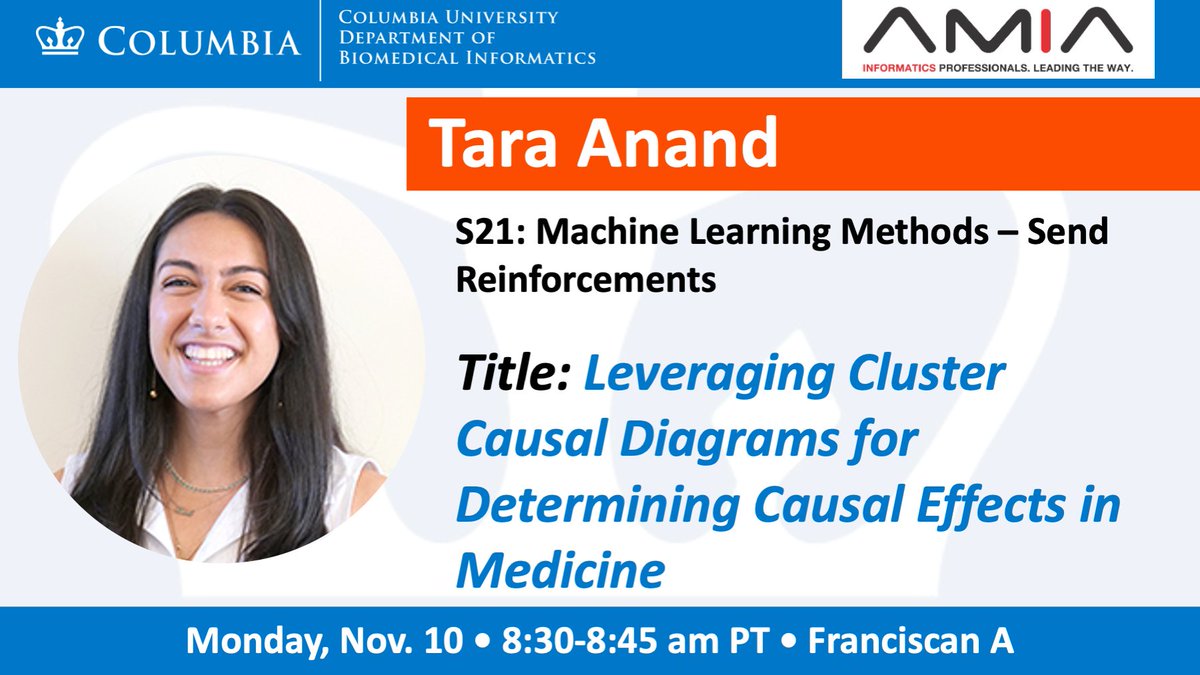
A full #AMIA2024 day for DBMI begins at 8:30 am as @taravanand presents "Leveraging Cluster Causal Diagrams for Determining Causal Effects in Medicine" during S21: Machine Learning Methods – Send Reinforcements (Franciscan A). @AMIAinformatics
@yudapearl@AJAveritt@eliasbareinboim 1/C-DAGs address the problem of when only partial knowledge is available, such that a full causal diagram cannot be specified (particularly useful in high-dimensional domains, like medicine). Consider an example where the following edges are known:X→Y; Z1→X; Z1↔X; Z2→Y; Z2↔Y
@yudapearl@AJAveritt@eliasbareinboim 6/ Interestingly, in application, conditional ignorability is often assumed. In fact, the above example may apply, such that this assumption is contradicted. C-DAGs help clarify where more knowledge may be necessary and allow for assumptions more nuanced than ignorability.
@yudapearl@AJAveritt@eliasbareinboim 5/ Here, P(Y|do(X)) is non-ID because the effect is non-ID in a compatible causal diagram. The C-DAG motivates model refinement. More knowledge is required, perhaps to determine a mediator between X and Y for use of front-door adjustment, or to break up clusters another way.
@yudapearl@AJAveritt Work can be found here! (https://t.co/cUytyZ5655)
Highlighting my recent paper with @eliasbareinboim on effect identification in C-DAGS (https://t.co/EypToID6rZ) @ AAAI 2023. I’m broadly working on ways to make existing theory more usable for applications in medicine
Thank you to everyone who came to the Justice Informatics Workshop at #AMIA2022! So many rich conversations on how informatics can be used to advance justice and how to protect against its abuse for injustice! Grateful for my workshop co-organizers for making this happen
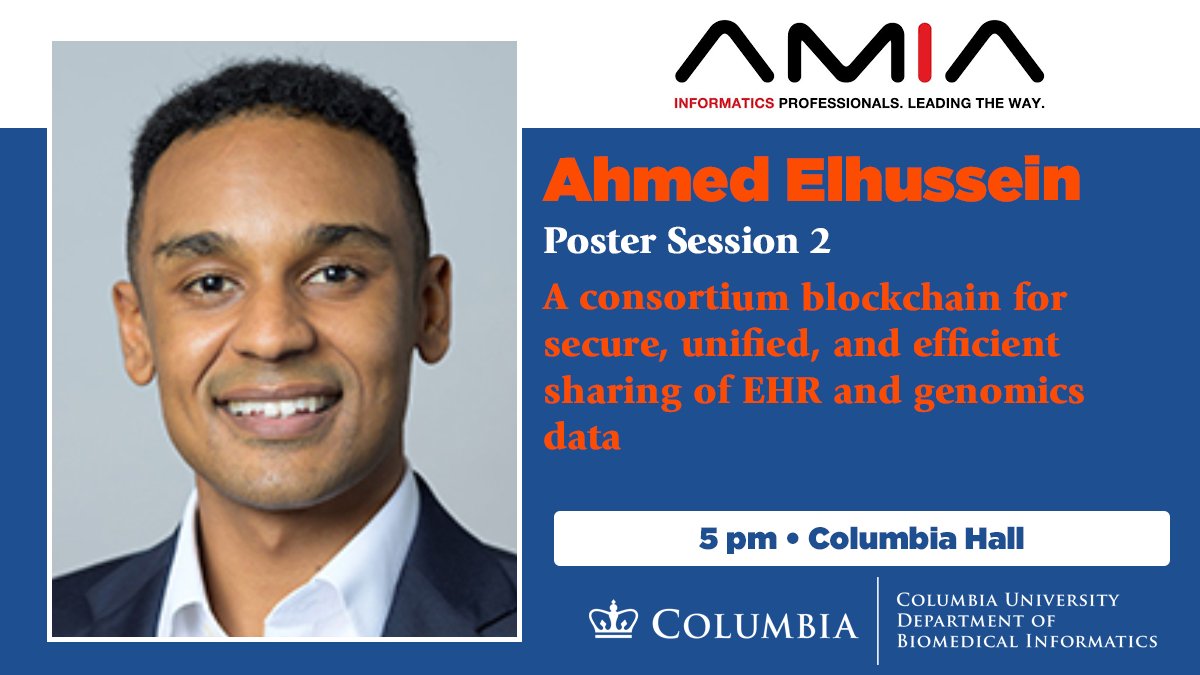
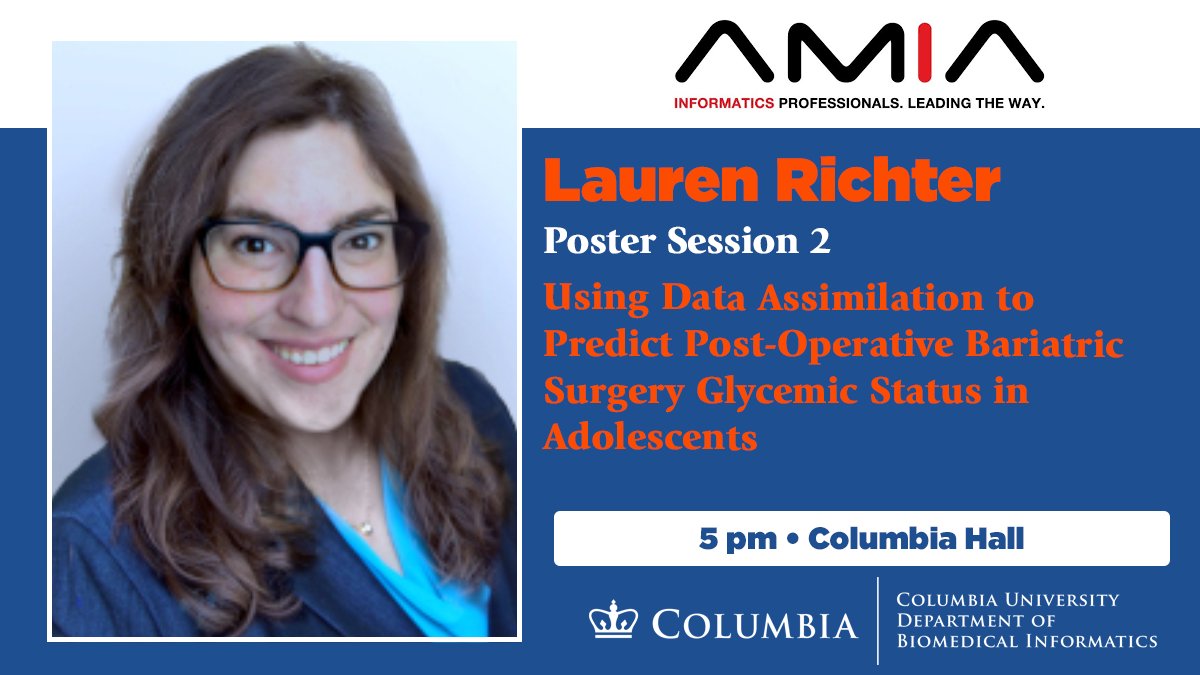
It's #AMIA2022 Poster Time! DBMI will be represented by Betina Idnay, Lauren Richter, Tara Anand (@taravanand) and Ahmed Elhussein during Poster Session 2 at 5 pm in Columbia Hall. Poster topics are shared on the graphics below ... hope you give them a visit!