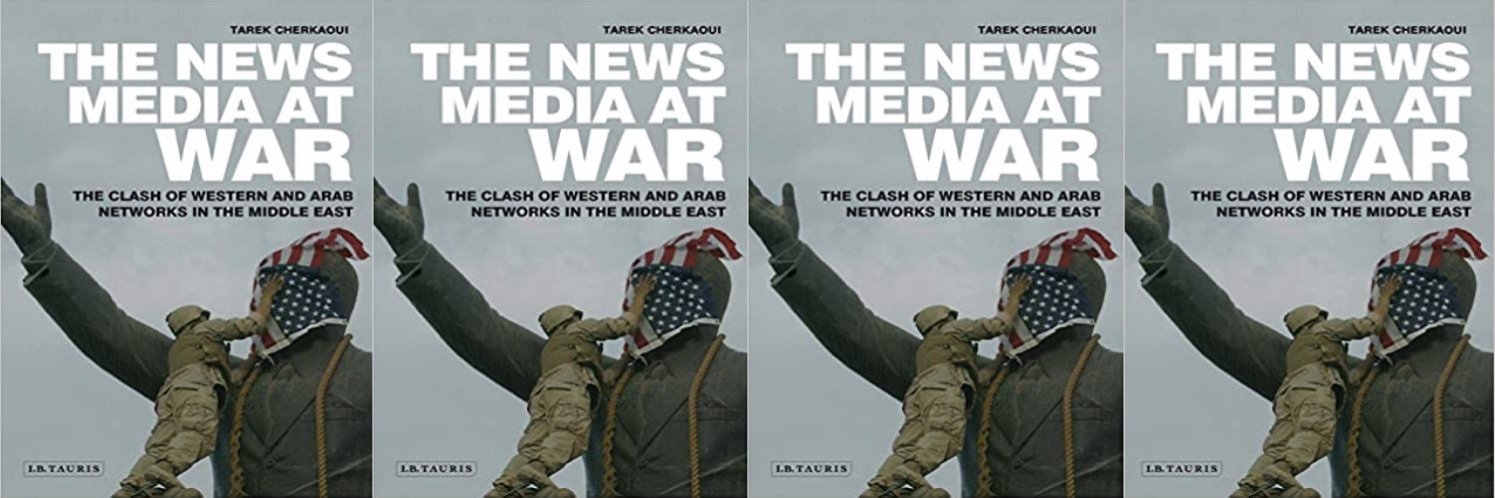
Manager @TRTWorldRC PhD Media & Comms. Author of "The News Media at War"; IR & Media. Views are mine. retweets ≠ endorsements; Likes are my filing cabinet
Policy Outlook | Bringing together Saudi financial and geopolitical weight, Türkiye’s defence-industrial capabilities and operational experience, and Pakistan’s military depth and strategic deterrence, the Mecca Accord seeks to turn complementary strengths into collective capacity.
Our latest Policy Outlook examines what this shift could mean for the regional order. Read more: https://t.co/GXRnhCM5Sp
WARNING: LONG 3 POST THREAD:
I was hoping that 2026 was going to be a peaceful year but the trajectory of events in the MENA region says otherwise. From East Africa to the Gulf and the Levant to Persia the pressure cooker is whistling.
I want to layout a possible roadmap of what could happen in the region. Geopolitics is a lot like chess and every good chess player knows that predict what the other player will do is critical.
The best place to begin is with the catalyst - the recognition of Somaliland. Yup little old Somaliland. You thought it was insignificant but, it’s not. It’s the firewood.
Somalia has been a country plagued with poverty, famine, terrorism and separatist movements for years. There’s a fragile balance within the de facto division of the country. That fragile balance has kept it from descending into civil war. Somalia, despite its weak economic state has incredible economic potential. Geographically it sits on a maritime choke point, it’s rich in minerals and most likely has vast undiscovered hydrocarbon reserves off it’s coast. The fragile balance inside the country has now been upended with the recognition of Somaliland. But, this is only the domestic angle of the issue. Unfortunately, this will likely have a cascading impact on the region.
Ethiopia is an important actor in what could happen next. The country is a rising power in Africa. Its Achilles heel is that it’s landlocked. In its pursuit of a seaport, Ethiopia tried to reach a deal with breakaway Somaliland. This obviously didn’t sit well with neighboring Somalia and was viewed as a threat to it’s territorial integrity. Tensions increased between both African nations. But, both were brought to the table for negotiations with Türkiye mediating. After several rounds of talks, a joint declaration was made between both countries to work towards a mutually agreed upon solution. Now with a push to recognize Somaliland, Ethiopia will most likely be emboldened to abandon talks with Somalia and revert to its original strategy of maritime access via Somaliland, hence reviving the tensions with Somalia. Somalia will most likely try to counter these moves with the many ethnic Somalians that live on the Ethiopian side of the border. Ethiopia had experienced unrest in the north with rebels in Tigray, the potential for unrest in the southeast will stretch the capacity of the state’s security services.
While this scenario has already impacted two countries, the contagion would be manageable if it was limited to this. But it’s not.
Enter Egypt. Egypt adds a whole new dimension to the issue because it has a military that could be a game-changer. Egypt already had its own set of issues with Ethiopia stemming from the construction of the Grand Ethiopian Renaissance Dam which has had a direct impact on Egypt’s water supply. The Egyptian have accused the Ethiopians of bad water management which they believe led to flooding in Sudan and lower water levels in Egypt. While water and Egyptian concerns regarding Ethiopian expansion are a major issue, another concern for Cairo is maritime commerce lanes. Being home to the Suez Canal is a great geopolitical advantage for Egypt. It’s the choke point that links the Mediterranean to the Indian Ocean. But even choke points could have choke points which brings the Somalia, more specifically the geography of Somaliland back into the analysis. While rivals Ethiopia will likely return back to their strategy of seeking a seaport on the Gulf of Aden coast, there also seems to be initiatives by Israel as well, which was probably the end game goal of recognizing Somaliland. The potential of having two or more rival countries control a commercial maritime choke point would threaten the economic security of Egypt.
We’re entering a new epistemic Cold War:
Wikipedia vs. Grokipedia.
Open-source vs. algorithmic empire.
Human consensus vs. machine curation.
The 21st century won’t be defined by a single encyclopedia — but by a war of encyclopedias.
Wikipedia is facing other challenges: its active editor base has dropped 35% since 2019.
Traffic is down.
Bots outnumber humans.
And Musk’s Grokipedia steps into that vacuum, promising “truth” — but offering ideology wrapped in code.
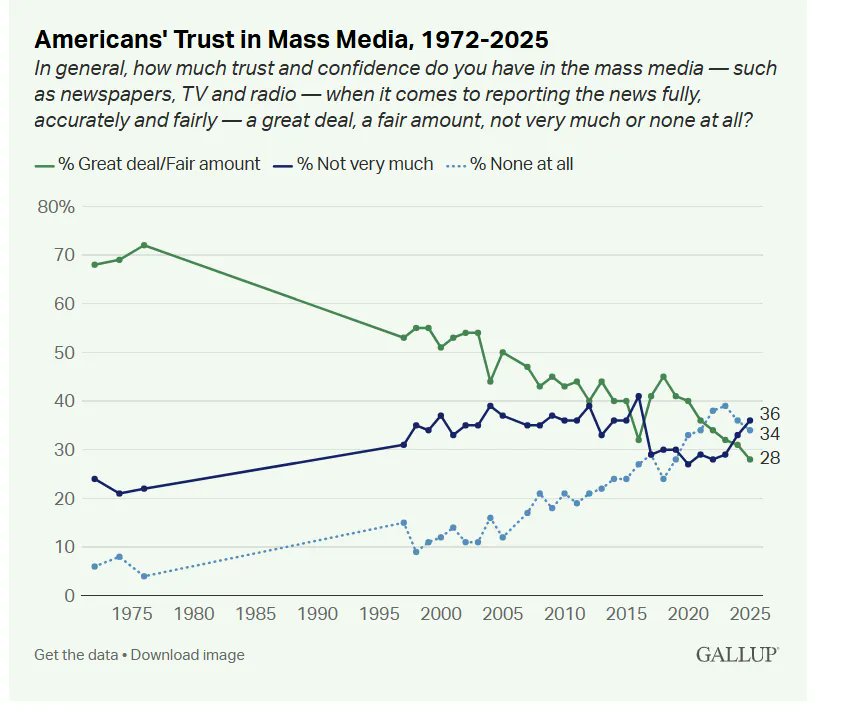
For decades, Americans trusted the press as democracy’s Fourth Estate.
Today, that trust is collapsing — from 70% in the 1970s to just 36% in 2025.
My latest blog piece explores how commercialization, consolidation, and systemic bias eroded the credibility of U.S. mainstream media.
👉 https://t.co/u4aXA40GIb
#NEXT is back on stage, placing youth and the future at its core!
Join us at #NEXT25 for thought-provoking sessions, workshops, and discussions on topics like climate, AI, arts, and sports.
📍 Hilton Bomonti, Istanbul
📅 10 May 2025
Register: https://t.co/GKMAE0LYqU
Today's Digital Debates session is discussing ''Shadows of War: Humanitarian and Security Dilemmas in Post-Assad Syria'' with @ammarkahf, @HittoGhassan and @muratyesiltas will be moderated by @tarek_cher.
📌Join us live on Twitter, YouTube, Facebook/ trtworldforum 📱
🗓️Today - 9.00 PM (6.00 PM GMT)
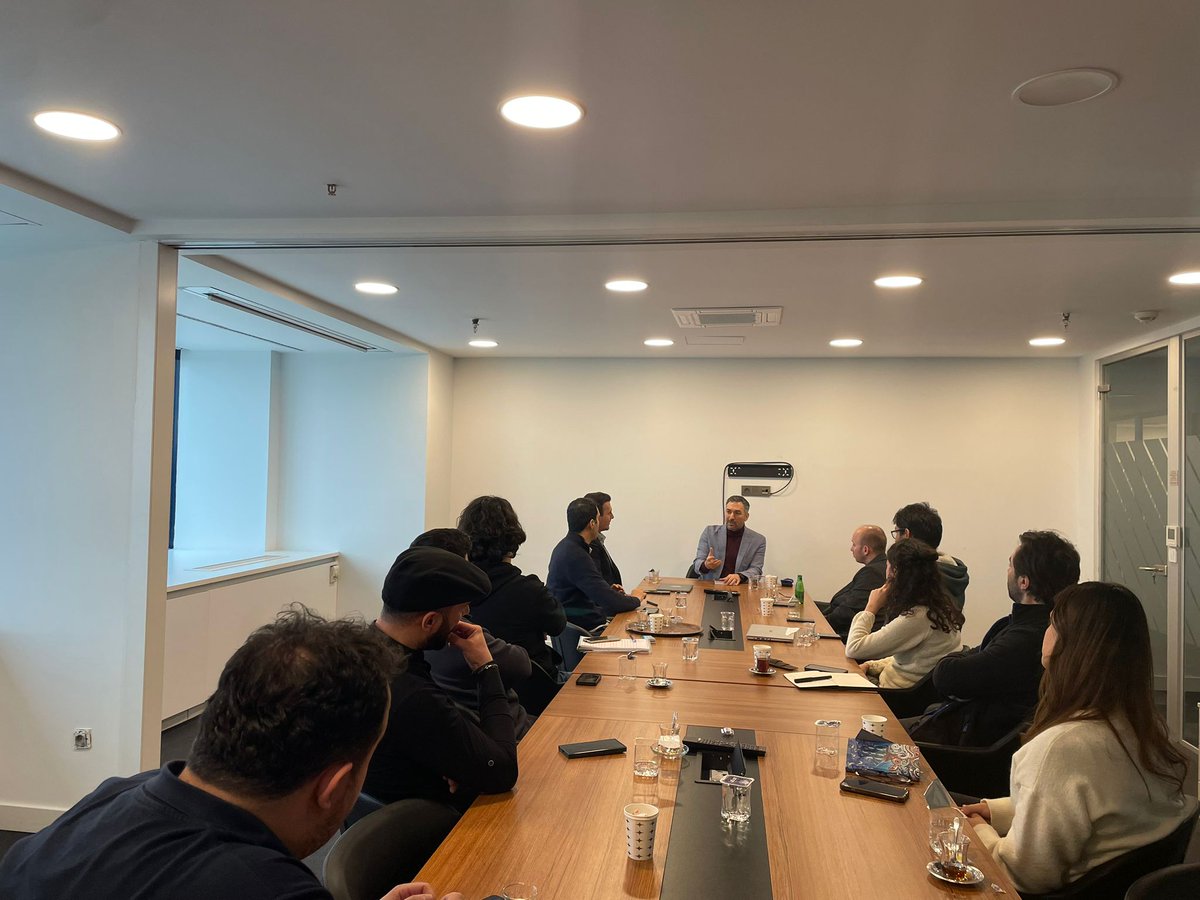
🇹🇷🇹🇷 I am very grateful to the @TRTWorldRC and @tarek_cher for the invitation.
I had the opportunity to discuss the strategic partnership between #Türkiye and the #GCC concerning #Syria's future.
The open discussion session covered a range of important topics, including:
- The impact of the #Trump factor on the region
- #Iran's strategic approach
- The future of #Iraq
- #Israel's regional policies
- #Hezbollah and #Lebanon
- Regional connectivity projects
- #Gulf politics
- The situation in #Palestine
I would also like to extend my thanks to @Burak and Berfe for their assistance and support, as well as to all the outstanding team members.
The 8th annual TRT World Forum, "A World at Breaking Point: Managing Crises and Transformations," will bring together global experts to discuss how to build a fairer future.
🗓️ 29-30 November
📍 Istanbul
Register: https://t.co/IzSSEzseje