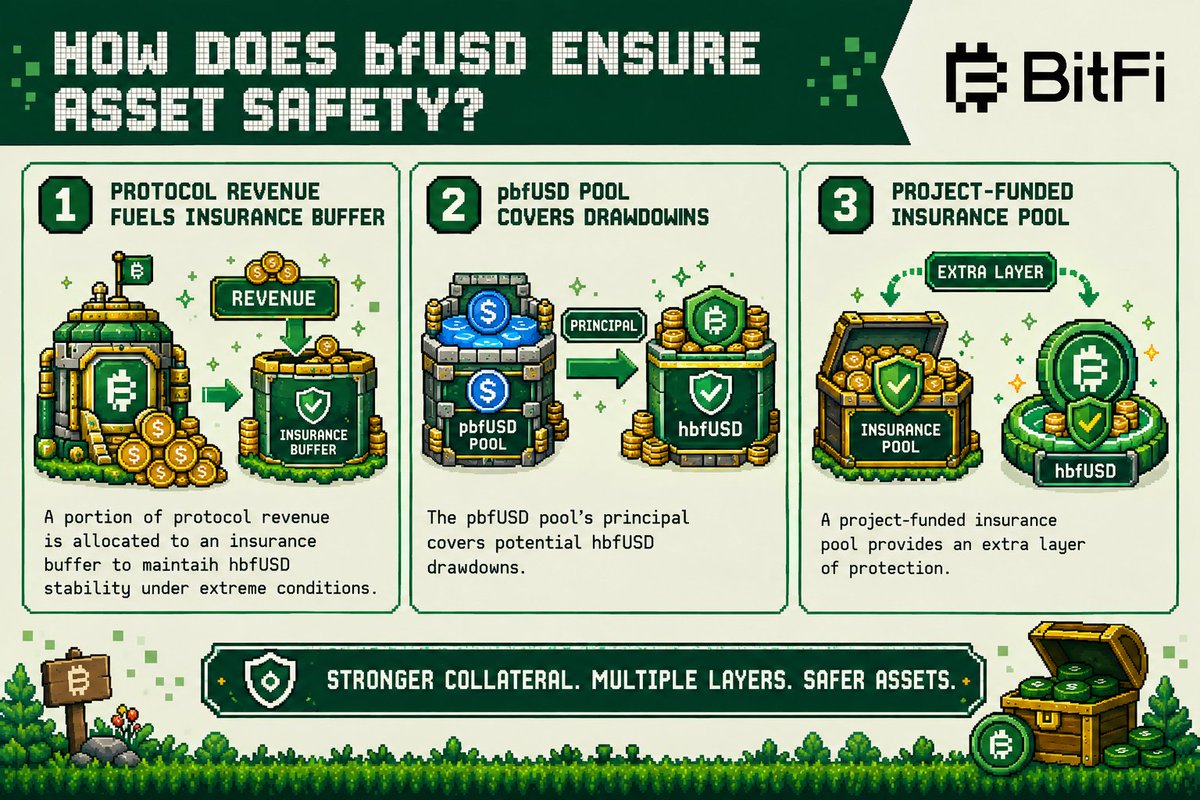
most stablecoins tell you your assets are safe. ethereum:0xa3eb7a9e57fca4e40b79e394ed5eb37fed205a24 shows you exactly how. three layers, all running before TGE.
@Bitfi_Org 🧵
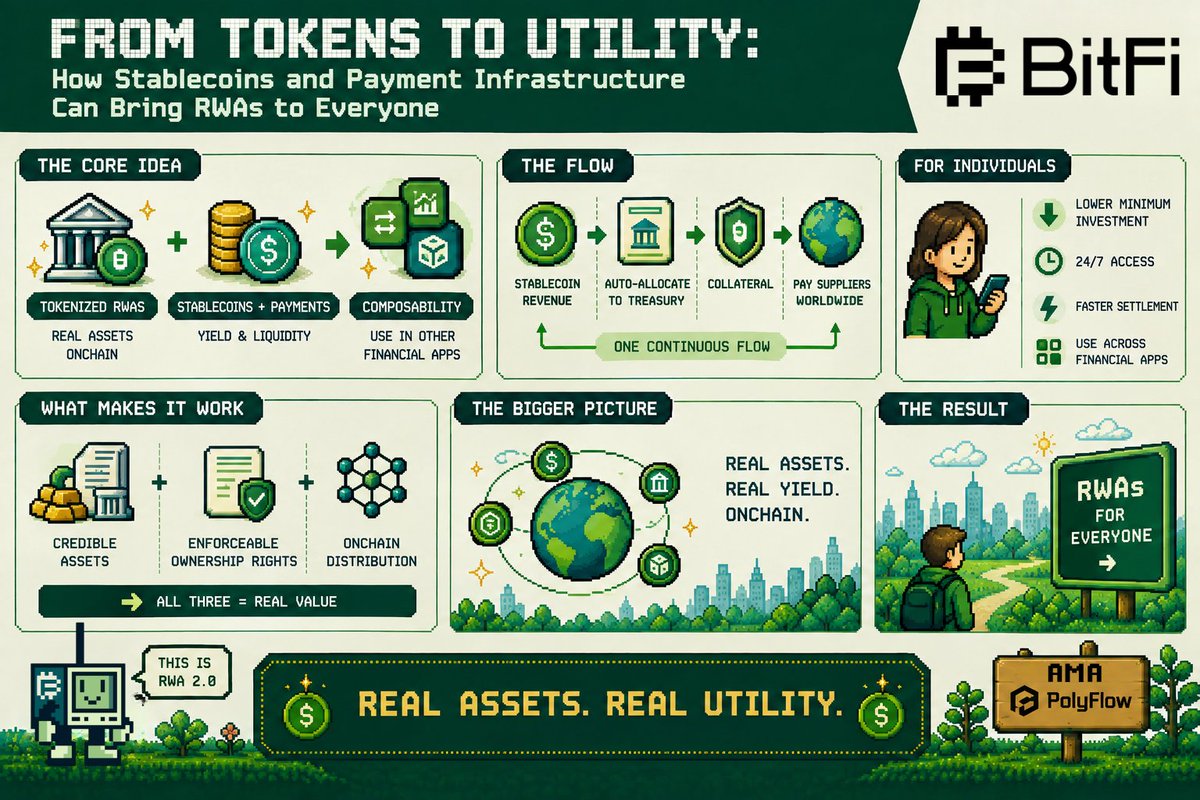
wanted to share something from @Polyflow_PayFi recent AMA.
Rebecca — Head of Institutions at @Bitfi_Org — made a point most RWA projects skip: putting an asset onchain is the easy part. it's not the part that matters.
🧵
TGE isn't here yet, but the points are already running.
ethereum:0xa3eb7a9e57fca4e40b79e394ed5eb37fed205a24 on @Bitfi_Org rewards everything you do with it while you wait. here's what's live right now. 🧵
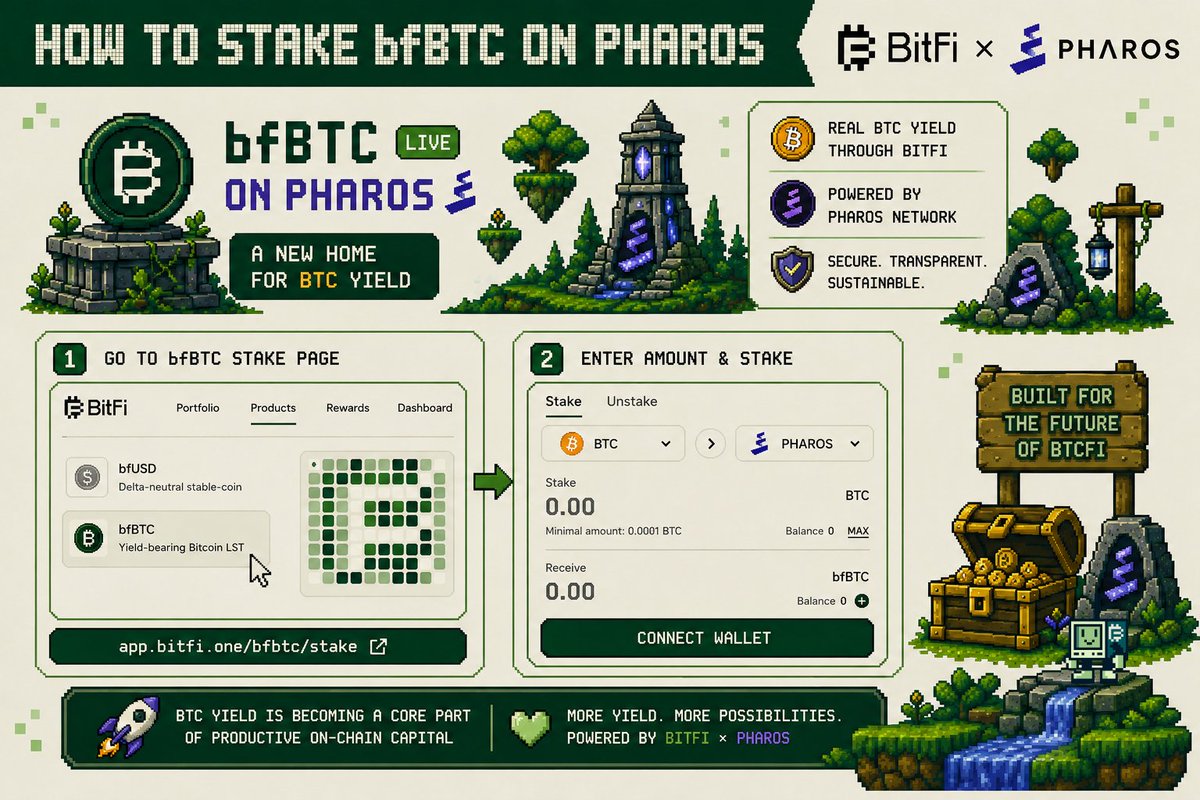
$bfBTC is now live on @pharos_network 🤝
for BitFi this isn't just another chain integration — it's the next step in building $BTC yield infrastructure that can actually reach institutional scale.
@Bitfi_Org 🧵
if you have $bfBTC staked on Sui, support ends August 20. two steps to unstake before the deadline.
▪️go to Products → bfBTC
▪️click Unstake, enter amount, confirm
your $BTC comes back to your wallet
@Bitfi_Org 🧵
TGE airdrop allocation for $BFI is 4.50% of total supply, fully claimable at TGE. built for early supporters, pre-TGE campaign participants, and retrospective users.
@Bitfi_Org 🧵
$KII, $105-175M FDV, and their own payment app is labeled "v3 beta, please be cautious" in the docs.
network hasn't launched mainnet yet, their own disclosures say it "may be delayed or may not occur." expected for an L1 needing the token live at genesis for validator staking, but it also means the FDV is pricing volume and adoption that don't exist yet, purely on the promise it will.
what it does: an FX-native L1, its own chain, own validators, built specifically to settle cross-border stablecoin swaps for emerging markets. real problem, $7.5T/day market genuinely running on outdated rails.
worth asking though whether FX settlement needed a dedicated L1 at all. cross-border payments and stablecoin FX get solved elsewhere as a service layer on existing chains, no new blockchain required. building a whole L1 is the heavier, more expensive path, and their own docs describe the matching engine as "hybrid," part centralized pricing under the hood anyway. if part of the system is centralized either way, the case for needing a full L1 gets thinner.
token utility is fees, validator staking, governance, standard L1 stuff, no equity or income rights per their own disclosures. value here is entirely a bet on future network usage, not something already happening.
$26M raised pre-token, backers I recognize by name but none tier 1 for crypto specifically. $767k committed in the public sale so far against a $105-175M ask.
and this keeps happening across sales this year, unfinished products still pricing themselves at $100M+ FDV like it's 2021. that gap between what's shipped and what's being asked for hasn't closed industry-wide.
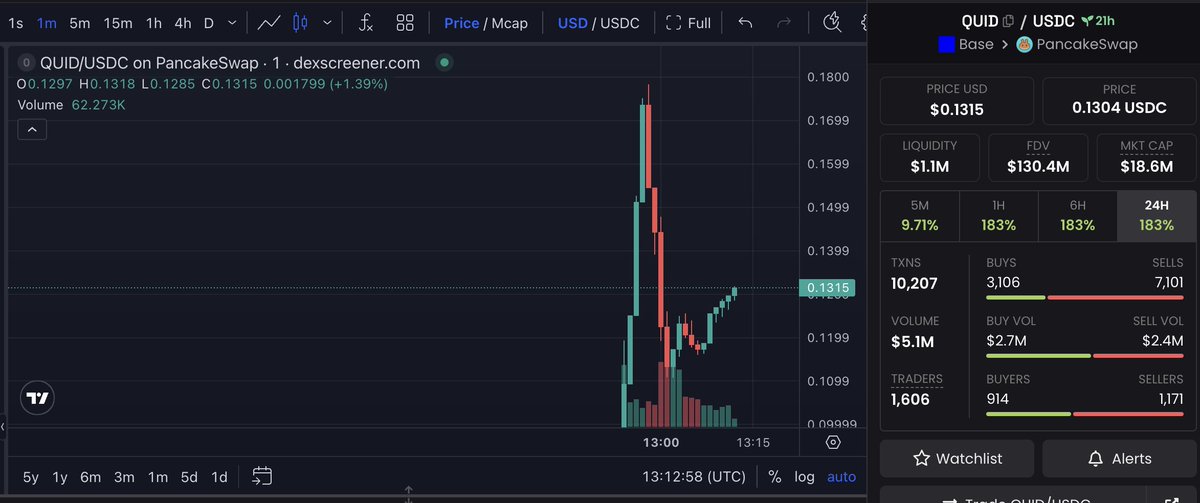
$QUID is live.
trading at 0.13, sale was 0.045 a month ago. that's just under 3x in 30 days with 100% unlock at TGE and no vesting to hide behind.
the thesis held. 🌹
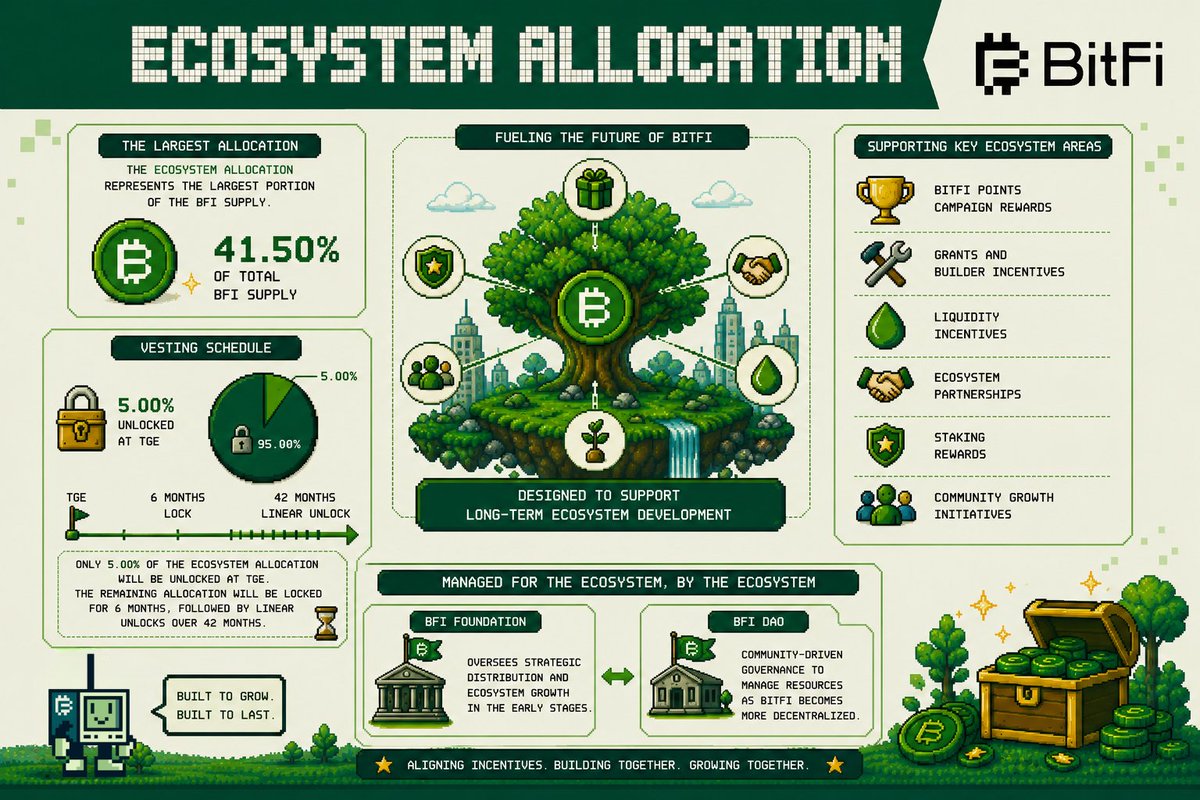
TGE isn't here yet, but the tokenomics are already public and worth understanding before it lands. one thing that stands out immediately: Ecosystem allocation is 41.50% of total $BFI supply. that's the largest single bucket.
@Bitfi_Org 🧵
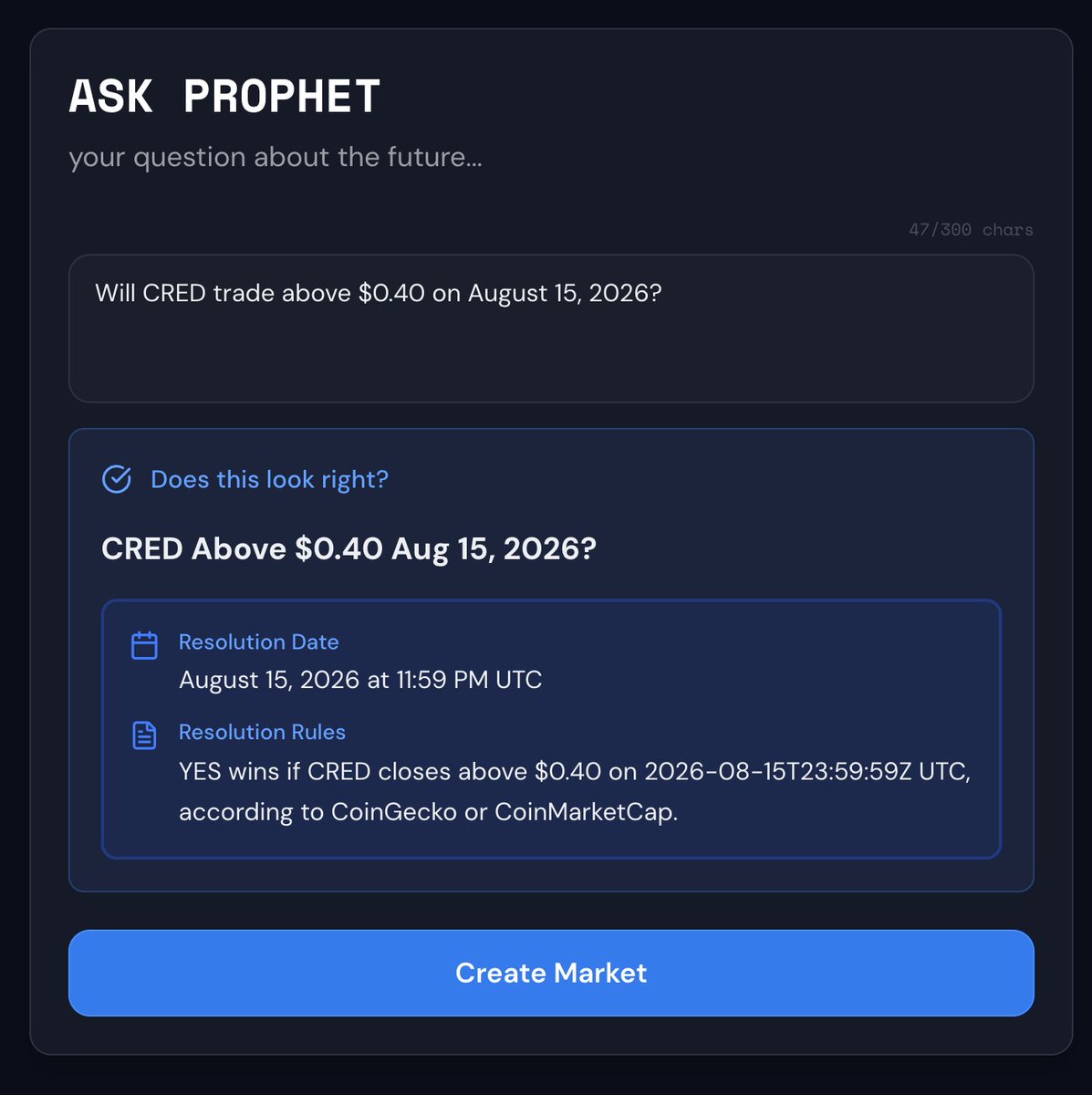
been doing ICO/IDO breakdowns for months now, cryptorank data, FDV math, the whole thing. what I didn't expect is that prophet turned that same research into a second income stream.
every FDV number I dig into is just an opinion until someone's willing to price it. so now instead of just writing "this looks overpriced," I make the market myself, ask if the token trades above X by date Y, and let people who disagree take the other side.
made one on $CRED closing above $0.40 by aug 15 based on the analysis from my last few posts. if you've read my breakdowns and have a stronger view than mine, this is the actual way to put it to the test instead of just arguing in the replies.
the narrative research most of us are already doing for free just became something you can get paid to be right about.
market's live here:
https://t.co/LkUugkkiqW
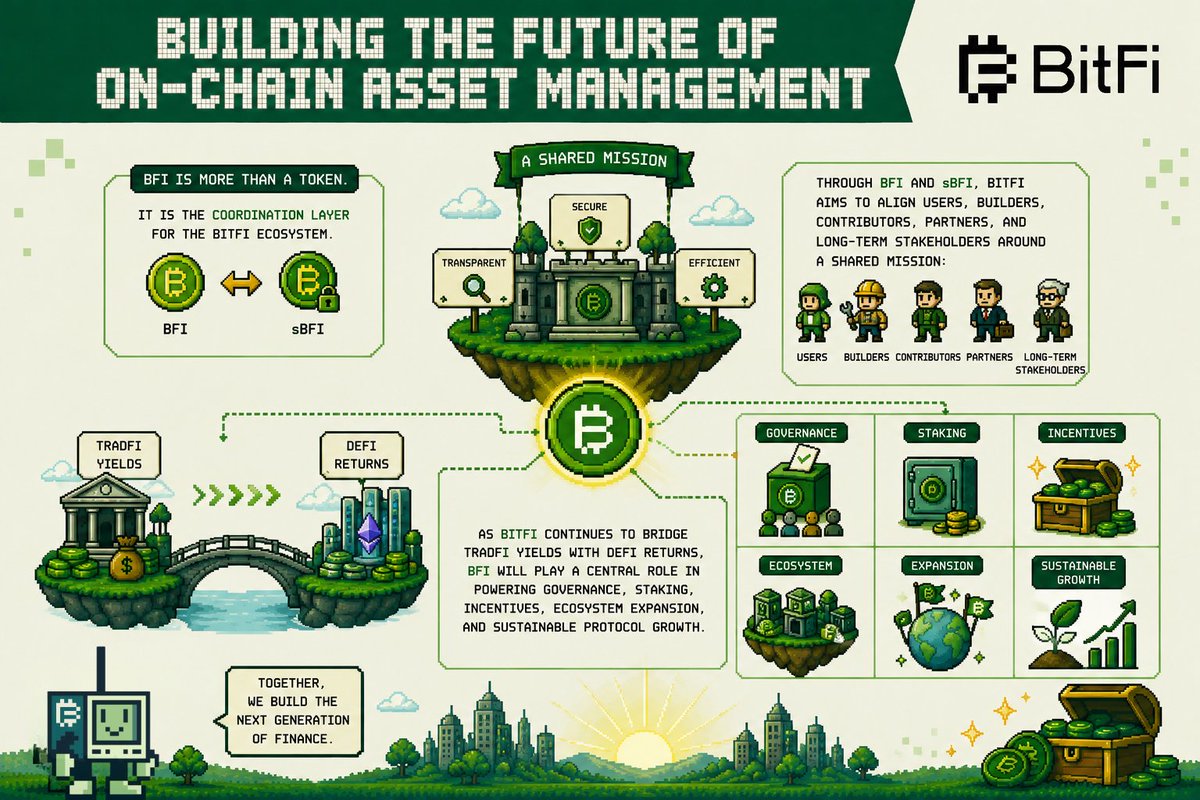
$BFI isn't just a token. it's the coordination layer for everything BitFi is building — aligning users, builders, contributors, and long-term stakeholders around one goal: transparent, secure on-chain asset management.
@Bitfi_Org 🧵
49 dead in 7 months, and most of them sold a token before the product ever had to prove it worked. that's not bad luck stacking up, that's the exit happening before the risk did. 2026 is finally pricing the gap between "raise closed" and "business works" — something 2021 should've done and didn't.
good, honestly. every cycle that skips this filter just pushes the reckoning downstream — bigger raises, more users holding the bag, longer before anyone asks if the token ever needed the product to survive. the teams left standing after this are the ones that were never leaning on a TGE to carry them. that's who ends up owning the niche when this is done.
$CARS on MetaDAO. hot wheels gacha platform, $250k raise, $645k FDV. team's real, checked myself, David Khosroshvili and Ioseb Khutsishvili have a genuine track record, MaxinAI, WiFisher, ETHTbilisi organizing. not anons behind a meme.
the actual question is whether this business makes sense, not whether the people are real.
courtyard and collector crypt already run this model on trading cards, and it works specifically because cards plug into an existing, decades-old grading industry, PSA/CGC. the card arrives pre-authenticated, vaults just custody something already trusted. collector crypt hit $360M FDV on $38M annualized revenue running this exact playbook.
hot wheels has no equivalent. there's no standardized, liquid grading system for die-cast cars the way PSA is for cards. the docs don't mention authentication, condition verification, or collection tracking at all, just "we'll buy inventory and sell it through gacha." that's the part that actually needs answering before the market comparison means anything.
also worth the scale gap: courtyard raised $30-37M to build this infrastructure for cards. $250k doesn't build an equivalent trust layer for a category that doesn't have one yet.
not saying you can't make money on this ICO, people clearly do. just treat it as PVP, not a bet on the business fundamentals, because the fundamentals here are genuinely unproven.
buying governance rights for a system that doesn't exist yet, priced at $150-200M FDV
that's the $TOWN sale in one sentence
checked the live app: lending vaults, loops, and veTOWN governance all show "coming soon." the entire utility of the token depends on vote escrow working. it doesn't. you're buying voting power in a bribe economy that's purely hypothetical right now
the ve(3,3) model only worked at Curve because years of multi-billion stablecoin liquidity made gauge direction genuinely strategic. Velodrome made it work on Optimism because it launched with real existing liquidity wars as a foundation. TownSquare needs to build that demand from scratch, on a protocol that hasn't launched the mechanism for it yet
one more thing on the lockup: the 25% discount tier ($0.015) unlocks 6 months after TGE, not after settlement. if TGE is delayed, your lock extends with it
TVL is real — $63M of $75M milestone, Monad itself growing fast (+79% TVL in 30 days, Aave and MetaMask live). that momentum belongs to the chain though, not automatically to every token that launches on it
the project might be worth watching later. the entry price today doesn't reflect where the product actually is
BitFi governance isn't a single vote.
it's built as a three-step process where discussion, signaling, and execution each have their own role.
that makes governance less reactive and more deliberate.
@Bitfi_Org 🧵
$GNOT public sale opens july 20. team is legit, jae kwon co-founded cosmos and tendermint, 5 years of real building. that's also exactly the problem.
cosmos is in genuine trouble right now, not just bearish vibes. $ATOM is 96% off its ATH, multiple voices in the space (including anoma's co-founder) have said cosmos is "pretty much dead" or "nearing its end" this year, penumbra shut down, osmosis is in maintenance mode, noble's leaving the stack, secret network proposed exiting to arbitrum days ago.
43.59% of GNOT supply is airdropped to people who held ATOM or AtomOne, not people who chose to believe in Gnoland specifically. it unlocks 4% a month for 25 months straight, constant scheduled sell pressure from holders whose only connection to this project is that they happened to hold a different token years ago.
FDV at the starting price: $86M. pre-mainnet, zero live economic activity, mainnet launches the same quarter as the sale. you're not buying proven usage, you're buying a bet on a team's pedigree, five years after they started.
timing's the part that bothers me most. announced 2022, still no mainnet in 2026, and the raise lands right as cosmos-adjacent funding is visibly drying up. could be a real milestone. could just as easily be the point where retail money became easier to access than grants.
is gno solving an actual problem or is it a solution looking for one? go-based smart contracts is a real technical idea, but the market for smart contract platforms is already saturated with players fighting for the same developers and liquidity, and it's launching this valuation while its own parent ecosystem is publicly dying.
auction mechanism itself is fair, uniform price, pro-rata, refunds. that's not the issue. the issue is what you're actually buying into.
$CRED. team's own numbers put max FDV at $9M against $3.5M/year run-rate revenue already growing 29% MoM. that's 1.3x-2.6x revenue for a live payments business, not a pre-revenue pitch deck.
what it is: Credible, global payment orchestration (pay-in, pay-out, stablecoin settlement) for businesses legacy PSPs won't touch. $784M processed to date, $146M in june alone. volume is diversified too, remittances, creator payments, dropshipping, gaming, ecommerce, not one vertical propping up the number. live pilot with Owlting (NASDAQ: OWLS).
deal structure is genuinely cleaner than most: same price for retail and the $2.3M in fund soft commits already in, no backroom discount. team's token package is fully performance-gated, 18-month minimum cliff, then unlocks only at 2x/4x/8x/16x/32x price. they only win if the token actually appreciates. 50%+ of supply is liquid on day one between the ICO and AMM tranches, no hidden low-float trick.
what to actually watch: the business has pivoted three times in two years (RWA lending → PayFi → full payments gateway), it's a 7-person team covering licensing, compliance, and orchestration across 40+ markets, and CRED is mintable, the team package can be topped up later through governance. real traction, real execution risk, priced cheap either way.
eric trump tweets bullish, ETH immediately dumps. flawless indicator, never misses.
genuinely considering tweeting at him to call an ICO revival next, we need the reverse-midas touch on our side for once.
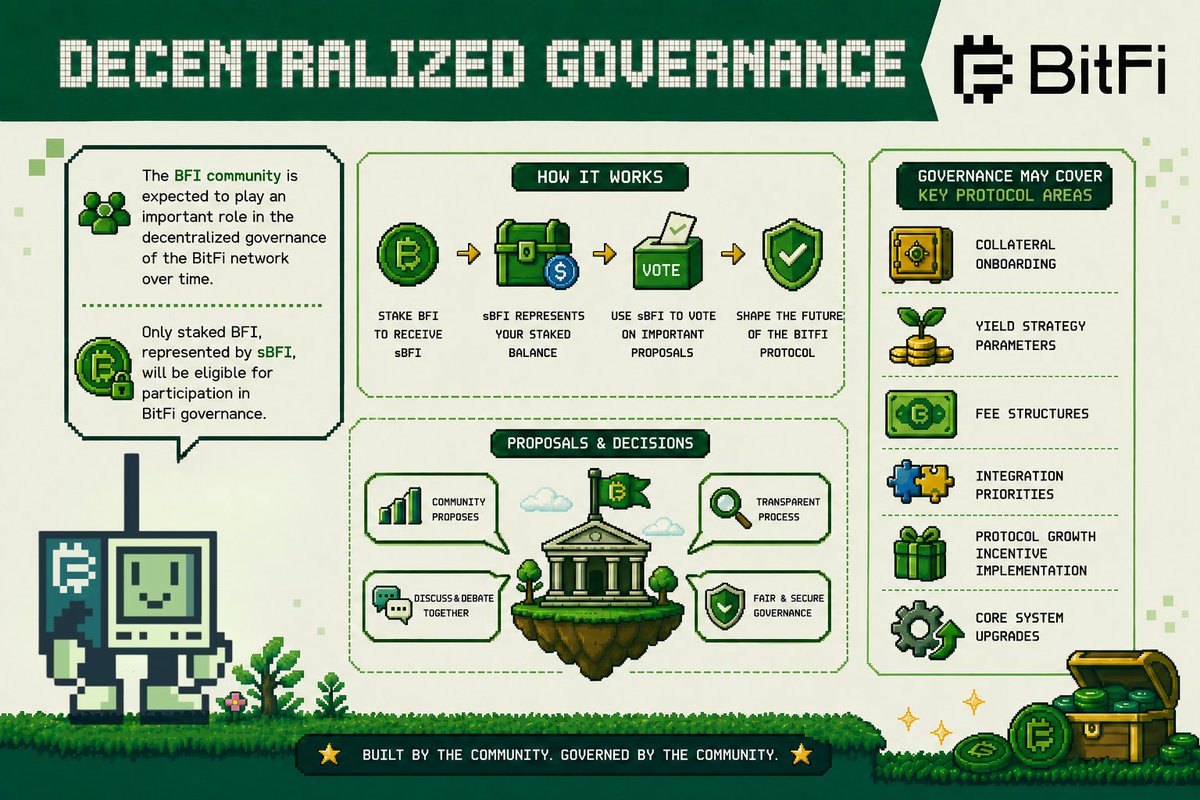
$BFI governance only goes to stakers, not just holders. sBFI is the access key, not the token itself.
that's a deliberate filter, not just a technicality. worth breaking down what it actually controls.
@Bitfi_Org 🧵