@tenkichi122 The links still bend, so the pin is locked, not welded. At 230°C the filament tip melts and mushrooms wider than the hole. That head holds the joint in tension. Leave the iron on too long and the heat runs down the strand and freezes the hinge.
@snapmaker Four heads, so the green never shares a nozzle with the orange. The glow is a phosphor in that filament. It stores light and gives it back.
The press works because 95A softens into the cotton, then locks as it cools. That only shows if the green face stays on the outside.
Flat slices would leave stairs on the ear. This plate tilts so each bead lands on a face that is closer to level. If the path stays with that tilt, the stairs leave the outline. The lines that remain follow the flank, spaced by bead width, not by layer height.
The part that can still fail is the nozzle meeting an ear that is already standing.
@dimentary The mesh was the easy part. A door hinge only moves on an arc, so a straight reach hits the frame. The white part is still on the plate after the door is open. The gripper then has to beat first-layer adhesion without crushing a part that is still soft.
This cube is too short to separate heat creep from a settings change. Creep shows up once the heat break nears PETG's softening point, about 80°C, and white pigment doesn't cause that.
Reprint a tall part when the room is hot.
If it jams only then, clear the heatsink fan and shorten retraction.
If it also jams in a cool room, the profile changed, not the weather.
@ZombieHedgehog_@BIQU_Makers The spool on the left never joins this job. That head is an ink cartridge, so Z only holds a gap above the icing while X and Y draw. The red circles are the real setup: miss one, and the mark on the screen prints the plate instead of the cookie.
Then the Ender 3 made home manufacturing a sub-$200 story.
Creality, Anycubic, tinkering. Later: input shaping ~5x faster than 2018; lidar on first layer; AMS multi-color. Next: generative design, bone-like shapes.
#Task3d
https://t.co/pL5eXPcXTw
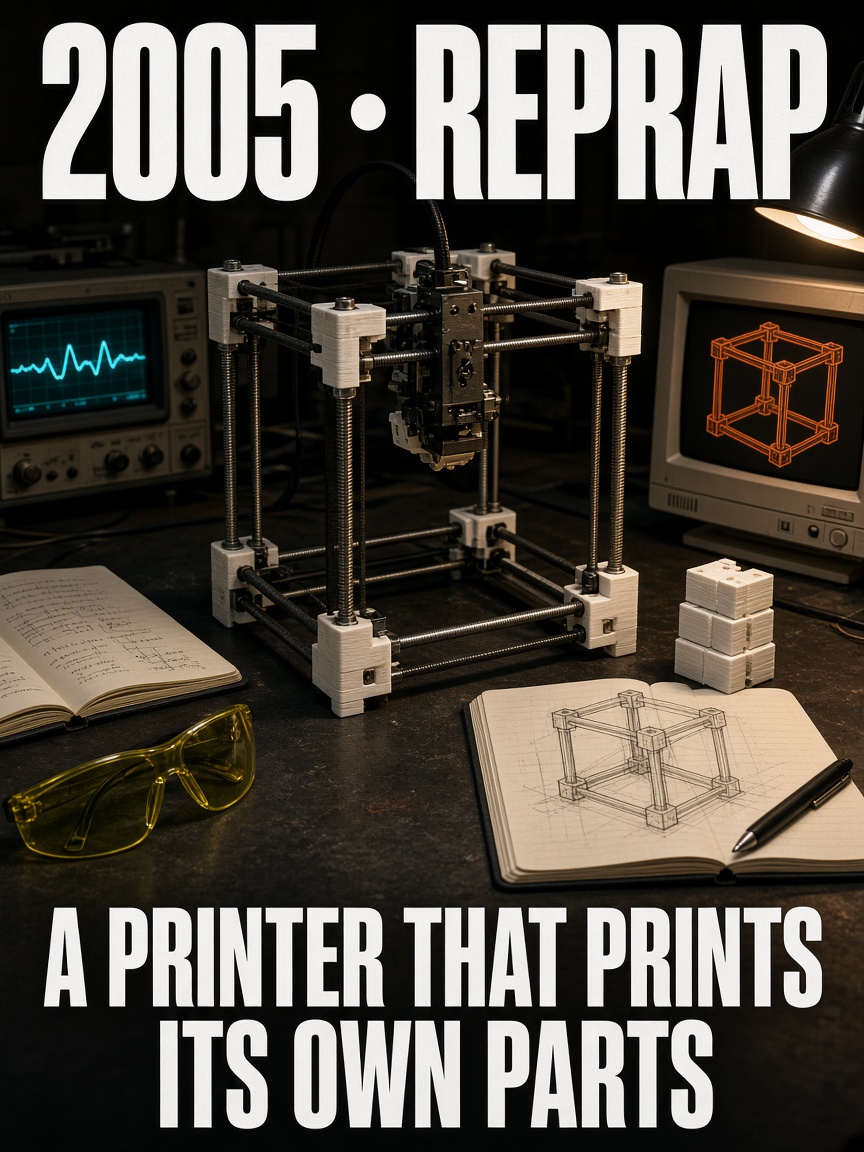
2005, University of Bath: what if a printer could print its own parts?
Dr. Adrian Bowyer, RepRap, open source. First machine: Darwin. Ancestor of almost every desktop printer, including the Prusa i3. 2009: FDM patents expire.
#Task3d
https://t.co/pL5eXPdvJ4
1999: a 3D-printed bladder scaffold, seeded with a patient's own cells.
Wake Forest, Dr. Anthony Atala: cells grew, plastic dissolved, a functional organ. Grandfather of bioprinting. Machines still $50,000-$500,000.
#Task3d#3dprinting#3Dhistory
https://t.co/ybwcgbn0JL
Toy Story (1995) matters for printing because printing needs a 3D model.
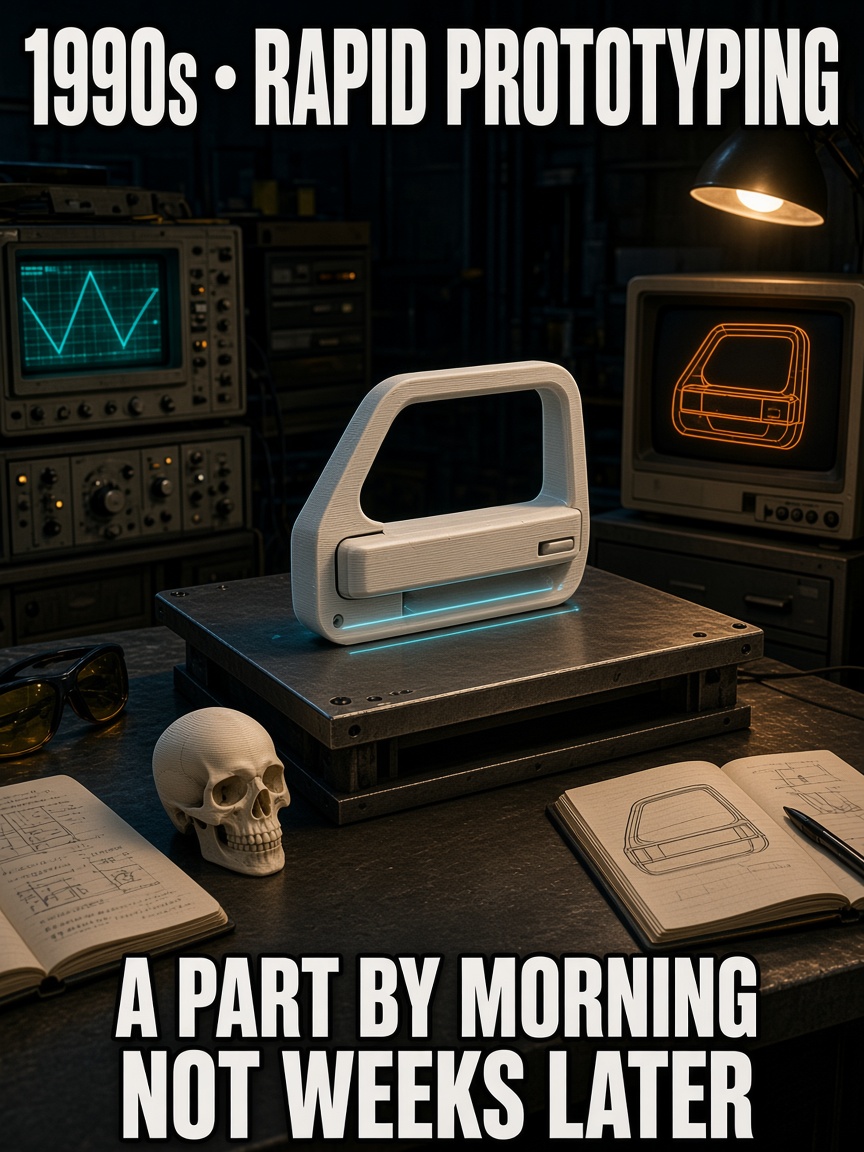
First fully CGI feature. Maya and 3ds Max later reached people who sculpt printable figures. 90s industry said Rapid Prototyping, not "3D printing."
#Task3d
https://t.co/ybwcgbmsUd
Chuck Hull. A UV laser. Liquid resin.
The first 3D print was a small eye-wash cup. Not pretty. It proved light could turn liquid into solid.
Then came .STL — curves broken into triangles. Your slicer still speaks that language.
https://t.co/2wSL85cgRU
#Task3D#SLA#History3D