@axlrose I’m a cat person myself. Ten years ago, I left my country with almost nothing — just my cat in my arms.
That’s why I deeply understand your pain and your loss. They are never “just pets.” They become part of our story, part of our family, and somehow, part of who we are. ❤️🐾
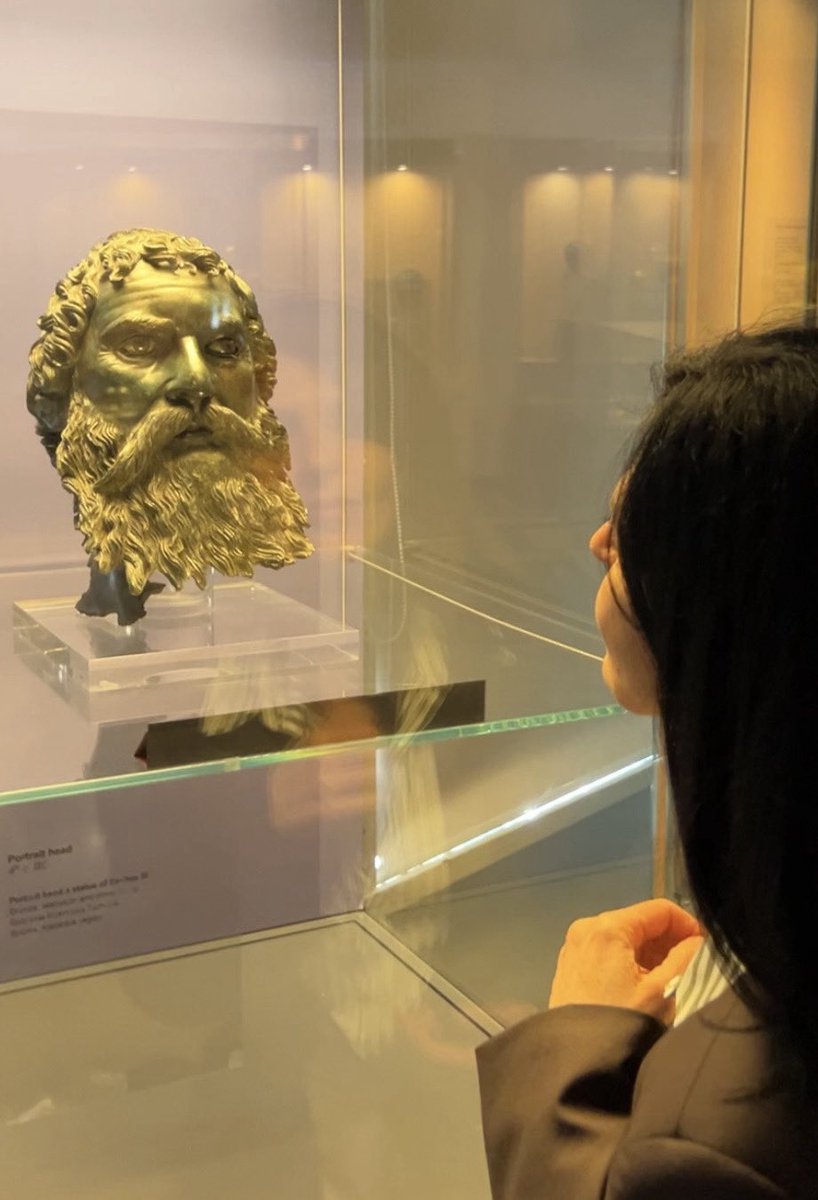
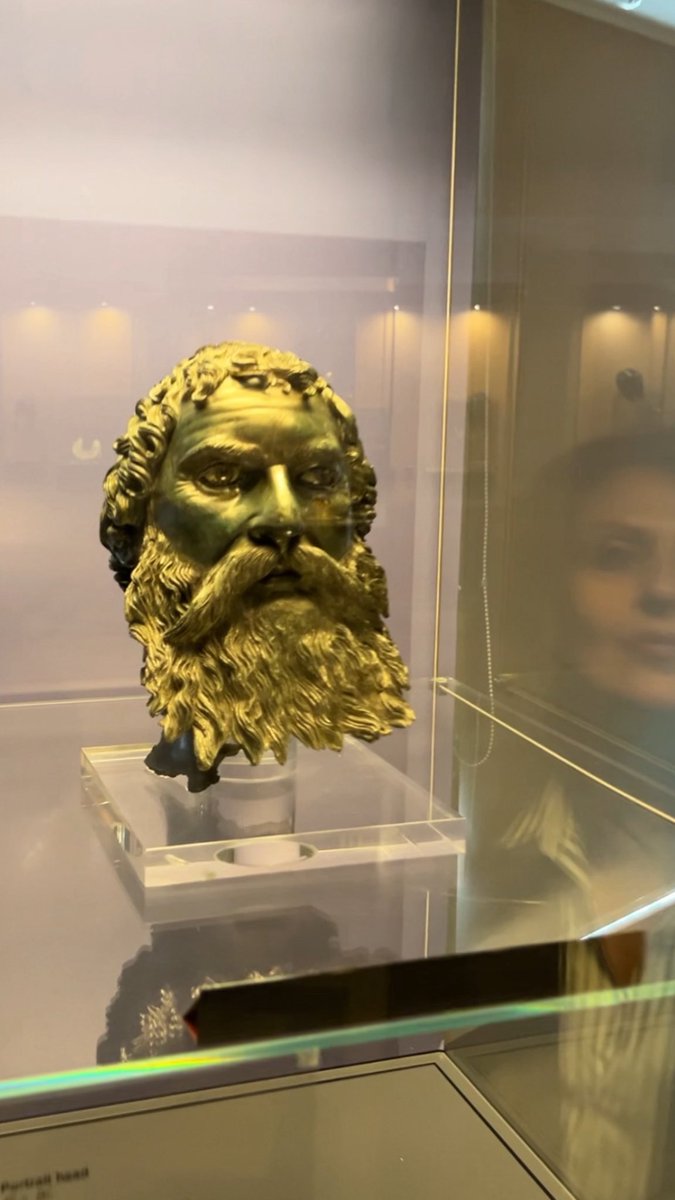
Thracian gladiator Spartacus leads 70,000 enslaved rebels against Rome’s iron grip, 73 BC. Defying legions, they fight for freedom, shaking the Republic’s core.
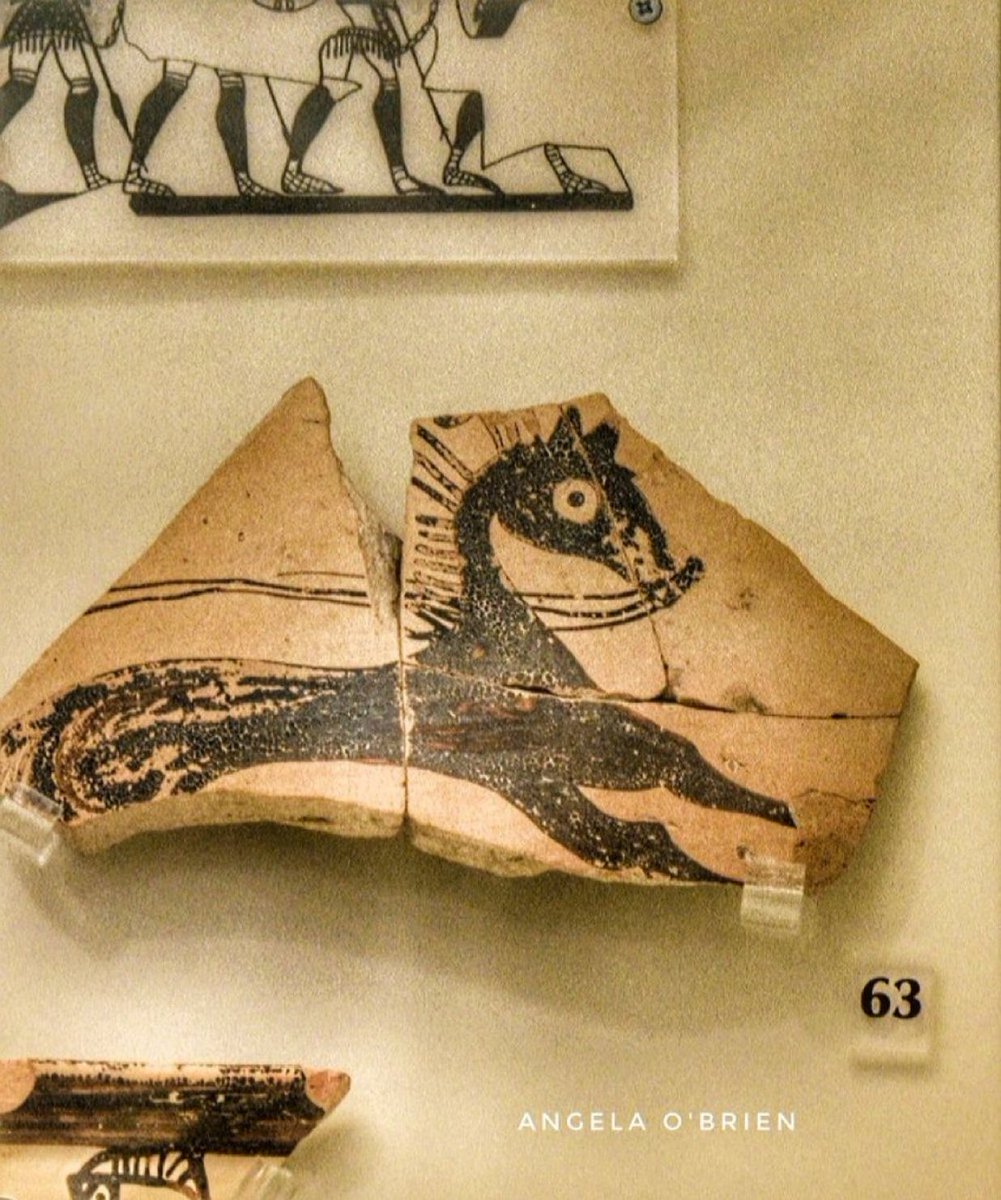
A 3,000 year-old Mycenaean pictorial pottery sherd depicting a galloping horse. Found at the Bronze Age citadel of Mycenae, Peloponnese, Greece. Dated 1100-1050 BCE. Archaeological Museum of Mycenae. 📷 me.
For centuries the British countryside has been a playground for bloodsport enthusiasts, killing any animal in sight. We're sick of it, join our growing movement to protect British wildlife.
Gold Royal signet-ring with an image of a Thracian king (4th Century BC), found in 2007 by archaeologists on the expedition "Temp", guided by Georgi Kitov, during archaeological excavations of a Thracian royal burial in Dalakova mogila (Dalakova Mound) near the village Topolchane, Sliven region, Bulgaria.
National Archaeological Museum of Bulgaria
#archaeohistories
Thracian Kanfar. Silver with gilding (5th Century BC), Bulgaria :
The handles are attached to the vessel by two gilded attachments depicting Silenus, the companion and educator of Dionysus. The vessel depicts two myths: one about the Dioscuri and the other about the killing of Orpheus. The popularity of the Orpheus myth during that time is evident. Orpheus represents the most vivid personification of the Hellenic perspective on Thracian antiquity, which clearly influenced ancient Greek myth-making. Interestingly, the myth of Orpheus predates its incorporation into Greek mythology by several centuries.
National Museum of Bulgaria
#archaeohistories
Now let's talk about the trophy! ✨ One of the highlights of Bellum Gens Elite Stara Zagora 2024 was the stunning trophy – a replica of an ancient Thracian gold treasure found in Bulgaria! 🇧🇬
#ThracianTreasure#BellumGens
Extraordinary discovery in Bulgaria: Burial of a Thracian horseman unearthed, including a gold necklace, a gold diadem, a gold ring, a knife decorated with gold elements and semi-precious stones.
https://t.co/Yvd01pBEA2
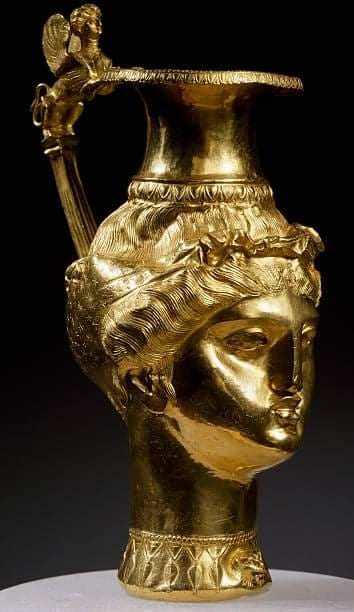
Thracian Gold Rhyton-pitcher in the shape of a female head whose hair is covered by a veil of stars and a handle in the shape of a sphinx, from the Treasures of Panagyurishte (4th Century BC), Plovdiv Region, Bulgaria.
Archaeological Museum, Plovdiv
#drthehistories
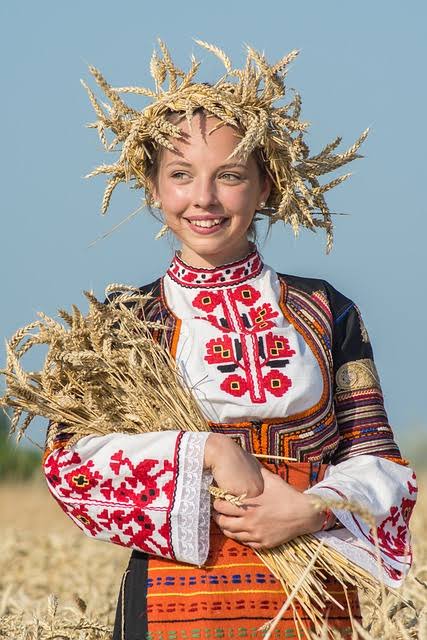
Despite being a part of the Turkish Empire for more than 500 years, Bulgaria managed to keep much of its cultural heritage intact. Embroidery in particular, with its unique decorative compositions, allowed Bulgarians living in the areas within the then Turkish province to retain their national identity.
Originally, Bulgarian embroidery proclaimed the social status and ethnic origin of a person. “Tree of life,” “Young sun,” and “Circle of life” are just some of the motifs associated with the craft. Undoubtedly, sun motifs were the most important symbols. Ancient Thracians, who are generally accepted to be ancestors of present-day Bulgarians, worshiped the cult of the sun. Contemporary Bulgarian life is still rife with motifs that represent the sun. One such symbol is a double cross known as an “Elbetitsa.”
Bulgarian women's embroidering art was noted by many a foreign traveller in Bulgarian lands during 16th-19th Centuries. Tradition of embroidery was mostly spread among the peasant population and predominantly connected with the decoration of garments. Ornamental needlework involved counting cloth fibres and, in case of thin cotton and silk textiles, using an embroidery frame for stretching material with pattern being previously drawn on it using a pencil or a stick of charcoal.
Traditional Bulgarian embroidery is characterized by great regional and local diversity. There is a wide variety of flat, raised and open-work stitches. Among those most often applied are several types of stitches: straight stitch (horizontal and slanted); cross stitch (Koumanian); loop stitch, and two-faced stitch. The high artistic value of the designs is largely due to the skilful selection and treatment of materials. Commonly used are woollen and silk threads. Metallic (golden) threads would give a touch of brilliance and magnificence to the embroidery. Designs are primarily geometrical, combined with stylized floral motifs and animal and human figures. Hem embroidered with anthropomorphic figures is typical of the patterns from the town of Samokov. Embroidery from Sofia region is a symmetrical, elaborate combination of geometrical motifs of ancient origin and meaning. The dense embroidery from South-west Bulgaria, with its typical interplay of red and wine-red hues, is entirely different from the sokai embroidery of the Gabrovo area - open-worked and decorated with gold threads.
Embroidery ornamentation accounts for much of specificity and uniqueness of Bulgarian costumes. It is typical of all areas, but mostly spread in North and North-West Bulgaria, and in region of Macedonia. It is regular element of men's shirts, women's chemises, aprons, and belts, soukman and saya dresses; it is found on curtains of two-apron costume. Adornment with embroidery motifs is also characteristic of textiles used for the headdress of married women. Embroidery worked on costumes is varied in technique, structure, pattern, substance, colour and place of application.
Both textile decoration and embroidery are remarkable with their ornamental designs and motifs some of which are rather ancient such as the "tree of life", rosette, swastika, circle, cross. The rhomb is particularly rich in graphic patterns.
Three elements of traditional Bulgarian embroidery: rhythm, symmetry, and contrast, are common throughout the Bulgarian ethnic territory. Compared to the textile ornamentation, embroidery compositions are characterised by even greater variety owing to the specific technique of ornamentation.
Colour is of key importance for the ethnic specificity of Bulgarian folk costumes. The typical colours used in ornamental embroidery designs intended for clothing are red, black, and white. This seemingly narrow range of colours, however, does not represent the actual situation. Each colour is displayed in a number of shades and combinations, sometimes clear and brilliant, sometimes dark and harmonious, and sometimes deep and contrasting.
#archaeohistories
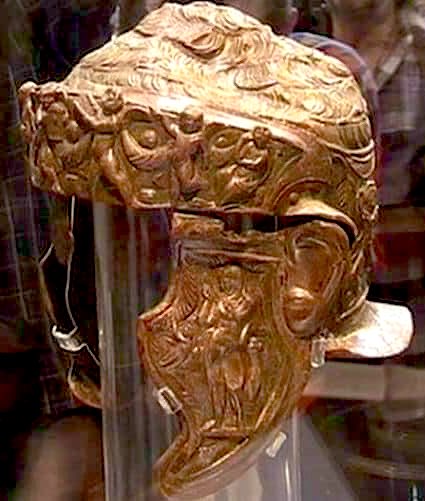
Thracian combat cavalry helmet from the 1st century AD
Christ, discovered during excavations in a mound
Pamuklia near the village of Brestovitsa , Bulgaria two years ago.