This is a personal account. All comments/RT reflect my personal views only. Working on foreign & security policies, & refugee & Myanmar issues at @ISIS_MY
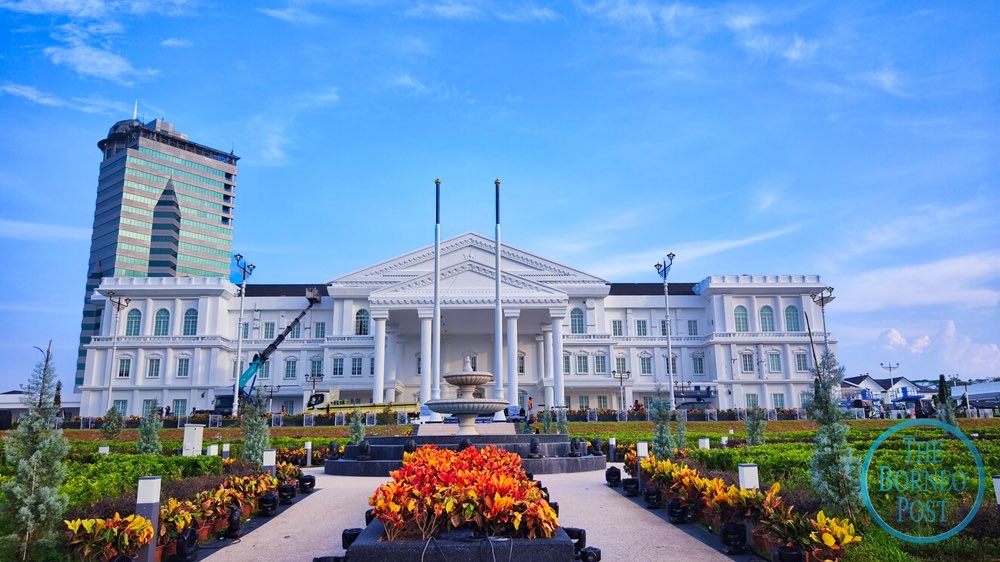
The problem with Malaysia mimicking Western style architecture like Kuching's "White House" is that it looks cheap, like McMansion rather than a proper neoclassical building which Kuching White House was inspired from.
🚨 JUST IN : The AFC has found Harimau Malaya guilty of fielding ineligible players, resulting in 3-0 defeats in the 2027 Asian Cup qualifiers.
FAM was also fined US$50,000.
The matches involved Malaysia’s 2-0 victory over Nepal in March 2025 and a 4-0 win over Vietnam the same year.
Yes. But are #ASEAN member states willing to yield on giving a stronger SG the authority he or she needs to act in the interests of regional peace and security without being hobbled by sovereignty and non-interference issues?
I often see non-Malay Malaysians, especially liberals, underestimate Malay Muslim sentiments, waving away any negativity as fringe sentiment, affliciting a small minority.
They dismiss warning signs that are highlighted as fear-mongering, e.g. the “Green Wave” brushed aside as a political fairytale.
Never has that sort of assessment been so wrong.
Politicians manipulate, not fabricate, communal sentiments, which are pre-existent.
And today, Malays by and large have a lot less desire to be tolerant, and are expressing a lot more animosity and hostility, spilling over into hatred.
We now have the perfect environment for right-wing extremists and religio-political fascists to thrive and dominate.
Ignore, disregard, dismiss this at your own peril.
On Al Jazeera.
Indonesians flocked to the Iranian ambassador’s residence in Jakarta to express their solidarity, blaming the United States and Israel for sparking a war in the Middle East. The Indonesian government is under increasing pressure at home to withdraw from Donald Trump’s Board of Peace.
How ready are Southeast Asian states to collectively respond to a major regional security crisis such as a possible US-China conflict over Taiwan?
Our latest @IISS_org Southeast Asian Security and Defence programme research paper provides a 'building blocks' answer 👇
Download: https://t.co/eEpQrxm8J8
Devastating scenes - In the Southern Iranian city of Minab, a mass funeral was held for 165 girls when their school was attacked on Saturday.
The U.S. Central Command says officials are looking into reports a school was struck.
The Red Crescent Society estimates at least 787 people in Iran have been killed by airstrikes since the war began.
https://t.co/o7jAJPS3FH
America’s Pivot to Asia has failed.
That’s the argument I make in an essay out today in Foreign Affairs.
I know this will be controversial, so let me explain why I think we need to take this seriously and reimagine what comes next. A thread… (1/10)
https://t.co/pzvfXJYvLF
The expulsion of a Timor-Leste diplomat is drawing attention today, in Dili and across ASEAN. Here’s my latest commentary reflecting on what this episode really tells us, not just about Timor-Leste or Myanmar, but about ASEAN itself. https://t.co/NPVAe6AgBB
It’s worth reminding folks that King Abdullah of Jordan pointed out the hypocrisy of the “rules based” world order in Oct 2023 at the Cairo Peace Summit. But it was only when a Western leader said it that people paid attention.
At the time, the King said, “The application of international law is optional. And human rights have boundaries — they stop at borders, they stop at races, they stop at religions.”
What does it mean that only when Western leaders feel the impact that they start speaking up? What does this tell us about their next steps, and what they will prioritize?
Will they actually go back to the drawing board and forge a world order that protects and values every human life?
Or will it look like the old one, except with more protections for themselves, still at the expense of the “Global South”?
We have a moment of opportunity here to learn the right lessons. I hope we take it.
https://t.co/ZPKqvWXGlK
Whatever we are doing now is not aligned with reality.
The policy restricts imported electric cars below RM100,000, supposedly to protect local industry.
But the data is clear: Only ~30% of Malaysian car buyers can afford cars above RM100,000.
That means 70% of households are locked out of EV adoption by policy design.
Protection was meant to buy time to build capability.
Instead, it is shrinking the market, slowing learning, and delaying scale.
Look around the region: Thailand and Indonesia allow cheaper EVs in.
Prices fall.
Volume rises.
Skills, supply chains, and consumer familiarity grow.
Malaysia does the opposite: Small market.
High price floor.
Slow adoption.
And the most worrying part: There is still no clear mass-market EV roadmap from Perodua.
Without volume, there is no learning.
Without learning, there is no competitiveness.
Without competitiveness, protection becomes permanent.
This is not industrial policy.
This is a price barrier disguised as strategy.
If the goal is EV capability, the conclusion is simple:
Remove the RM100,000 barrier.
Let scale happen.
Let Malaysians participate.
This week in @TheEconomist, we highlight ongoing resistance to military rule in Myanmar, including the bravery of Dr Tayzar San and his friends, but also canvass four reasons for the army’s success on the battlefield this year (Russia, China, and Donald Trump all played a part).