The World Cup absolutely mogs every other sporting event. It’s what the Olympics wishes it was X100.
You’ve got Europeans road-tripping across America and having their minds blown by Buc-ee’s and Bass Pro Shops. You’ve got a small Kansas town falling in love with an Algerian club that chose Kansas City as their homebase. You’ve got South Korea training in Utah to prepare for the altitude in Guadalajara.
For one month, the whole world forgets we’re supposed to hate each other over differences that barely matter. It’s the closest thing we have to world peace.
In Navy SEAL training, students who failed daily had to do two extra hours of punishment.
They called it “circus.”
Those students should have burned out first.
Instead, they got stronger than everyone else.
Admiral McRaven spent 20 minutes explaining the 10 lessons SEAL training taught him:
Lesson 1: Make your bed.
Every morning, the first thing instructors inspected was your bed. Corners square. Covers tight. Pillow centered.
"It seemed ridiculous at the time. We were aspiring to be real warriors."
"But if you make your bed every morning, you will have accomplished the first task of the day. It will encourage you to do another task, and another, and another."
"And if by chance you have a miserable day, you will come home to a bed that is made. That you made."
Lesson 2: Find someone to help you paddle.
Students were broken into boat crews. Seven men paddling through 8 to 10 foot surf.
"Every paddle must be synchronized. Everyone must exert equal effort or the boat will be dumped back on the beach."
"You can't change the world alone."
Lesson 3: Measure a person by the size of their heart, not their flippers.
The best boat crew was "the munchkin crew." No one over five-foot-five.
"They out-paddled, out-ran, and out-swam all the other boat crews."
"The big men would make fun of the tiny little flippers the munchkins put on their tiny little feet. But these little guys always had the last laugh."
"SEAL training was a great equalizer. Nothing mattered but your will to succeed."
Lesson 4: Get over being a sugar cookie.
Several times a week, uniform inspections. Hat perfectly starched. Belt buckle shiny.
"No matter how much effort you put in, it wasn't good enough. The instructors would find something wrong."
Fail the inspection, you ran into the surf. Then rolled in sand until covered head to toe. "Sugar cookie."
"Many students couldn't accept that all their efforts were in vain. Those students didn't make it through training."
"Sometimes no matter how well you prepare or perform, you still end up as a sugar cookie. It's just the way life is sometimes."
Lesson 5: Don't be afraid of the circus.
Fail to meet standards, your name went on a list. End of day: "circus." Two hours of extra calisthenics designed to break you.
"No one wanted a circus. More fatigue meant the following day would be more difficult."
"But everyone made the circus list. And an interesting thing happened. Over time, those students got stronger and stronger."
"Life is filled with circuses. You will fail often. It will test you to your very core."
Lesson 6: Sometimes you have to slide down the obstacle head first.
The obstacle course record had stood for years. Seemed unbeatable.
Until one student went down the slide for life head first. Mounted the top of the rope instead of swinging underneath.
"Dangerous. Seemingly foolish. Fraught with risk."
"Instead of several minutes, it took him half that time. He broke the record."
Lesson 7: Don't back down from the sharks.
The waters off San Clemente are breeding grounds for great white sharks. Night swims were mandatory.
"If a shark begins to circle your position, stand your ground. Do not swim away. Do not act afraid."
"If the shark darts towards you, summon all your strength and punch him in the snout. He will turn and swim away."
"There are a lot of sharks in the world."
Lesson 8: Be your very best in the darkest moments.
Underwater ship attacks. Divers swim over two miles to the target. As you approach, the steel structure blocks all light.
"The keel is the darkest part of the ship. You cannot see your hand in front of your face. The noise is deafening. You can easily become disoriented."
"At the darkest moment of the mission is when you must be calm. When all your inner strength must be brought to bear."
Lesson 9: Start singing when you're up to your neck in mud.
Hell Week. Six days of no sleep. Constant harassment.
His class was ordered into the mud flats. "The mud consumed each man until there was nothing visible but our heads."
Eight hours until sunrise. Instructors said five men could quit and everyone could leave.
"Then one voice began to echo through the night. Terribly out of tune. Sung with great enthusiasm."
"One voice became two. Two became three. Before long everyone was singing."
"Somehow the mud seemed warmer, the wind a little tamer, and the dawn not so far away."
"If I have learned anything, it is the power of hope. One person can change the world by giving people hope."
Lesson 10: Don't ever, ever ring the bell.
A brass bell hangs in the center of the compound.
"All you have to do to quit is ring the bell."
"Ring the bell and you no longer have to wake up at 5 o'clock. No longer have to do the freezing cold swims. No longer have to endure the hardships."
"Don't ever, ever ring the bell."
This 20 minute speech will teach you more about discipline, resilience, and hope than every self-help book combined.
Bookmark & give it 20 minutes today, no matter what.
La entrada en calor más famosa de la historia, cumple hoy 37 años: Live is Life, por Diego Maradona. Un 19 de abril de 1989 en el Estadio Olímpico de Munich, antes que el Napoli empatara 2-2 contra el Bayern y pasara a la final de la Copa UEFA (ida 2-0).
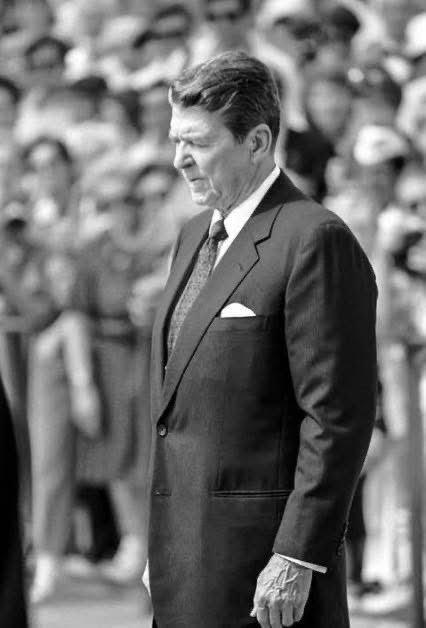
Par une soirée pluvieuse de septembre 1985, Ronald Reagan quittait un dîner d'État lorsqu'il aperçut un vieux concierge peinant à déplacer une poubelle lourde. Sans hésitation, le président des États-Unis, vêtu de son costume de soirée, s'approcha, saisit l'autre côté de la poubelle et l'aida à la pousser jusqu’au quai de chargement, tandis que les agents du Secret Service faillirent avoir une crise cardiaque en voyant leur patron manipuler des déchets dans un costume à 3 000 dollars. Le concierge, James Parker, raconta plus tard que ce qui l'étonna n’était pas seulement l’aide qu'il reçut, mais le fait que Reagan resta quinze minutes à lui poser des questions sur ses petits-enfants, sa ville natale en Géorgie, ses rêves de retraite, traitant leur conversation comme s'il s'agissait de la réunion la plus importante de son emploi du temps, parce que, pour Reagan, elle l’était réellement. Né le 6 février 1911, dans un appartement modeste où sa famille avait du mal à payer le loyer, il n’oublia jamais ce que sa mère, Nelle, lui avait murmuré pendant les jours les plus sombres de la Grande Dépression : « Ronnie, il n’y a pas de petites gens, seulement de petites pensées à propos des gens », et il porta cette vérité dans chaque pièce qu’il entra. Son ancien assistant, Michael Deaver, décrivit comment Reagan arrivait tôt aux événements pour rencontrer spécifiquement le personnel de service, la cuisine et les ouvriers du lieu, comment il envoyait des notes de remerciement manuscrites aux équipes de nettoyage de la Maison Blanche, comment il avait un jour retardé une réunion critique du Conseil de sécurité nationale parce qu'il avait promis à un nouveau jardinier qu'il verrait les photos du mariage de sa fille et qu'« une promesse est une promesse, même pour moi ». Ce qui me touche profondément à propos de cette soirée pluvieuse, ce n’est pas le smoking qu’il a probablement abîmé ou le cauchemar sécuritaire qu’il a créé, mais sa conviction profonde que chaque travail a de la dignité, que chaque personne mérite du respect, et que si l’on est trop important pour aider quelqu’un à déplacer une poubelle, on n’est pas important du tout, on est juste perdu.
Sources :
The Ronald Reagan Presidential Foundation ("Reagan's Personal Kindnesses")
Michael Deaver's memoirs ("A Different Drummer")
When I see Team USA freestyle skiers saying ICE does not represent them, my mind goes back to 2012.
Seventy-six of us - Papua New Guinean students - arrived in Sydney, Nova Scotia. Thousands of miles from home. Different weather, different culture, different everything.
That first night, during dinner, one of our own stood up and sang our national anthem.
Grown men and women cried.
Not because life was easy - but because we knew what it meant to represent your country far from home.
We were carrying our people, our families, our land with us - quietly, respectfully, proudly.
That’s why this hurts to watch.
These athletes live in the most developed country on Earth. They train in world-class facilities. They enjoy freedoms and protections most humans will never experience.
Yet when they step onto the global stage, they find it easy - almost fashionable - to trash the country that gave them everything.
Every nation has flaws. Every government has problems.
But the global stage is not the place to air domestic political grievances.
I remember @GavinNewsom at Davos. Same issue.
What happens at home should stay at home.
Abroad, the American brand should be unified - not fractured for applause.
Then there’s Billie Eilish - living in a mansion, private security, completely insulated from everyday reality - proudly chanting “ICE out.”
Let me offer perspective.
In America, you dial 911. Police, fire, ambulance show up - minutes, maybe hours.
In Papua New Guinea?
There is no 911.
In rural areas, there is often zero police presence.
Murderers, rapists, violent criminals live in the same communities as their victims.
If something happens, you either find a police station - or defend yourself. Sometimes you just say goodbye to your loved ones.
That’s not theory. That’s life for millions.
In America, you don’t even have to leave your house.
Food shows up. Packages show up. Transportation shows up.
You drive or walk to a polling booth. Ballot boxes arrive easily. Voter registration is accessible.
In PNG - a country that’s 80% rural - people carry ballot boxes on foot, climbing mountains, crossing rivers, just to vote.
Services don’t reach the people - but the ballot boxes do.
And still, people complain.
As much as Americans may struggle - your reality is the lifelong dream of millions who will never experience it. Not once. Not ever. Not even for a generation.
When you stand on the world stage, fly your flag with humility and pride.
Critique your country at home if you must - but don’t forget how rare, how privileged, how blessed your position truly is.
Some of us know what it means to represent a nation - because we come from places where survival isn’t guaranteed, and opportunity isn’t assumed.
And we still sing our anthem with tears in our eyes.
To conclude, as mentioned above, in PNG services rarely or if not ever reaches the rural populace but they consider it their civic duty to vote when the ballot boxes reaches them. Knowing full well that one day, their vote will help secure their children and grandchildren's futures.
What excuse do you have for sitting out the primaries and the midterms?
Ronald Reagan was the first U.S. president who had been divorced. His first marriage, to actress Jane Wyman, ended because she chose to walk away. By all accounts, she wasn’t the easiest person to be married to — she filed for divorce from her second husband just a month after marrying him, and her third marriage didn’t last long either.
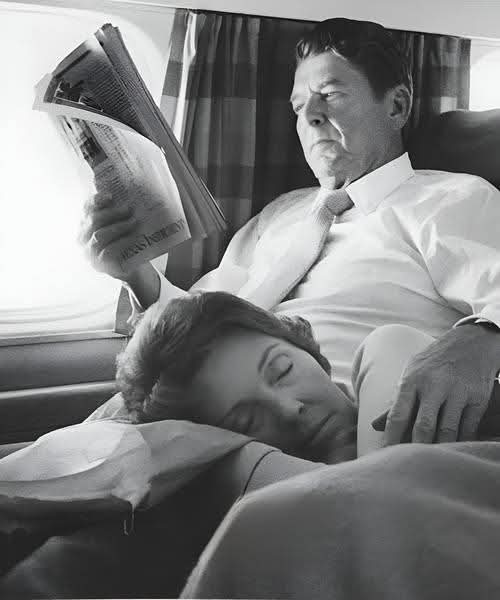
But Reagan’s second marriage, to Nancy, was a different story. They were together for 52 years, and their relationship was widely seen as a model of love and partnership.
In 1971, when Reagan was Governor of California, his eldest son Michael was getting married. Reagan couldn’t be there in person, so he sent him a letter. What he wrote wasn’t just a note of congratulations — it was honest advice from a father who had lived, learned, and deeply valued his own marriage:
Dear Mike,
You’ve probably heard all the jokes from people who are bitter or cynical about marriage. But here’s the truth: you’re about to start the most important relationship in your life. And it will become whatever you choose to make it.
Some men try to act tough by living like the guys in locker room stories — thinking that what their wife doesn’t know won’t hurt her. But believe me, even without lipstick on your collar or shady excuses about where you were at 3 a.m., a wife always knows. And when that trust starts to break, the magic in the relationship starts to fade.
More often than people realize, the ones who say marriage doesn’t work are the same ones who put the least into it. It’s like physics — you get out exactly what you put in. If you only give half, you’ll only get half back.
Sure, there’ll be moments when you’re tempted — when you notice another woman or miss your old single life. But I’ll tell you something: real strength, real masculinity, is sticking with one woman your whole life. Anyone can cheat — that’s easy. But to stay interesting and loving to the same woman, through all the normal, messy, everyday stuff — that takes real character.
If you love her, really love her, you’ll never embarrass her by flirting with others or making her question where you’ve been. And you’ll never put her in a position where another woman could give her a knowing smile — like she knows a secret your wife doesn’t. Even for one second.
You, more than most, understand what it’s like to grow up in an unhappy home. Now, you have the chance to build something better.
There’s no greater feeling than coming home after a long day and knowing someone’s waiting just to hear the sound of your footsteps.
With love,
Dad
P.S. Say “I love you” at least once a day. It really does help.
Those words came from more than just a father — they came from someone who knew what marriage meant and how important it is to nurture love and loyalty every day.
Reagan made sure Nancy never had to doubt she mattered. He made sure she always waited for him with love. As people say, you reap what you sow.
And Nancy — graceful, strong, and loyal — chose him just as much as he chose her. She wasn’t just the First Lady of the United States. She was, first and always, the First Lady of his heart.
And Ronald Reagan — the strong, determined leader known to the world — never forgot who he was at home: a husband, a father, and a man who truly loved his family.
Like many good men in this world.
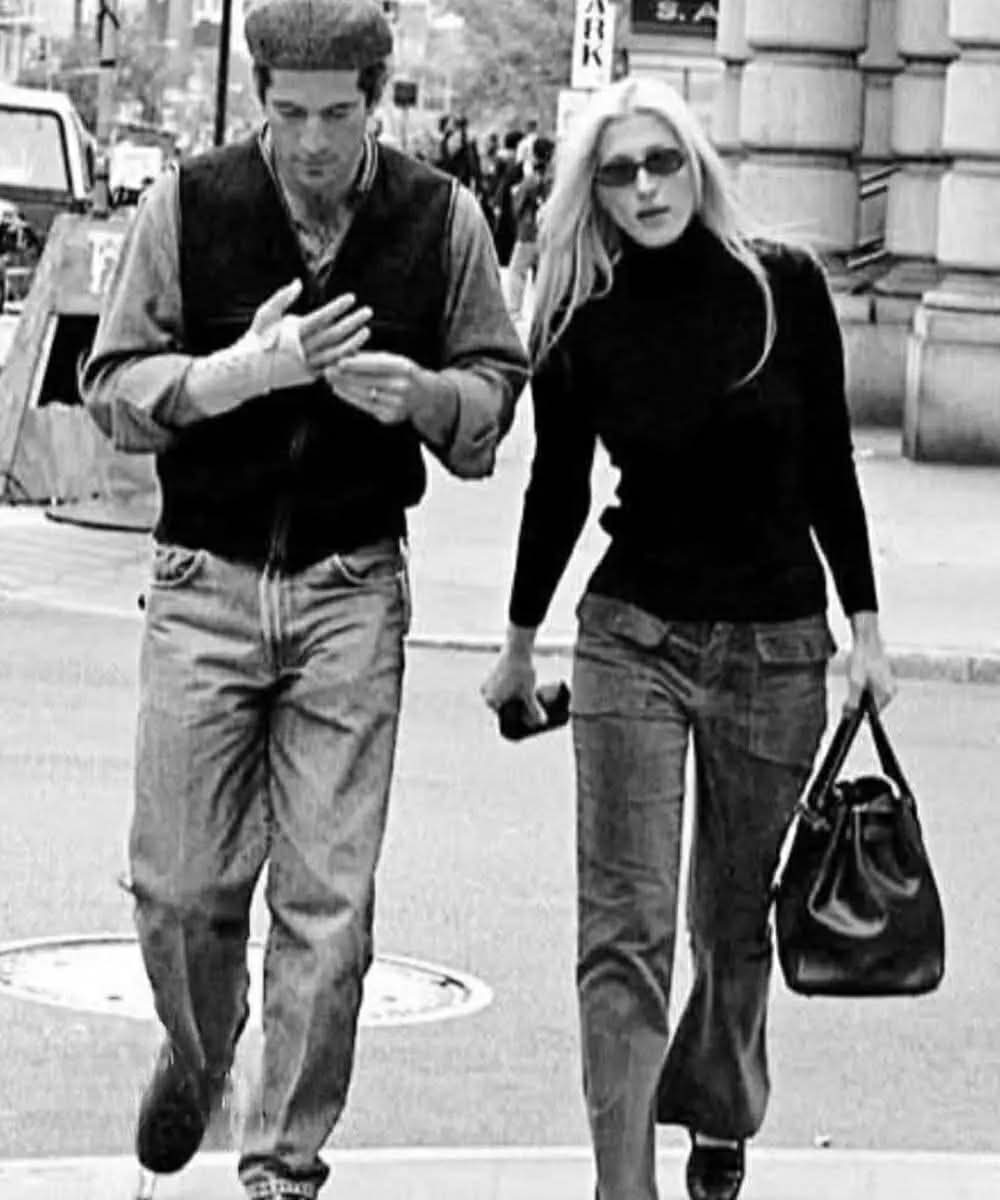
On a cold October night in 1994, John F. Kennedy Jr. walked into a small Italian restaurant in the heart of Manhattan and, without meaning to, created a memory that would last forever.
The place was packed. Every table occupied. The kitchen overwhelmed. And a young waitress—Maria Sanchez, on her very first night on the job—was rushing around with teary eyes, crushed by confusion and the fear of making a mistake.
John noticed. Then, quietly, he approached the owner, Giovanni Russo, and whispered:
“Would you like me to help clear tables until things calm down?”
Giovanni protested, almost scandalized:
“Mr. Kennedy, you are a guest. Please, sit down. I’ll prepare a table for you right away.”
But John smiled. He rolled up his sleeves and answered simply:
“I worked in a restaurant while I was studying law. I know how terrifying the first night can be. Let me help.”
For the next forty-five minutes, he moved among the tables like any other member of the staff. He carried away dirty plates, refilled glasses, wiped tablecloths, and cracked gentle jokes to calm Maria—who finally stopped shaking.
When the rush in the dining room finally eased, Giovanni offered him dinner. John politely declined. Instead, he left a $100 tip, along with a handwritten note:
“To Maria — You’re doing great. And soon it will be easier, I promise.”
Maria framed that note. And for the next twenty-five years, she hung it in every restaurant she managed. In a 2004 interview, she said:
“Mr. Kennedy taught me that true elegance is not about where you sit, but about the people you are willing to support when things get hard.”
Giovanni still remembers the words John used to say goodbye that night:
“My mother always told me that the way you treat people when no one important is watching says everything about who you really are.”
It was a brief moment. No photographs. No spotlight. Just a gesture. Invisible to the world, but eternal for those who lived it.
Because true character is not measured by status.
It is measured by service.
By quiet kindness.
By respect that does not seek applause.
American Giant. One of the best to have ever done it.
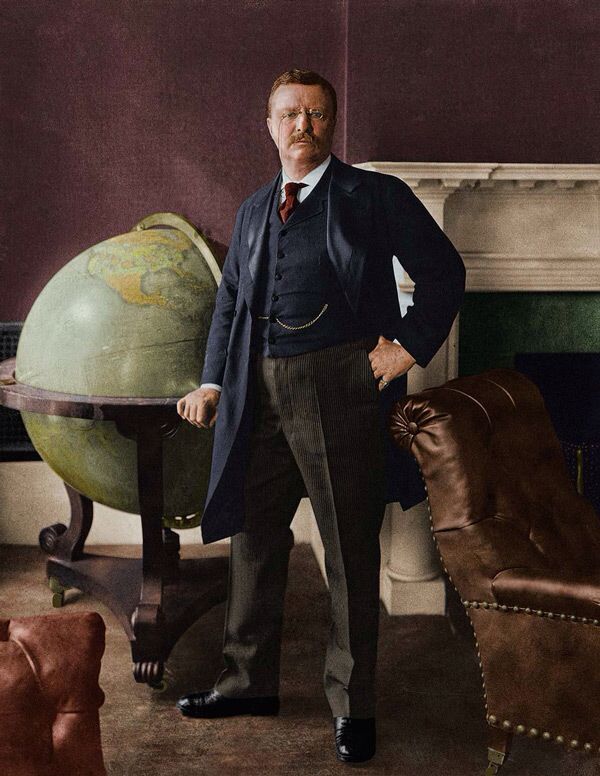
Be Theodore Roosevelt
>Born 1858. New York. Wealthy family.
>Sickly child. Severe asthma. Can barely breathe. Weak.
>Father tells you: "You have the mind but not the body. Make your body."
>Build a gym in your house. Lift. Box. Push until your lungs work.
>Will yourself into strength.
>Enter Harvard. Box. Row. Hunt. Study everything.
>Graduate. Enter politics at 23.
>Mother and wife die on the same day. Same house. Valentine's Day 1884.
>Write in your diary: "The light has gone out of my life."
>Flee to the Badlands. Become a cowboy. Cattle rancher in Dakota Territory.
>Hunt grizzlies. Capture outlaws. Live hard. Forge yourself in wilderness.
>Return East. Marry again. Re-enter politics.
>Become Police Commissioner of New York. Walk the streets at night in disguise. Fire corrupt cops.
>Spanish-American War breaks out.
>Assistant Secretary of the Navy. Resign immediately. "I will not stay behind a desk."
>Form the Rough Riders. Volunteer cavalry. Cowboys, miners, Native Americans, Ivy Leaguers.
>Lead them up San Juan Hill. Bullets everywhere. Horse shot. Keep charging on foot.
>Return a war hero.
>Become Governor of New York. Too reformist. Political bosses want you gone.
>"Make him Vice President. That'll shut him up."
>President McKinley gets assassinated. You're 42.
>Youngest President in American history.
>Trust-bust. Break up monopolies. Take on J.P. Morgan and Rockefeller.
>Create National Parks. Preserve wilderness. 230 million acres protected.
>Build the Panama Canal. "I took the Canal Zone and let Congress debate."
>Win Nobel Peace Prize for ending Russo-Japanese War.
>Finish term. Hand presidency to Taft.
>Go on safari in Africa. Kill lions. Collect specimens for museums.
>Return. Taft has betrayed your policies.
>Run again. Third party. Bull Moose.
>Get shot in the chest before a speech in Milwaukee. Bullet lodged in rib.
>Refuse hospital. Speech is 50 pages folded in your pocket. Bullet went through it.
>"Friends, I shall ask you to be as quiet as possible. I don't know whether you fully understand that I have just been shot."
>Speak for 90 minutes. Bleeding. Then go to hospital.
>Lose election. Split the vote. Wilson wins.
>Son Quentin dies in WWI aerial combat. Never recover.
>Die in your sleep 1919. Age 60.
Vice President Marshall: "Death had to take him sleeping, for if Roosevelt had been awake, there would have been a fight."
Leaves behind: The National Parks. The Panama Canal. Trust-busting precedent. The modern presidency. A regiment. A stuffed bear named after him. Proof that the sickly can become titans. The belief that action conquers everything.