Chainlink for Agents (beta): Skill.md → x402 USDC (Base) → Data Streams + CRE calldata.
Restricted default: gateway builds the tx; agent signs.
Where it breaks: agent can flip unrestricted without your OK — wrong amount/dest possible.
Who owns agent-wallet policy in prod?
Claude Code Projects just opened to every Pro/Max on the waitlist.
Coordinator → parallel cloud threads → each on its own branch/PR.
Where it breaks: each thread burns plan quota. Docs warn you'll hit limits faster.
Who owns merge conflicts when 5 agents land PRs at once?
Barron's cover on tokenization: "Crypto technology is moving from the fringes toward the center of finance."
Builder filter: issuance demos scale. Redemption under stress doesn't.
Where it breaks: token ≈ share until book and chain disagree.
What's in your settlement SLA? #TOKEN2049
Conference week rule: agent owns the grind between meetings. I own decisions that can't be re-run.
Refactors + tests → agentArchitecture, custody edges, compliance gates → me
Where it breaks: treating a sketch design doc as enough context for prod.
What do you refuse to hand an agent while traveling?
Copilot local sandboxing is GA: agent tools run under OS limits on files, network, and credentials (MXC).
Model execution ≠ tool isolation.
Where it breaks in prod: you lock network but leave .env and gh auth readable.
Who owns that policy on your team?
Tokenized gold isn't "price feed → ship."
You run two clocks:
1) Asset existence (custody attestation / PoR)
2) Market price (oracle)
Where it breaks in prod: mint trusts a stale PoR while price is fresh — or the reverse.
How do you set TTL on each?
JetBrains shipped Mellum2.1: 12B MoE, 2.5B active, Apache 2.0, RL-trained in sandboxed repos to explore, edit and check its own changes.
Cheap self-hosted sub-agents are getting real. Where it breaks in prod: the orchestrator trusting a sub-agent's "tests pass."
Who verifies?
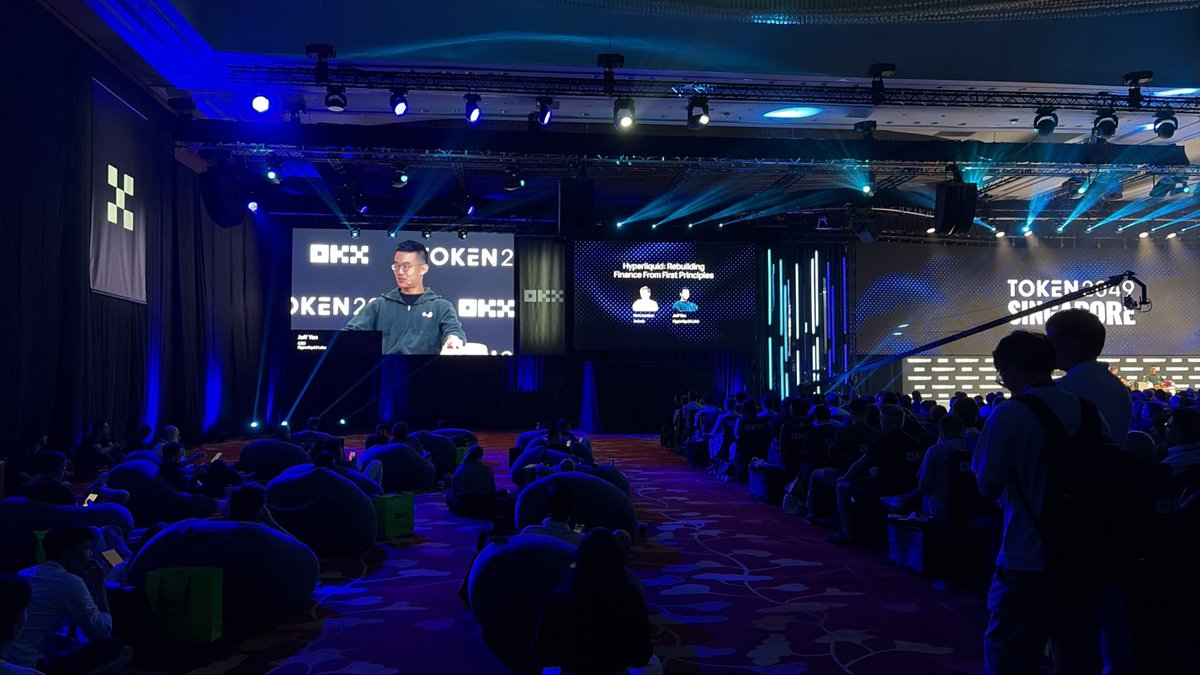
TOKEN2049 wrap, builder's view: RWA talk moved from "can we issue?" to "can we redeem at 3am on a Sunday?"
Issuance is a solved demo. Redemption queues, custody reconciliation and cross-chain settlement are where it breaks in prod.
What changed your mind? #TOKEN2049
Proof-of-reserve mint gate: totalSupply + amount <= reserves. One line. The bugs live around it:
Stale feed? Revert, don't mint.
Feed decimals != token decimals? Silent over-mint.
Reserves in oz, token in grams? Convert once, in the contract.
What else breaks this in prod?
Cardano's CIP-113 is live: KYC, sanctions and freeze rules enforced by the ledger on every transfer. #TOKEN2049
Right layer. But a validator only checks the list it's handed. The hard part in prod: who updates that list, and how fast?
What it actually takes to put gold onchain
Minting a token is the easy part. The hard parts are everything around it:
1. Proof the gold exists. A token is only as good as its attestation. Reserves need to be verified onchain, not in a PDF. That's where oracles (Chainlink) and signed attestations (EAS) come in.
2. Compliance that lives in code. KYB for issuers, KYC/AML for holders. If transfer rules sit in a spreadsheet, they'll break the first time volume shows up.
3. White-label, not one-off. Every issuer wants their own brand, but nobody should rebuild custody links, attestations, and compliance from scratch each time.
That's what I'm building at Goldie City. Here I'll share the design trade-offs, the mistakes, and what holds up in production.
Builders working on RWA: what's the hardest part you've hit?