@ContrarianJolly@gill1109@Mscjervis What’s wrong with addressing both? And if he promised in his video to engage and then refuses to, that makes the ‘who is he’ question even more valid
@ContrarianJolly@sueklo1122 I think his last two sentences are in dispute. He doesn’t know about the test issues so thinks you can make a clean inference from an immonoassay result. That looks like supporting the prosecution to me.
Idk I just like your list but this still looks like a gap in it to me
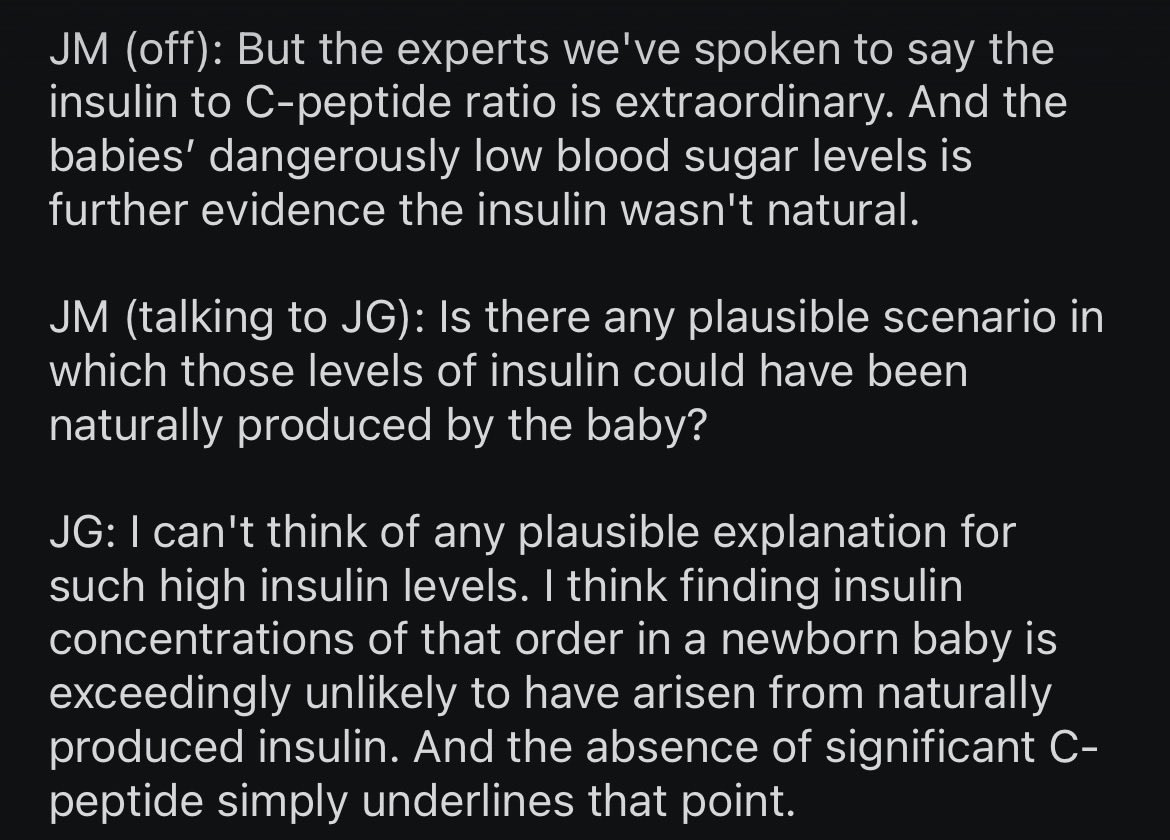
@ContrarianJolly@sueklo1122 It honestly sounds like he simply doesn’t know about the natural ways a test can produce those readings. To me it doesn’t look like he’s simply saying the uncontroversial ‘high insulin low c-peptide usually indicates exogenous administration’.
@ContrarianJolly@sueklo1122 Hm I’m sure about that. I don’t trust Moritz much but it seems reasonable to assume Gregory wasn’t completely in the dark about what he was being asked about
@PhillAndry86@BrettKnoss@LBC@amandaknox@TomSwarbrick1 Because each piece of the evidence against her has been dismantled by dozens of experts. The context of this video is that Amanda has done a podcast all about how unsafe the convictions are.
@DrSusanOliver1 I’m wondering whether a few of your claims come from studies that do the same. Whether the method detects bound insulin too is of crucial importance here.
@DrSusanOliver1 There’s a lot to look into here, but a first thing worth noting is that you justify the claim that non-igG binding is not associated with unusually high levels of insulin with a source (Wellik et al) that seems to have measured *free* insulin.
@benshep20@ValidateYaModel@triedbystats I haven’t read the full paper so I don’t know where exactly the number comes from. But it seems pretty obvious that inverted ratios are common.
This fact is highly relevant because, in conjunction with other facts (about antibodies, sepsis, etc), it demonstrates a plausible,