@Laurasenio The cold storage construction has stopped them from safely making the normal direct interior/roof attack. They have been forced into indirect suppression from outside, above, and with robots. The cannot yet reach the interior of the fire and it flares up.
@alibrooke4ever The cold storage construction has stopped them from safely making the normal direct interior/roof attack. They have been forced into indirect suppression from outside, above, and with robots. The cannot yet reach the interior of the fire and it flares up.
One of the strangest discoveries I ever made is that our forward-facing eyes are probably a relic of an ancient form of X-ray vision.
Not literally X-rays, of course.
But something almost as weird.
We’re taught that animals have forward-facing eyes because they’re predators.
Sounds plausible. Except almost all birds are predators. Most fish are predators. Countless hunters throughout nature have eyes on the sides of their heads.
And the mammals with the most forward-facing eyes aren’t lions or wolves.
They’re primates.
So I started wondering whether we’d been asking the wrong question.
Imagine you’re moving through a dense forest. Leaves and branches are constantly blocking your view. With side-facing eyes, if a leaf blocks something, it’s usually blocked for both eyes.
But with eyes closer together and aimed forward, each eye gets a slightly different view. A leaf that blocks an object in one eye may not block it in the other.
Your brain can combine those views and partially “see through” the clutter.
A kind of natural X-ray vision.
The really surprising prediction was that this benefit should grow the larger an animal becomes. As your eyes get farther apart relative to the diameter of leaves and twigs, the two eyes see increasingly different paths through the vegetation.
More opportunities to see around obstacles.
And that’s exactly the pattern I found.
Out in open habitats, animals tend to have side-facing eyes.
Inside forests, eyes become more forward-facing. And among forest dwellers, the larger species tend to have the most forward-facing eyes of all.
Not because they’re predators.
Because they’re trying to see through a visual jungle.
Ironically, if many of us were redesigned for modern life, we’d probably be better off with somewhat more side-facing eyes. We no longer spend our days navigating dense forests. Wider visual coverage would often be more useful.
But our eyes still carry the signature of the world that built us.
They aren’t primarily hunting eyes.
They’re forest eyes.
Six Things I See in My ‘Strongest’ 80-Year-Old Patients
I am 63 now, and after three decades as an orthopedic surgeon, I have examined thousands of people in their eighties. Some arrive frail and afraid, others walk in straighter and more confident than patients half their age.
They’re still skiing, still gardening, still picking up grandchildren without a second thought. The gap between those two groups is not luck, and it is rarely genetics alone. The same patterns keep showing up in those who are thriving.
Here is what they have in common. The most important reasons are lower down in the list…
@GASLAMPKILLER It was bad for most of the day on Friday, June 19th. I drove from the west side back into SGV and you could easily see the haze you were driving into.
A Japanese immunologist spent 20 years proving that the chemicals trees release into the air walk into your bloodstream, hunt down your stress hormones, and arm your immune system in ways no therapist or pharmaceutical has ever matched, and most of the data has been sitting in Japanese medical journals for two decades waiting to be translated.
His name is Qing Li.
He is a clinical professor at Nippon Medical School in Tokyo and the president of the Japanese Society of Forest Medicine. The Japanese government has been funding his research since 2004, and the body of work he has produced is the reason forest bathing is now an officially prescribed clinical therapy in Japan and Korea.
The story actually starts in 1982, when the Japanese Ministry of Agriculture, Forestry and Fisheries coined the term shinrin-yoku to describe the practice of slow, mindful walking in a forest. They did it for a practical reason.
Japan was urbanizing fast, stress-related illness was climbing, and the country had thousands of square kilometers of forest sitting unused. The idea was to give people a reason to walk into the trees... They had no idea what was actually happening to the human body during those walks until Qing Li ran the first proper experiment in 2005.
He took twelve healthy adult men on a three-day, two-night trip to a forest park. They walked for a few hours each day. Nothing strenuous. No prescribed routes or breathing exercises. They simply walked slowly through the trees, breathing the air, looking at the forest.
Li drew blood and urine samples before the trip, on the second day, on the third day, on day seven after returning home, and again on day thirty.
The numbers that came back from the lab were not what anyone expected.
The activity of a specific type of immune cell called the natural killer cell, which is the cell your body uses to hunt down cancer cells and virus-infected cells before they can spread, had jumped by roughly 50 percent during the forest trip. The actual number of natural killer cells circulating in the bloodstream had increased significantly.
Three different anti-cancer proteins that those cells produce, called perforin, granzymes, and granulysin, had all risen sharply. And the effect did not disappear when the men went home. The immune boost was still measurable on day seven and was still partially present on day thirty.
Two hours a day in a forest had upgraded the immune system for a full month.
Li ran the same experiment with women a year later and found nearly identical results. Then he ran it with a control group who took a three-day trip through an urban area with the same amount of walking, the same hotel quality, and the same diet.
The urban group showed no measurable change in natural killer cell activity at all. The forest was doing the work, not the vacation.
The mechanism turned out to be a class of airborne molecules called phytoncides. Trees produce these compounds to defend themselves against insects, bacteria, and fungi. Pine, cedar, oak, and cypress trees release them in particularly large amounts, especially in warmer weather and after rainfall.
When you walk through a forest, you are inhaling those molecules into your lungs and absorbing them through your skin, and once inside your body they appear to directly stimulate the production and activity of the very immune cells Li was measuring in his lab.
Roughly 50 percent of the health benefit of a forest walk, according to Li's data, comes from the chemistry of the air itself. The other half comes from what the forest is doing to your nervous system.
This is where it stops being only about the immune system and starts being about stress.
A separate Japanese research team measured cortisol, the body's main stress hormone, in 84 participants across 35 different forest sites. They drew samples before and after a 30-minute walk in each forest and compared them to control walks in matched urban environments. The cortisol levels of the people who walked in the forest were lower than the cortisol levels of the people who walked in the city by a significant margin. Their heart rates were lower. Their blood pressure was lower.
The activity of their parasympathetic nervous system, which is the part responsible for rest and recovery, had gone up. The activity of their sympathetic nervous system, which is the part that drives fight or flight, had gone down.
Then a researcher at the University of Michigan named MaryCarol Hunter ran the cleanest version of this experiment ever done. She recruited participants from a city and told them to take a nature pill three times a week for eight weeks.
They were free to choose the time, the place, and the duration of the nature experience, as long as it was outside, in daylight, and free of phones, conversations, and aerobic exercise. They sent her saliva samples before and after each session so she could measure cortisol changes accurately and rule out the normal daily drop in stress hormones that happens to everyone.
The result was that participants experienced a 21.3 percent drop in cortisol per hour spent in nature, with the biggest payoff happening between minutes 20 and 30 of the walk.
After that, the cortisol kept dropping, but more slowly. The threshold dose for measurable stress relief was just 20 minutes outside in something that looked and felt like nature.
What none of this means is that nature is a substitute for therapy or for medication when someone genuinely needs them. Therapy treats different things than a walk does, and Li himself has been careful in interviews to call forest bathing a complementary intervention rather than a replacement for clinical care.
But what the research has settled is that the human body has a physiological response to being among trees that operates on the same biological systems modern medicine is trying to reach with drugs and clinical protocols, and that response is fast, measurable, and free.
The strangest part of Li's work is the implication he keeps repeating in interviews. The average person now spends more than 90 percent of their life indoors. Their cortisol stays elevated. Their natural killer cells stay sluggish.
Their parasympathetic nervous system rarely gets a chance to take over. The system that was tuned by millions of years of life under a canopy of trees is being asked to run permanently inside a box made of drywall and screens.
Your body has not forgotten what it is supposed to do in a forest. It is waiting for you to walk into one.
BEAR #A1128179
These two pics is all he has. Will it be enough to save him?
He's around 12yo., must have been adopted as a puppy.
Bear doesn't ask for much. Compassion of a loving ❤️, & a soft bed is all he needs.
Who can help Bear?
#euthlisted 6/16 #SanJacinto#Riverside
💔 Last Sunday, Mercy Full Project Rescue in Tampa, Florida hosted a mini adoption event for Red.
A few other pups came too, but somehow every dog found a home that day except Red. 😔
Red is 6 years old, about 12 lbs, potty trained, affectionate, cuddly, and happiest relaxing with his people.
He can get anxious and vocal in busy public settings, but at home he is calm, easygoing, and full of love.
Red is not looking for adventure. He is just looking for someone to choose him.
Please share his story. His forever family may be one share away. ❤️🐾
☑️ HOW TO ADOPT: Apply here: https://t.co/qwLDBt95v7
Then text +1 (657) 423-8216 to let them know you’re interested.
The new issue of Daedalus, the open-access Journal of the American Academy of Arts and Sciences, is chock full of good material on AI. w/@demishassabis@ylecun@alondra@pushmeet and so many others
I wrote about the future of AI-facilitated medicine
https://t.co/UMPKLcpuq5
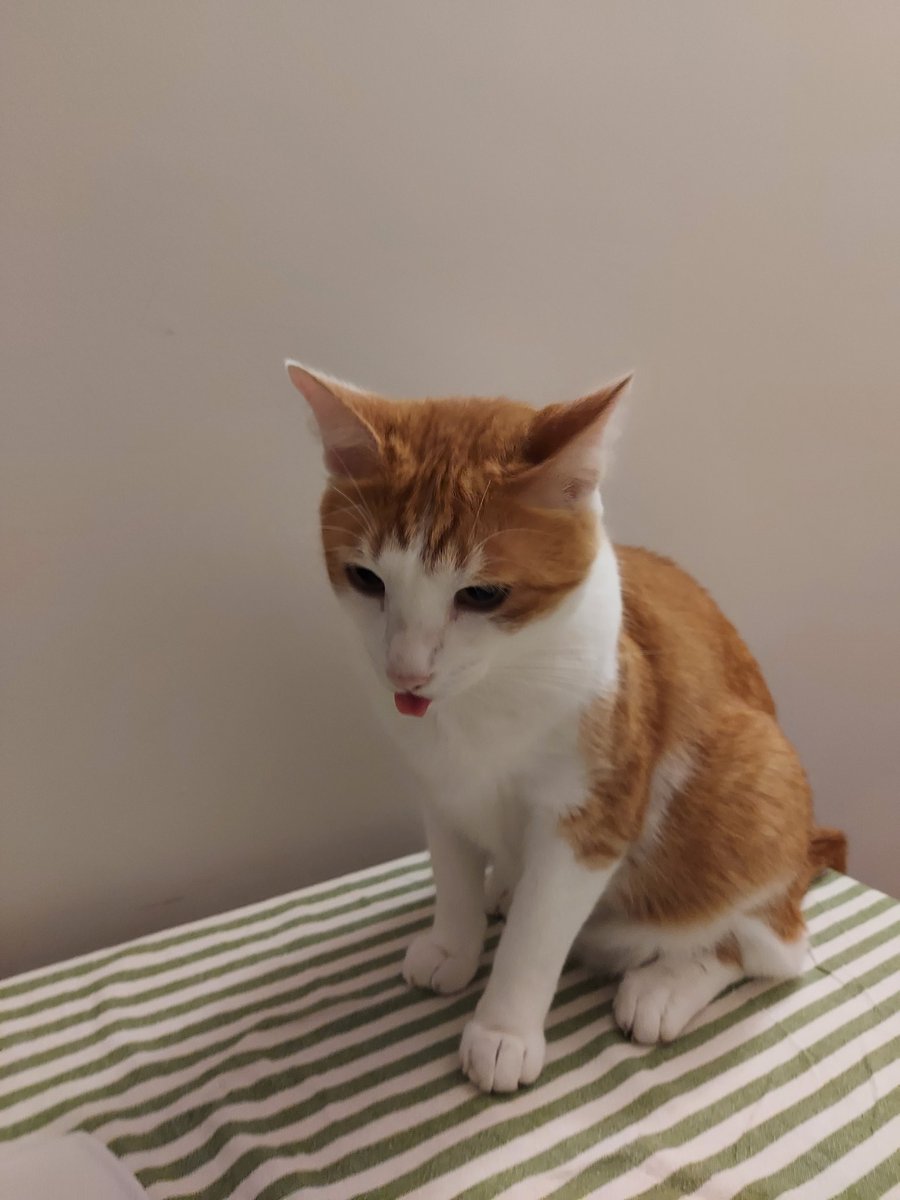
essa madrugada o gato da minha amiga LITERALMENTE salvou minha vida
tive uma hipoglicemia de 32 dormindo e tava apagadissima, comecei a sonhar que alguém me cutucava horrores, qnd abri o olho era ele me acordando, e só ficou calmo qnd eu levantei 😭😭😭
olha q lindo meu heroi
Bear escaped when my roommate left the door open this morning, I’ve been searching the neighborhood for three hours and I can’t find him anywhere. Please pray for his safe return, I’m losing my mind I’m so worried idk what I’m gonna do if I can’t find him.
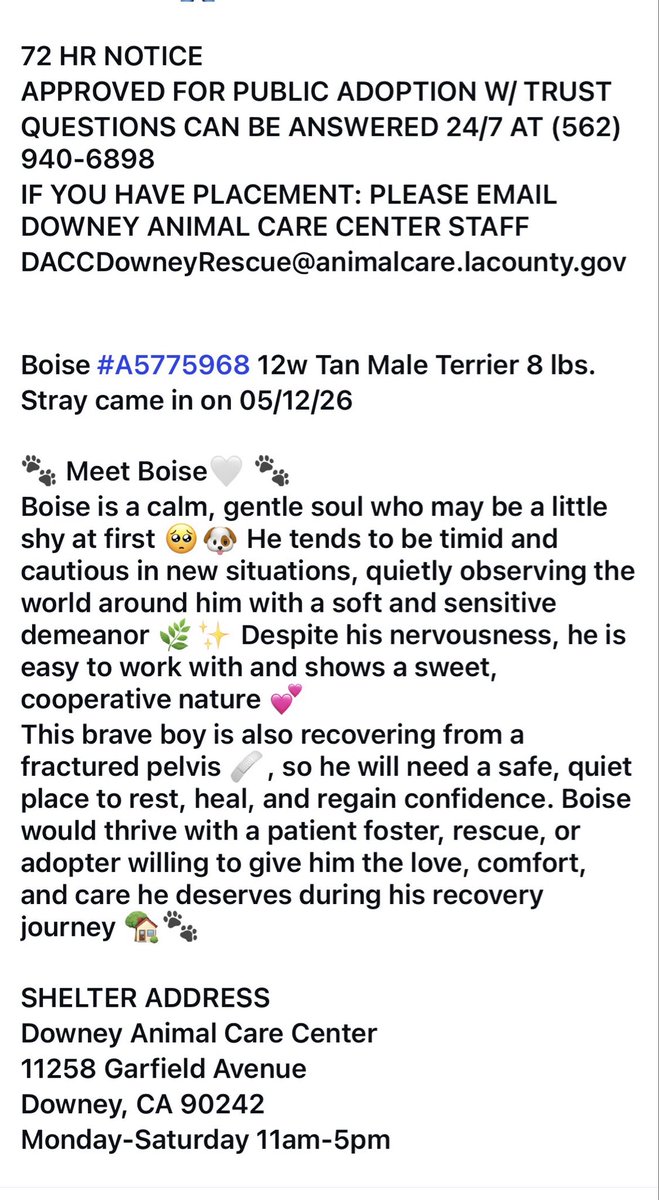
Puppy in need in Southern California. 72 hour notice given.
Poor baby is crying💔💔💔💔💔🆘🆘🆘🆘🆘🆘🆘🆘🆘🆘🆘🆘🆘
I am just sharing this post for a larger audience. Please read the bio.
KwaZulu Natal Hluhluwe🇿🇦
5 SUSPECTED RHINO POACHERS on the way to poach Rhino were SHOT DEAD. A shoot out on the R618 took place between SAPS & suspected poachers. A gun battle ensued when suspects approached roadblock
NO SAPS were injured NO rhinos were killed. Well done SAPS!🇿🇦