Understanding grief in children through the lens of Attachment Theory provides valuable insight into how early relationships shape their responses to loss. Exploring this connection can offer a deeper understanding of how children navigate and process grief.
Loss has been prevalent in recent years, highlighting the need for early childhood educators to embrace grief literacy in their professional growth. Understanding and supporting children through grief is crucial. #griefliteracy#teachereducation#earlychildhood#grief#children
Understanding grief in children through the lens of Attachment Theory provides valuable insight into how early relationships shape their responses to loss. Exploring this connection can offer a deeper understanding of how children navigate and process grief. #earlychildhood
Losses including relationships, predictability, and loved ones deeply impact children's social-emotional and overall development. Recognizing these effects and providing necessary support is vital for nurturing all children. #children#teachereducation#earlychildhood#grief
I’ve been keeping an exciting secret that I’m finally ready to share:
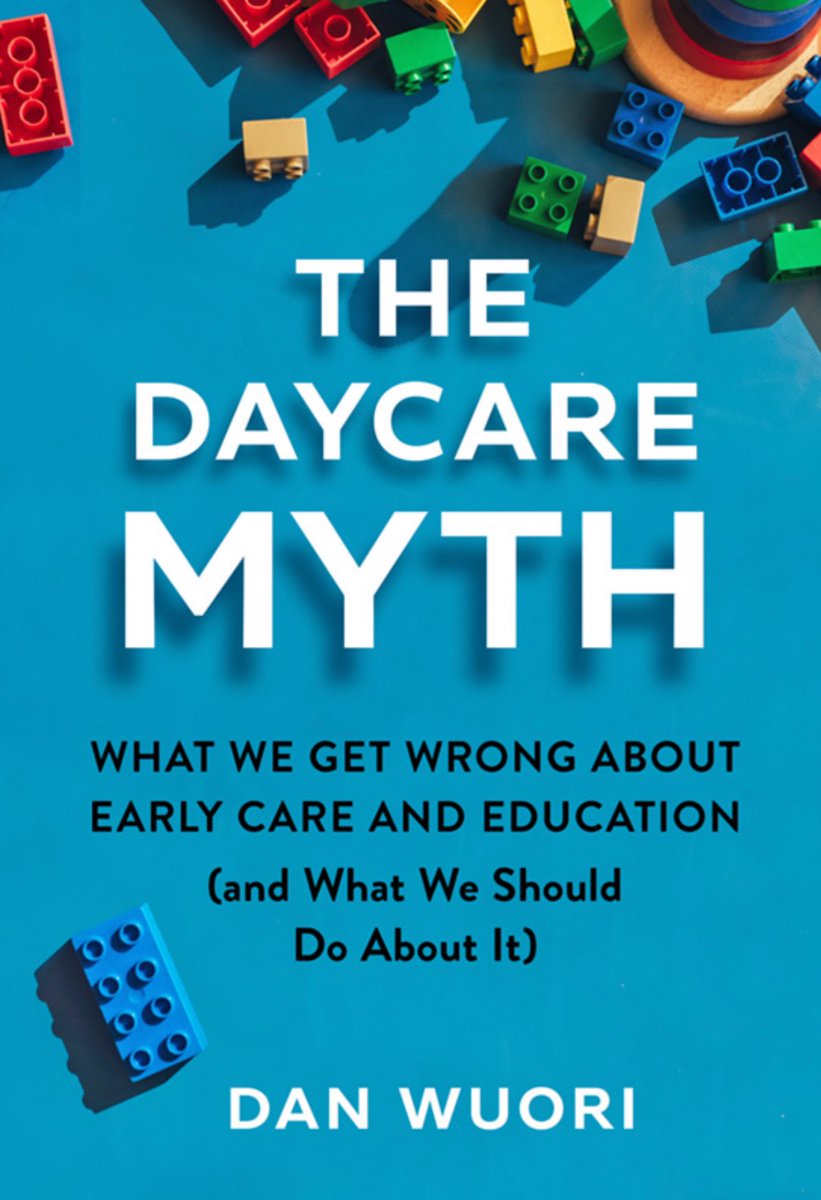
My first book, The Daycare Myth: What We Get Wrong About Early Care and Education (and What We Should Do About It), will be published this fall by @TCPress at @Columbia University.
Focused on the disconnect between what we know (about the science of early development and the importance of the early years) and our nation’s public policy for children, it’s my hope that the book will spark a long-overdue, bipartisan conversation about the consequences of our inaction and how we might do better by our youngest.
Whether you’re a parent, grandparent, early childhood educator, policymaker…or a taxpayer interested in learning why the nation’s failed approach to early childhood is costing each and every one of us an untold fortune, you’re going to want to check it out.
Publication is still a few months off, but pre-orders are live NOW. You can order at the link in the first reply below.
To celebrate the launch, I have a special offer:
The first 100 verified pre-orders will receive a personally inscribed bookplate (to be mailed the week before release).
Details with the link below.
Writing this book has been a real labor of love. I couldn’t be more excited to share it with you at last.
Thank you for your support, today and always. I so love the community we’ve built here on X.
If you’d repost this to help spread the word I’d be so grateful.
Did you know that your baby learns important lessons from your eyes? 👀
Only hours after birth, babies begin fixating on the faces of their significant caregivers.
But due to poor visual acuity what they see initially is primarily their outlines - and mostly in black and white.
As their vision improves over the first weeks of life, their gaze turns more intentionally toward the eyes.
Shared gaze between mother and child is a critical part of bonding and attachment. (The same holds true for you, Dad.)
Your eyes provide important cues about your emotional state (which, in turn, influences your baby’s own) and teach lessons about who is a trusted caregiver, provider, and loved one.
So make sure you’re dedicating time to staring right back.
This adoring little one only has eyes for mom.
Notice how his gaze is never broken, even as Dad prompts a smile by stroking his head.
That’s the look of love.
This sweet video was shared to IG by ira_pinch_2022.
Being a lifelong learner isn’t about taking pride in your knowledge. It's about having the humility to know what you don’t know.
My top 23 insights from 2023 🧵
💡 There is no such thing as “learning styles.”
💯 Students benefit from more testing.
🧠 Information that's harder to learn is retained longer.
Educational psychologist Jonathan Tullis dispels some of the most widespread misconceptions in education.
https://t.co/GUawr7zbgi
Without comprehensive federal policy & collaboration with industry leaders, #childcare is just not possible in its current state. On both fronts, @RepRoKhanna & @WendyDDoyle @UnitedWeEmpower are taking desperately needed action-- learn more: https://t.co/A4VMFXqBBQ @ehaspel
💡 There is no such thing as “learning styles.”
💯 Students benefit from more testing.
🧠 Information that's harder to learn is retained longer.
Educational psychologist Jonathan Tullis dispels some of the most widespread misconceptions in education.
https://t.co/GUawr7yDqK
We asked teachers what tiny shifts made a difference in their classroom—and their answers surprised us. Just a few words can have a positive impact!
Here are 5 Tiny Language Shifts (that can make a *big* difference)
🧵1/6
Mr. Rogers once said, “Play is often talked about as if it were a relief from serious learning. But for children, play is serious learning.” Educator @natcatlett shows that during PD, play can bring about serious learning in adults, too.
https://t.co/yU19cx34gn
Grief is not an emotion to move on from. It’s a reality to move forward with.
Coping is not about forgetting those we love. It’s about finding ways to keep their memory alive.
We pay respects by leading a life that honors their legacy.
@noraborealis https://t.co/OyCJwcN6wD
Who said formative assessment can’t be fun? From math raps to creating collages, here are creative ways to check for student understanding. 💯
https://t.co/BWt0TJk8HY
On modeling self-regulation through tone of voice: “The sweet spot is calm, neutral, assertive, and the teachers who get the best responses from kids are the ones that have mastered that the best," says Cynthia Robinson-Rivers of Van Ness Elementary in Washington, DC.
Julieanna Richardson founded The HistoryMakers in 1999 with no formal training in oral history. By 2012, her collection of African American first-person accounts had become so significant, the Library of Congress agreed to become its permanent repository. https://t.co/V7Xaut4MGq