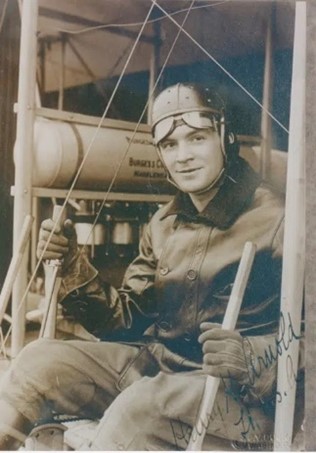
1911: Lt. Henry H. Arnold flies as a “stunt pilot” for scenes in the movie “The Military Air Scout.” Filming was accomplished after the conclusion of the Aero Club of America meet at Nassau Boulevard, NY. He would later fly again in The Elopement (1912), also filmed in Oct 1911.
1937: Test pilot Eddie Allen flew the Boeing XB-15 on its first flight at Boeing Field, Seattle. The specification that produced the XB-15 began in mid-1933 as "Project A", a project exploring the possibility of flying a very large bomber with a range of 5,000 mi.
1954: Benjamin O. Davis, Jr., was promoted to Brigadier General, becoming the USAF’s first Black general officer.
See this article by Anthony Eley for an excellent biographical summary of his life.
https://t.co/aJTdjmeG7p
1918: Capt. Edward V. “Eddie” Rickenbacker shoots down his final enemy aircraft of the war (a balloon). His total of 26 victories was later revised down to 24 1/3 by the Office of Air Force History. In 1931, he was awarded the Medal of Honor by President Herbert Hoover.
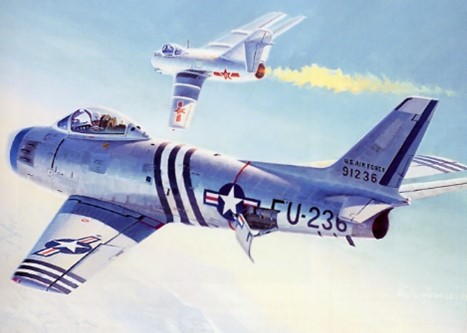
1950: KOREAN WAR. During the UN forces’ retreat from the Yalu back toward the 38th parallel, Soviet-made MiG-15s entered the conflict for the first time when six MiG-15 jets appeared for the first time in the war & fired on a T-6 & an F-51 Mustang flight in the Yalu River area.
1974: Gen Carl “Tooey” Spaatz, the first USAF Chief of Staff, died at Walter Reed General Hospital at age 83. Spaatz was instrumental in the creation of the Air Force Historical Foundation in 1953.
1937: Jacqueline Cochran, flying a Beechcraft Staggerwing, set the women's US record of 203.895 MPH for 1,000 kilometers (620 miles).
Seventy-five years ago, on June 12, 1948, President Harry S. Truman had signed the Women's Armed Services Integration Act (Public Law 625-80), which authorized women to serve as regular members of the U.S. armed forces. During July, AFHF will celebrate the lives and careers of many notable women in aviation history.
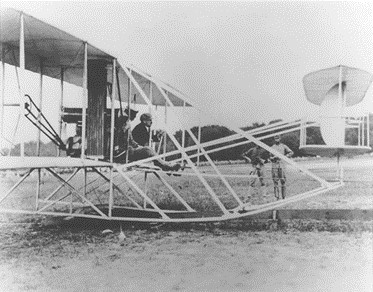
1909: Orville Wright, with Lt Frank P. Lahm riding as a passenger, flew the Army’s first airplane for 1 hour 12 minutes 40 seconds to set a two-man endurance record. Thus, the first official flight test of the airplane fulfilled a contract requirement for an hour-long flight with a passenger. (Lahm is seated in the right seat of the plane. Orville is hunched over in the left seat.)
1929: The patent application is made for the “pilot maker” flight trainer by inventor Edward Albert Link. The Link Trainer will become essential to every pilot’s training before the Second World War begins.
1919: Capt. E.F. White and mechanic H.M. Schaefer set an American distance record for a non-stop flight when they fly a DH-4B-Liberty 400 from Chicago to New York in 6 hours and 50 minutes. They cover 738.6 miles.
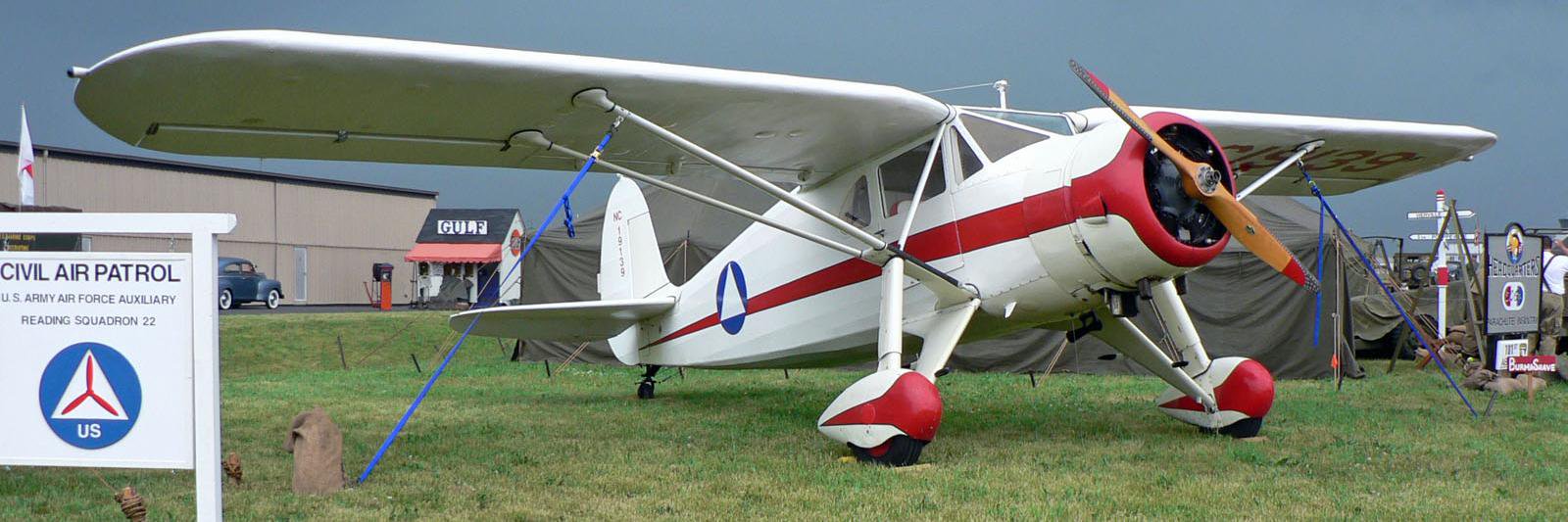
The Rearwin Sportster 9000-L is our latest painting in the Silvered Wing series of vintage Civil Air Patrol World War II aircraft by Maj. Ron Finger. Read more at https://t.co/p8OwATfDPp.
#CivilAirPatrol#GoFlyCAP#WWII#pilotlife#AvGeek#aviation
Check out this @FOX13News news story about our new high-school-affiliated squadron in Florida (@FloridaWing). Civil Air Patrol cadets will earn school credit and a private pilot certificate as part of the program. Go to https://t.co/0He0DqUQPh. #CivilAirPatrol#GoFlyCAP#CAPCadet
#CivilAirPatrol cadets gain valuable experience, learn life lessons, & explore potential careers during our national cadet special activities. Cadets attending the University of Rocky Mountain Region activity spend up to 10 days at the @AF_Academy. Read: https://t.co/djZddl8n8U
1942: Eighth Air Force commander Maj. Gen. Carl A. “Tooey” Spaatz (seen here) is transferred to the Mediterranean Theater. He flies to Algeria to act as Gen. Eisenhower’s air advisor. Maj. Gen. Ira C. Eaker is named as his replacement to command the Mighty Eighth.
1948: The Beech Model 45 demonstrator flies for the first time. The Model 45 will begin AF service at the T-34A Mentor in 1953, the first primary trainer to be added to the inventory since the end of WW II. The T-34 will be used by the USAF until 1961. Many still fly today.
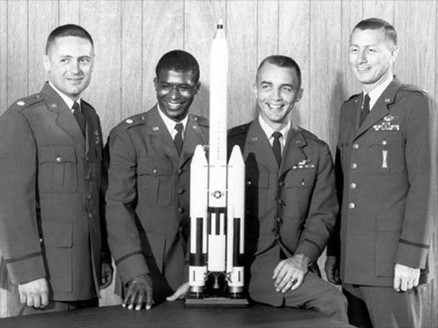
1967: Air Force Major, Robert H. Lawrence, Jr., the first African American chosen by NASA to be an astronaut, dies in an F-104 crash at Edwards AFB before he can travel into space.