The average TEAS 7 score is 65%.
The average score of students who use structured prep materials: 78%.
That's the difference between getting in and getting waitlisted.
Don't leave it to chance.
If your TEAS 7 is in the next 30 days, stop panicking.
Here's what you actually need:
✅ My free cheat sheet (covers all 4 sections)
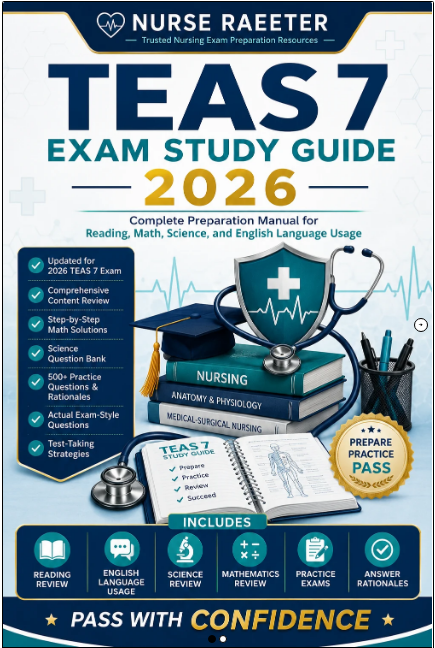
✅ My TEAS 7 study guide (step-by-step, what to study each week)
Students who use structured guides score 15+ points higher on average.
The 60-second TEAS 7 reading strategy:
1️⃣ Read the QUESTION first
2️⃣ Skim the passage for the answer
3️⃣ Eliminate 2 obviously wrong answers
4️⃣ Choose between the remaining 2
Don't read the whole passage.
You don't have time.
Work smarter 🩺
You don't need to be a genius to pass TEAS 7.
You need:
→ The right study material
→ 6–8 weeks of consistent effort
→ Practice tests every 3 days
→ Sleep the night before
That's it.
Everything else is noise.
I made a free TEAS 7 cheat sheet so you don't have to spend hours making notes.
Covers:
📐 All math formulas
🔬 Science body systems
📖 English grammar rules
Get it free 👇
[link in bio]
Every math formula on TEAS 7 — in one thread.
Save this. It's everything you need.
The TEAS 7 math section has 32 questions in 54 minutes. Here are every formula you need:
The 5 TEAS 7 conversions you WILL see on test day:
1 kg = 2.2 lbs
1 tsp = 5 mL
1 tbsp = 15 mL
1 oz = 30 mL
1 L = 1,000 mL
Screenshot this. It's on the test.
🩺 Follow for daily TEAS 7 tips
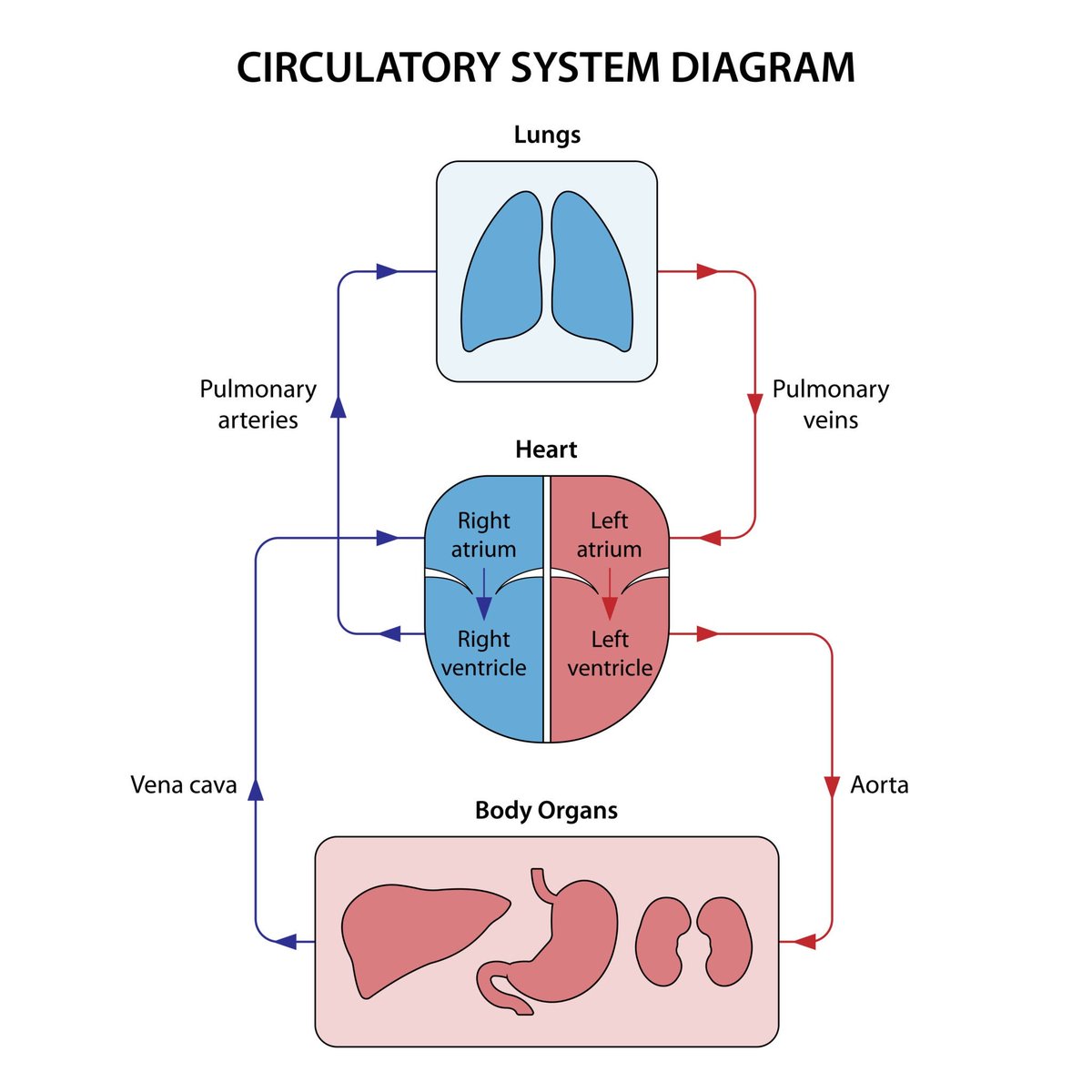
Heart, arteries, veins — the TEAS 7 circulatory system simplified. 🩺🫀
If you’re studying for the TEAS, the cardiovascular system is guaranteed to show up. Let’s break down exactly what you need to know to lock in those points.👇
1/ The Heart: 4 Chambers
Think of the heart as a two-story house:
Atria (Top Floor): The receiving rooms. They receive blood returning to the heart.
Ventricles (Bottom Floor): The powerhouses. They pump blood out of the heart.
TEAS Tip: The left ventricle is the thickest because it pumps blood to the entire body!
2/ The Plumbing: Arteries, Veins, & Capillaries
Direction matters on the exam:
Arteries = Away from the heart (mostly oxygenated).
Veins = Toward the heart (mostly deoxygenated, uses valves to prevent backflow).
Capillaries: The microscopic exchange sites where O2, CO2, and nutrients actually swap places.
3/ Pulmonary vs. Systemic Circulation
The heart pumps in two separate loops:
Pulmonary Circuit: Right side of the heart ➡️ Lungs (to pick up O2) ➡️ Left side of the heart.
Systemic Circuit: Left side of the heart ➡️ Body tissues (to drop off O2) ➡️ Right side of the heart.
4/ Valves & Blood Pressure Basics
Heart Valves: Act as one-way doors to prevent backflow (AV valves between atria/ventricles; Semilunar valves at the exits).
Blood Pressure: Written as Systolic / Diastolic (e.g., 120/80 mmHg).
Systolic: Heart contracting (active squeeze).
Diastolic: Heart relaxing (filling up).
5/ ABO Blood Types
The TEAS loves compatibility questions. Remember antigens (on the cell) vs. antibodies (in the plasma):
Type O-: The Universal Donor (has no antigens).
Type AB+: The Universal Recipient (has no antibodies).
Save this for your exam 📌
Want the full, comprehensive TEAS 7 anatomy blueprint? Grab the complete study guide via the link in our bio! 📖✨