Husband, father, basset and mutt zookeeper, tech person at Google who worries about making fast (enough) bytes cheaper (roughly in that order of importance).
FYI, as this place is now officially and intentionally a dumpster fire, I’ve revived over at Bluesky with the same name. I’ve found it kind of nice and quiet over there. Thoughtful elder millennial friendly.
Goodbye, corpse of Twitter. You were always kind of trash?…
Anyway, it’s an interesting question where I get my news now. Social media killed news and then replaced it with bullshit. Back to WaPo, I guess? Not a replacement for all the things I’ve gotten from Twitter, but c’est la vie.
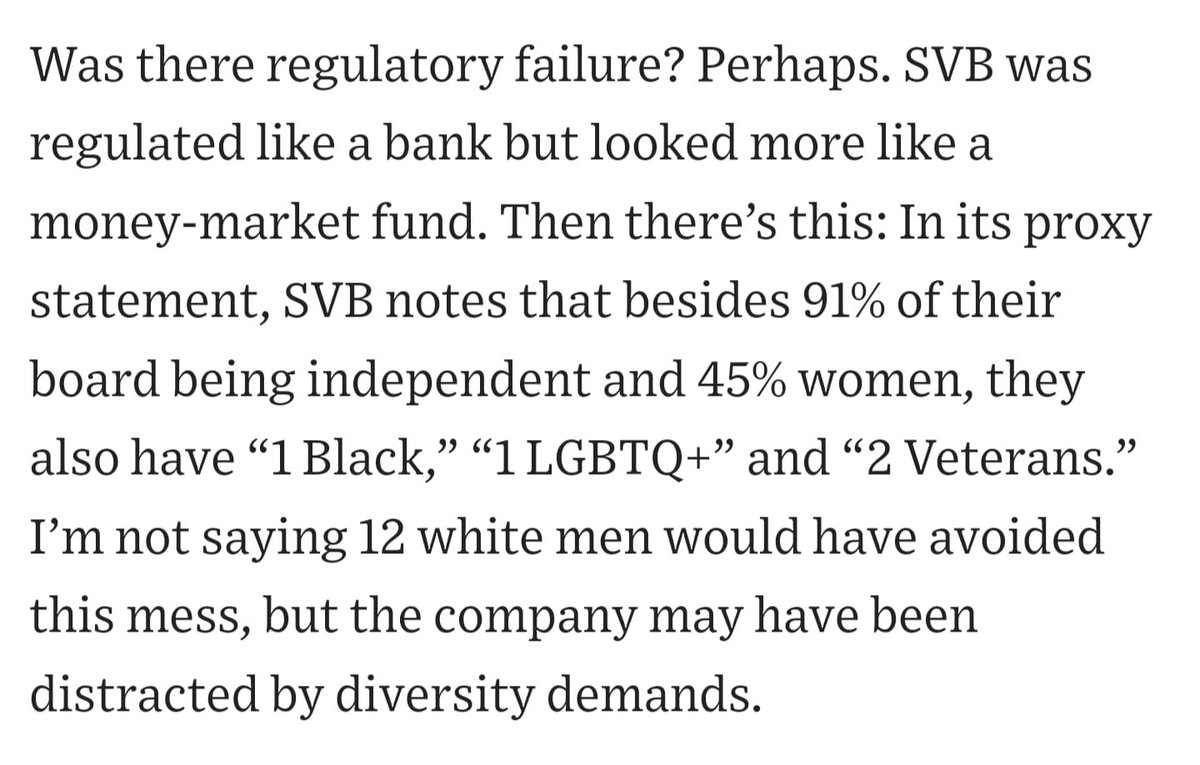
NAILED IT: “In five years a number of banks will not be around because of blockchain technology.”
-Joseph DiPaolo, Signature Bank CEO, 2018
https://t.co/2A6L0sodEA
I am on board a Delta flight right now. The person sitting next to me in first class refused $100,000 to remove her mask for the entire flight. No joke. This was after I explained they don’t work. She works for a pharma company.
This is dumb. There’s a valid point in here somewhere, but still fundamentally dumb.
Google has a huge infrastructure that creates challenges unique to Google, which is part of why there’s so much bespoke tech.
What was previously Google's biggest strength might prevent it from innovating in the future.
Google technology used to be years ahead of the industry. In 2004, Google released a paper on its proprietary MapReduce algorithm, the system that powered Google's massively parallel web crawling infrastructure. The previous year, Google had released a paper on its proprietary Google File System, which worked hand-in-hand with MapReduce. No other company was operating at Google scale.
But the industry always catches up, eventually. In 2006, two engineers would use those papers as a blueprint to create an open-source version of both technologies, Apache Hadoop and HDFS. They quickly became the industry standard - spawning huge companies like Cloudera, Hortonworks, and Databricks. Google's internal implementation was similar but incompatible. Not only had Google failed to commercialize the technology, but it now maintained a completely different codebase. This made it difficult to hire talent, expensive to keep up with improvements, and created a divergent basis for future innovation.
Avoiding the MapReduce/Hadoop situation was the initial rationale for open-source projects like TensorFlow and Kubernetes. While open-sourcing internal Google technologies has been wildly successful in both cases, Google is still filled with bespoke proprietary technology. Everything works differently at Google: building software, communicating between services, version control, code search, running jobs and applications, testing, and everything in between. Ramp-up time for new engineers continues to increase. Engineers aren't able to use off-the-shelf software because it won't work with internal technologies. Technologies that were years ahead are now only months.
These are the patterns of strategic disruption: a company like Google acts rationally, building its bespoke technologies as a competitive advantage. This series of rational decisions unexpectedly creates an opportunity for startups to move more quickly, take advantage of the current ecosystem, and eventually disrupt. While Google still has some of the best internal technology, it is on a parallel, but different, path than the rest of the world. Cloud computing has accelerated this divergence. Engineers may choose to work at companies where they can build non-firm-specific skills to further their careers. I believe that Google understands these issues, but the inertia may prove to be too great to overcome, even with the best effort.
But the real thing Rickard doesn’t seem to understand is that Google is a hardware company, which makes it well positioned to compete in, e.g., the machine learning space where it will be able to stand up machine learning systems at a fraction of the price of competitors.
And the correct galaxy brain take is there is no reason higher education need be scarce and if we’re rejecting good students from schools that means schooling should be expanded, probably via community college.
I feel like SATs are one of those things that periodically crops up that everyone ends up having painfully shallow takes on, all over the spectrum. Even those who should know better.
My take: SATs are indeed dumb and should be nixed. You should use metrics related to specific subjects to filter those who are fundamentally unprepared, and then lottery everyone else.
Getting rid of SATs without doing that is not really better than keeping SATs.
I feel like it’s also worth noting the really important difference between a tweet and a live interview with a legislative sponsor. If you don’t understand the difference between those two, you’re not the media savvy critic you think you are.
Counterpoint: this viewpoint is basically a variant of “moderate” both-sidesism with all its accompanying problems. The bar being set for journalism by this standard is unrealistic and unhelpful. Conversely, this kind of journalism ends up explaining policy really well.
And at the end of the day pointing out hypocrisy is ubiquitous in politics, and therefore concluding it shouldn’t be remarked upon, is exactly as shallow and unhelpful as the post accuses Stewart of being.