Your pointer is a stranger to the kernel.
User space buffers are UNTRUSTED.
Kernel memory is SACRED.
So Linux uses two bodyguards:
• copy_from_user()
• copy_to_user()
No direct dereference.
No blind trust.
Only validated crossing.
#Linux#Kernel#OSInternals
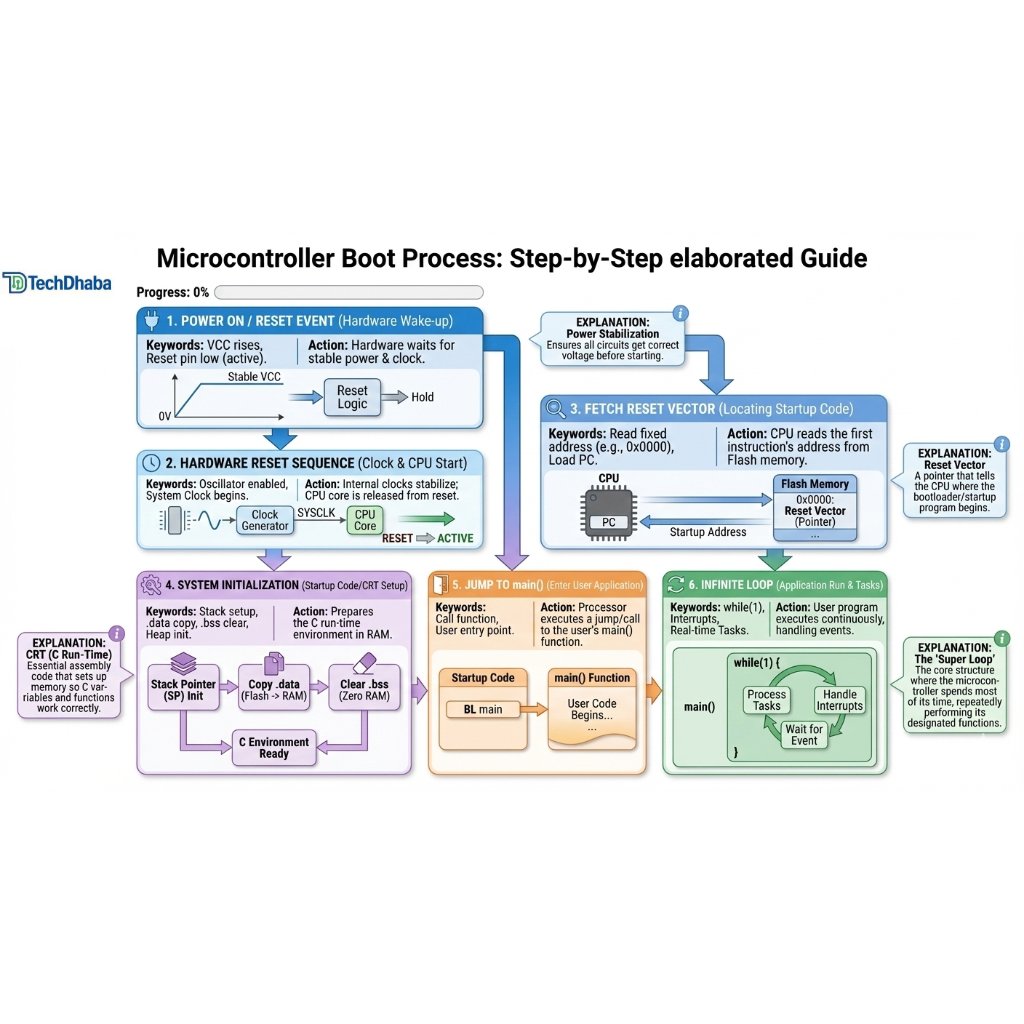
Most embedded bugs don’t happen in main().
Flash = blueprint (truth)
RAM = live execution state
Every reset rebuilds RAM from Flash.
Get .data, .bss, stack, or heap wrong → bugs before main(). Master the map.
#EmbeddedSystems#BareMetal
https://t.co/zJhVou0kKe via @LinkedIn
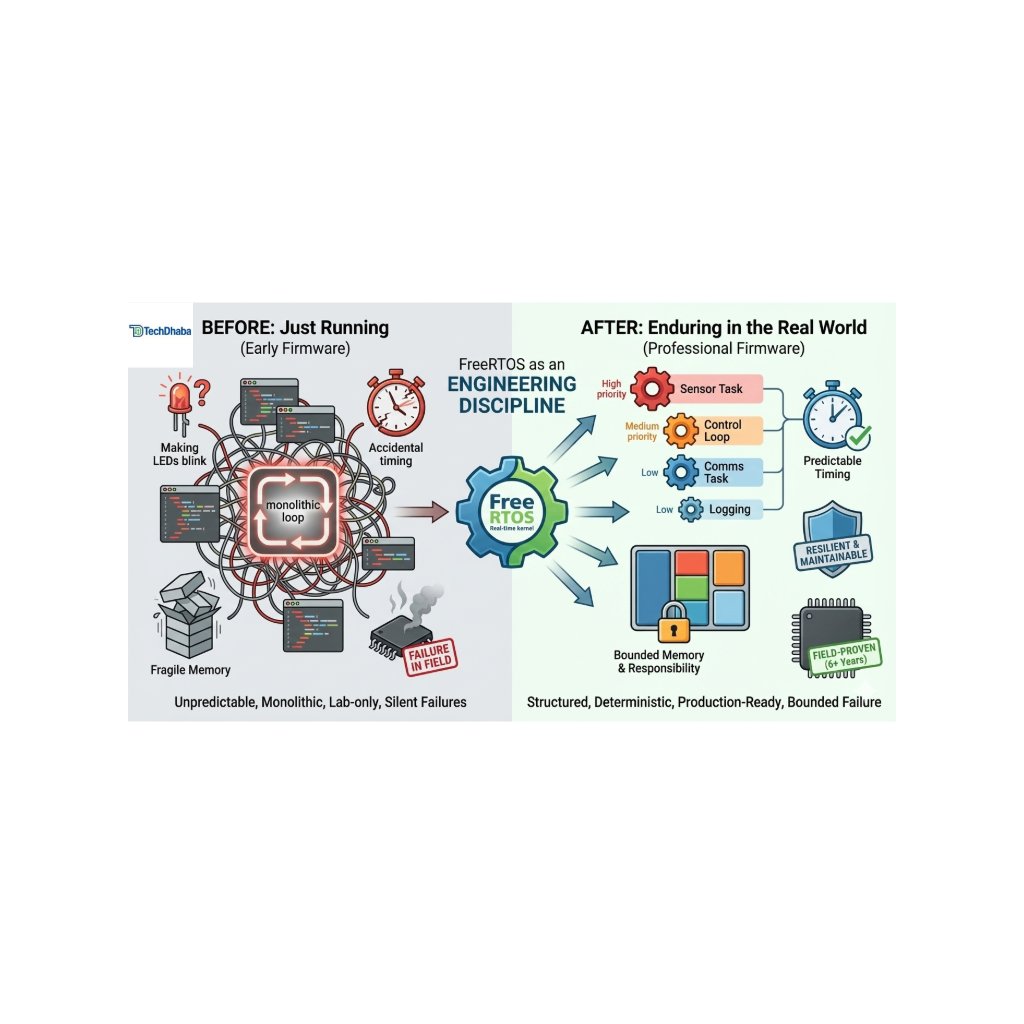
Bare-metal works… until it doesn’t.
FreeRTOS gives you task isolation, deterministic scheduling, and control over timing—critical when systems grow beyond a while(1) loop.
#FreeRTOS#EmbeddedC#RTOS#FirmwareEngineering#techdhaba
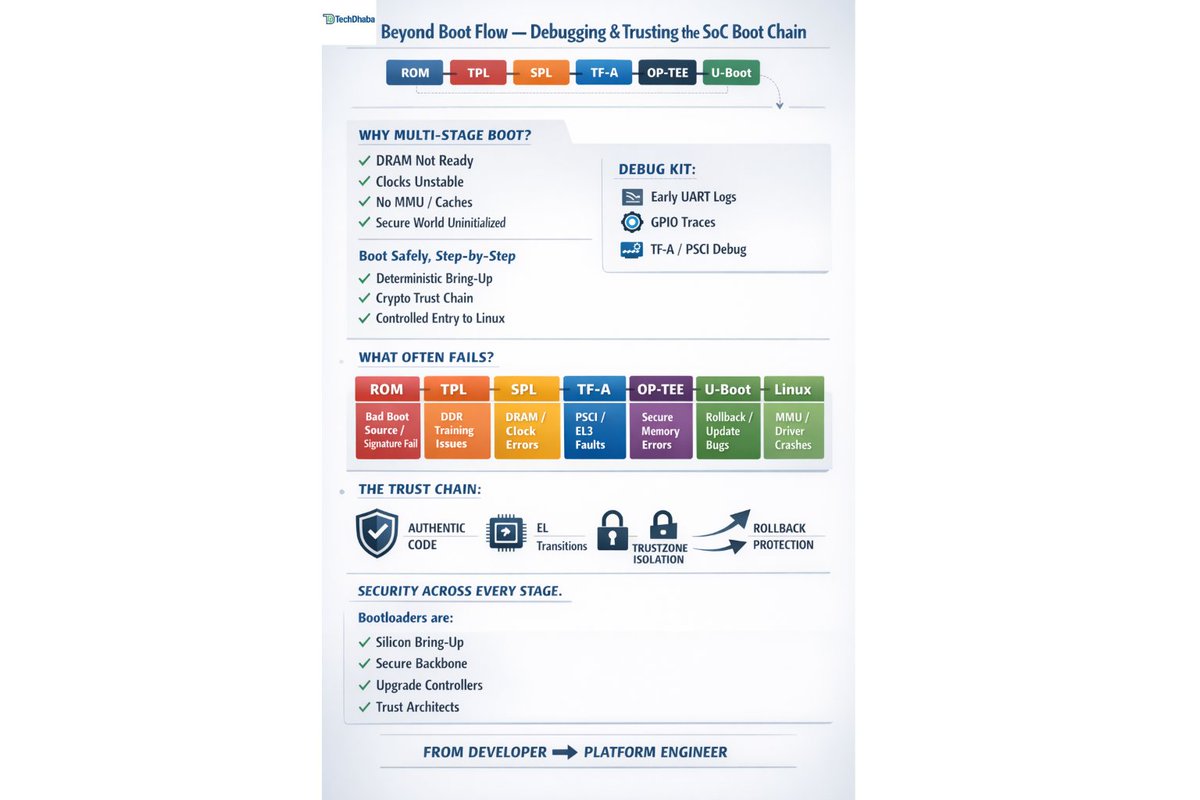
Booting a real ARM SoC is not just “ROM → U-Boot → Linux”.
It’s a secure, multi-stage chain:
ROM → TPL → SPL → TF-A → OP-TEE → U-Boot → LinuxBootloaders are silicon bring-up + trust anchors.
Get the boot chain wrong, Linux never runs.
https://t.co/SgVi1PyIoL
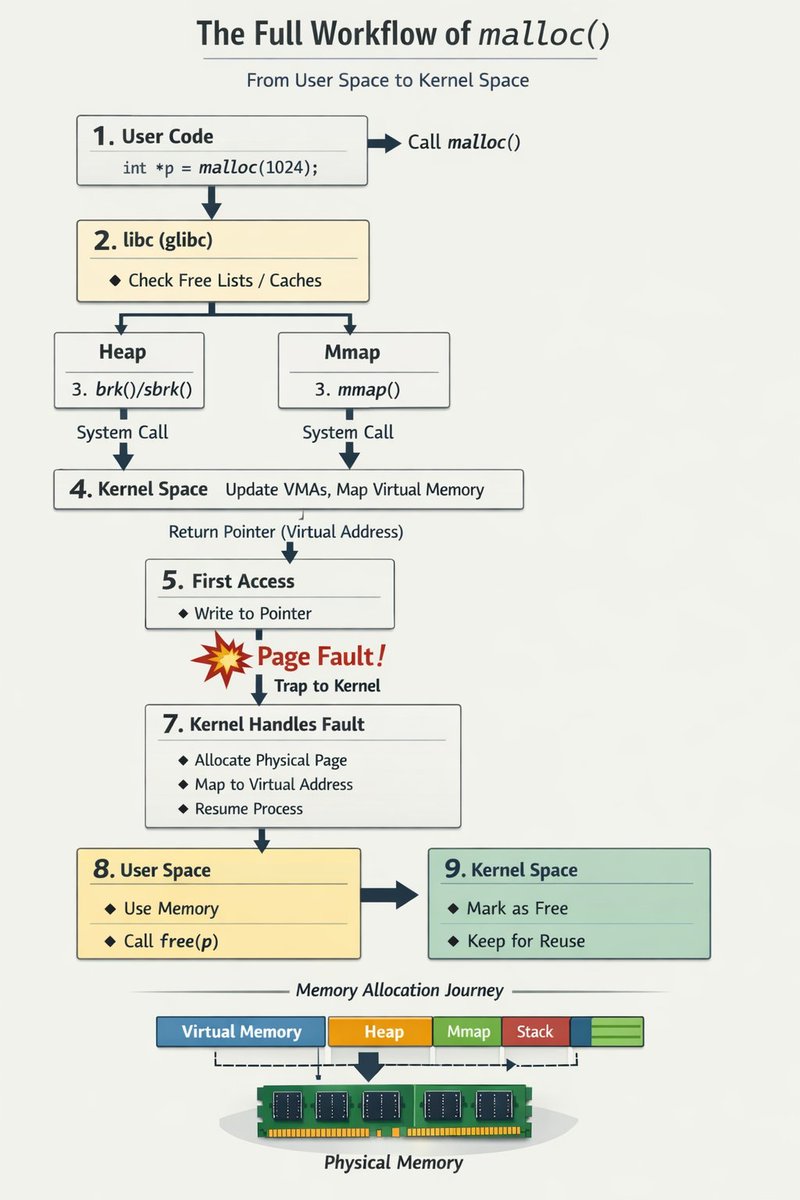
malloc() doesn’t give you memory. It gives you an illusion of memory.
Real RAM is allocated later, on a page fault.
User space → glibc → kernel → page tables → RAM
Once you see this, Linux memory makes sense. 🧠
#Linux#CProgramming#malloc
https://t.co/1DO8kc5unD
#LearnEmbedded 🎓 "FPGA Design for Embedded Systems Specialization"
Decode the Secrets of the #FPGA in Embedded Systems. Enhance career opportunities and build better systems by acquiring skills in FPGA design
👉 https://t.co/zVs2v2ndlp
📌 #EmbeddedSystems#Semiconductor