USDCx on Canton ↔️ USDC on Ethereum is now live on Cancore.
Move stablecoin liquidity between @CantonNetwork and Ethereum through a single atomic settlement flow – with assets remaining with counterparties until settlement completes.
One route live today. More pairs coming next.
Trade now → https://t.co/2W7TSEtrKI
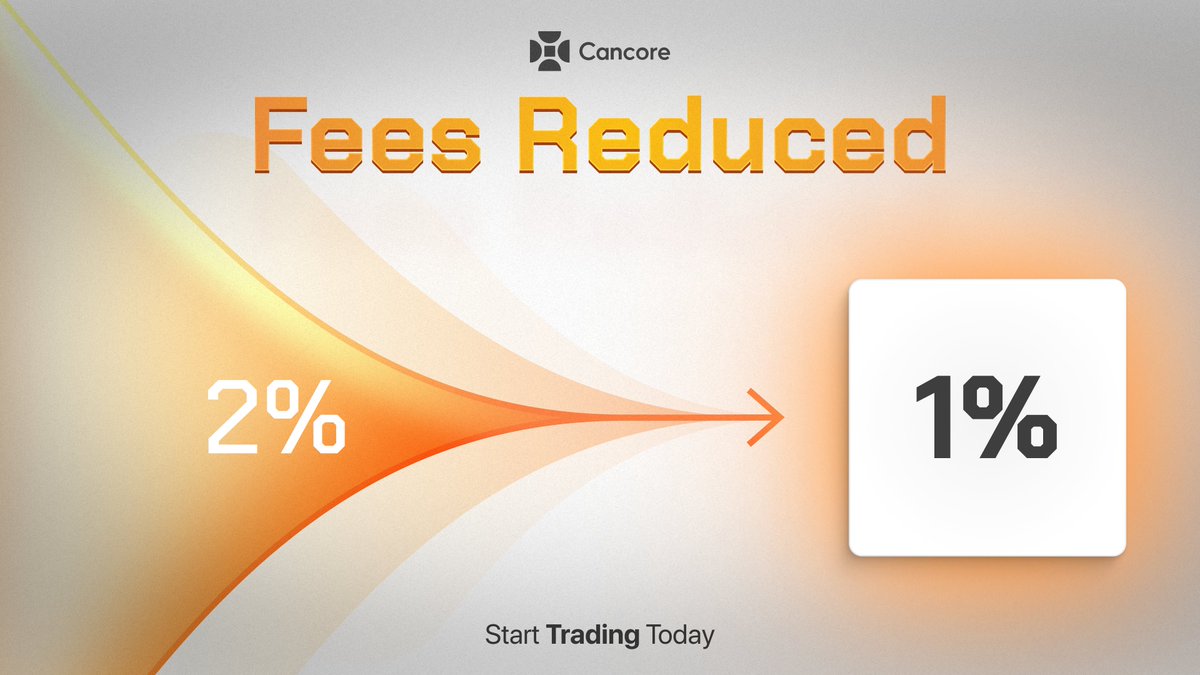
Cancore fees just got cut in half.
Since launch, the platform has processed 60,000+ swaps and $13M+ in volume – and that growing activity lets us make trading cheaper.
Swap fees are now 0.5% per side – 1% total, down from 2%.
Same atomic settlement. Same self-custody.
5 networks. 250+ pairs. Half the fees.
Live now → https://t.co/2W7TSEtrKI
Cancore is now working with @OnRailsFinance to bring ETH liquidity onto Canton.
cETH is 1:1 wrapped ETH, issued natively on Canton and audited by Consensys Diligence. onRails is powered by Digital Asset and a member of the Canton Foundation.
cETH trading is now live across multiple pairs on Cancore → https://t.co/2W7TSEtrKI
Tokenized finance is global. Cancore should be too.
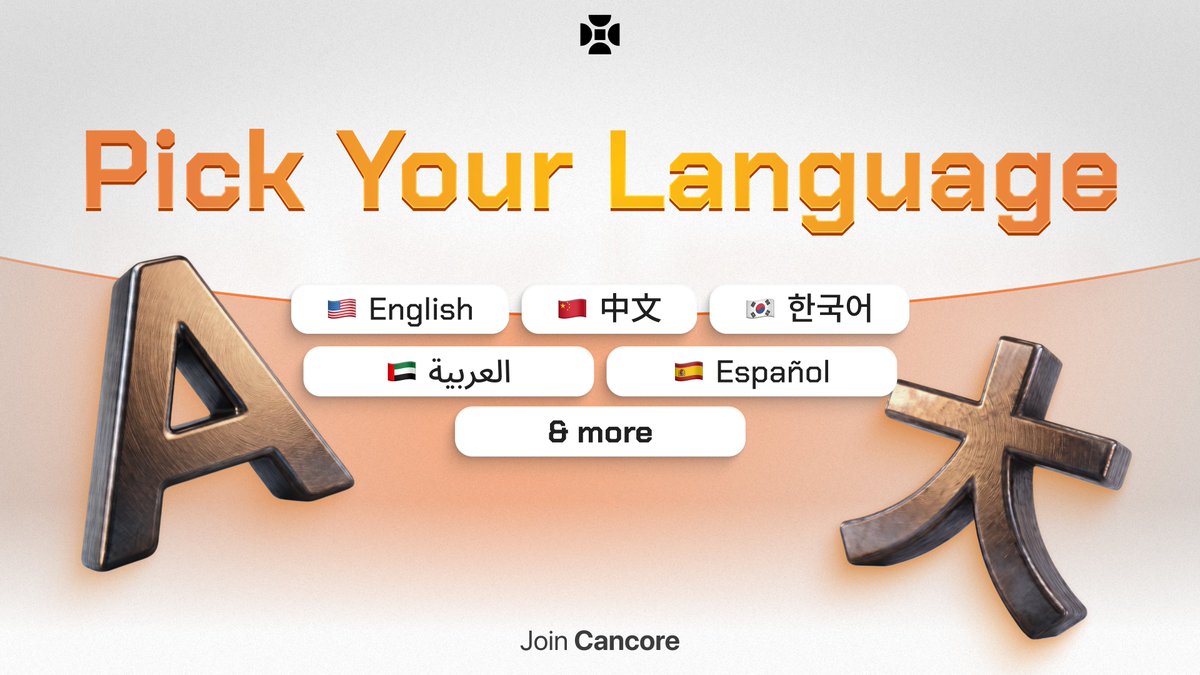
Cancore is now available in 8 languages – including English, Chinese, Korean, Arabic, Spanish, and more.
From Wallet and Trade to order flows and transaction history, the full platform experience is now localized.
Built for a global market. Now speaking its language.
→ https://t.co/2W7TSEtrKI
Recently, we shipped a new version of @cancore_io and introduced a broader way of describing what we are building: the Liquidity OS for Tokenized Finance.
When we started Cancore, we described it as a settlement layer. That was accurate at the time because settlement was the first major problem we had to solve: enabling value to move safely and atomically between networks that were never designed to operate together.
As the product developed and people began using it, our understanding of the problem became broader. Users were less interested in how settlement worked underneath and more interested in what they could actually do with their assets: where they could hold them, how they could trade or deploy them, whether they could remain in control of them, and how much of that process could eventually happen automatically.
That was an important realization for us. We had been using our hardest engineering problem to describe the entire product, when in reality settlement was becoming the infrastructure underneath a much larger system. If it works properly, users should not have to think about it.
That is how Cancore has evolved into what we now call the Liquidity OS for Tokenized Finance. Trade and Wallet are already live, with Strategies, Autopilot and more automated execution being built on top of the same settlement infrastructure. The goal is to give users one environment for accessing, moving and managing liquidity rather than a collection of disconnected tools.
@CantonNetwork remains at the center of that architecture as our institutional foundation, while public chains provide access to broader onchain liquidity, users and markets. These environments are growing quickly, but they still operate largely as separate financial systems. Cancore is being built around the opportunity to make them work together more naturally.
Tokenizing an asset solves issuance. Making that asset liquid, accessible and programmable is the next problem. That is where we see Cancore going: more networks, more asset classes and increasingly automated execution, while keeping the complexity underneath the product rather than in front of the user.
The underlying technology has not changed with this release. What changed is that the product has developed far enough for us to describe more clearly what we have actually been building.
Recently, we shipped a new version of @cancore_io and introduced a broader way of describing what we are building: the Liquidity OS for Tokenized Finance.
When we started Cancore, we described it as a settlement layer. That was accurate at the time because settlement was the first major problem we had to solve: enabling value to move safely and atomically between networks that were never designed to operate together.
As the product developed and people began using it, our understanding of the problem became broader. Users were less interested in how settlement worked underneath and more interested in what they could actually do with their assets: where they could hold them, how they could trade or deploy them, whether they could remain in control of them, and how much of that process could eventually happen automatically.
That was an important realization for us. We had been using our hardest engineering problem to describe the entire product, when in reality settlement was becoming the infrastructure underneath a much larger system. If it works properly, users should not have to think about it.
That is how Cancore has evolved into what we now call the Liquidity OS for Tokenized Finance. Trade and Wallet are already live, with Strategies, Autopilot and more automated execution being built on top of the same settlement infrastructure. The goal is to give users one environment for accessing, moving and managing liquidity rather than a collection of disconnected tools.
@CantonNetwork remains at the center of that architecture as our institutional foundation, while public chains provide access to broader onchain liquidity, users and markets. These environments are growing quickly, but they still operate largely as separate financial systems. Cancore is being built around the opportunity to make them work together more naturally.
Tokenizing an asset solves issuance. Making that asset liquid, accessible and programmable is the next problem. That is where we see Cancore going: more networks, more asset classes and increasingly automated execution, while keeping the complexity underneath the product rather than in front of the user.
The underlying technology has not changed with this release. What changed is that the product has developed far enough for us to describe more clearly what we have actually been building.
Cancore Trading Tournament is LIVE
$750 USDT in rewards. Two ways to win.
Top 5 traders by volume split $500 USDT.
5 randomly selected active traders split $250 USDT.
Every Swap counts.
Every Auto Trade counts.
Trade your way to the top, or stay active throughout the full tournament for another chance to win.
Ends August 21
Start trading now at https://t.co/2W7TSEtrKI
Cancore Trading Tournament is LIVE
$750 USDT in rewards. Two ways to win.
Top 5 traders by volume split $500 USDT.
5 randomly selected active traders split $250 USDT.
Every Swap counts.
Every Auto Trade counts.
Trade your way to the top, or stay active throughout the full tournament for another chance to win.
Ends August 21
Start trading now at https://t.co/2W7TSEtrKI
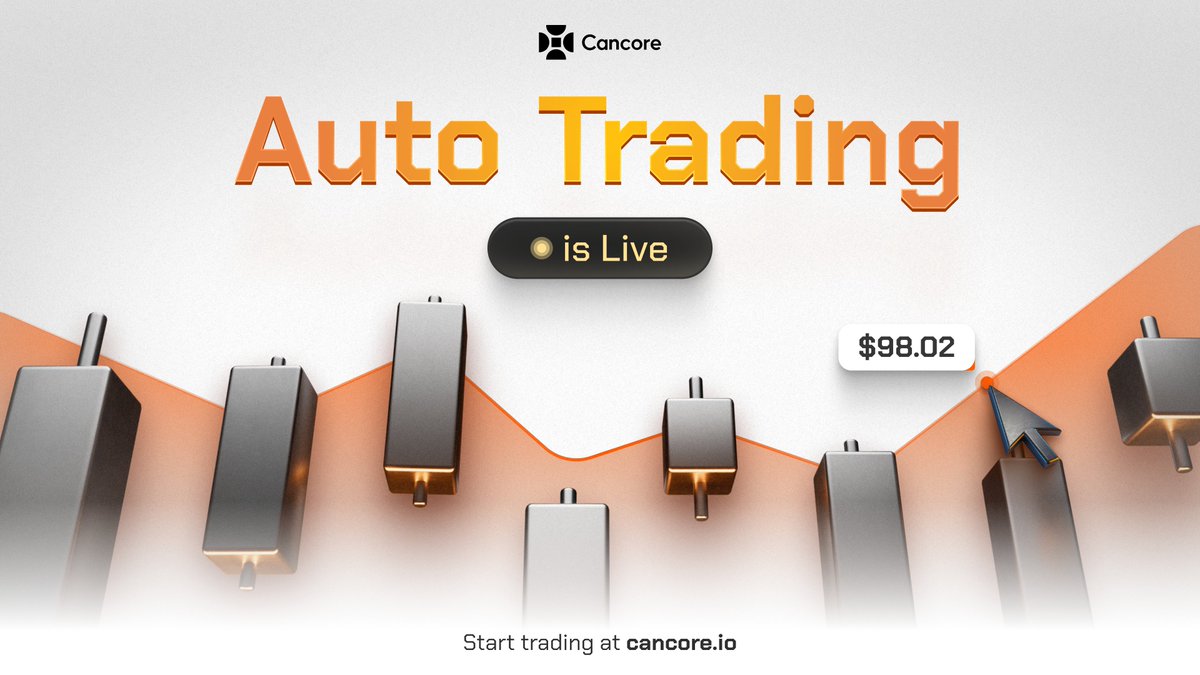
Cancore Auto Trading is live.
Auto Trading executes your order against the pool. Quoting, routing and settlement handled by the platform.
Assets stay native. No wrapped tokens, no custody.
Live now with CC / USDCx on Canton. More pairs are in development and will be added as pools launch.
Start trading at https://t.co/2W7TSEtrKI
Cancore Auto Trading is live.
Auto Trading executes your order against the pool. Quoting, routing and settlement handled by the platform.
Assets stay native. No wrapped tokens, no custody.
Live now with CC / USDCx on Canton. More pairs are in development and will be added as pools launch.
Start trading at https://t.co/2W7TSEtrKI
At the end of 2025, @cancore_io was still mostly an idea built around a simple question:
How should value move between institutional networks and public chains?
The answer was much harder than building another bridge or adding another wrapped asset. We wanted both sides to settle natively, without introducing unnecessary custody, intermediaries, or additional trust.
The first months of 2026 were spent building the parts that rarely make it into announcements: making two very different networks communicate reliably, ensuring every transaction either completes correctly or safely returns the funds, and turning complex infrastructure into a product people could actually use.
Cancore went live on mainnet in April.
Since then, the platform has been tested through real activity, real edge cases, and a long list of issues that could only be discovered after launch. Every report helped us make the system more stable, the execution more predictable, and the overall experience simpler.
At the same time, a community of more than 100,000 people formed around Cancore. For me, that remains one of the most meaningful parts of this journey. Infrastructure matters only when people understand why it should exist and choose to build, trade, and participate around it.
Canton is built for institutional markets. Public chains are where much of the global on-chain liquidity already lives.
Cancore exists to connect these two environments properly.
We are still early, and there is a lot left to build. But the direction has never been clearer.
This is only the beginning.
Introducing @cancore_zh, the official Chinese-language account for Cancore.
Follow for localized product updates, ecosystem developments, educational content, and everything happening across the Cancore community.
Genesis began with mainnet. It hasn’t stopped since.
Every swap. Every transfer. Every contribution to the Cancore community.
It all adds to the record being built onchain, and what you do today will be part of what comes next.
$CNRX is coming to anchor the Cancore ecosystem and connect everything we are building.
The next chapter is being shaped right now at https://t.co/2W7TSEtrKI