Most AI content on X/Twitter shows demos without explaining how it actually helps you.
We build AI systems that run real businesses that work smoothly in production.
Are you tired of watching generic AI content with 0 impact on your work?
Want to use AI to get real results in your work?
If the answer is yes, then this post is for you.
Hi, we’re https://t.co/CYLMkNVHYT.
We help enterprises and startups create AI systems that deliver better results.
🧵Here’s what you should know about us (read more):
https://t.co/CYLMkNVHYT
𝐇𝐨𝐰 𝐦𝐚𝐧𝐲 𝐀𝐈 𝐩𝐫𝐨𝐣𝐞𝐜𝐭𝐬 𝐡𝐚𝐯𝐞 𝐲𝐨𝐮 𝐬𝐞𝐞𝐧 𝐟𝐚𝐢𝐥 𝐝𝐮𝐞 𝐭𝐨 𝐩𝐨𝐨𝐫 𝐢𝐧𝐟𝐫𝐚𝐬𝐭𝐫𝐮𝐜𝐭𝐮𝐫𝐞 𝐩𝐥𝐚𝐧𝐧𝐢𝐧𝐠?
We are here to make that problem easier to solve.
On November 10, it introduced an expanded open-source AI-native infrastructure stack for Kubernetes and Google Kubernetes Engine (GKE).
The goal?
Bring model training, AI deployment, distributed computing, and secure AI agent execution together through one ecosystem.
--
Here are the six key components:
1. OpenRL: Helps teams train AI models more effectively using available computing resources.
2. llm-d 1.0: Helps AI models respond faster and handle more requests efficiently.
3. Ray on GKE with KubeRay: Makes it easier to manage large computing tasks and scale resources when needed.
4. Agent Substrate: Helps manage AI agents, their tasks, and the environments in which they operate.
5. gVisor: Adds an extra layer of security when AI agents run computer-generated code.
6. TorchTPU: Makes it easier for developers to run PyTorch models on Google Cloud's AI hardware.
--
Why does this matter for businesses?
Consider an enterprise building AI agents for legal document analysis.
It needs to train models for specific tasks, serve multiple users without delays, manage computing resources efficiently, and safely run code generated by AI agents.
These components address different parts of that challenge.
AI infrastructure is evolving beyond simply deploying models.
But training efficiency, faster responses, better resource management, and stronger security are important.
If you were building an enterprise AI platform today, which would be your biggest infrastructure priority?
𝐈𝐧 𝐣𝐮𝐬𝐭 3 𝐰𝐞𝐞𝐤𝐬, 𝐰𝐞 𝐢𝐦𝐩𝐫𝐨𝐯𝐞𝐝 𝐨𝐮𝐫 𝐀𝐈 𝐚𝐠𝐞𝐧𝐭'𝐬 𝐫𝐞𝐬𝐩𝐨𝐧𝐬𝐞 𝐪𝐮𝐚𝐥𝐢𝐭𝐲 𝐛𝐲 25%.
Here's how:
Building an AI agent is one challenge. Knowing whether it's performing well is another.
Many teams use different metrics and testing methods to evaluate AI agents, making it difficult to compare performance, identify weaknesses, and measure improvements.
To solve this, we are here to address it with the Universal Agent Evaluation Framework (UAEF).
Introduced on November 11, 2026, UAEF offers a framework approach to evaluating AI agents.
--
Here's what makes it valuable:
1. Standardized evaluation across frameworks -
UAEF supports LangGraph, LangChain, Strands Agents, Amazon Bedrock AgentCore, and Langfuse, converting execution records into a common format.
2. Evaluate more than response accuracy -
It includes 36 built-in metrics across 7 dimensions:
→ Tool calling
→ Response quality
→ Responsible AI
→ Performance
→ Multi-turn conversations
→ Multi-agent coordination
→ Reasoning
This helps developers understand how their agents perform beyond simple response accuracy.
3. Track improvements and catch regressions -
Using Amazon DynamoDB and Amazon S3, UAEF stores evaluation results, helping teams compare agent versions, identify performance regressions, and guide further improvements.
--
Why does this matter?
As AI agents handle increasingly complex tasks, developers need consistent ways to measure reliability, efficiency, safety, and task completion.
In our view, UAEF is an important step toward making AI agent evaluation more consistent and measurable.
What matters most when evaluating an AI agent?
𝐖𝐞 𝐥𝐨𝐬𝐭 𝐨𝐯𝐞𝐫 £50,000 𝐥𝐚𝐬𝐭 𝐲𝐞𝐚𝐫 𝐛𝐞𝐜𝐚𝐮𝐬𝐞 𝐨𝐟 𝐨𝐧𝐞 𝐦𝐢𝐬𝐭𝐚𝐤𝐞:
We didn't set up GPU workload checkpointing.
--
Here are the 3 steps that would have saved us (and will save you):
1. Stop initializing the same workload repeatedly -
Every time an AI inference replica starts from scratch, it needs to load model weights, initialise the inference engine, compile kernels, and capture CUDA graphs.
This can take several minutes.
Its new Snapshot system solves this by capturing an initialised GPU workload, including its CPU and GPU memory state.
Instead of repeating initialization, you can restore the saved state.
2. Make GPU workloads reusable across Kubernetes replicas -
Snapshot introduces checkpoint and restore capabilities for GPU workloads running on Kubernetes.
Here's how it works:
- Checkpoint: Capture a fully initialized GPU workload as a reusable artefact.
- Restore: Launch another compatible Pod using that saved state.
- Resume: Continue execution without repeating model loading, compilation and graph capture.
3. Accelerate scaling and recovery -
Imagine your AI application suddenly experiences a traffic spike.
You need additional inference replicas, but initializing them from scratch creates delays.
With its Snapshot, compatible workloads can be restored in seconds.
--
In November 2026 benchmarks, restoration took just 3.6 to 42.7 seconds, delivering 8x to 36x faster startup than cold starts across tested configurations.
That's a huge difference for teams managing demanding inference workloads.
But here's what matters most:
The future of AI infrastructure isn't just about having more GPUs.
It's about getting more productive capacity from the GPUs you already have.
Are your Kubernetes environments still paying the initialization cost every time an inference replica starts?
Perhaps it's time to rethink your approach to GPU workload management.
What's your biggest obstacle when scaling AI inference?
@BatsouElef@coderabbitai This is a main issue for open source. It's good to see initiatives like this addressing the need for faster defense in public code.
𝐈𝐟 𝐲𝐨𝐮𝐫 𝐀𝐈 𝐦𝐨𝐝𝐞𝐥 𝐭𝐚𝐤𝐞𝐬 𝐥𝐨𝐧𝐠𝐞𝐫 𝐭𝐨 𝐞𝐯𝐚𝐥𝐮𝐚𝐭𝐞 𝐭𝐡𝐚𝐧 𝐭𝐨 𝐛𝐮𝐢𝐥𝐝, 𝐭𝐡𝐞 𝐩𝐫𝐨𝐛𝐥𝐞𝐦 𝐢𝐬𝐧'𝐭 𝐭𝐡𝐞 𝐦𝐨𝐝𝐞𝐥.
Most teams still use full LLMs to get a simple "yes" or "no" check.
That means paying for slow text generation when all you need is a quick decision.
That's why innovations like Gemini Decisions API matter.
It points towards a more efficient way to evaluate AI outputs without relying on lengthy text generation for every decision.
--
Here's how:
1. Decisions without lengthy generation -
The API evaluates predefined questions and returns probabilities and confidence scores.
2. Multimodal evaluation in one pass -
It can process text, images, audio, video, and PDFs.
Developers can evaluate up to 1,000 independent questions against a shared input in a single request.
3. Faster, more cost-efficient workflows -
Google reports end-to-end latency of 150–250 milliseconds in its testing.
The API costs $0.10 per million input tokens, with zero output-token charges.
--
For instance:
Imagine an insurance company processing a claim.
Instead of running separate AI calls to inspect damage photographs, review a scanned claim document, and assess policy conditions, developers can evaluate multiple predefined checks against the combined multimodal input.
That's a practical way to reduce unnecessary AI processing while keeping humans involved where judgment matters.
The next step in AI efficiency is choosing a better way to make decisions.
Email us at [email protected] to connect with our team and explore how AI-powered evaluation and multimodal capabilities can be integrated into your operations.
𝐖𝐚𝐢𝐭𝐢𝐧𝐠 𝐟𝐨𝐫 𝐚 𝐝𝐚𝐭𝐚 𝐛𝐫𝐞𝐚𝐜𝐡 𝐭𝐨 𝐚𝐮𝐝𝐢𝐭 𝐲𝐨𝐮𝐫 𝐀𝐈 𝐬𝐲𝐬𝐭𝐞𝐦𝐬 𝐢𝐬 𝐥𝐢𝐤𝐞 𝐜𝐡𝐞𝐜𝐤𝐢𝐧𝐠 𝐲𝐨𝐮𝐫 𝐛𝐫𝐚𝐤𝐞𝐬 𝐚𝐟𝐭𝐞𝐫 𝐚 𝐜𝐫𝐚𝐬𝐡.
By the time you notice an issue, the damage is done.
--
3 risks you can't ignore, even if you want to:
a) Unsecured AI models and sensitive data -
AI systems process valuable business information. Weak data governance, inadequate access controls, and exposed integrations can put confidential information at risk.
b) Uncontrolled AI agents -
Autonomous AI agents can interact with tools, APIs, and enterprise systems. Without proper permissions and monitoring, their actions can create security risks.
c) Compliance gaps and delayed incident response -
Without proper audit trails, security monitoring, and incident-response procedures, organisations will struggle to investigate breaches and meet reporting obligations.
--
And India's cybersecurity regulator is taking this seriously.
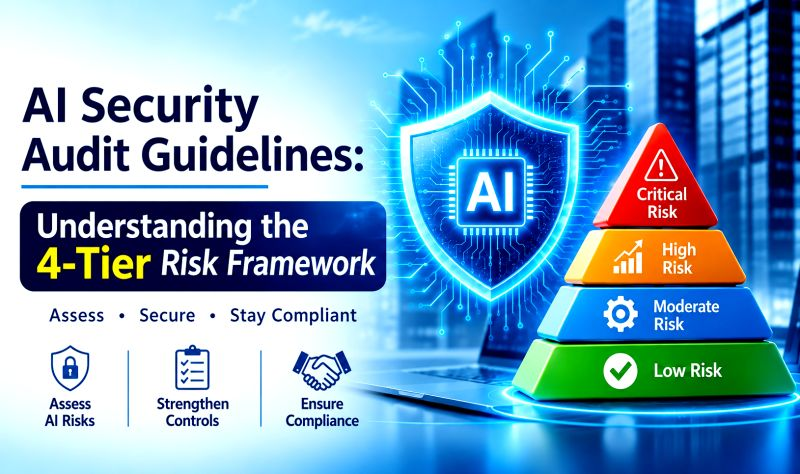
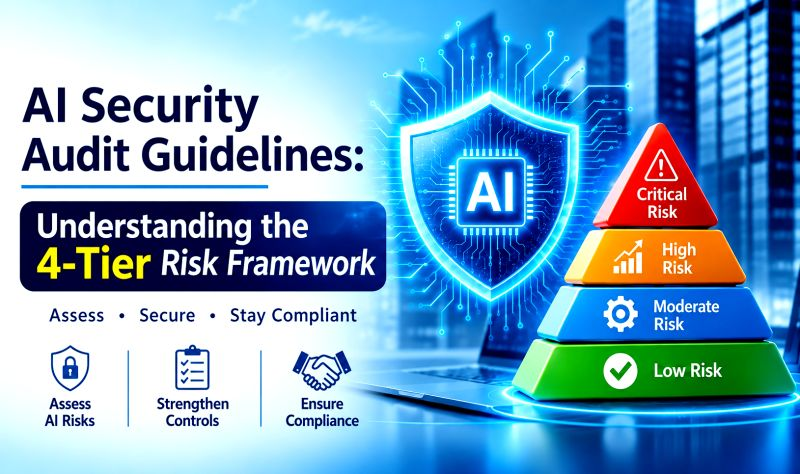
On November 4, 2026, it released its Artificial Intelligence (AI) Security Auditing Guidelines, Version 1.0.
--
Here's what makes them significant:
-> AI systems are classified into four risk categories: Low, Moderate, High, and Critical.
-> Security assessments cover 9 key audit domains, including governance, data management, privacy, model risks, fairness, and explainability.
-> Generative AI and agentic AI receive dedicated security considerations.
-> Organizations need stronger audit trails, continuous monitoring, and accountability.
--
Reportable AI-related security incidents must be reported within 6 hours.
What should enterprises do now?
Start creating an inventory of every AI system deployed across your organization.
Then classify each system by risk, review access permissions, assess third-party integrations, and establish documented security testing and incident-response procedures.
For example, if your organization uses an AI agent connected to internal databases, verify exactly what information it can access, which actions it can execute, and whether those actions are logged and reviewable.
AI adoption without security assurance can turn operational efficiency into organizational exposure.
Click the link in the comments below to explore how we can help your organization navigate enterprise AI, strengthen its security posture, and build with confidence.
Email us at [email protected] for further assistance.
𝐘𝐨𝐮𝐫 𝐜𝐨𝐦𝐩𝐚𝐧𝐲 𝐰𝐢𝐥𝐥 𝐬𝐭𝐫𝐮𝐠𝐠𝐥𝐞 𝐭𝐨 𝐚𝐝𝐨𝐩𝐭 𝐀𝐈 𝐢𝐟 𝐲𝐨𝐮 𝐝𝐨𝐧'𝐭 𝐬𝐭𝐚𝐧𝐝𝐚𝐫𝐝𝐢𝐬𝐞 𝐲𝐨𝐮𝐫 𝐛𝐮𝐬𝐢𝐧𝐞𝐬𝐬 𝐭𝐞𝐫𝐦𝐢𝐧𝐨𝐥𝐨𝐠𝐲.
Do this instead:
Give every critical business term an approved definition that your people, analytics tools, and AI agents can share.
That's exactly what we do: Business Ontology.
Here's why:
For instance, your finance team defines net revenue one way. Your sales dashboard calculates it differently. And your AI agent produces a third interpretation.
Now, which number should your leadership team trust?
This shows how your organisation defines and communicates business knowledge.
--
It provides a governed layer where organisations can:
→ Define and approve business terms, concepts, and metrics.
→ Assign ownership to important business definitions.
→ Connect those definitions to the underlying tables, views, and semantic models.
→ Give AI agents access to approved business context instead of leaving them to interpret competing definitions.
--
What does it mean?
1. More consistent AI-driven analytics: Finance, sales, and operations agents could interpret shared business metrics using approved definitions.
2. Better data governance: Organisations will track who owns a definition, who approved it, and where it's implemented.
--
But here's something worth considering:
Standardising terminology doesn't mean forcing every department to use identical definitions.
Different business units may have legitimate reasons for defining metrics differently. The real objective is making those differences explicit, governed, and accessible to AI systems.
The lesson is:
AI adoption is about ensuring AI understands what your business actually means.
Follow https://t.co/sDzIELVwDS for more insights on enterprise AI, data governance, machine learning, and emerging technology shaping the future of business.