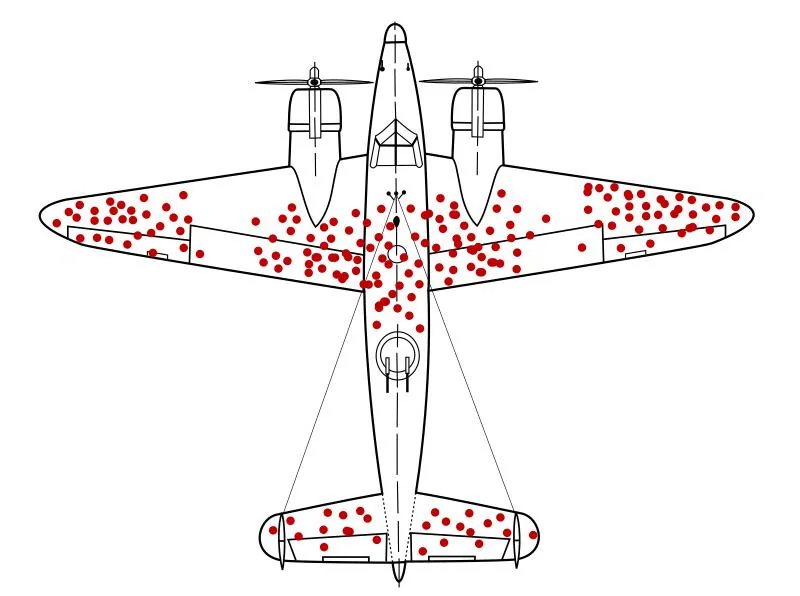
It comes down to what @poteto keeps saying. If the agents can verify the code they can fix it. Similary, if they can experiment on the code, they can debug it. In the case of complex failures in large systems, you need a way to reproduce failures in test (e.g. with DST). Once you can do that, the agents are better and faster at debugging than you are.
If all the agent has is log access (no ability to perform experiments), it is ~50x faster than you, but possibly not better, in that there may still be some issues you could figure out that it can't.
Debugging capabilities have been somewhat slept on imo - in a system where the agent can iterate effectively, they have been at or above human level for 9 months or so.
@sjsharpe22@AftermathFi@SuiNetwork Yes, step 2 is cutting the cost of reading package bytes. CLOB packages are large, so using them at all had a large fixed cost. We are also cutting the cost of input package bytes by 99%, this will go live in 1.82
@gadwell_eth As head of hashi, I humbly ask to adjust your model. We will open the rails of Bitcoin held in Qualified Custody to Fluid. That's 4.6M coins, or ~$400B in capital that is suddenly fungible BTC collateral on Fluid to access loans or deploy in hBTC (hashi BTC) yield vaults. $SUI
I was using ChatGPT for legal advice and it decided to completely hallucinate some preposterous nonsense about how growing wheat to use on my own farm somehow constitutes interstate commerce
Effective Altruism is the natural enemy of the left and right because the right doesn't believe in altruism and the left doesn't believe in effectiveness.
Our white hat Base64 malleability ASIA CCS 2022 hack is unfortunately applied in practice to attack JWT authentication
https://t.co/CfTg99HtT7
4 years later, the exact attack surfaced in the wild, a real authentication vulnerability in FileBrowser, via golang-jwt, where changing only unused Base64URL padding bits produced a different JWT string with the same valid signature, bypassing logout revocation. Even if I mentioned a million times even on twitter "watch out, this attack is more subtle than it seems", humans tend to overlook, but now AI doesn't forgive.
Unfortunately, I know where else it can harm web logins and informed affected bank's admins. Please follow me and read carefully, do continuous audits, please, please!
I told you, Mysten Labs is helping the whole internet, not just blockchains
@atoi6664 If you could rebuild the same bridge 8000 times and empirically test all the things that can make it fail, we probably wouldn't know much about concrete either.
We started building @AftermathFi more than 4 years ago because the end state to us was obvious: markets should live onchain and it is inevitable that they will live onchain.
Not “settled onchain”.
Not “a proof arrives later”
Not “well some of it is onchain”
The actual market will live onchain. That means orders, machine, liquidations and custody. All of it.
Four years later, our belief is stronger than ever.
Aftermath has not had the easiest route to where we are today. We’ve had delays, rewrites and setbacks each of the four years we’ve been building. And yet, we kept building anyway. Many of our early supporters gave up on us long ago and yet we’ve done the one thing all the OG crypto heads tell you is most important: we’ve survived.
Aftermath is still here and in reality we’re just getting started.
Perhaps most notably is that we’ve done this without raising an infinite war chest of capital and selling our token supply indiscriminately.
In 2022, we raised a $3.4M seed round and sold just 18% of the token supply. That was enough to build without manufacturing the appearance of PMF. A useful constraint it turns out.
It also leaves us in an enviable position. Today, Aftermath Perps has:
• zero paid external market makers
• zero private points deals
• zero token-for-volume agreements
• zero off-book liquidity incentives
There are no hidden multipliers and no preferred firms quietly farming a different game than everyone else.
Everything you see (volume, OI, liquidity) is available to everyone. gfLP is not some disguised external market-making desk. It is an onchain, community-accessible liquidity vault. Anyone can participate and is subject tot he same rules, risks and rewards.
We know running a serious and legitimate perp venue can be expensive. We’re fortunate enough to have support from the Sui Foundation and those incentives are passed directly back to users, not carved into private side agreements. Traders & LPs compete in public with all the incentives completely visible to the entire market.
Everyone in crypto is always looking for +EV activity. Upwards of 30% of token supply is available to participants through the points program. You don’t even need to believe in our thesis. Provide liquidity. Bring taker flow. Grow healthy and organic open interest. Improve the market.
If Aftermath wins, users will win and likely in an outsized way.
Most readers will care more about that first section than what comes next, but coming back to our original belief that markets will move completely onchain, the distinction with Aftermath is architectural.
Everything material on Aftermath Perps happens onchain. Orders, matching, positioning, liquidations, settlement. There is no Aftermath sequencer or nodes you need to trust. You don’t have to believe us to see what has actually occurred.
You don’t have to use our API. That isn’t bypassing Aftermath it is our system working exactly how we intend the system to work.
We’ve spent an ungodly amount of time making sure the protocol is legible to machines. The docs, SDKs, schemas and LLM-friendly tooling let integrators and agents understand the contracts and buildout completely without our influence.
Truly open systems should be easy to inspect and extend, and this is the world we want to live in.
Our v1 proved that a truly, fully onchain order-book perp venue could work. V2 made it substantially more efficient.
Our v3 is coming in November and includes: cross margin, portfolio margin and support for collateral beyond USDC, all inside a unified account.
Each version is moving us closer to the original vision.
Despite what many think, Perp DEXs are not all the same. They all have:
• different sequencing
• different trust assumptions
• different liquidity arrangements
• different (warped) definitions of “onchain”
Aftermath chose the difficult version deliberately. If that matters to you, come trade, build or LP. You can do so in your own self-interest.