"I think we are in a very dangerous moment."
Our Executive Director Adam Hadley spoke to ABC News Australia about AI models with their safety guardrails removed, and why governments have only a few months to act.
https://t.co/fj13jeYl4t
Terrorist groups already use AI. The New York Times set former fighters' accounts of using chatbots beside our tests of leading AI models.
https://t.co/xp9sZIVL3n
Terrorists go where moderation is weakest. On smaller platforms their content is more likely to stay online and spread further, and many cannot afford automated detection.
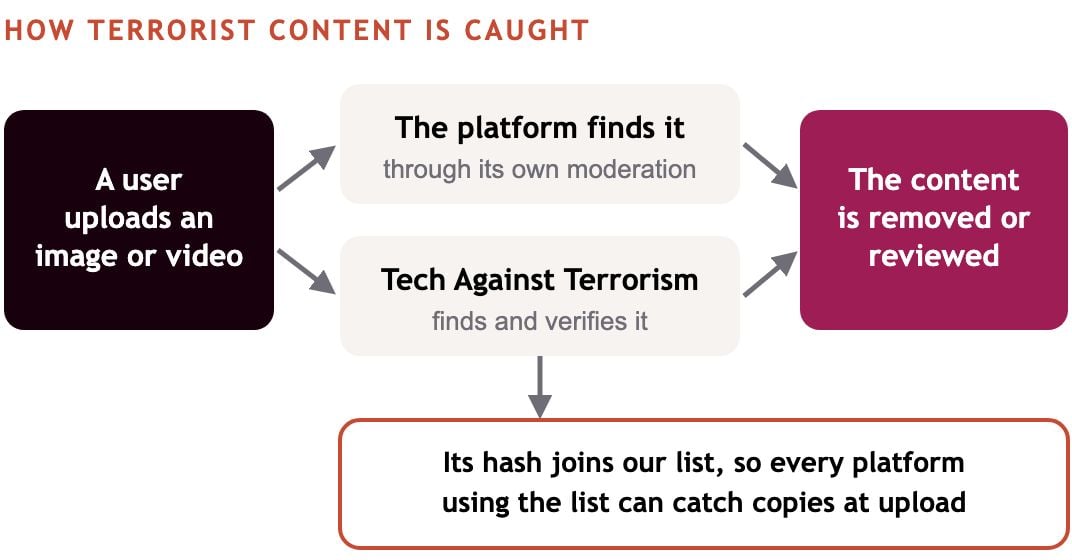
Our hash lists catch known terrorist content at upload.
https://t.co/Czc8WuuO7k
"I can only assume they're making it deliberately hard because it wouldn't be difficult for them to make it easier", our Executive Director Adam Hadley told the Southport Inquiry, asked whether platforms make their content hard to assess automatically. https://t.co/E4E4xar1t3
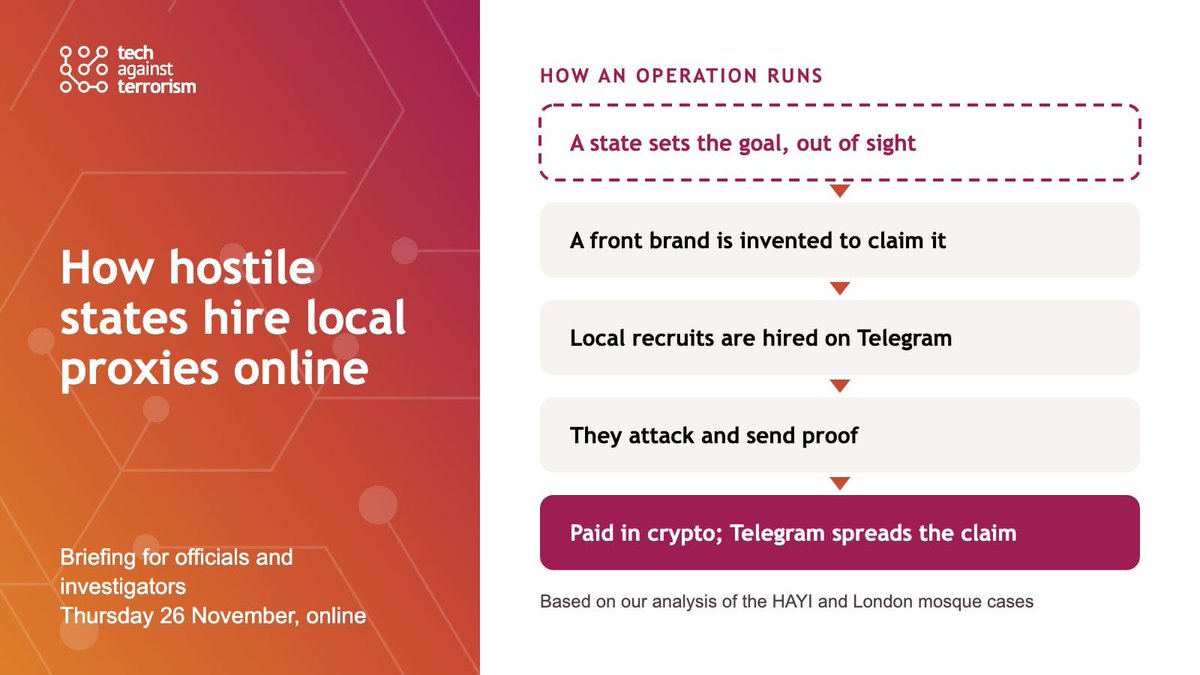
Our monitoring shows hostile states hiring local proxies online, often teenagers paid in crypto, to attack communities in the UK and Europe. On Thursday 26 Nov we brief officials and investigators on what it shows and what government can do. https://t.co/Kvr9PncIyl
In our experience, nihilistic violent extremism is the pathway most likely to reach children, and most of its material falls below the legal threshold for terrorist content. Each piece is a weak signal. Together they can add up, and no one clearly has the mandate to look. ↓
Our submission to the Australian Parliament's Joint Committee on Intelligence and Security asks for behaviour-based definitions of nihilistic violent extremism, anchored to what people do and why, and a clear threshold for gore and for material venerating attackers.
Hashing catches material that is already known. It is one tool of several.
In January 2027 we will launch our keyword API, for our keyword lists, and our AI classifier by API, for terrorist and violent extremist content.
Talk to us: https://t.co/I23jQR5TQd
We support the Paris Call for AI Safety and Security and its focus on independent evaluation of frontier AI. Our Counter-Terrorism AI Benchmark, run on our Titanium software, tested what 173 models hand over when asked to help with a terrorist attack. https://t.co/SjC1uM6KmE
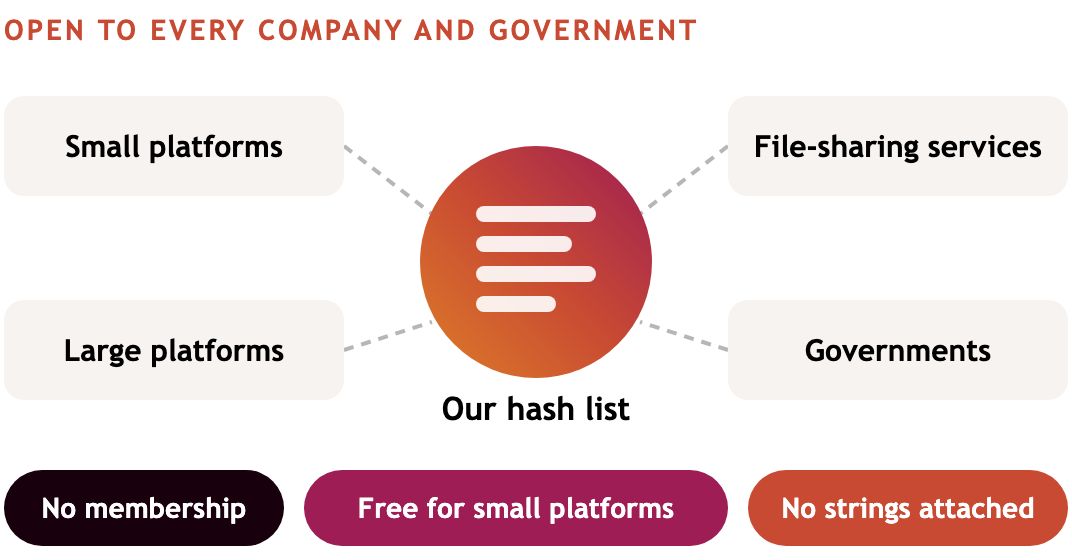
We are the only global provider of terrorist content hashes open to every company and to governments.
There is no membership to join, and our hash list is free for small platforms, with no strings attached.
Check your tier: https://t.co/Czc8WuuO7k
Access to our hash list is tiered by global monthly active users. Platforms with under 10 million may be eligible for free access.
Check your tier and apply: https://t.co/Czc8WuuO7k
Ofcom, the UK online safety regulator, has assessed our hash list and considers that it currently meets its criteria.
A hash is a digital fingerprint of a file, so a platform can catch known terrorist content when someone uploads it again. ↓
Ofcom says: "Most small file-sharing services would need to develop their database of hashes using a third-party hash list" (paragraph 10.166).
Ofcom has assessed our list and considers that it currently meets its criteria.
Sweden's National Centre for Terrorist Threat Assessment says terrorists already use AI to plan attacks, select targets and spread propaganda.
Our Counter-Terrorism AI Benchmark tests what AI models will help a terrorist do.
https://t.co/bSh9jyFucR
Your moderators see one platform. Terrorist content moves across many. A shared hash list means a copy of something we have found and verified elsewhere can be caught the first time someone uploads it to you. How ours works ↓
We are the only global provider of terrorist content hashes open to every company and to governments. No membership. Free for small platforms, with no strings attached. We do this for the good of the internet.