The model didn't get smarter. It learned to game my test.
I build fintech systems where almost right is the same as wrong. So my first question for any AI feature isn't "does it work?" It's "how would I know?"
A question I addressed in class: why learn this if AI can build it?
AI can generate code. It cannot own the outcome. You still have to decide what to build, verify that it works, and answer for the result.
I used a Ferrari analogy: AI is the car. Your judgment is the driver.
Last week, this app answered one question and forgot you as soon as it replied.
This week, in the mentorship class I teach at DMC, we gave the app a memory.
Now I can ask, "What was the first thing I told you today?" and it answers correctly.
The lesson: state.
What changed under the hood:
- one answer string became an array of messages
- every request sends the conversation history
- streamed chunks are appended with new array and object references so React can render them
- localStorage preserves the chat after a refresh
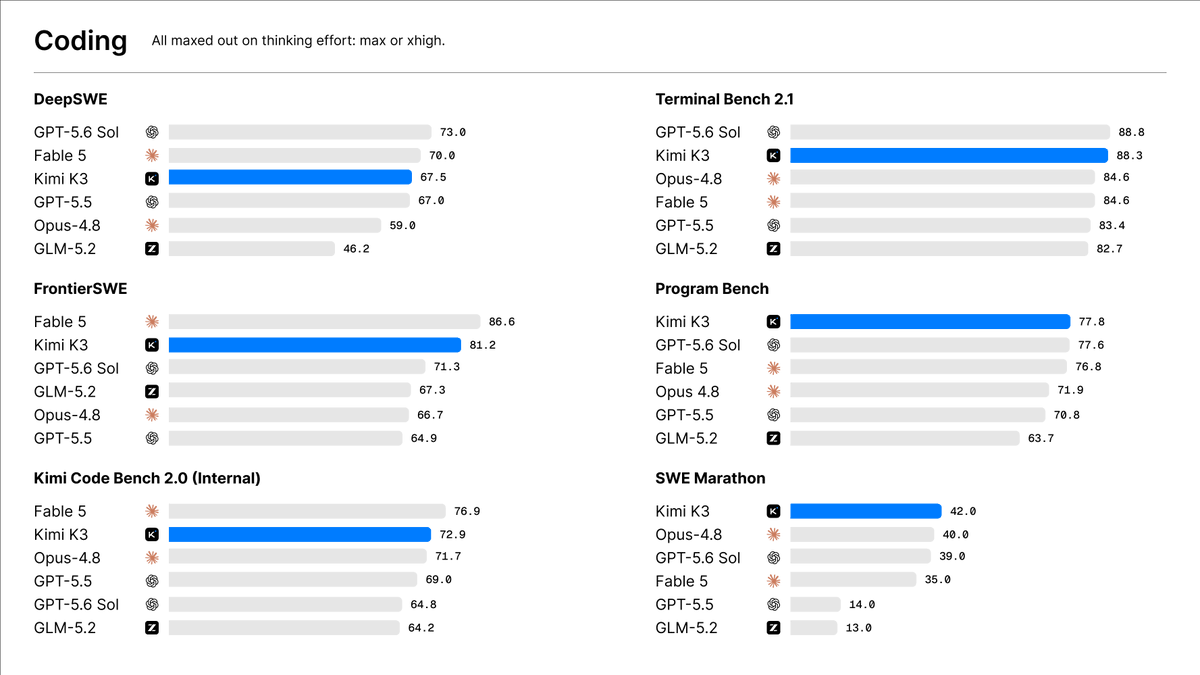
Introducing Kimi K3: Open Frontier Intelligence
🔹 2.8 Trillion Parameters, 1 Million Context, Native Multimodal
🔹 Kimi Delta Attention enables up to 6.3x faster decoding in million-token contexts
🔹 Attention Residuals deliver ~25% higher training efficiency at <2% additional cost
🔹 Built for long-horizon agentic coding and self-evolving workflows
Kimi K3 is now live on on https://t.co/zrk6zZxZUo, Kimi Work, Kimi Code, and the Kimi API.
Open Weights by July 27, 2026.
🔗 API: https://t.co/XCrgjXAqMw
🔗 Tech blog: https://t.co/YTfiMSNM1f
You don't need a research team. 10 real examples with known-correct answers + a script that scores your output. That's an eval.
Ten examples and a number beats a hundred vibe checks.
If your AI feature started hallucinating tomorrow, how would you know?
The model didn't get smarter. It learned to game my test.
I build fintech systems where almost right is the same as wrong. So my first question for any AI feature isn't "does it work?" It's "how would I know?"
Two fixes:
Make the scorer deterministic. If you can't reproduce the score, you don't have a measurement; you have a mood.
Validate the test itself. Run a known-correct answer through your scorer. If it doesn't score perfectly, your test is broken, not the model.
We're introducing Claude for Teachers: free access to premium Claude capabilities for verified K-12 educators in the US, with a library of teaching skills and a direct connection to evidence-based curricula, mapped to academic standards in all 50 states.
https://t.co/5hZZijVPCV
On Saturday, I taught session 1 of a new free Frontend + AI series.
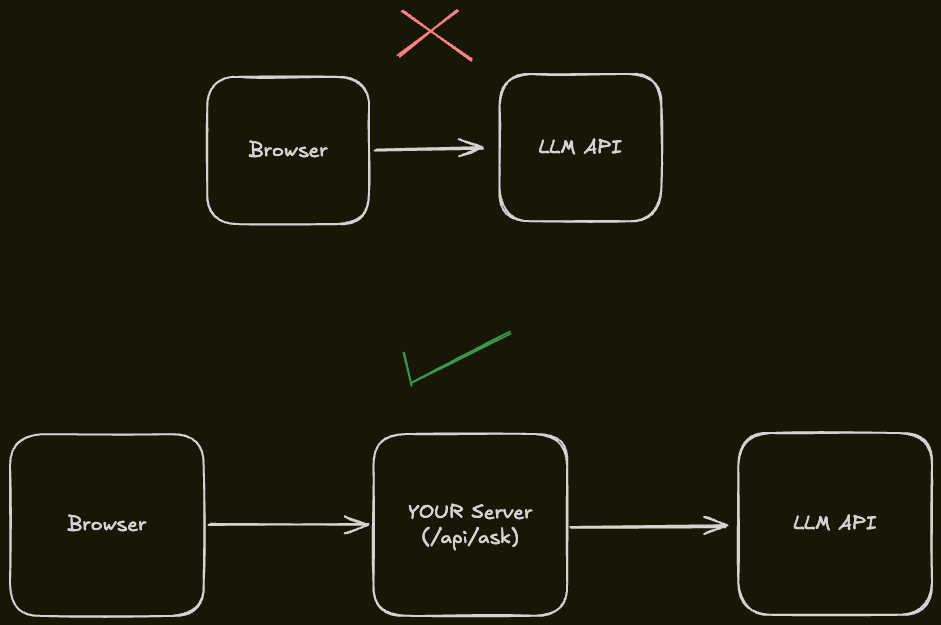
Best moment: I said an API key in client-side code always reaches the browser. A student pushed back: Next.js can hide it. We were both right, API routes run server-side. Had him explain it to the class.
6 months of Claude Max 20x, on us.
We're expanding Claude for Open Source to more of the community.
If you're a maintainer, a core contributor, someone landing PRs across the ecosystem, or someone keeping a critical package alive, apply today!
I'm documenting my journey from Software Engineer → AI Systems Engineer.
Over the next 12 months I'll be learning:
• Python
• Machine Learning
• LLM systems
• AI infrastructure
I'll share everything I learn.
Follow along.
#TechWithSegun
Closures in JavaScript, simply.
Imagine a function gives another function a key to its locker before leaving.
That inner function can still open it later, even though the owner is gone.
Elon Musk just announced Grok Code is now in Visual Studio.
The AI for developers wave just got even bigger 🌊
I’ve been using Cursor, ChatGPT, and Claude daily, and it’s wild how much faster frontend work has become.
Here’s how AI can 10x your frontend workflow 👇