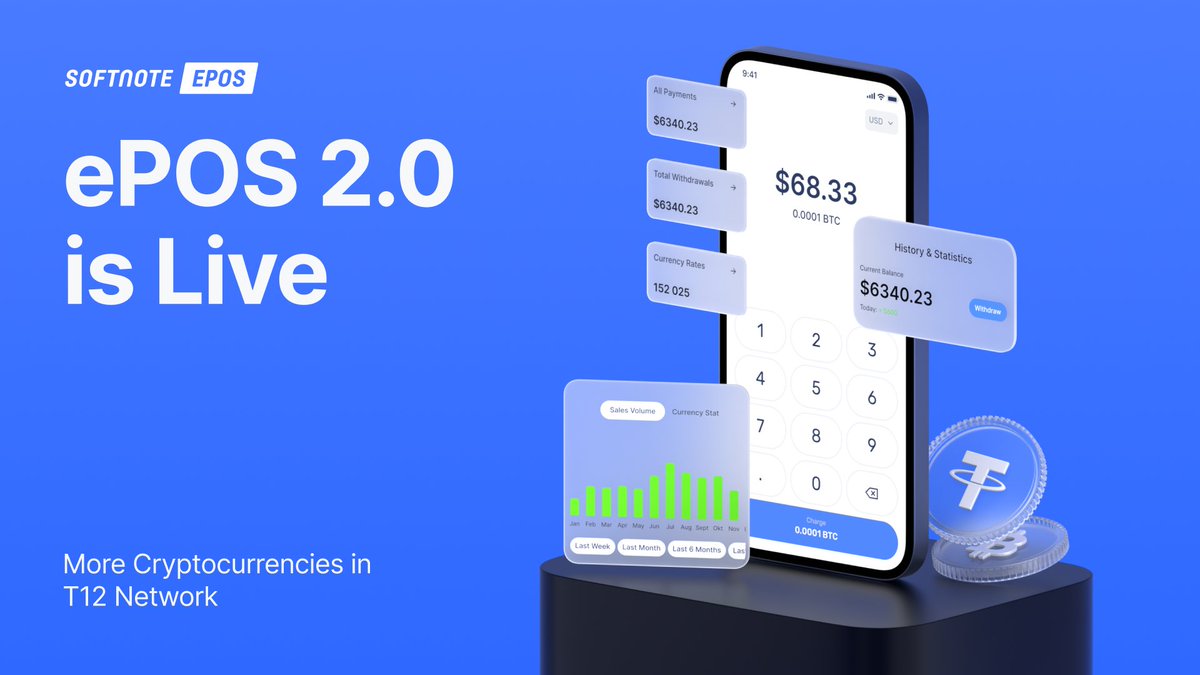
SoftNote ePOS 2.0 is LIVE NOW
https://t.co/g6SkFkkNFP
All t12 cryptocurrencies, choose exactly how you want to receive your payment - TRX, ETH, BTC, BNB, SOL, USDT!
Fancy becoming a merchant? Able to connect us to a merchant?
DM us today and start shaping the future of crypto today.
#SoftNote #Tectum $TET $TCT
While we are busy working on the latest developments, we are proud to announce that we have already acquired first BSK customers AAAAND the card integration is set to go live soon
So, randomness, huh?
Part 3 is here
Keys 101, part 3.
Computers are built to be predictable: same input, same output, every time.
Great for running software.
A real problem when you need a number nobody can predict, like a private key.
Keys 101, part 4.
Real randomness comes from physics: electrical noise in circuits, radioactive decay, atmospheric static.
One large internet company even films a wall of lava lamps to feed its random number generator.
Stablecoins 101, part 3.
What are stablecoins actually used for? Sending money across borders in minutes.
Holding dollars where the local currency keeps losing value.
Paying and getting paid any day of the week. Less speculation, more plumbing.
Cash 101, part 3.
Can digital money behave like a banknote?
The hard part: a digital file can be copied, a banknote can't. Solving that without a bank in the middle is the problem SoftNote was built around.
Stablecoins 101, part 2.
How does USDT or USDC stay near $1?
Reserves and redemption.
Issuers hold assets like cash and short-term US Treasuries, and approved holders can swap tokens back for dollars.
If the price drifts, traders close the gap.
Cash 101, part 2.
Card payments and bank transfers don't move money the way a banknote moves.
They update balances in accounts.
Banks, card networks and processors sit in between, and payments can take days to settle or be reversed.
Cash 101, part 1.
A banknote doesn't know who you are. Whoever holds it owns it, and handing it over settles the payment on the spot.
No bank in the middle, no approval, no record. That property has a name: bearer money.
Kind reminder: our weekly AMA is set for 4 pm today
Let's discuss what happened with Binance and how TectumKeys eliminates any risks related to security
Stablecoins 101, part 1.
A stablecoin is a crypto token built to hold a steady value, usually one US dollar.
It moves like crypto: any hour, any day, across borders. It's priced like cash.
USDT and USDC are the two largest.
Keys 101, part 2.
Entropy is a measure of unpredictability. One fair coin flip carries 1 bit of it.
A strong private key carries 256 bits: as unpredictable as 256 coin flips in a row.
Anything less and the key is easier to guess.
@MJStacking Security remains one of the biggest challenges facing the crypto industry. Incidents like these highlight why stronger infrastructure, transparency and user asset protection must remain top priorities as adoption grows!
Privacy 101, part 3.
Tonight, half the world wears a mask, and nobody finds it suspicious.
Financial privacy works the same way.
You don't post your salary or bank statement online. Wanting that for your crypto is just as normal.
~3.5 million Bitcoin are gone forever.
Lost keys. Dead hard drives. Forgotten passwords.
That's 1 in 6 BTC that will ever exist — ~$280B at today's price.
Bitcoin's real cap isn't 21M. It's closer to 17.5M.