@jkenney The incoming meteor of the midterms is catching his attention. His administration is now desperate for a deal. As they say, if we're taking flak, it means we're over the target.
@johnkonrad Numbers without percentages, and percentages without the numbers are meaningless. But editors are counting on inummeracy in their readership.
@TheRealDuke4U Father of a converted NEP recruit. RCN managed to convince him to roll into a longer contract. Not sure how successful RCN is in converting NEP, but the initial 1yr contract allows opportunities for RCN to sell the story.
@johnkonrad The best thing about this entire dumpster fire is that the grievance studies crazies won't be happy until it's put out of business - and they'll still blame it on the patriarchy.
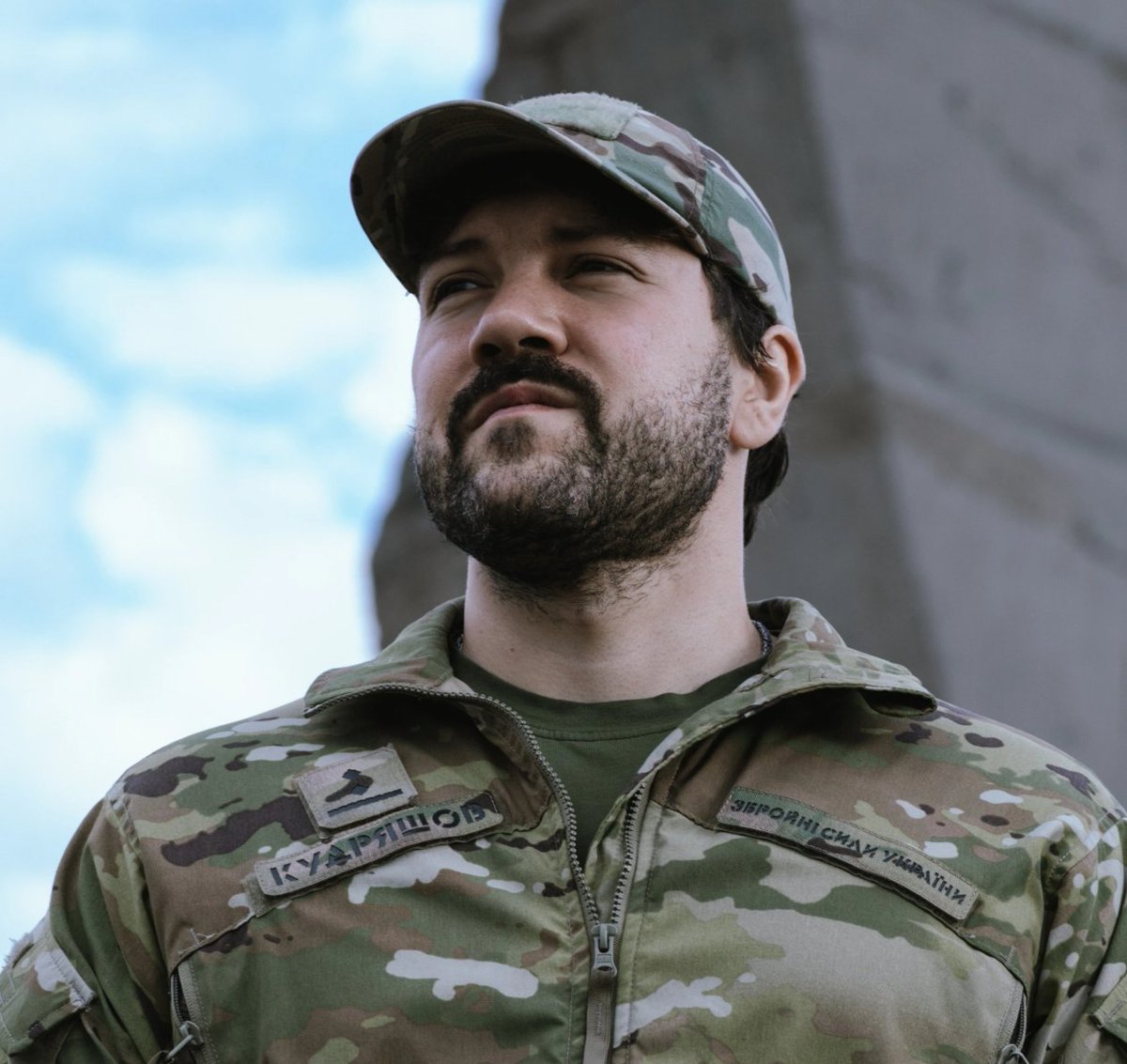
Rodion Kudryashov, a Ukrainian colonel and deputy commander of the Third Army Corps, has written what I consider an extremely important column examining some of the lessons of the Vivaldi offensive operation.
I put together a summary of the key points:
• In war, it is assault troops — infantry — who actually retake territory, but the conditions that make this possible are created long before they take their first step forward.
• An offensive does not begin when the infantry receives the order to advance. It begins much earlier: with headquarters, commanders, personnel training, logistics, intelligence, unmanned systems, sustainment, and dozens of decisions, most of which never make the news.
• The Third Army Corps spent more than six months preparing for Operation Vivaldi. When the corps assumed responsibility for the sector, its first task was to stop the deterioration of the situation and stabilize the forward line.
• You cannot plan a complex operation if you do not know where your front line will be tomorrow. In such a situation, logistics remain under constant threat, while assembling a strike force becomes extremely difficult.
• A commander must be responsible for the entire cycle — from preparing the individual soldier to achieving results on the battlefield.
• A modern commander must process an enormous flow of information, make decisions quickly, understand the capabilities of systems, logistics, intelligence, and adjacent units, while at the same time avoiding the suppression of initiative at lower levels.
• An army in which every decision spends hours moving up and down the chain of command will lose to an army that can complete the same process in minutes.
• Russia has more manpower, more resources, and a significantly larger industrial base. That means a “unit versus unit” model cannot serve as a long-term strategy for Ukraine. Every unit of Ukrainian resources must produce a greater effect.
• Everything cannot be reduced to technology: even ten thousand drones will not create an advantage by themselves if there is no effective command-and-control system behind them.
• If a junior commander sees the situation changing but has to go through five levels of approval before reacting, the enemy may simply be faster. Sometimes a few minutes matter far more than one additional piece of equipment.
• Flexible command is not just a nice phrase from a military textbook. It can be measured very simply: how much time passes between the emergence of a problem and its solution.
• The corps invested not only in equipment, but also in NCOs, officers, staff training, lessons learned, intelligence organization, and planning.
• The corps began retaking territory and conducting offensive operations after it learned how to win time — the time between identifying a problem and deciding on a solution, between the decision and the action, and between detecting a target and striking it.
• What matters is the system and the command culture: competence must matter more than formal seniority; a strong NCO corps is essential; headquarters must be capable of planning rather than merely transmitting orders; technology must be integrated into a unified system; and logistics must be planned as part of the battle rather than treated as a supporting function.
• Most importantly, the goal is to create an environment in which, after every successful or unsuccessful action, one simple question is asked: what can we learn from this today that will make the entire system stronger tomorrow?
• Winning one battle is not the same as winning the war. The enemy is also learning, changing its tactics, looking for weaknesses, and trying to scale whatever works.
• The colonel ends with a reminder that “Vivaldi” has four seasons. So far, only part of this composition has been heard publicly. The task is to make sure that after Ukraine’s “Vivaldi,” the Russian army increasingly hears Mozart’s “Requiem.”
https://t.co/vfe8xEdqIS
@johnkonrad@johnkonrad. (1) X / Twitter can bring out the worst in us - that can be mitigated with reflection. (2) Keep posting, you have interesting things to say - if you stop posting, we miss out on your thoughts. (3) I know nothing abt commercial shipping, you offer real insights.
@SenatorCollins it's also 'unfortunate' your party elected a petulant child to the White House. On balance, I'll take our form of fortune over yours. Maybe make better choices next time.
@Katie___Simpson@MikeCrawleyCBC Hurt them? Any more than they already have been by the administration? You wanted America First, you're getting America Alone.
@Dred_Tory Yes. Peace Order and Good Government and the Shining City on a Hill, are two very different visions. If the second vision collapses, it has further to fall.
@JessieTweeting Unfortunately we have a history of solving problems with new structure/HQs protecting comd & GOFO billets. Flattening goes against that history. Msn comd preached - not practiced; resource mgmt/whole fleet mgmt etc is centrally controlled, leaving little room for msn comd.
@l3v1at4an@AirCanada@AirCanada . Why is this employee permitted to post unhinged hate filled content? Do you stand by this employee, and does he represent your values? Consumers have choices, and I chose to fly on airlines not staffed with anti-Semites.