For 37 years, over 2,000 images taken by a Chinese state media photographer were hidden in a metal box, surviving brutal purges—until now.
These raw, powerful photos show the courage of the students, the scale of the protests, and the horror of what the Chinese Communist Party did.
Now, The @EpochTimes is making the photos public for the first time. [1/2]
37 years ago today, the Chinese government brutally crushed peaceful protesters in and around Tiananmen Square who were demanding an end to corruption, freedom of speech, and democratic reform. The massacre revealed a truth the world should never forget: the Chinese Communist Party will do whatever it takes to preserve its grip on power. If it did not value the lives of its own citizens, why would it value the lives of others?
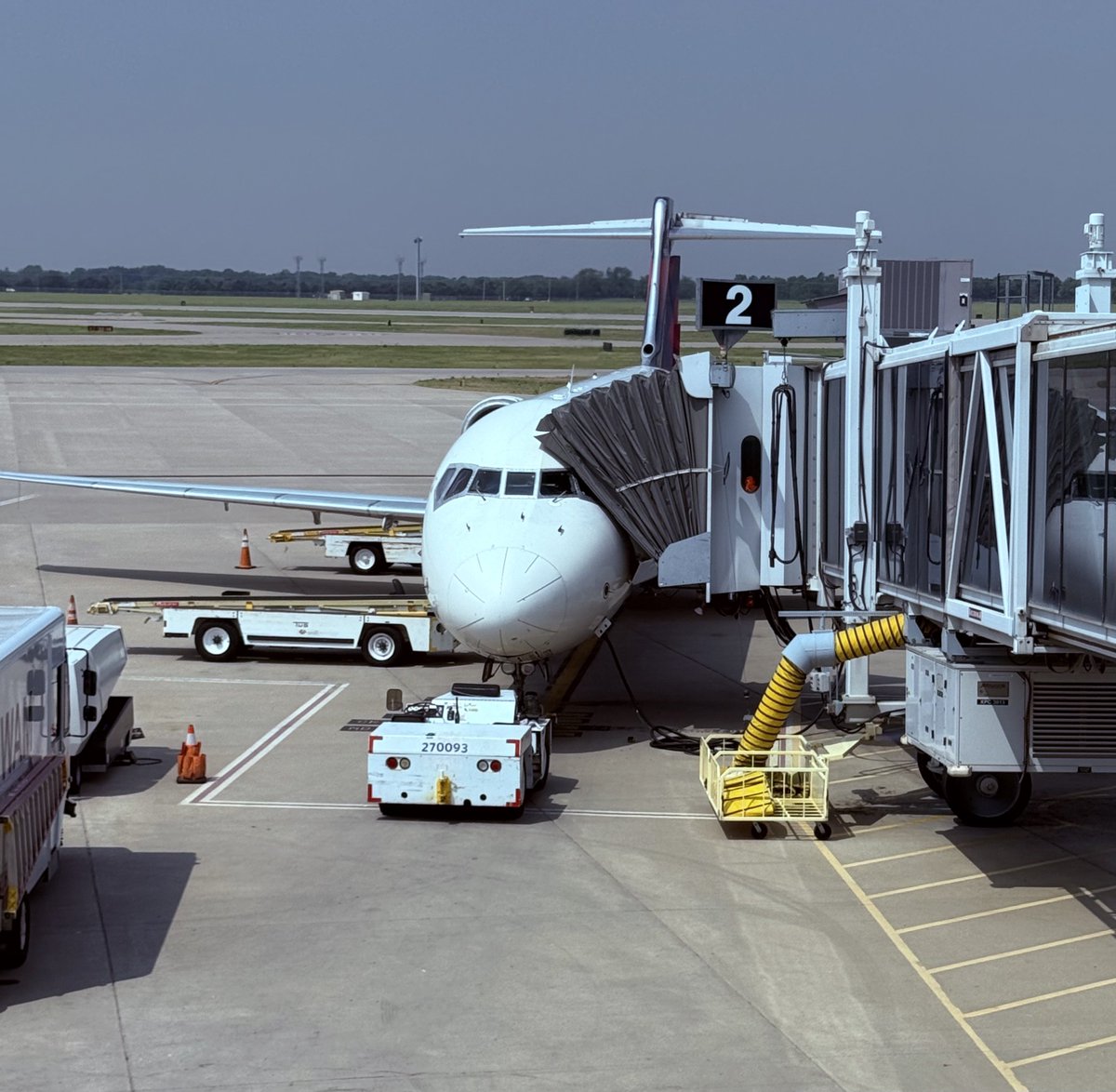
I just had the craziest experience at the airport.
We are about to board a flight to Atlanta when the pilot from the incoming plane walks out of the jetway. Guy is probably late 50s, salt and pepper hair, military look. The kind of pilot you instantly feel good about seeing on your flight.
Pilot walks over to the counter, gets on the PA system, and starts addressing everyone. “Folks, I’ve been doing this a long time. Flying one of these jets is easy. The hard part is looking at 130 people and telling them their flight is going to be delayed.”
Audible groans throughout the boarding gate. Most people here are flying to Atlanta as a layover before another flight. 130 people just had their day become a complete mess.
The pilot goes on. “I get it, trust me. But here’s the deal: During our landing, we had a small mechanical issue. I’m not your pilot for the next leg, but I don’t feel confident the jet’s safe to fly until we have a mechanical team look it over, and I don’t feel comfortable asking the next pilots to fly you guys until we get confirmation.”
He points at the agents next to him behind the counter: “Now, none of this is the agents’ fault. Please be kind to them. I’m the one who made this decision, not them, so any inconvenience you experience is my fault. Just please know that I don’t do this lightly, and I’m only doing it because I believe it’s in the best interests of everyone’s safety.”
Now this is where the story gets crazy. The pilot puts the microphone down, grabs his suitcase, and all the people in the gate…
Start clapping.
I’m not joking, everyone starts clapping for the guy. 130 people who just had their travel plans ruined give an ovation to the guy who made the decision and delivered the message.
All because he addressed them with decency and transparency, took ownership of the decision, made it clear that it was necessary, and explained why it was in everyone’s best interest.
It’s honestly one of the best examples of strong communication—of strong leadership, for that matter—that I’ve seen in a long time.
@Delta, whoever your Atlanta to Wichita pilot was this morning, he’s one of the good ones. Please tell him the delayed passengers of flight 1637 appreciate what he did.
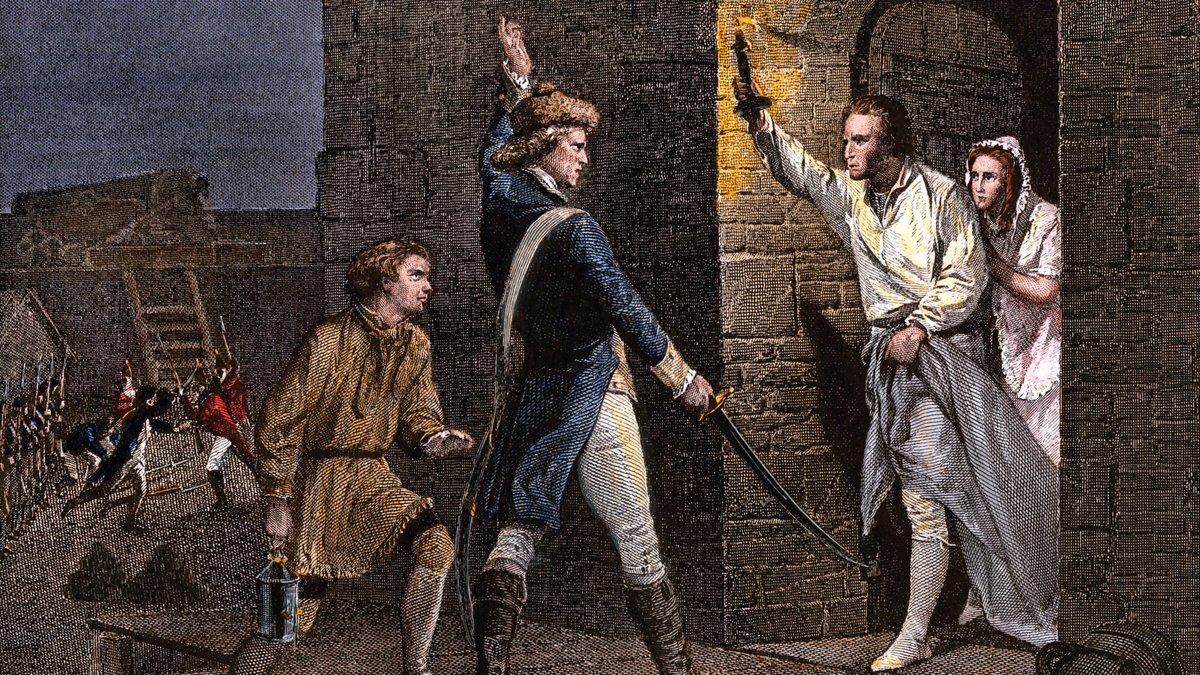
251 years ago this week, a 6'2" Vermont moonshiner with no military experience and no authorization from anyone captured the most strategically important fort in North America at dawn, and accidentally won the Revolutionary War before it had really started.
It's May 1775. Lexington and Concord happened three weeks ago. The colonies have muskets but almost no cannon. The British, sitting in Boston, have plenty. Everyone knows that without artillery, the rebellion is over by autumn.
Everyone also knows where to get artillery: Fort Ticonderoga. A stone star-fort on Lake Champlain, bristling with roughly 80 heavy guns. The British call it "the Gibraltar of America." It's the bottleneck of the entire continent. Whoever holds it controls the invasion route between Canada and New York.
What the rebels don't know, but Ethan Allen has heard, is that "the Gibraltar of America" is, by 1775, mostly held together by moss. The walls are crumbling. The garrison is 48 men, many of them invalids and pensioners. The commander hasn't even been told a war started.
Allen is not a soldier. He's a frontier land speculator who runs an armed militia called the Green Mountain Boys, originally formed not to fight the British, but to beat up New York surveyors trying to seize Vermont farms. New York has literally put a bounty on his head. He decides to go take the fort anyway.
Halfway there, a man named Benedict Arnold shows up on horseback with a Massachusetts colonel's commission, waving paperwork, demanding command of the expedition. The Green Mountain Boys threaten to go home if Arnold is in charge. Allen and Arnold agree to "joint command," which mostly means walking next to each other in furious silence.
They reach the lake at midnight. Problem: they have 200 men and exactly two leaky boats. By 3 AM only 83 have made it across. Dawn is coming. Allen decides to attack with what he has, meaning roughly 1 American for every half-cannon inside the fort.
A lone British sentry sees them coming through the wicket gate, levels his musket at Allen's chest, and pulls the trigger. The musket misfires. He runs. The Americans pour in. Total resistance to the capture of British North America's most important inland fortress: one wet flintlock.
Allen pounds on the officers' quarters with the flat of his sword. Lt. Jocelyn Feltham stumbles out half-dressed, asking by what authority Allen is there. Allen, by his own later account, roars: "In the name of the Great Jehovah and the Continental Congress!" (Other witnesses remembered the wording as substantially more profane. The Continental Congress, for its part, had no idea any of this was happening.)
Captain Delaplace, the actual commander, emerges still buttoning his trousers and surrenders the fort, its 78 cannons, its garrison, and roughly 30,000 musket flints without a shot fired by either side. Casualties: zero. Time elapsed: about ten minutes.
But here's the part that actually changed history. Those cannons sat at Ticonderoga for six months until a 25-year-old, 280-pound Boston bookseller named Henry Knox, who had learned artillery from books in his own shop, volunteered to go get them.
In the dead of winter, Knox and his men dragged 59 cannons weighing 60 tons across 300 miles of frozen rivers, the Berkshires, and unbroken snow, on 42 ox-drawn sleds. One gun fell through the ice of the Hudson. They fished it out and kept going. It took 56 days.
On the night of March 4, 1776, those cannons were hauled silently up Dorchester Heights overlooking Boston Harbor. The British woke up on March 5 to find every ship in the harbor and every redcoat in the city under the muzzles of guns that, six months earlier, had belonged to them.
Eleven days later, the British evacuated Boston. They would never hold it again.
An unauthorized raid by 83 backwoodsmen, led by a wanted man and a future traitor, against a fort defended by a captain in his pajamas, became the artillery that drove the British army out of the largest city in the American colonies.
Easiest W in American history. Possibly the most consequential ten minutes of the 18th century.
On The Tonight Show Starring Johnny Carson, Buddy Hackett told a remarkable story about a robbery at his father's upholstery shop when Buddy was seven years old.
A man came in pretending he had a gun, but Hackett's father, hammer in hand, told him there was only 35 cents in the shop and gave him a choice: keep his hand in his pocket and take his chances, or take off his coat and learn a trade.
The man broke down crying, stayed, learned the upholstery trade, and years later opened a successful business of his own.
Hackett shared it as a true story about his father's character and his gift for seeing potential in a desperate man.
In 2003, Putin arrived 14 minutes late for a meeting with Queen Elizabeth II
The delay was explained by traffic in London, even though roads are normally cleared for visits of that level.
Elizabeth II did not comment publicly on the lateness. However, when the guide dog of then–Home Secretary David Blunkett suddenly barked loudly at Putin, the Queen remarked, “Dogs have interesting instincts, don’t they?”
David Blunkett later recounted the incident in an interview with the BBC.
🇩🇪 The German antifa responsible for the Berlin terrorist attack faces up to 10 years in prison
Tens of thousands of residents in southwest Berlin have been without electricity for several days.
The blackout began last Saturday after a substation in Lichterfelde was set on fire. As of the evening of January 6, about 25,500 homes and 1,200 businesses remain without power.
Berlin Mayor Kai Wegner called the incident more than vandalism or sabotage, saying it could be classified as terrorism.
“We are also in contact with the Federal Criminal Police, because this is no joke: a terrorist act has occurred here,” he confirmed.
The far-left radical group Vulkan claimed responsibility, a statement authorities consider genuine.
Suspects may face charges including forming a criminal or terrorist organization and aggravated arson, which endangered lives, particularly patients reliant on ventilators and other medical equipment in hospitals and care homes.


![JanJekielek's tweet photo. For 37 years, over 2,000 images taken by a Chinese state media photographer were hidden in a metal box, surviving brutal purges—until now.
These raw, powerful photos show the courage of the students, the scale of the protests, and the horror of what the Chinese Communist Party did.
Now, The @EpochTimes is making the photos public for the first time. [1/2]](https://pbs.twimg.com/media/HJ91wfIX0AA7ZsO.jpg)
![JanJekielek's tweet photo. For 37 years, over 2,000 images taken by a Chinese state media photographer were hidden in a metal box, surviving brutal purges—until now.
These raw, powerful photos show the courage of the students, the scale of the protests, and the horror of what the Chinese Communist Party did.
Now, The @EpochTimes is making the photos public for the first time. [1/2]](https://pbs.twimg.com/media/HJ91RzVWkAAypoW.jpg)


![JanJekielek's tweet photo. For 37 years, over 2,000 images taken by a Chinese state media photographer were hidden in a metal box, surviving brutal purges—until now.
These raw, powerful photos show the courage of the students, the scale of the protests, and the horror of what the Chinese Communist Party did.
Now, The @EpochTimes is making the photos public for the first time. [1/2]](https://pbs.twimg.com/media/HJ93AneWwAA6d7L.jpg)