Andrej Karpathy’s 1-hour Stanford lecture on AI engineering is one of the best explanations I’ve seen of how AI systems actually work.
The progression is simple:
10% → LLM
30% → Prompt
50% → Agent
70% → Loop
100% → Graph
The key takeaway:
AI engineering isn’t just about writing better prompts.
It’s about building systems around models — giving them context, memory, tools, feedback loops, and data flows.
“Delete everything, keep Graph.”
Definitely worth watching if you’re building with AI agents.
Watch → Bookmark it
Ingeniero de SpaceXAI (ex-Cursor):
“Ahora mismo tengo 10-20 agentes GrokBot trabajando para mí. Automatizan el 90% de mi rutina.
Tengo un agente Jefe de Staff. Conoce a todos los demás bots y lo gestiona TODO 24/7.”
En un podcast de 50 min un ingeniero de SpaceXAI te enseña a montar un equipo de agentes que trabaja por ti mientras duermes.
Vale más que cualquier curso de $500 de ingeniería de agentes.
Guárdalo y míralo cuanto antes. 🔖
بدلاً من قضاء ساعتين في مشاهدة نتفليكس الليلة.. شاهد هذه المحاضرة من جامعة ستانفورد! 🚨
أوضح وأبسط شرح يمكن أن تراه عيناك لكيفية عمل ChatGPT و Claude كواليس خلف الشاشة!
سواء كنت لم تلمس الذكاء الاصطناعي في حياتك، أو تستخدمه يومياً منذ سنوات.. هذه المحاضرة ستغير طريقة فهمك له تماماً! 📷 👇
"AI won't replace you. Someone who knows AI will replace you". That's not what's happening at all.
AI enables many humans to never think. To skip reading, understanding, and making mistakes. In exchange, humans get this bland, boring results that look good at first glance, but whose execution lacks care and attention to detail.
AI won't replace you. Humans who still choose to think, in an era where you can delegate that to a machine, will replace you.
Train your own LLM from scratch!
A step-by-step repo that walks you through building and training a transformer model from scratch using PyTorch. From downloading training data all the way to generating text.
The architecture is built from the ground up following the original "Attention is All You Need" paper. MLP, single head attention, multi-head attention, transformer blocks, and the full transformer model - all coded and explained with detailed diagrams at each step.
Training data comes from The Pile - a diverse 825GB open-source dataset covering books, articles, code, websites, and more. The repo includes scripts to download it, preprocess and tokenize it using tiktoken, store it in HDF5 format, and feed it into training batches.
You can train a 13M parameter model on a single Colab T4 GPU. At 13M parameters the model starts generating proper grammar and coherent short sentences. For billion-parameter training you need at least an A100 or RTX 4090. The repo includes a full GPU compatibility table so you know exactly what's possible on your hardware.
Includes a complete SFT and RLHF guide as a separate notebook for taking your trained model further.
Key capabilities:
• End-to-end pipeline: data download → preprocessing → training → text generation
• Full transformer implementation from scratch with PyTorch
• Trains models from 13M to 2B+ parameters on a single GPU
• Training data from The Pile (825GB, 22 diverse datasets)
• Tokenization via tiktoken (r50k_base)
• SFT and RLHF guide included
100% open source.
I've shared the link in the replies!
L’équipe d’Anthropic vient de montrer comment utiliser correctement Claude Code.
30 minutes. gratuit. présenté par la personne qui a créé Claude Code.
Regarde le workshop. Ajoute en signet 🔖
Ça vaut plus que tous les cours à 500$ que t’as failli acheter.
for people who question the default path of technology.
> this book explores hacking, reuse, and alternative tech futures;
> where communities build tools on their own terms instead of waiting for corporations or institutions.
Recopilé todos los prompts de NotebookLM que se volvieron virales en Reddit, X y comunidades de investigación.
Estos convirtieron un “juguete de IA interesante” en un arma de investigación que hace 10 horas de trabajo en 20 segundos.
16 prompts para copiar y pegar. Cero relleno.
Róbatelos todos 👇
how to build your first ROS hexapod.
this is not a toy project. it’s a full systems problem.
stack:
• compute → jetson nano. pi if budget is tight.
• actuation → serial servo motors. daisy-chained. fewer wires, real control.
• structure → anodized metal brackets. plastic flex will destroy gait stability.
• perception → depth camera for near-field terrain.
• ranging → lidar a1 for 2d mapping and obstacle detection.
• interface → oled display for state, battery, mode, errors.
mechanical first:
• 6 legs × 3 dof minimum.
• design leg kinematics before touching ros.
• center of mass inside support polygon. always.
• symmetric mounting or control becomes impossible.
electronics:
• separate power rails for compute and servos.
• common ground or nothing works.
• serial bus tuned for latency, not bandwidth.
software order (do not reorder):
ros bringup
servo driver node
joint state publisher
inverse kinematics (per leg)
gait generator (tripod first)
state machine (stand, walk, turn)
perception integration
navigation
gaits:
• start with open-loop.
• add imu feedback later.
• stability > speed.
sensors:
• depth camera → terrain classification, foot placement.
• lidar → mapping, obstacle avoidance.
• fuse later. do not over-integrate early.
display:
• show only truth: voltage, current, mode, fault.
• no animations. diagnostics only.
core lesson:
hexapods are not about walking.
they are about coordination across mechanics, power, control, perception, and software.
if it walks once, you learned nothing.
if it walks repeatably, you’re doing robotics.
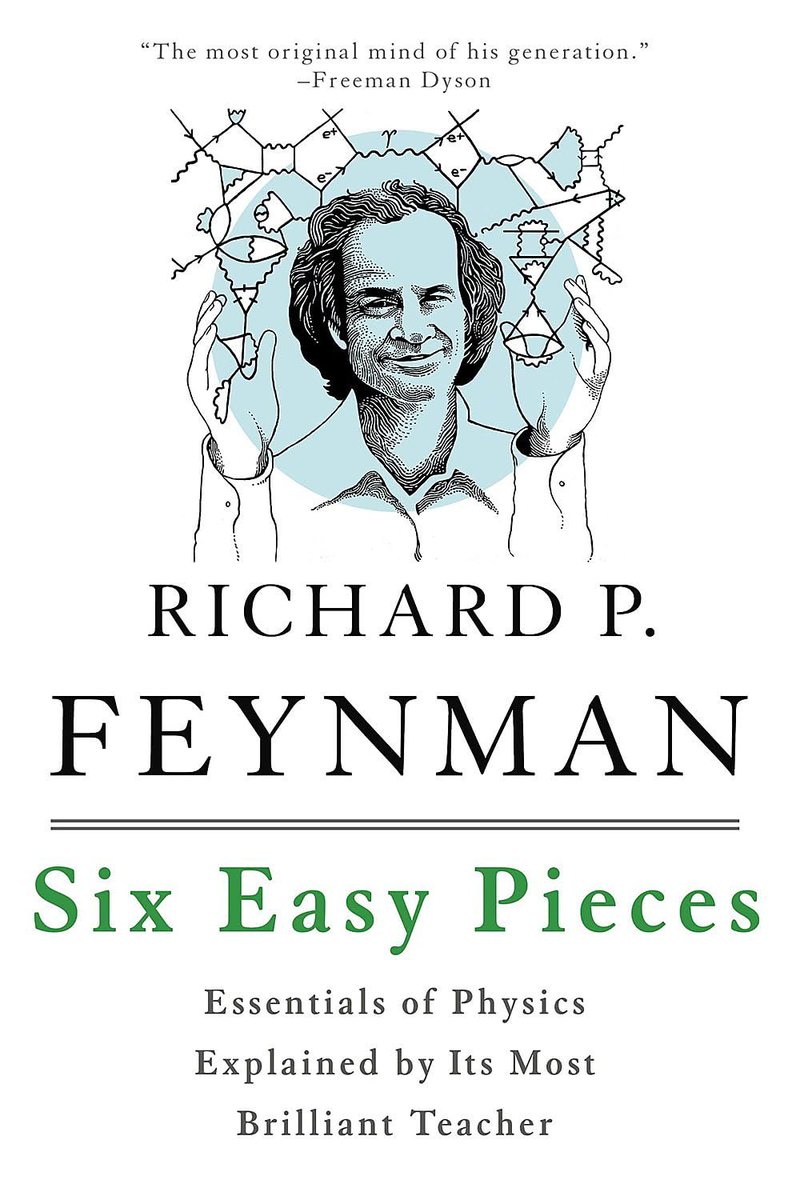
anyone who wants to understand physics without drowning in formalism.
> this book distills Feynman’s legendary lectures into clear, intuitive explanations;
> perfect for curious beginners, engineers, and thinkers who want real understanding, not memorization.