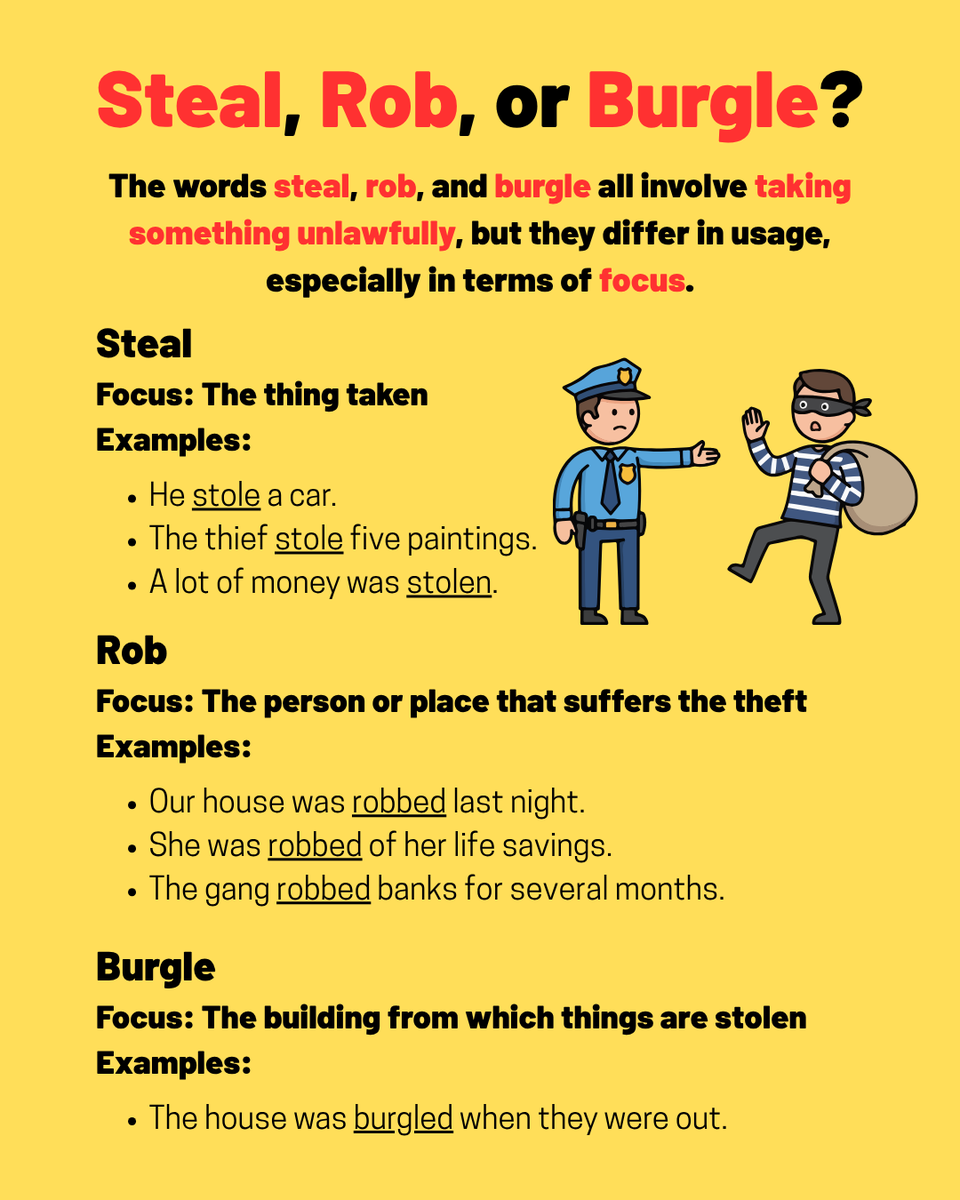
The words "steal," "rob," and "burgle" all refer to something being unlawfully taken, but actually they each have slightly different meanings.
Here's an explanation.👇
Stop overusing "important" in IELTS Writing Task 2. Upgrade your vocabulary with these four precise alternatives to boost your Lexical Resource score. Save this reference for your next practice essay.
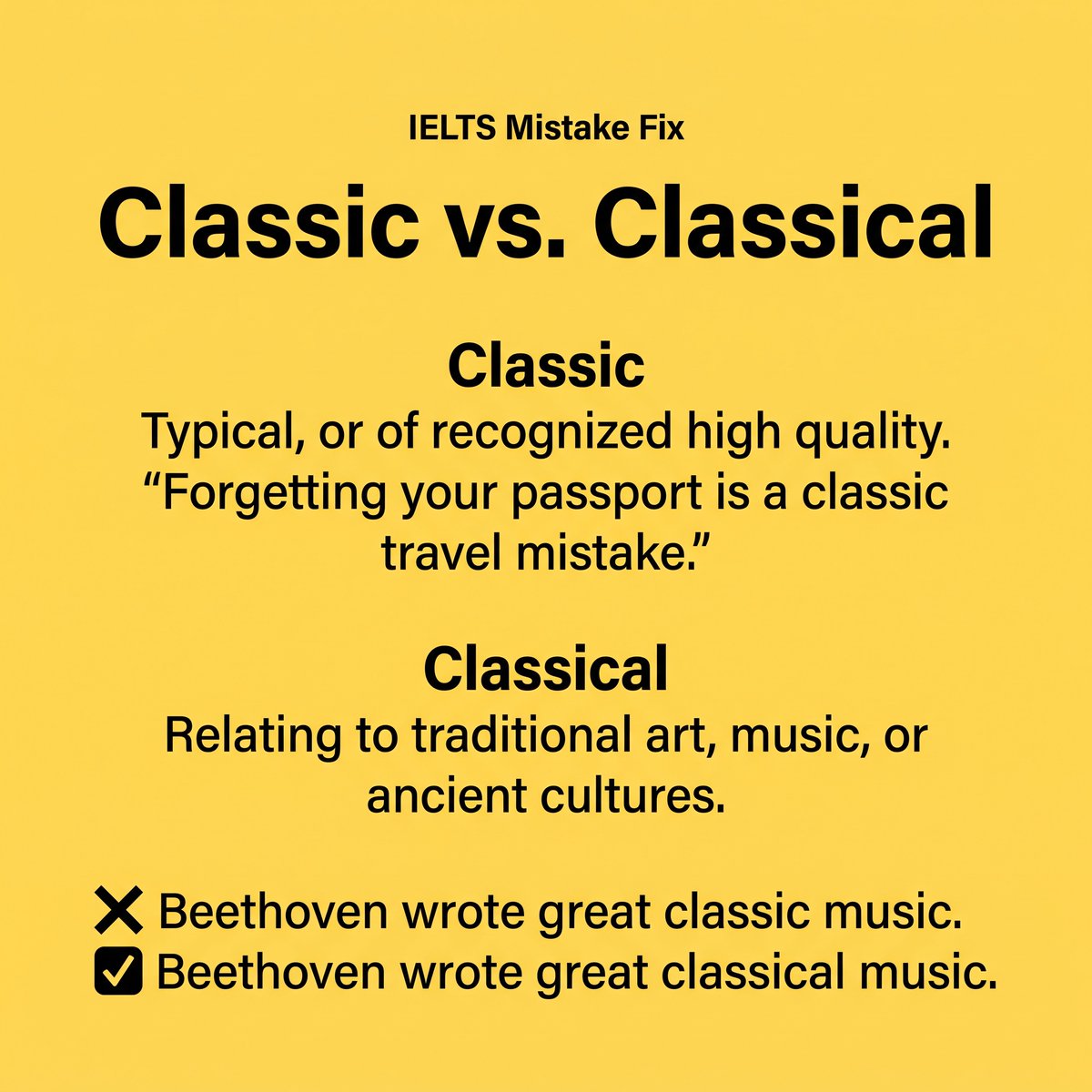
A common IELTS vocabulary mistake is confusing classic and classical. Use 'classic' for something typical or of high quality, and 'classical' for traditional art, music, or ancient cultures.
Confusing beside and besides is a common IELTS mistake. Beside means 'next to', while besides means 'in addition to'. Master this difference for better vocabulary scores.
A common IELTS vocabulary mistake is confusing opportunity and possibility. Use opportunity for a chance to do something, and possibility for the likelihood that an event will happen.
Don't lose points on Lexical Resource by confusing 'work' and 'job'. 'Work' is an uncountable noun for the general activity, while 'job' is a countable noun for a specific role. See the examples to fix this common mistake.
Do you know the difference between 'say' and 'tell'? In IELTS, remember that 'tell' must be followed immediately by a person, while 'say' is not. You tell someone something, but you say something.
A common IELTS Task 2 mistake is dropping the preposition after 'provide'. Remember the rule: provide someone WITH something, or provide something FOR someone.