Entanglement usually steals the show in quantum computing, but theory points to a deeper resource: quantum contextuality. In Science, we run contextuality-based tasks up to 105 qubits on Willow, creating a fixed, physics-based benchmark for quantum hardware: https://t.co/x7RSUR51LJ
Congratulations to our very own Ryan Babbush on receiving the 2027 Rolf Landauer and Charles H. Bennett Award in Quantum Computing for his vital work in quantum algorithms and circuit compilation! https://t.co/Kg2gBOhKx8
Quantum progress. Powered by collaboration.
We're excited to announce we're launching a new co-design platform with @IBM and @ORNL's @QuantumSciCtr to advance quantum error correction. At its foundation: Umbra, an HPC system powered by AMD Instinct MI355X GPUs and 5th Gen AMD EPYC CPUs, working alongside IBM quantum computers.
https://t.co/kLFRd1U0Ok
Dinner with friends after the closing session of the Nobel Symposium @STIAS_SA, where we all gave talks. It's been a very stimulating week. Lieven Vandersypen, Yasu Nakamura, John Martinis, Antoine Browaeys.
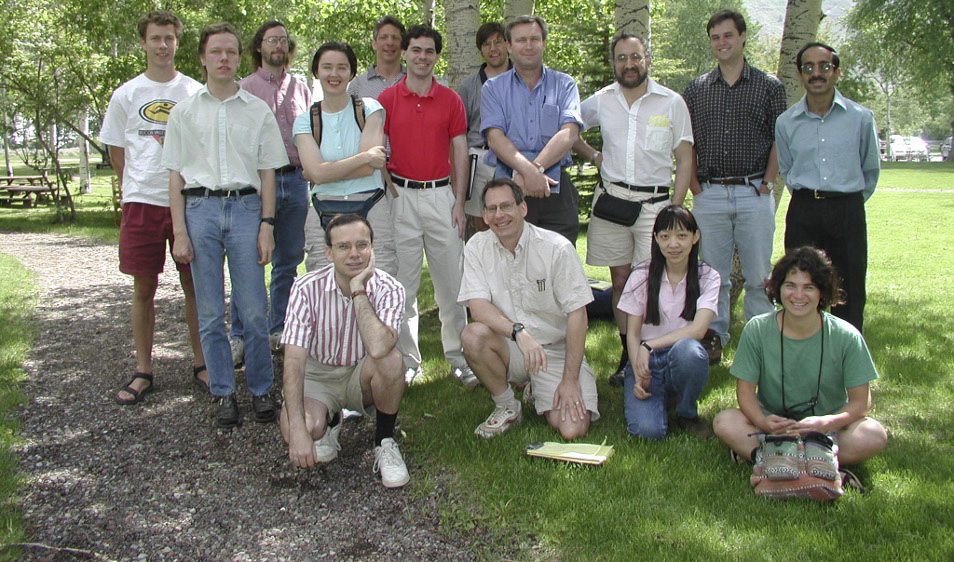
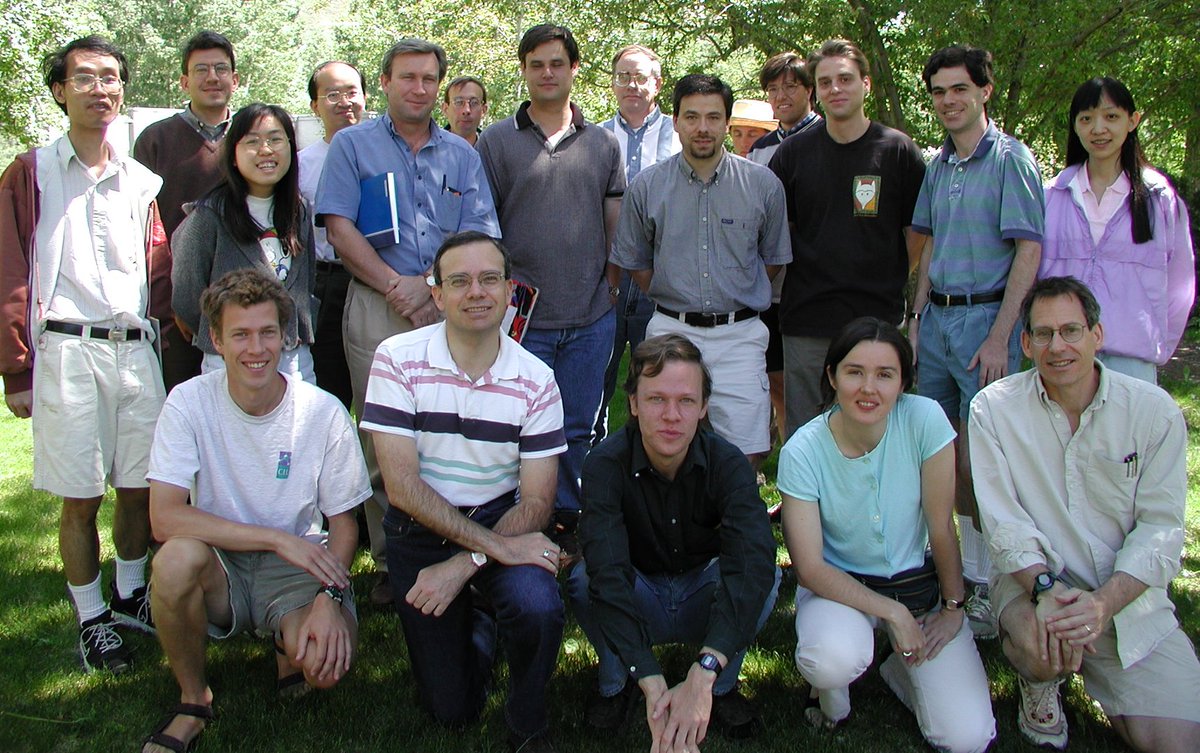
We were in Aspen in June 2000 for a quantum computing program that David DiVincenzo and I organized. Daniel Gottesman and I were writing our paper about GKP codes, and Knill-Laflamme-Milburn were working on photonic quantum computing. You may recognize some of the luminaries. Photos by Ike Chuang.
Jensen Huang says quantum computers could help train AI by simulating biology and chemistry and generating synthetic training data.
“Quantum computer is not the next big thing, but it is a big thing.”
Published in Science today: Magic state cultivation works in practice on our Willow processor. We achieved a 40x error reduction, compared to without cultivation, and 99.99% fidelity. Learn how this addresses a critical resource bottleneck: https://t.co/XojsYpQhDE
In new research published today in @Science, @GoogleQuantumAI has demonstrated "magic state cultivation" in practice on our Willow processor, overcoming a major 20-year resource bottleneck in quantum computing.
Here are some key milestones from this breakthrough:
🔹 A 40-fold reduction in errors relative to un-cultivated states
🔹 A record 99.99% logical fidelity for T-states (a key resource needed for quantum operations)
🔹 Smooth state transfers across different quantum error-correction codes on physical hardware
BREAKING NEWS
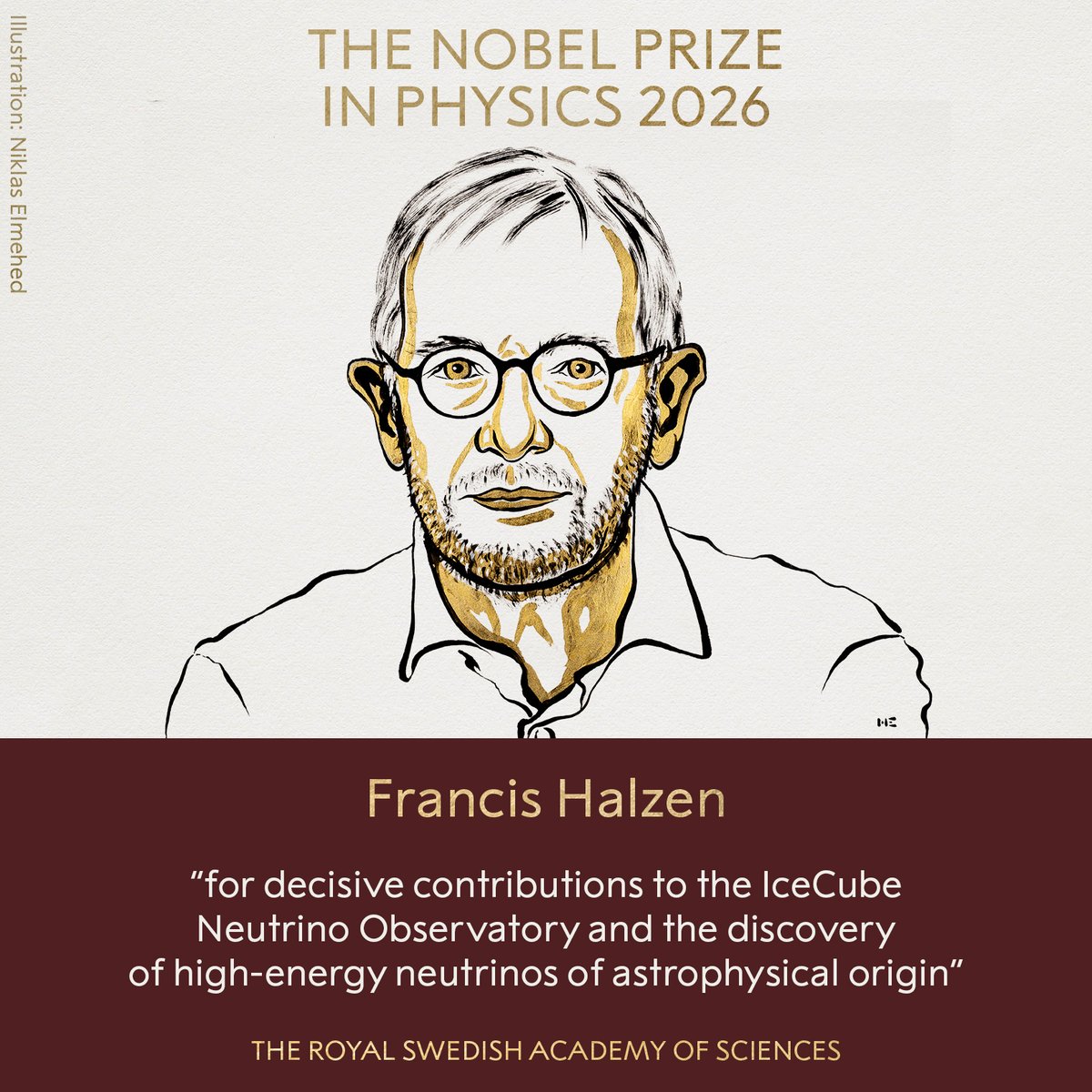
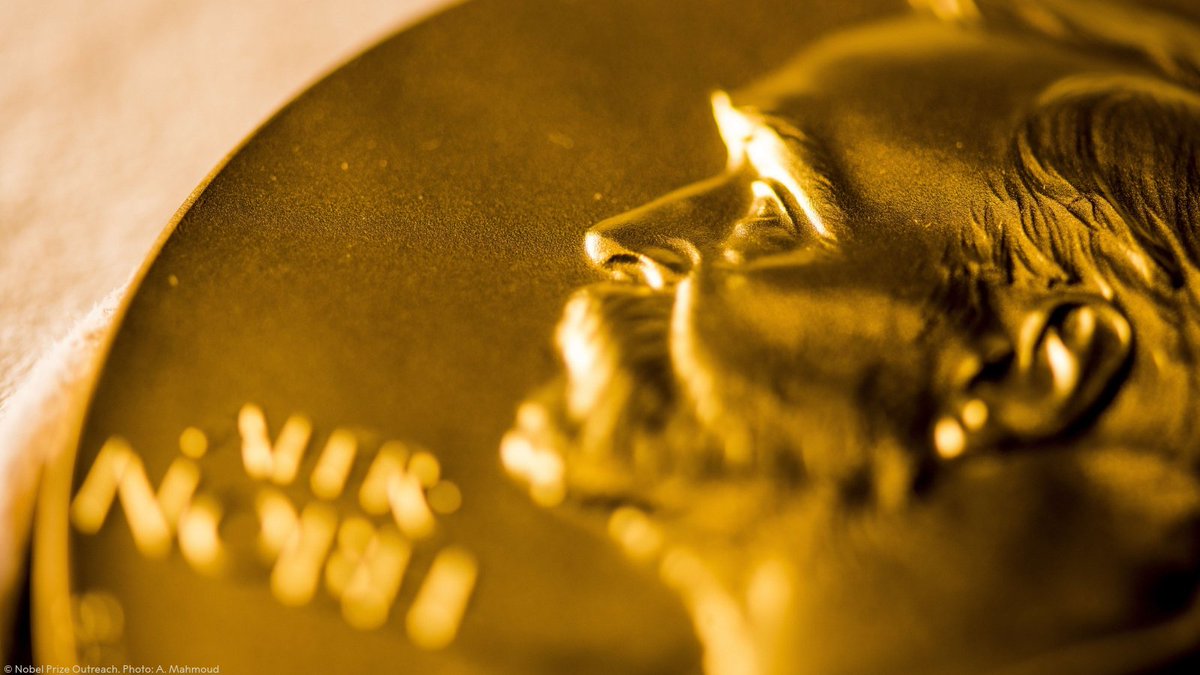
The Royal Swedish Academy of Sciences has decided to award the 2026 #NobelPrize in Physics to Francis Halzen “for decisive contributions to the IceCube Neutrino Observatory and the discovery of high-energy neutrinos of astrophysical origin.”
Calling all teachers!
Do you want your students to learn about the 2026 Nobel Prizes? Make it easy for yourself and use the Nobel Prize lessons in the classroom.
Each free lesson includes a slideshow, speaker’s script, student assignment and more.
The lessons will be available here on 13 October: https://t.co/4kesxymYbg
We’ve risen to No. 2 in the nation in the new undergrad engineering rankings from @usnews — and we’re still tied as the top public program!
@GeorgiaTechISyE is No. 1 for its 26th straight year and 7 other degrees are first or second. See the full list: https://t.co/GzCysFsPuR