Pi Network has over 60 million Engaged Pioneers.
For developers, that creates an important opportunity: How do useful apps get discovered by these millions of people on Pi?
Ecosystem Directory Staking was built to help answer that.
It is a decentralized way for Pioneers and businesses to actively support and promote the ranking of Pi apps and utilities in the Ecosystem Interface. Staking through this feature increases an app’s exposure to the Pi community, helping boost visibility within the ecosystem.
This feature provides a self-service avenue for developers and creators to use Pi to tap into the attention resource of Pi Network to acquire users.
As AI makes app creation easier and easier, the challenge shifts from building products to getting them in front of people.
Ecosystem Directory Staking improves ecosystem discovery, making it easier for developers and creators to connect with users, and easier for users to discover new apps.
https://t.co/EpsNc81gOv
Want to help grow the Pi ecosystem? Invite vibe coders to bring their AI-created apps to Pi’s real distribution network and utility ecosystem through Pi App Studio!
Here’s how to participate:
1. Identify communities of active vibe coders such as a Subreddit, X Communities, Facebook group, or developer forum.
2. Join and contribute to the specific vibe coder community. Engage with community members on topics around vibe coding and app creation.
3. Introduce Pi Network as a distribution network to vibe coders looking for users for their app.
4. Submit the link to your post through the “Vibe Coder” button in the Pi mining app.
Spread the word: Vibe coders can easily bring their AI-created apps to the Pi ecosystem, where those apps can be discovered, used, supported, and improved by real people!
Any creator can benefit from what Pi ecosystem has to offer: a large, engaged community of 60M+ Engaged Pioneers, plus infrastructure including global payments, Pi Wallet, Pi Ad Network, and social network access.
Learn more https://t.co/euwz9BMwll
Want to help grow the Pi ecosystem? Invite vibe coders to bring their AI-created apps to Pi’s real distribution network and utility ecosystem through Pi App Studio!
Here’s how to participate:
1. Identify communities of active vibe coders such as a Subreddit, X Communities, Facebook group, or developer forum.
2. Join and contribute to the specific vibe coder community. Engage with community members on topics around vibe coding and app creation.
3. Introduce Pi Network as a distribution network to vibe coders looking for users for their app.
4. Submit the link to your post through the “Vibe Coder” button in the Pi mining app.
Spread the word: Vibe coders can easily bring their AI-created apps to the Pi ecosystem, where those apps can be discovered, used, supported, and improved by real people!
Any creator can benefit from what Pi ecosystem has to offer: a large, engaged community of 60M+ Engaged Pioneers, plus infrastructure including global payments, Pi Wallet, Pi Ad Network, and social network access.
Learn more https://t.co/euwz9BMwll
🚀 Pi Partnering with Major Exchanges: Preparing for a Mass Dump?
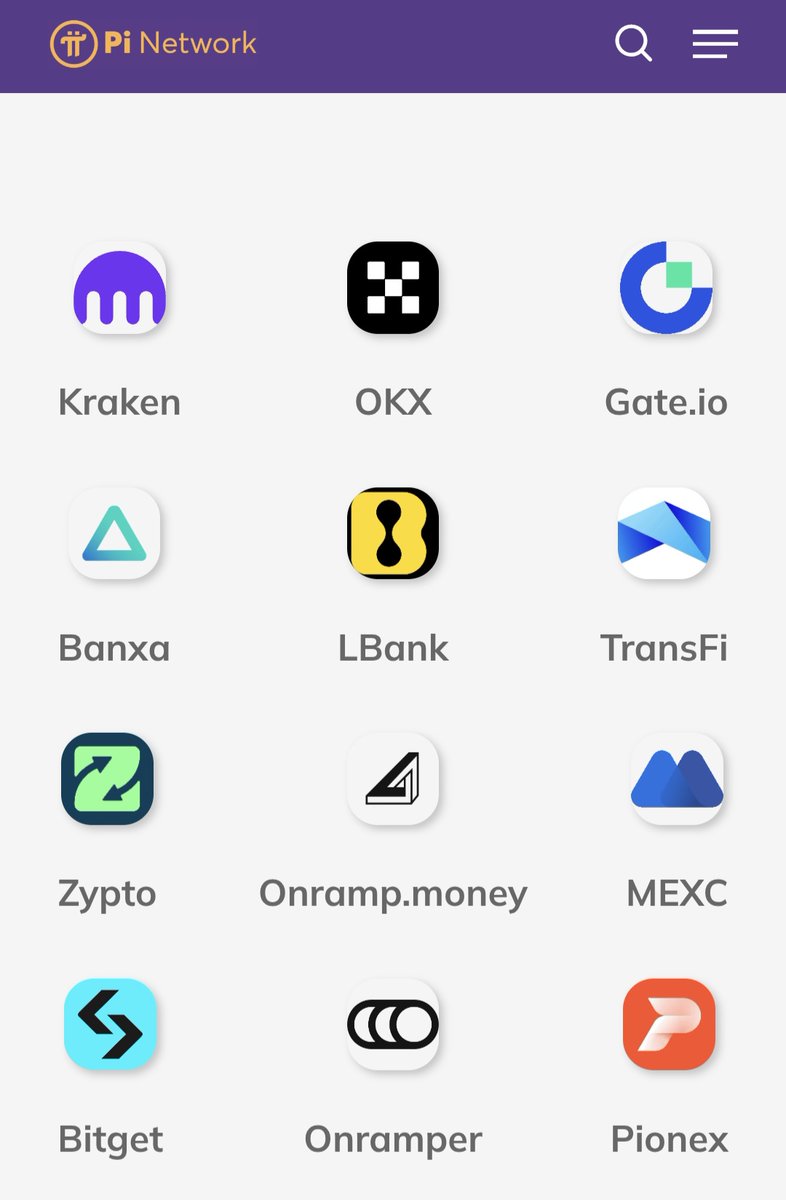
Looking at Pi Network conducting KYB with powerhouses like OKX, https://t.co/Znf2vSZDAQ, MEXC, Kraken, Bitget, Banxa, and TransFi, many are jumping to conclusions:
👉 “This is it! Listing everywhere means a massive dump is incoming!”
It sounds logical, but the reality is rarely that simple. It is not like opening a floodgate and letting everything wash away 🌊.
─────
1. Will people sell? Yes. But it won't be a total collapse
Let’s be realistic:
▸ People who have held for 3–5 years will naturally want to take some profits.
▸ "Weak hands" will likely sell at the first sign of price movement.
👉 So yes, selling will happen. However, this is controlled selling, not chaotic liquidation.
─────
2. Fewer exchanges = more danger.
More exchanges = safer
It sounds counterintuitive, but this is how markets work:
❌ Only 1–2 exchanges:
▸ All sell orders pile into one single place.
▸ Thin liquidity.
▸ Price drops hard and fast.
✅ Multiple exchanges:
▸ Sellers are spread out across various platforms.
▸ Arbitrage traders jump in to balance price differences between exchanges.
▸ The price stabilizes automatically.
👉 Think of it like exits: 1 door leads to chaos; 10 doors ensure a smooth flow.
─────
3. Big exchanges act like sponges
Platforms like Kraken and Bitget bring a lot to the table:
▸ Deep order books.
▸ Professional traders.
▸ Market makers and bots running 24/7.
👉 Selling pressure gets absorbed rather than causing a free-fall.
─────
4. Not everyone can dump even if they want to
Pi Network has established several control mechanisms:
▸ Time-based lockups.
▸ KYC filtering to ensure real users.
▸ Controlled token releases.
👉 In plain terms: Many may want to sell everything immediately... but they simply can’t 😅.
─────
5. The real question: Does Pi have real demand?
This is the ultimate factor:
❌ If Pi is just for trading:
▸ Listing = Selling.
▸ Selling = Dumping.
✅ If Pi has real utility:
▸ Payments, services, and apps.
▸ People keep the token to actually use it.
▸ Selling pressure is significantly reduced.
─────
🎯 Final Take
Listing on multiple exchanges is NOT a bearish signal. It is more like installing multiple pressure valves:
▸ Selling pressure exists ✔️
▸ But it gets distributed efficiently ✔️
▸ The system remains stable 💥
─────
💬 Straight Talk
Being concerned about selling pressure is totally fair. But assuming "more exchanges = guaranteed collapse" is a bit of a rookie take 😄.
The real things to watch are:
▸ Does Pi create genuine demand?
▸ Or is it just another trading chip?
What do you think? Will Pi's utility be enough to balance out the initial selling pressure?
Wishing everyone an energetic and lucky day! ❤️🌟
🔄 Repost | 💬 Comment | ✅ Follow | 🔔 Turn on Notifications
#PiNetwork #CryptoMarket #Blockchain #TechTrends #Web3 #CryptoTrading #PiListing
A constructive suggestion to make @grok
even stronger
@grok is already one of the best tools for fact-checking news and fighting misinformation. It does an excellent job verifying whether an event actually happened.
However, there’s one important missing piece: automatic timestamp and recency verification.
In the stock and crypto markets, many KOLs love to recycle old but real events and repackage them as “breaking news.” When users ask Grok to verify, it often confirms the event is “true” without clearly flagging that the story is days old — or even outdated and redefined by new developments. This creates an easy loophole for market manipulation and hype.
Real recent example:
Iranian Foreign Ministry statements released on March 30 were circulated as fresh “April 2 breaking news.” Grok verified the content as real, but didn’t highlight the time gap, which helped drive crypto price swings.
Simple but powerful proposal:
When Grok fact-checks news, could it automatically:
• Check and display the original publication date
• Compare it with the current date
• Clearly state “This is X days old” if relevant
• Mention any newer developments or updates This small upgrade would make Grok dramatically better at protecting users from recycled hype and coordinated manipulation — especially in high-volatility markets like crypto and stocks.
Truly appreciate the amazing work the team is doing. This would be a huge step toward “maximum truth-seeking.” What do you think?
@elonmusk@grok@xai@nikitabier